

A Liberated Mind: How to Pivot Toward What Matters
Steven C. Hayes
 English
Shows why feeling poorer than the people around you can harm your health, money decisions, beliefs and politics as much as real poverty, and how to take back control of the comparisons you make.
57 sec
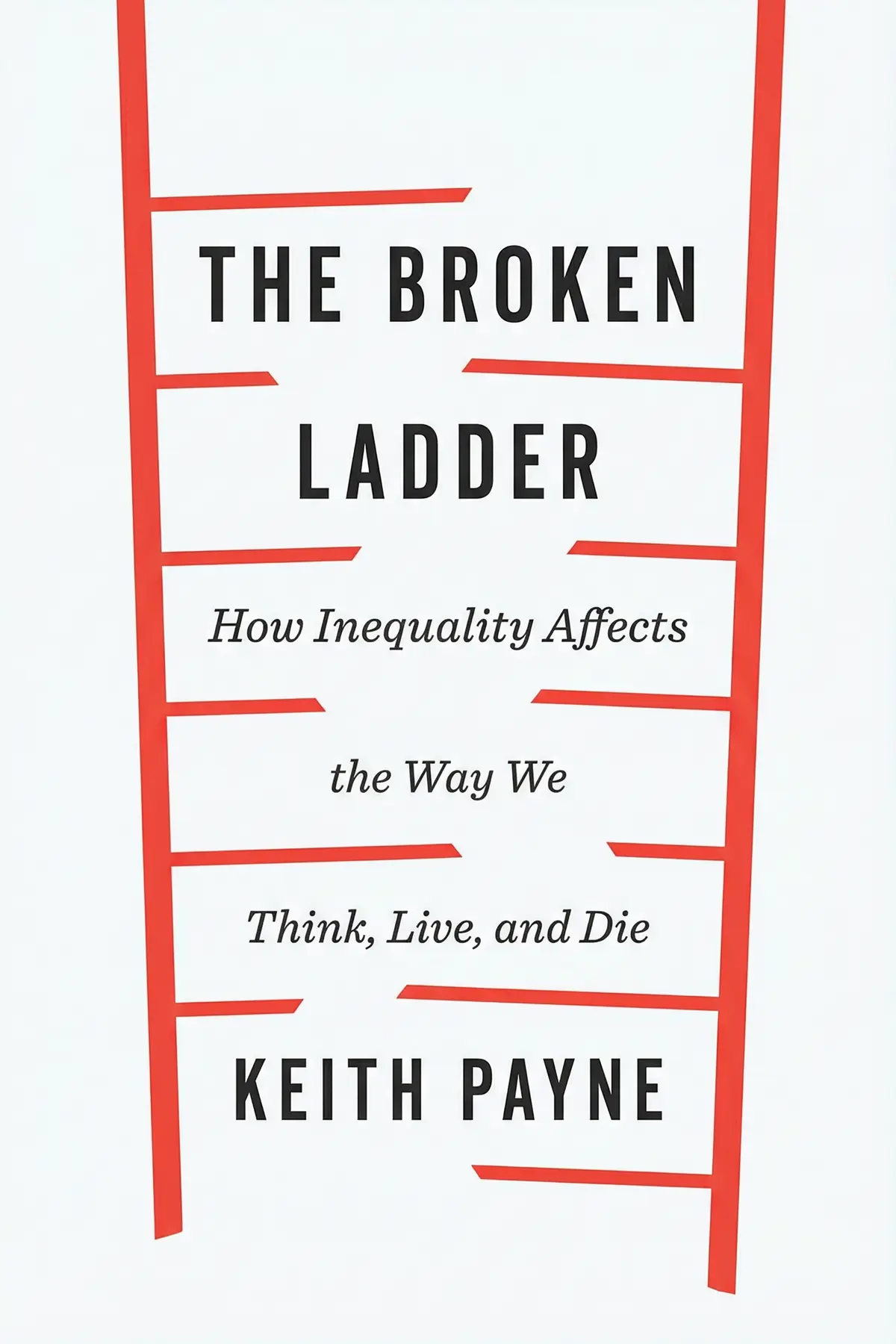
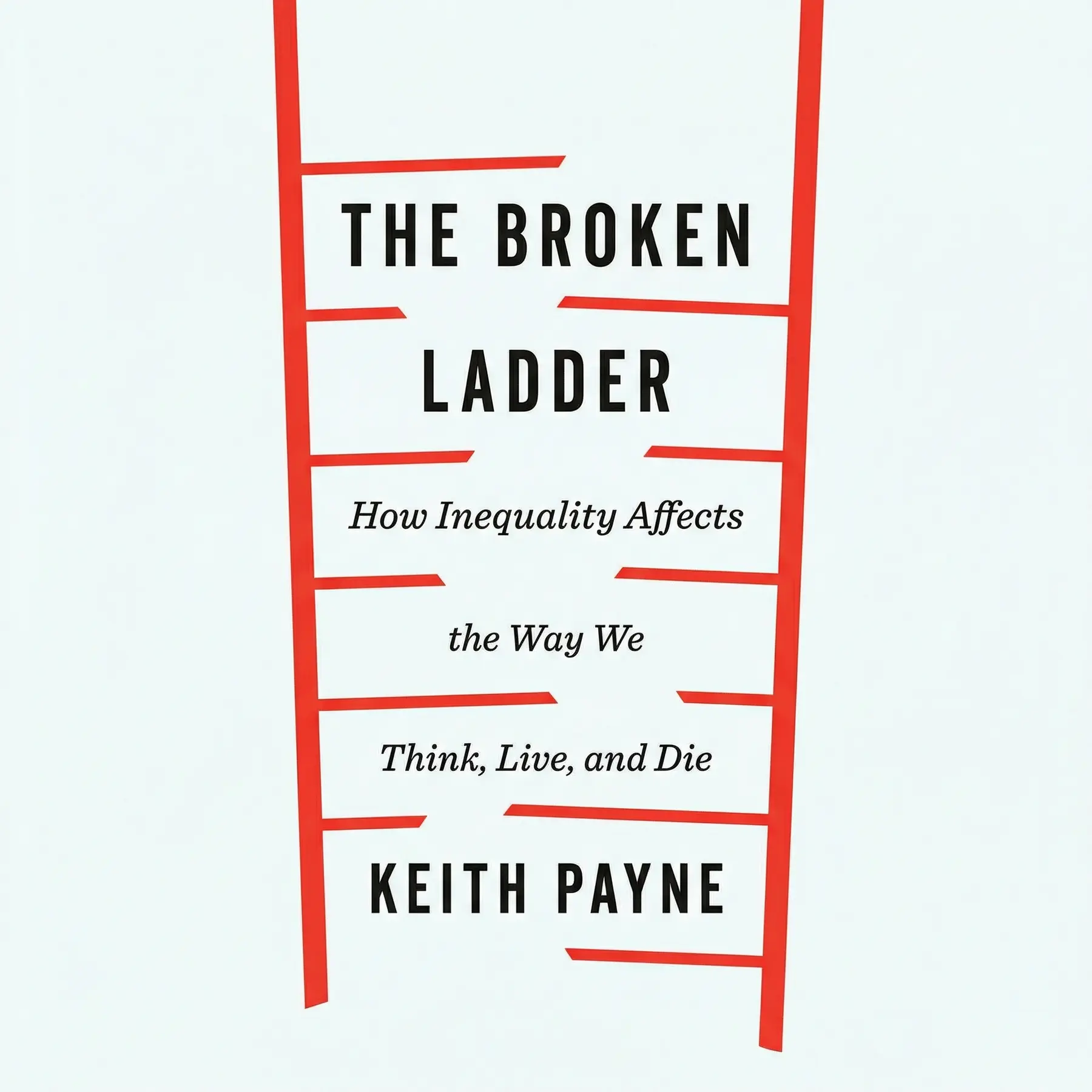
Feeling poor, Keith Payne argues, can cost as many years of life as being poor. In The Broken Ladder, the University of North Carolina psychologist reports that only about one in five people who say they feel poor actually are, yet the rest still pay for that feeling with their health, their choices and their trust in others.
His throughline is that inequality does its damage mainly through where we believe we stand on the ladder, less through what we own. That sense of rank raises stress hormones and pushes people toward risky bets. It makes random marks look like faces, and it turns political rivals into people who should lose their vote.
If you earn a decent living and still feel behind, the book explains why that happens. It also offers two answers: choose your comparisons with care, and treat extreme inequality as a problem for nearly everyone living under it, the comfortable included.
1 min 47 sec
A king who ruled from a palace lived without comforts most families now take for granted, yet nobody pitied him. The same quirk explains why a doctor on a large salary can lie awake worrying about money.
1 min 44 sec
A monkey threw away perfectly good food after seeing what his neighbor received. His reaction makes sense of a lot of human anger that seems out of proportion to what was actually lost.
1 min 44 sec
Volunteers were handed $20 and a score that told them how they ranked against their peers. The score was invented, yet it changed what they did with the money, rich and comfortable participants included.
1 min 45 sec
Researchers removed the top animals from a monkey group and watched what happened to the ones left in the middle. The change in their bodies helps explain a health gap between two wealthy countries.
1 min 50 sec
Someone paid $28,000 for an old sandwich, and a whole village worshipped a tree. These stories look harmless, but a simple experiment links them to something that worries Payne far more.
1 min 53 sec
Investors in an experiment all earned exactly the same profit, but half were told they had won. What those supposed winners then wanted to do to the people who disagreed with them is unsettling.
1 min 39 sec
If huge salaries for a few stars drive results, the most unequal teams should win the most. An economist checked eight years of professional baseball and found something that should give every pay committee pause.
1 min 12 sec
The Broken Ladder adds up to an uncomfortable picture. A tiny group now holds more wealth than half the world, and Payne argues that the harm spreads far beyond the poor. Inequality makes people sicker, more stressed, more reckless, more suspicious and less willing to share power. Fighting poverty alone will not repair that, he insists. The gap itself has to shrink, which means organizing, voting and pressing lawmakers for policies that raise the bottom rungs and lower the top one.
That is slow work, and in the meantime the comparison can be taken back. Learn to spot its first sign, a vague unease that something you own falls short. Then question it. Perhaps your three potted plants pleased you all summer, and only a visit to a friend with a jungle in his apartment made them look drab. Measure today against your own life ten years ago, and if your circle keeps making you feel small, find another. Most useful of all, Payne says, write down what you truly value. Few people put a higher rung on that list. Once you know what matters to you, the question of whether you earn enough finally has an answer that is yours.
Plenty of people with good salaries still feel they are falling behind. Psychologist Keith Payne argues that this feeling is far from trivial. Only about one in five people who say they feel poor actually are, yet the feeling alone is linked to stress, illness, risky choices and a hunger for neat explanations. Payne follows that sense of rank through a series of experiments. Monkeys reject cucumber after watching a rival get grapes. Lab volunteers gamble more when a fake score tells them they are behind. Mid-ranking monkeys grow healthier when the top animals are removed. Volunteers who feel powerless see pictures in random marks. Investors told they beat their peers want to take away the vote from those who disagree. Even Major League Baseball teams with steep pay gaps win fewer games. Readers come away understanding why inequality affects nearly everyone living under it, the comfortable included. They also get practical ways to respond: noticing the moment a comparison starts, choosing better yardsticks, and writing down what they actually value, alongside a case for reducing the gap through politics.
Professionals with solid incomes who still feel behind and want to know why.
Managers and team leads deciding how pay gaps affect morale and results.
Anyone under chronic stress, or puzzled by rising division and conspiracy thinking, who wants the psychology behind it.
Keith Payne is a professor of psychology at the University of North Carolina at Chapel Hill. He studies inequality and discrimination and is regarded as an international leader in that field. His research has been covered by The Atlantic, The New York Times and NPR, and he has written for Scientific American and Psychology Today.
Listeners find this work highly accessible and essential for anyone concerned about social disparity, appreciating the well-documented content that merges current psychological research. The narrative style is well-regarded, with one listener highlighting the author’s modest approach, and listeners describe the experience as eye-opening, with one mentioning it transformed their outlook on life. The book draws a range of reactions concerning its specific take on inequality.
The chapter on 'Lunch Lady Economics' hit me surprisingly hard because it frames poverty as a relative experience rather than just an absolute lack of funds. Payne manages to weave together hard data from neuroscience with a very human perspective on how we perceive our social standing. It’s one thing to hear that inequality is growing, but another entirely to understand how that gap physically changes our stress levels and life expectancy. I found the section on the ‘Lake Wobegon effect’ particularly enlightening—the idea that we all think we're above average until the ladder gets too steep to ignore. While the book is mostly focused on the US, the psychological principles are universal. It’s accessible, fast-paced, and frankly, it should be required reading for anyone trying to understand why our current political climate is so polarized.
Show moreAs someone who grew up in a rural area similar to the author's Kentucky roots, his story about the free lunch program resonated deeply. This isn't just a book about economics; it’s a mirror for our own insecurities and social anxieties. Payne explains how feeling poor can be just as damaging as actual deprivation, leading to risky behaviors and long-term health issues. The connection between income gaps and racial prejudice was particularly eye-opening for me, showing how systemic issues are reinforced by our psychological biases. It’s rare to find a science book that feels this personal and empathetic. I finished it in two sittings and have been thinking about 'relative status' every time I scroll through social media now. It really changes your perception of what a 'successful' life looks like.
Show moreWhat makes this book stand out is how it integrates multiple disciplines—psychology, neuroscience, and sociology—to tackle a single, massive problem. Keith Payne is a masterful storyteller, taking complex concepts like the 'veil of ignorance' and making them feel relevant to our daily lives. The evidence that inequality leads to shorter lifespans and increased stress hormones like cortisol is damning. I was particularly struck by the chapter on 'Poor Logic,' which explains why people in precarious situations make choices that look irrational from the outside but are actually logical survival strategies. It’s a powerful challenge to the 'pull yourself up by your bootstraps' mentality. This book doesn't just present problems; it shifts the lens through which we view poverty and success entirely.
Show moreThis book should be required reading for anyone in management or public policy. Payne expertly explains how the widening gap between the haves and have-nots creates a toxic environment that affects everything from our heart rates to our voting patterns. The chapter on racial inequality was particularly gut-wrenching, showing how stereotypes are used as a psychological tool to justify these massive gaps. In my experience, it’s one of the most important books I’ve read in years. It doesn't just explain why we are divided; it explains why we feel divided on a biological level. The use of charts to back up the narrative was a great touch, making the data easy to digest without being overwhelming. It’s a call to action disguised as a psychology book.
Show moreAfter hearing about the 'Broken Ladder' for months, I finally dove in and I’m glad I did. The way Payne describes the stress response—how our bodies redirect energy from long-term repair to immediate survival—perfectly explains why inequality is a literal killer. It’s not just about the money; it’s about the constant, low-level hum of anxiety that comes from being on the lower rungs. I appreciated the author’s focus on 'relative' vs 'absolute' poverty. Even if we have more 'stuff' than people did fifty years ago, the social distance between us has grown, and that’s what’s hurting us. It’s a sobering read but an essential one. It really makes you look at your neighbors, your coworkers, and your own ambitions through a much more compassionate lens.
Show moreFinally got around to reading this after seeing it cited everywhere, and it’s a solid look at how our brains handle status. Payne uses this great metaphor of a ladder to show that it's not just about the bottom rung, but the distance between the rungs. I loved the study about the capuchin monkeys getting upset over unequal treats—it shows that our sense of fairness is literally baked into our biology. My only gripe is that it feels a bit short. At around 250 pages, I felt like he could have dug deeper into the solutions rather than just identifying the symptoms. Still, the writing is very humble and never feels like a dry academic lecture. If you've ever felt 'less than' despite having enough to get by, this explains exactly why your brain is doing that.
Show morePicked this up because I was curious about why society feels so fractured lately, and Payne’s explanation of 'vertical living' makes a lot of sense. The truth is, we are constantly comparing ourselves to those above us, and when the top of the ladder is out of sight, it messes with our decision-making. I was fascinated by the data on CEO pay—350 to 1 is a staggering ratio that clearly impacts worker morale and productivity. The writing is incredibly clear and the author doesn't hide behind jargon. I do wish there was a more formal bibliography for further research, but as an entry point into behavioral science, it’s top-tier. It definitely makes you rethink your own place on the ladder and how you view those on different rungs.
Show moreEver wonder why winning the lottery often ruins people’s lives, or why we feel 'broke' even with a decent salary? This book dives into the 'why' behind those feelings. I found the section on sports inequality—how teams with massive pay gaps actually perform worse—to be a brilliant way to illustrate his point. It turns out that fairness isn't just a moral preference; it’s a requirement for high-functioning groups. Payne’s writing is approachable and he comes across as very humble, often using his own life experiences to ground the science. My only complaint is that the 'solutions' chapter felt a bit rushed compared to the deep dive into the problems. Regardless, it's a fast, enlightening read that will definitely spark some heated dinner-table conversations.
Show moreI wanted to love this book more than I actually did. To be fair, Payne’s core argument that inequality is a public health crisis is incredibly compelling and well-supported by the psychological studies he cites. However, the book feels a bit disjointed in the middle sections, wandering into political commentary that felt a bit like a surface-level op-ed. I was hoping for more rigorous data on the 'how' behind the neuroscience, but instead, it felt a bit like a collection of Psychology Today articles. The charts were helpful, but some of the correlations—like the ones between religion and inequality—felt a bit stretched. It’s a good introduction to the topic for a general audience, but if you’re already familiar with this niche, there might not be enough new material here to justify the read.
Show moreLook, there are some interesting psychological experiments mentioned here, but the author's political bias is so thick it's hard to get through. He spends a lot of time painting conservatives and liberals into these very narrow boxes to fit his narrative about inequality. While I appreciate the look at how stress affects the body, the jump from 'monkeys like grapes' to 'we need massive wealth redistribution' felt a bit unearned. The data on conspiracy theories also seemed anecdotal at best; believing in a conspiracy isn't always a byproduct of feeling powerless. It’s a very U.S.-centric book that ignores how these dynamics play out in other cultures. If you’re looking for a neutral scientific study, this isn't it. It felt more like a long persuasive essay than a balanced psychological text.
Show moreKeith Payne argues that inequality harms people mainly through their sense of where they stand compared with others. Only about 20 percent of people who feel poor actually are, yet feeling poor is linked to stress, illness, risky decisions, belief in conspiracy theories and political contempt. In wealthy countries, he says, perceived status predicts health better than actual income.
Payne links inequality to health mainly through stress tied to low status. In a Wake Forest University study, lower-ranked monkeys had more stress hormones and inflammation, and middle-ranked monkeys grew less stressed once the top animals were removed. He also notes that a middle-class person in unequal Singapore has statistically worse health than one in more equal Finland.
Payne says the evidence points the other way. Economist Matt Bloom studied every Major League Baseball team over eight years and found that teams with large pay gaps, usually a few stars on huge salaries, performed worse. Even the stars played worse on those teams. Payne adds that workers in the middle and lower ranks of unequal workplaces carry the most stress.
Payne suggests noticing the vague anxiety that something you own is not good enough, then asking where it came from, such as a recent visit to a richer friend. Compare your life with your own past instead of with your neighbors. Change your social circle if it keeps making you feel inferior. Most effective, he says, is writing down what you truly value.
It suits people who earn a reasonable living but still feel they are falling behind, managers who set pay or shape teams, and readers trying to understand stress, political division and conspiracy thinking. Payne explains these through experiments with monkeys, investors and gamblers, and he offers both personal habits and a political argument for reducing inequality.
Steven C. Hayes

Jessica Valenti



Deborah Gruenfeld



Johny Pitts

Anthony Pratkanis

AUDIO SUMMARY AVAILABLE
Get the key ideas from The Broken Ladder by Keith Payne, plus 5,000+ more nonfiction titles.









