
16 min
Available in: English
 ไทย
EnglishไทยThe Blank Slate: The Modern Denial of Human Nature
Steven Pinker shows that the human mind arrives with an evolved structure rather than an empty page, and explains why accepting inborn differences leaves equality, personal responsibility and the search for meaning fully intact.
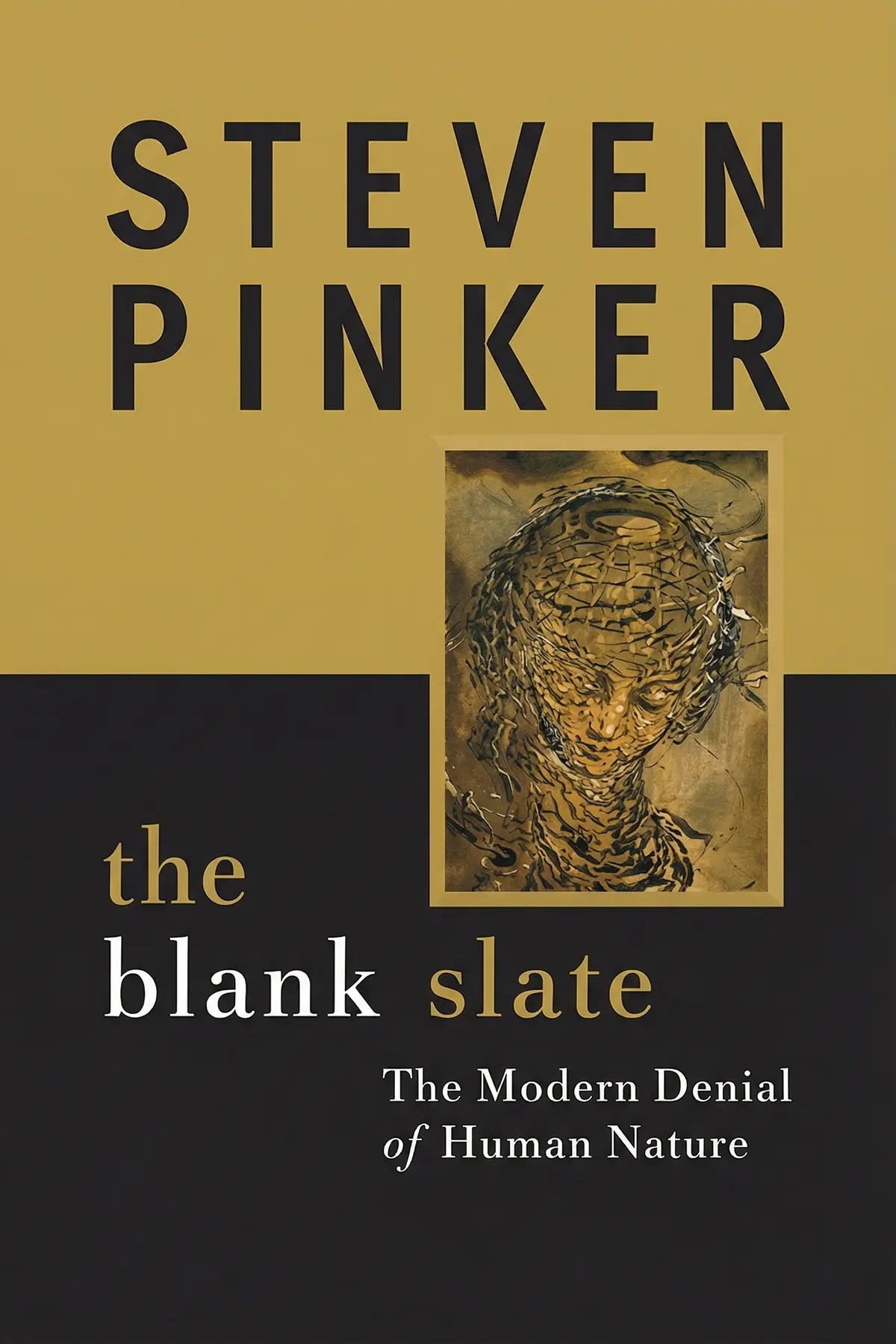
Table of Content
1. Introduction
59 sec
Most of us carry a rough theory of human nature, and it shapes how we raise children, judge strangers and argue about fairness. In The Blank Slate, Harvard psychologist Steven Pinker shows that the most popular theory of the last century gets the basics wrong: a baby’s mind is not empty. A small child soon builds sentences nobody has ever said to her, something no parrot repeating words can do, and twins raised apart grow up strikingly alike.
Pinker’s case is that the mind comes with an evolved structure, and that admitting this is safe. Inborn differences do not justify discrimination, explaining a behavior does not excuse it, and biology leaves plenty of room for meaning. Follow his argument and you gain a sturdier way to think about how far parenting reaches, where stereotypes and gut moral reactions come from, and why equality never depended on everyone being born the same.
2. Spot the three old myths about the mind
1 min 50 sec
Three thinkers from the 1600s and 1700s still shape how people explain one another at work and at home. A toddler learning to talk turns out to be the best evidence against the most popular of them.
3. What twins raised apart teach every parent
1 min 49 sec
Identical twins who grew up in different homes can end up with the same manners, the same math skills and even the same smoking habit. What that means for families is not what most parents expect.
4. Understand what a small genome really says about the mind
1 min 49 sec
When scientists finally counted human genes in 2001, the total came in far below expectations, and some saw vindication. A cartoon duck and a violinist’s left hand help explain why the celebration came too early.
5. Accept real differences and keep equality intact
2 min 01 sec
In the 1970s, evidence of inborn differences drew fire from the left and the right alike. The fear behind the anger was real, and Pinker’s response shows why it was aimed at the wrong target.
6. Separate explaining a behavior from excusing it
1 min 46 sec
If genes nudge some people toward violence, it can seem that blame and punishment lose their footing, and that life itself loses its point. Pinker thinks both worries rest on a simple confusion.
7. Spot how your brain builds stereotypes and moral gut calls
2 min 13 sec
A family decides to cook and eat their pet dog after it dies in an accident. Most people recoil instantly, yet struggle to say why. That gap reveals how an evolved mind sorts the world.
8. Real differences can make fairness easier to build
2 min 13 sec
Identical twins raised apart vote alike surprisingly often, and toddlers hit more than any other age group. Pinker uses findings like these to argue that people can accept different minds without giving an inch on equality.
9. Conclusion
1 min 20 sec
The Blank Slate ends up as an argument about honesty. For decades, thoughtful people defended an empty mind because it promised equality, and they feared what a full one might permit. Pinker’s reply is that the moral case never rested on that belief. Equality, responsibility and meaning all survive a mind that arrives with instincts.
Art gives the book a fitting last picture. Singing, dancing, painting and storytelling appear in every culture, and creativity may have helped our ancestors attract mates by signaling intelligence. When people say art is dying, Pinker suspects they are noticing the retreat of traditional beauty, the flowers and wide open views our evolved senses enjoy, in favor of Jackson Pollock’s splatters and atonal music. The art that ignores human nature is the art that is shrinking.
In daily life, the book supports a pause before acting on a gut verdict about a person or a group, long enough to ask what harm or evidence stands behind it. It also supports keeping two jobs apart when someone behaves badly: understanding the cause and holding them to account.
Human nature is no threat to a fair society. It is the material every fair society has to be built from.
About this book
What is this book about?
For much of the twentieth century, a comforting idea shaped thinking about people: that we are born as blank slates and become whatever parents, schools and society make of us. Steven Pinker argues that this view cannot survive the evidence, and neither can the myths of a noble savage or of a ghost inside the machine. Drawing on cognitive science and behavioral genetics, he shows how identical twins raised apart grow up alike, why a child's grasp of language proves the mind is far from empty, and how Eric Turkheimer's three laws divide the influence of genes, family and unique environment. He then takes on the fears that kept the blank slate alive: that inborn differences would justify discrimination, excuse crime or strip life of meaning. Readers get a clear account of what the evolved mind does well and where it misleads us, from fast stereotypes and gut moral reactions to political leanings, violence and differences between the sexes. Pinker's case is that a fair society does not need people to be identical, only to be treated justly.
Book Information
Who it's for
Parents and educators
Parents and teachers wondering how much upbringing really shapes a child.
Hoping to judge fairly
Managers and coaches who want a clearer view of why people differ and how to judge them fairly.
Tired of heated debates
Readers tired of heated nature versus nurture arguments who want the evidence laid out calmly.
About the Author
Steven Pinker
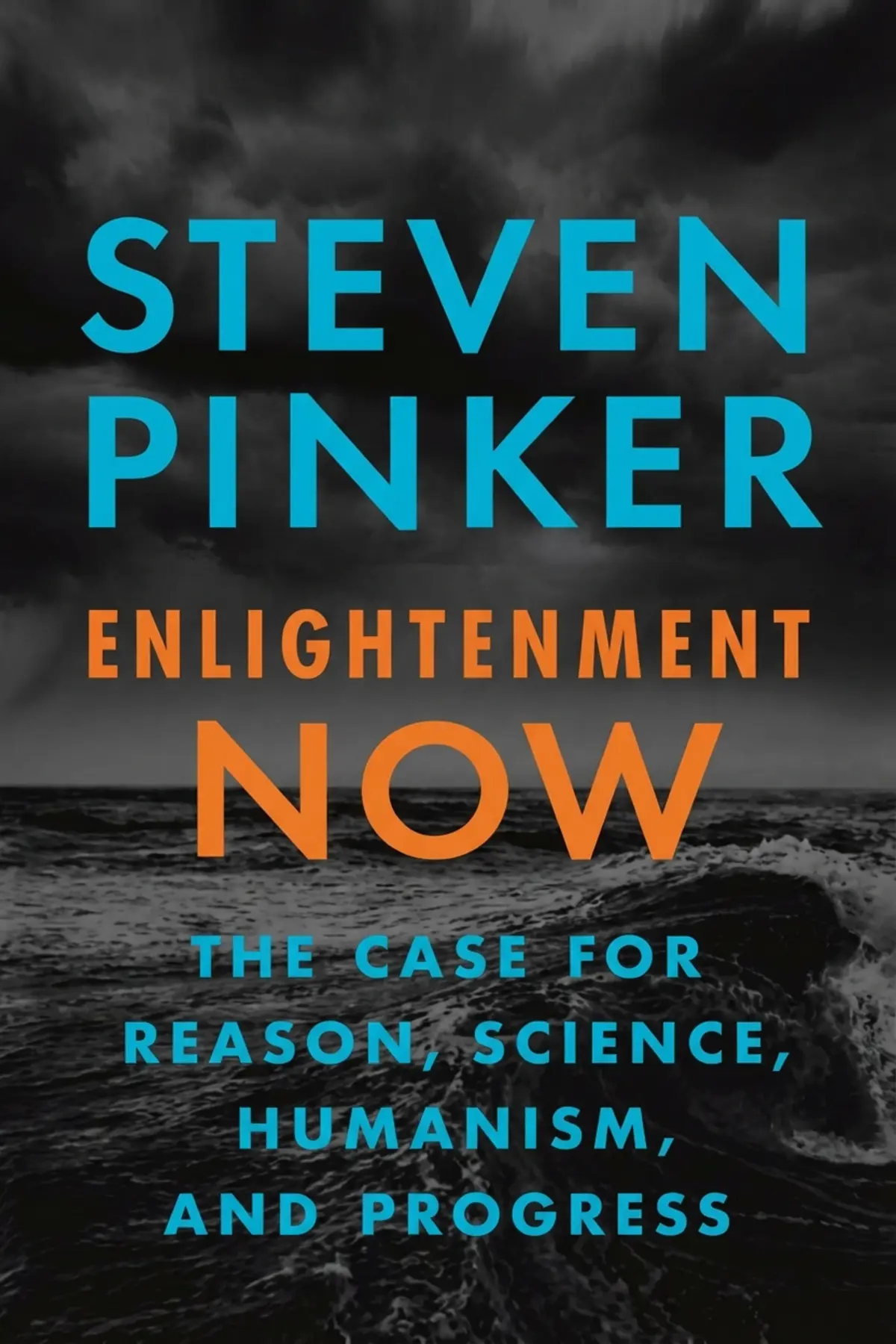
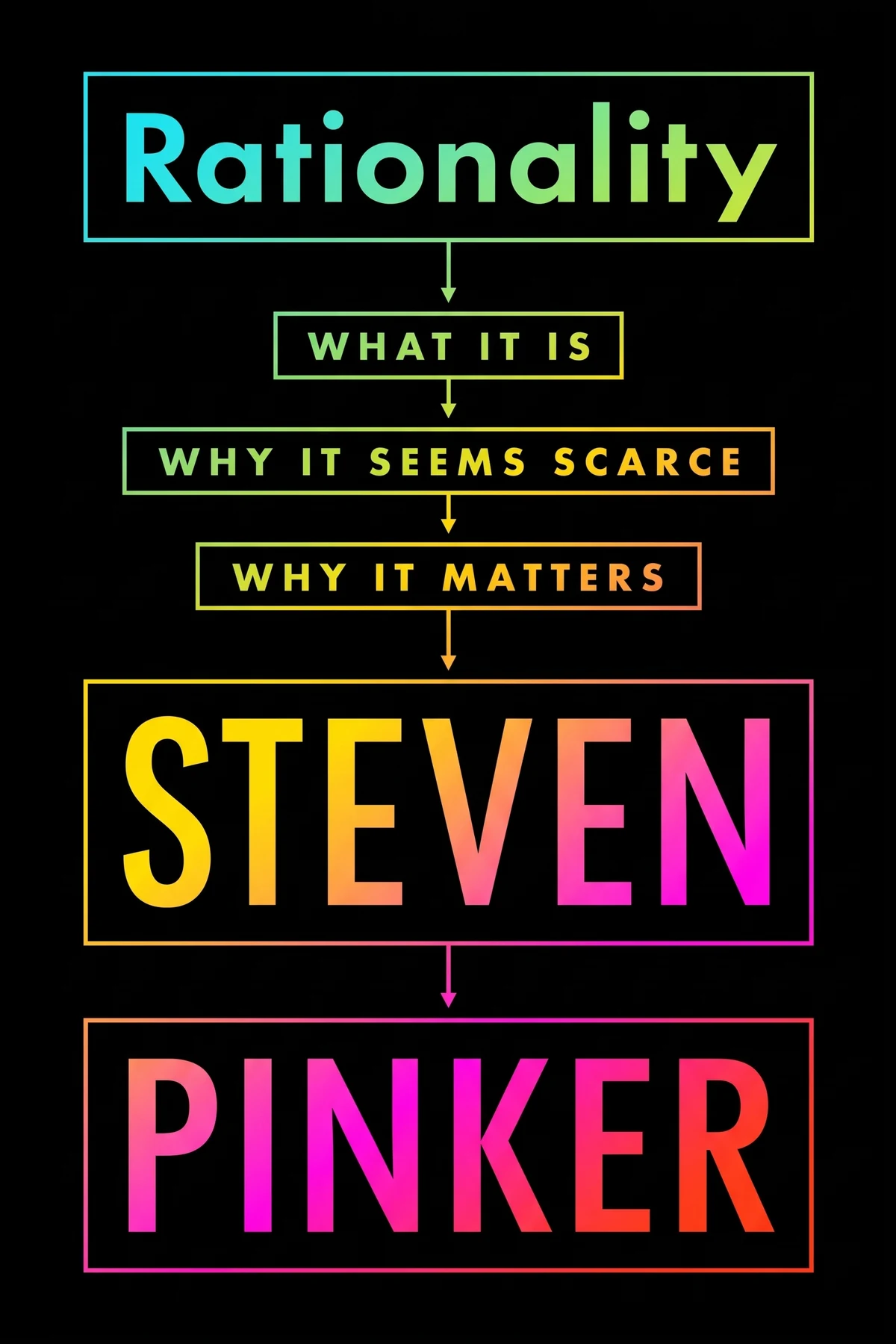
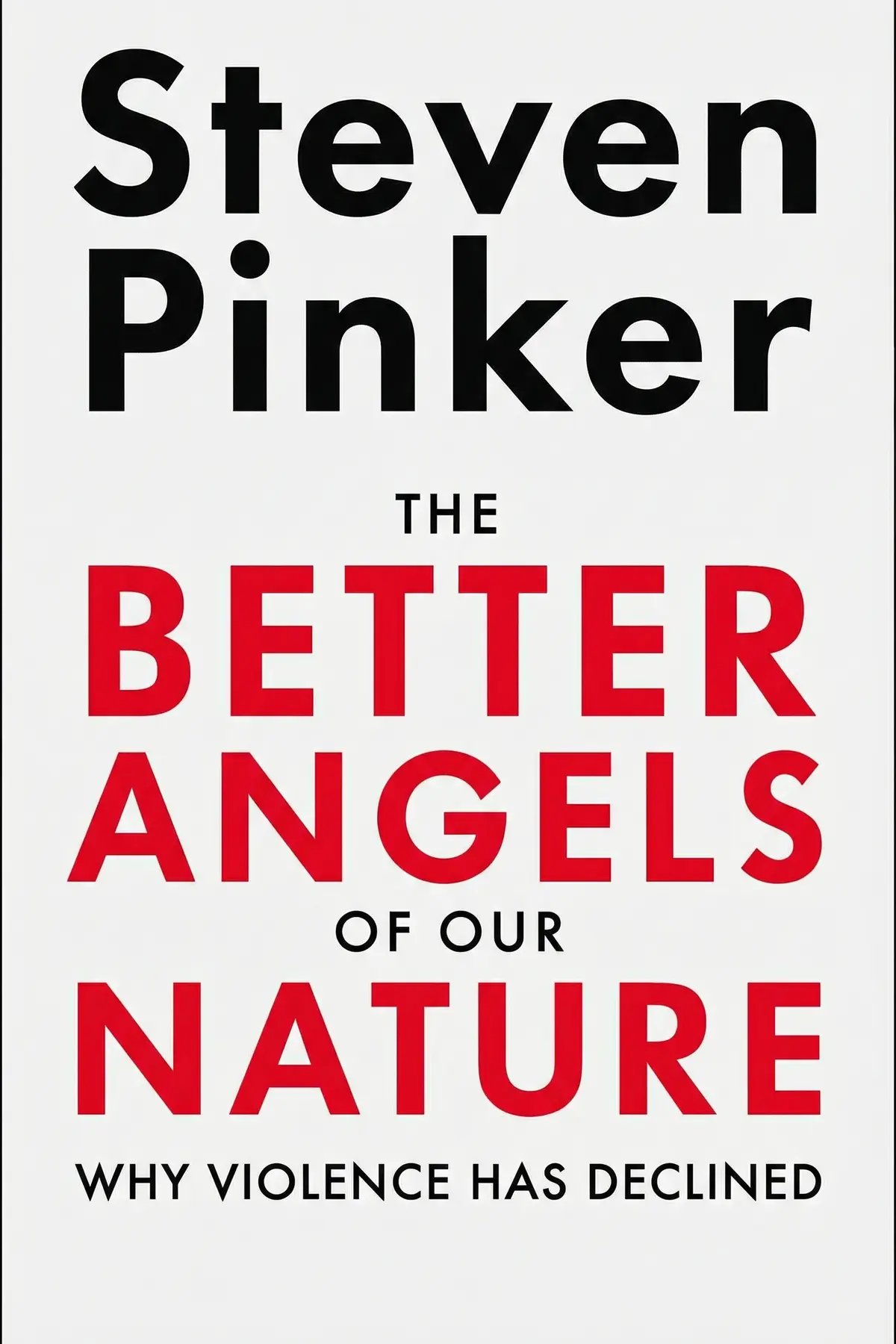
Steven Pinker was born in Montreal, and his Harvard doctorate in experimental psychology came in 1979. He taught at MIT from 1982 until 2003, then returned to Harvard as its Johnstone Family Professor of Psychology. His research covers language and cognition, including visual cognition and how children learn to speak. His books include The Language Instinct, The Better Angels of Our Nature and Enlightenment Now. Time listed him among the world's 100 most influential people in 2004, and he chaired the American Heritage Dictionary's Usage Panel from 2008 to 2018.
Ratings & Reviews
Ratings at a glance
What people think
Listeners find this book remarkably profound and thoroughly investigated, considering each section to be of high value. The prose is captivating, and one listener points out the clarity with which Pinker clarifies intricate ideas. Listeners characterize the work as exceptionally impressive, fascinating, and thought-provoking, offering persuasive points backed by data from diverse academic disciplines. They value the scholarly substance, as one review emphasizes how it addresses the persistent conflict between nature and nurture, while another mentions the way it is punctuated with literary references and humor.
Top reviews
Sienna
Steven Pinker takes the sledgehammer of evolutionary psychology to the delicate porcelain of the 'blank slate' theory with remarkable precision. It’s a dense read, yet he punctuates the deep dives into neurobiology with literary references and dry humor that kept me turning pages late into the night. He challenges the dogma that we are purely products of our environment, arguing instead that our genetic scaffolding plays a dominant role in who we become. I especially appreciated the way he navigates the ethical implications of these findings, showing that admitting we have an innate nature doesn't excuse social inequality or violence. While he can occasionally come across as a bit arrogant in his dismissals of 'standard social science,' the sheer volume of research cited makes his core thesis hard to ignore. It is a stimulating, masterfully written piece of non-fiction that feels more relevant every year.
Show moreAir
Ever wonder why certain human behaviors seem to pop up in every single culture, no matter how isolated? Pinker explores this through the lens of evolutionary psychology, systematically dismantling the myth that we are purely 'nurtured' into our identities. The writing style is engaging and accessible, managing to bridge the gap between heavy academic research and popular science. Frankly, his argument regarding the biological basis of sex differences was the most compelling part of the book for me. He uses data from botched medical cases to show how deeply ingrained our gender identity really is. It’s a thick volume, and some of the chapters on political theory drag slightly, but the intellectual payoff is massive. If you want to understand the modern consensus on human nature, this is the definitive starting point.
Show moreNaomi
Wow. This book was basically a religious experience for me as an atheist searching for a deeper understanding of the human condition. Pinker provides a framework for understanding our drives, our flaws, and our beauty without needing to invoke the supernatural. I found his discussion of the 'Noble Savage' myth particularly enlightening, especially regarding the history of violence in indigenous cultures. He backs up every claim with a mountain of evidence, yet the prose remains surprisingly fluid and easy to digest. Not gonna lie, some of the sections on genetics are a bit dense, but they provide the necessary foundation for his larger philosophical points. It’s a rare book that makes you feel both smaller and more connected to the rest of humanity at the same time. Truly a masterpiece of intellectual non-fiction.
Show moreManop
Truth is, we’ve spent decades pretending that biology stops at the neck, and Pinker finally provides a rigorous, scientific defense of an innate human nature. He tackles the big questions—violence, gender, parenting, and even art—with a level of detail that is honestly breathtaking. I was particularly moved by the stories of children who were raised as the opposite gender due to medical accidents; it’s a tragic but powerful proof of his thesis. He manages to be both a hard-headed scientist and a compassionate humanist throughout the text. While some of the technical bits about linguistics took a second reading, the overall narrative is incredibly cohesive and compelling. It’s one of those rare books that actually provides a new lens through which to view every interaction you have. Highly recommended for any curious mind.
Show moreTantipat
Picked this up after a friend mentioned it and was immediately struck by the breadth of fields Pinker draws from to build his case. He weaves together linguistics, genetics, and history to show that the mind has a complex, innate structure. The chapters are each like little gems, particularly the one on the 'Ghost in the Machine' which tackles our desire for a soul independent of the brain. I did find some of his rhetoric a bit polarizing, especially when he attacks long-dead academics to make his points. To be fair, he’s right that many of these old theories are flawed, but he beats the dead horses for quite a long time. Regardless of whether you agree with his politics, the scientific synthesis is undeniably impressive and well-organized. It’s an essential read for anyone interested in why we act the way we do.
Show moreEvelyn
The chapter on parenting was a total revelation, even if it was a bit hard to swallow at first. Pinker presents evidence that a child’s personality is shaped far more by genes and peer groups than by the specific parenting styles we obsess over. It’s a bold claim that likely makes many readers uncomfortable, but that’s exactly why this book is so valuable. He doesn't shy away from controversy; instead, he dives headfirst into the most contentious topics of our time. I appreciated the way he uses humor to lighten the mood when the biological determinism gets a bit heavy. My only real gripe is that he occasionally oversimplifies the 'nurture' side of the equation to make his 'nature' arguments look stronger. Still, the book is incredibly stimulating and will definitely change the way you look at human society.
Show moreLaor
As someone who usually prefers fiction, I was surprised by how much I enjoyed Pinker's literary flair and frequent references to classic authors. He makes a very convincing case that the 'Blank Slate,' 'Noble Savage,' and 'Ghost in the Machine' are three myths that have hindered our understanding of ourselves. The way he explains complex neurological concepts using everyday analogies is just brilliant. Look, he definitely has a specific agenda, and he isn't shy about mocking the 'politically correct' academics who disagree with him. That tone can be a bit off-putting if you're looking for a neutral textbook, but it certainly makes for an entertaining read. I especially liked the section on why we find certain things aesthetically pleasing based on our evolutionary history. It’s a long book, but it’s worth every minute for the insights it provides.
Show moreSirirat
After hearing so much about the 'science wars' of the 90s, I finally decided to read the book that supposedly ended the debate for many people. Pinker is an exceptionally gifted writer, making even the most complex genetic theories feel like a casual conversation. I enjoyed how he used humor to navigate the 'dangerous' ideas he presents, showing that understanding our nature isn't the same as justifying our worst impulses. To be fair, I think he’s a bit too quick to dismiss the impact of cultural systems, and his 'Pinker 2' persona can be a bit too polemical at times. However, the sheer volume of information from different fields—neuroscience, psychology, and history—is incredibly impressive. It’s a challenging but deeply rewarding read that forces you to re-examine your most basic assumptions about behavior.
Show moreBoy
I’m a bit conflicted because Pinker is clearly a brilliant communicator, but this book feels like a battle between two different authors. On one hand, you get 'Pinker 1,' the insightful linguist who explains cognitive architecture with clarity and wit. On the other hand, you have 'Pinker 2,' who seems more interested in scoring points against ideological opponents like 'gender feminists' and postmodernists. Look, the core idea that we aren't born as empty vessels is basically common sense at this point. However, he often relies on what feel like straw man characterizations of those who emphasize environmental factors. I found the section on the twin studies fascinating, but his dismissal of modern art as essentially 'crap' felt totally out of place and poorly supported. It's a well-researched book that is unfortunately bogged down by the author's own political biases and a somewhat patronizing tone.
Show moreSaengdao
While I agree with the basic premise that the 'blank slate' is an outdated concept, the way Pinker constructs cartoonish straw man arguments is just exhausting. He spends hundreds of pages railing against feminists and social scientists as if they all believe in some radical, 100% environmental determinism that nobody actually holds. It’s one thing to say biology matters, but it’s quite another to dismiss the entire field of sociology with such a condescending wave of the hand. Personally, I found his reliance on the Bouchard twin studies to be problematic given the criticisms those studies have faced over the years. He writes with an air of unassailable authority on topics, like modern art, where he clearly has no expertise. It felt less like a scientific inquiry and more like a lengthy political manifesto disguised as pop-science.
Show moreQuestions about this book
What is the main idea of The Blank Slate by Steven Pinker?
Pinker argues that the human mind is not an empty page shaped only by experience. It comes with an evolved structure that helps us understand the world and survive in it. Using evidence from language, twin studies and behavioral genetics, he rejects three old doctrines: the Blank Slate, plus the Noble Savage, plus the Ghost in the Machine. He then shows that accepting human nature does not threaten equality, moral responsibility or meaning.
What are the three laws of behavioral genetics in The Blank Slate?
Pinker draws on psychologist Eric Turkheimer, who proposed them in 2000. First, every measurable behavioral trait is partly heritable. Second, genes have a bigger effect than being raised in the same family, so even adopted siblings turn out very differently. Third, much of the variation comes from neither genes nor family but from each person’s unique environment. Current estimates put genes at 40 to 50 percent, shared family at 0 to 10 percent and unique environment at about 50 percent.
Does The Blank Slate say genetic differences justify inequality?
No. Pinker argues the opposite. Genes are far from the only factor in a person’s place in society, and if someone is born with a disadvantage, a just society should help them rather than discriminate. He also says explaining a behavior is different from excusing it, so laws and morality keep their purpose. On sex differences, he argues that men and women can have different minds without either being superior.
How can I apply the ideas in The Blank Slate?
Several habits follow from the book. When raising or coaching young people, remember that friends and surroundings matter alongside the home. Before acting on a strong moral reaction or a stereotype, ask what harm or evidence supports it, since the brain sorts quickly and moral emotions run ahead of reasoning. When someone behaves badly, understand the cause and still hold them responsible. When groups differ, look for every cause before choosing a fix.
Readers also enjoyed



A Liberated Mind: How to Pivot Toward What Matters
Steven C. Hayes


Acting with Power: Why We Are More Powerful Than We Believe
Deborah Gruenfeld


Age of Propaganda: The Everyday Use and Abuse of Persuasion
Anthony Pratkanis



AUDIO SUMMARY AVAILABLE
Listen to The Blank Slate in 15 minutes
Get the key ideas from The Blank Slate by Steven Pinker, plus 5,000+ more nonfiction titles.
- 5,000+ titles
- Listen as much as you want
- 7-day free trial
- Cancel anytime









