
14 min 32 sec
Available in: English
The Big Necessity: The Unmentionable World of Human Waste and Why It Matters
By Rose George
Shows why missing toilets kill more children than wars, why sanitation repays its cost several times over, and why embarrassment about the subject makes the problem even harder to tackle.
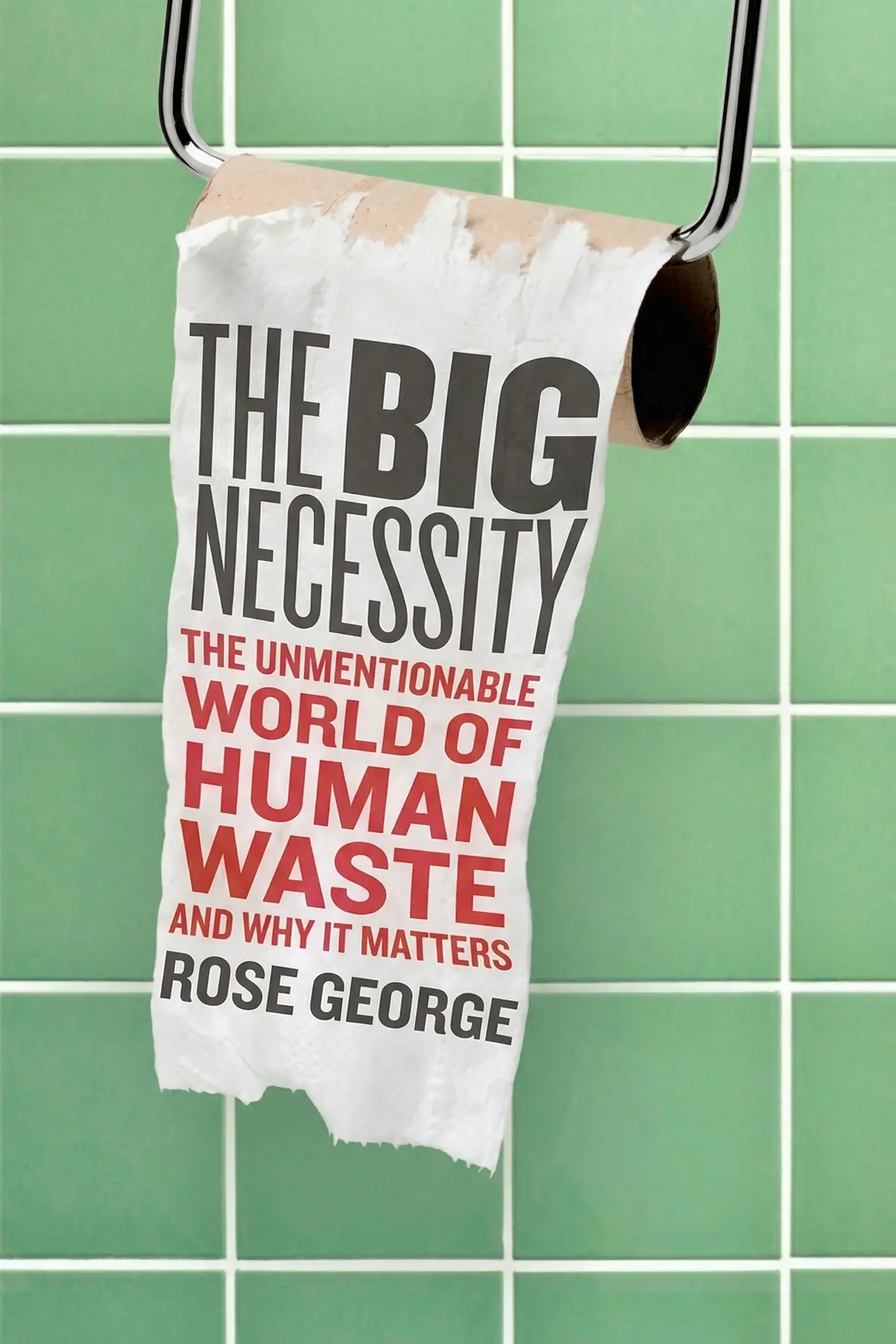
Table of Content
1. Introduction
58 sec
Most of us stop thinking about our own waste the moment we flush, and Rose George argues that this habit of not looking has a death toll. In The Big Necessity, the journalist reports that 2.6 billion people have no toilet of any kind, and that diarrhea, mostly spread through feces in food and water, kills a child every 15 seconds.
Her case is blunt. Human waste is one of the deadliest health problems on Earth and one of the best-value ones to fix, and it stays unfixed mainly because people will not talk about it. George follows the subject from slums to Victorian London, from a village in Bangladesh to the flooded subways of New York and the biogas tanks of rural China.
By the end, you will be able to explain why a simple toilet may matter more than most medicines, why good projects fail without the people they serve, and why the next fix starts with plain speech.
2. Measure the true cost of having no toilet
1 min 49 sec
Billions of people live without something most listeners never think about. The biology of what that means, gram by gram, turns a polite topic into one of the largest killers of young children anywhere.
3. Discover how a toilet outsaves most medical breakthroughs
1 min 51 sec
Readers of a leading medical journal were asked to name the most important medical innovation, and they passed over antibiotics and insulin. A cholera outbreak in Peru shows how expensive it is to ignore their answer.
4. Talk plainly so the money follows the problem
1 min 49 sec
There is no comfortable, neutral word in English for what happens in a toilet. That small linguistic gap, George suggests, helps explain why governments pour money into the wrong solution.
5. Change minds first, then build the latrines
1 min 50 sec
India built millions of latrines, and many stood empty. One consultant’s visit to a single village sparked a village-wide effort to change, and his approach was later taken up widely in India and elsewhere.
6. Spot the sewage crisis in wealthy cities
1 min 48 sec
One summer storm in New York stopped the subway in two hours. What happens to the city’s sewage when it rains reveals a problem the richest countries have barely begun to face.
7. Turn waste into light, heat and harvests
1 min 35 sec
Millions of rural households in China cook and light their homes with something the rest of the world pays to get rid of. The side benefits reach their fields and their forests.
8. Keep a good fix from falling apart
1 min 36 sec
Biogas looked like the perfect answer, until farmers started abandoning it and the forests began to shrink again. What went wrong points to the one step George believes must come first.
9. Conclusion
1 min 16 sec
What George builds is a reframing. One of the most effective medicines of the modern era is not a pill but a pipe, and its biggest obstacle is embarrassment. Poor sanitation kills more children than war, drains national budgets, floods subways and pours sewage into rivers, yet it struggles for money because officials would rather talk about water. Things did get better in places: nineteenth-century London gained toilets, sewers and hand-washing, and in Mosmoil change began once villagers saw how much waste surrounded them.
That points to a few things worth doing. When you read about global health or a city budget, check where sanitation sits on the list, and whether water is standing in for it. When you push for change at work, let people see the cost for themselves, as Kar’s villagers did when they counted their own waste, and plan for maintenance long after the launch. And at home, George offers one small habit: close the lid before you flush, since an open toilet sprays germs around the room.
Everyone does it, every day, for about three years of a lifetime. Speaking about it plainly may be the cheapest way there is to save a life.
About this book
What is this book about?
Most people stop thinking about their waste the moment they flush. Rose George argues that this habit of looking away has a body count. Billions of people have no toilet at all, diarrhea spread mostly by feces kills a child every 15 seconds, and even wealthy cities send sewage into nearby waters when it rains hard. George, a journalist drawn to taboo subjects, follows the problem from crowded slums to Victorian London, from a Bangladeshi village to the flooded New York subway and the biogas tanks of rural China. She makes three cases at once. Sanitation is arguably the most important medical advance of the modern era. It pays back about seven dollars for every one invested. And it keeps losing out in budgets because polite language lets governments and aid agencies fund something easier to mention. Readers come away with the numbers to explain why a toilet can matter more than most medicines, a model of change that starts with people instead of hardware, and a fresh view of waste as a source of energy, fertilizer and even medicine.
Book Information
Who it's for
Health, development, policy professionals
Professionals in health, development or policy who need clear numbers to argue for sanitation funding.
Change leaders without buy-in
Change leaders whose well-built projects keep failing because the people involved never bought in.
Curious about global health
Curious readers who want to understand a global health problem that polite conversation leaves out.
About the Author
Rose George
Rose George is a journalist who has written for The Guardian and The New York Times. Her books tend to take on subjects people ignore or find too awkward to discuss, including refugees, sanitation, shipping and blood. For Ninety Percent of Everything she traveled on a container ship, and under its UK title, Deep Sea and Foreign Going, it won the 2013 Mountbatten Maritime Prize. Her book on blood examines the taboo around menstruation and the fight for justice over contaminated blood products.
Ratings & Reviews
Ratings at a glance

What people think
Listeners find this work remarkably well-researched and superbly written, characterizing it as a captivating exploration of a challenging topic. Furthermore, they value its wit and entertainment factor, with one listener noting how it offers intriguing discussions of various global cultures. The book’s tempo also receives praise, as one listener highlights its impressive interviews.
Top reviews
Sirichai
This book changed how I look at my bathroom forever. It’s a bizarrely fascinating deep dive into a world we spend our entire lives trying to ignore. Rose George doesn’t hold back, taking us from the high-tech, musical 'Washlets' of Japan to the harrowing reality of manual scavengers in India who clean dry latrines with their bare hands. I was particularly struck by the 'Sludge Olympics' in the US; it’s such a weird, humanizing look at the people who keep our cities running. Truth is, our sanitation systems are modern miracles, yet they are crumbling from neglect because we’re too embarrassed to talk about them. The writing is punchy, the research is airtight, and the momentum never flags despite the heavy subject matter. It’s not just a book about waste; it’s about dignity and the infrastructure of civilization itself. You’ll never flush and forget again.
Show moreTariq
The sheer bravery of the author is what stuck with me most after finishing this. Whether she’s touring a sewage plant or drinking 'reclaimed' water that looks yellow and opaque to avoid offending her hosts, Rose George is a dauntless guide. She tackles the sexism inherent in sanitation—how it’s almost always 'women’s work' to deal with the household waste—with a fire that is both rare and welcome. The book is packed with fascinating nuggets of information, like how soybean paste is used to test toilet quality control. It sounds ridiculous, but it underscores the seriousness of the engineering involved. Frankly, we should all be more embarrassed by our ignorance than the subject matter. This is top-tier nonfiction that manages to be entertaining, educational, and deeply moving all at once. It’s a must-read for anyone interested in how the world actually works.
Show moreBoy
What we call a 'private matter' is actually a massive public failure, and George exposes it with incredible integrity. This book is a masterclass in how to write about a difficult subject without losing the reader’s interest. She explores the cultural taboos that keep us from fixing the sanitation crisis, especially for girls who drop out of school because they lack menstrual supplies and safe toilets. The reality of 'manual scavenging' and the caste system in India was heart-wrenching to read about, yet George handles it with such grace and empathy. On the flip side, the descriptions of the high-tech Japanese toilets provided some much-needed levity and a glimpse into a possible future. It’s an irresistible mix of science, history, and social commentary. Truly, it’s the most important book I’ve read this year. It makes the invisible visible and the unspeakable urgent.
Show moreFon
Few journalists can write about human excrement with this much dignity and wit. Rose George has produced an absolutely brilliant piece of reportage that is both disgusting and deeply enlightening. I was captivated by the history of London’s sewers and the 'flushers' who have to deal with everything from hardened concrete to live hand grenades. The book brilliantly illustrates that sanitation is not just about plumbing; it’s about human rights and gender equality. Seeing the '5F' diagram of how disease spreads was a real wake-up call regarding the fragility of our own health systems. Despite the subject, the pacing is fast and the storytelling is top-notch. It’s a fascinating read that tackles a global travesty with unflinching honesty and a much-needed sense of humor. If you care about how the planet survives the next century, you need to read this.
Show morePla
Ever wonder why we're so terrified of talking about what happens after we flush? This is a sober, essential examination of a global crisis that affects billions. George manages to balance grim statistics—like the sheer number of children dying from diarrhea—with an engaging narrative style that keeps you reading. I learned about the '5Fs' of fecal-oral contamination and the tragic history of Typhoid Mary, which gave the science a very human face. While the book is deeply researched, I did find the sheer volume of data a bit overwhelming in the middle chapters. However, her ability to sketch out the profiles of sanitation crusaders makes the text feel alive rather than just a dry report. It’s an eye-opening look at how the 'porcelain god' we worship in the West is a luxury much of the world is dying for.
Show moreLucia
Rose George has a remarkable gift for turning a stomach-churning topic into a genuine page-turner. This isn't just a gross-out book for shock value; it’s a brilliant piece of investigative journalism that highlights a massive structural failure in global development. The contrast between the robot toilets of the wealthy and the 'parachuting' bags used in slums is stark and unforgettable. I was impressed by how she interviewed people from all walks of life—from the 'flushers' in the London sewers to the Dalits in India. Personally, I found the chapter on biogas in China to be one of the most interesting discussions of how different cultures find utility in what we consider useless. The pacing is excellent, and she manages to weave in humor without diminishing the seriousness of the public health crisis. It’s a necessary, if uncomfortable, read.
Show moreKanchana
After hearing Rose George’s TED talk, I had to dive into the full text of what my friends now call 'The Poo Book.' It is an incredibly well-researched and sobering look at a topic that is too often treated as a joke. George makes a rock-solid case that sanitation is the single most critical development issue facing the world today. I was horrified to learn that more children have died from waste-related diseases in the last decade than people have died in wars since 1945. The book does a great job of explaining the 'plasticity of disgust' and why we find our own waste less offensive than that of others. My only gripe is that it feels a bit fragmented, jumping from London to India to China without a strong connecting thread beyond the subject matter. Still, the interviews are impressive and the call to action is undeniable.
Show moreAdam
To be fair, some of the statistics in this 2008 release feel a bit dusty now, which makes it harder to stay fully immersed in the global health arguments. I picked this up because I loved the author's later work, and her signature wit is definitely present here. She uses the word 'shit' with a refreshing lack of euphemism, though the constant puns can get a little tiresome after a while. My main frustration was the geographical gaps; she mentions some revolutionary ideas in Brazil but then completely abandons South America to focus elsewhere. The chapters on Japan and the London sewers were highlights, but other sections felt like they could have gone deeper into the history of the technology. It’s a solid, informative read, but it leaves you wanting a more updated and comprehensive version.
Show moreCameron
Picking this up, I expected a Mary Roach-style romp, but George is far more sober and focused on the policy implications of waste. That’s not a bad thing, but it does make for a denser read than the cover might suggest. The book is essentially a collection of deep-dive essays on different aspects of the 'watsan' (water and sanitation) world. While the interviews with sewer workers and toilet activists are fascinating, the narrative occasionally clogs under the weight of too many statistics. I would have loved to see more focus on the environmental impact of 'biosolids' as fertilizer, which felt like it was touched on but not fully explored. Got to say, the author’s dedication to the topic is impressive, but the structure felt a little disjointed at times. It’s a very good public health book, even if it’s not exactly a light summer read.
Show moreViroj
Look, I know this is an important subject for public health, but the level of graphic detail was just a bit much for me. I struggled to get through the descriptions of the manual scavenging in India and the conditions of the London sewers without feeling physically ill. The author is clearly talented and has done a mountain of research, but the tone oscillates between being overly academic and trying too hard to be funny with toilet puns. I also felt the book was quite repetitive in its message; once you understand that 2.6 billion people lack toilets, the point is hammered home in every single chapter. If you have a strong stomach and a professional interest in city planning, you might love it. For the average reader, it might be a bit of an information overload on a topic that is, let’s be honest, pretty unpleasant to dwell on for 300 pages.
Show moreQuestions about this book
What is The Big Necessity by Rose George about?
It is about human waste and why handling it badly is one of the world’s largest health problems. George reports that 2.6 billion people have no toilet, that diarrhea spread by feces kills a child every 15 seconds, and that even rich cities like New York discharge sewage into rivers. Her central argument is that the problem persists mainly because people find it too embarrassing to discuss.
Why does Rose George say sanitation is worth the money?
She cites estimates that every dollar invested in sanitation returns about seven through better productivity and lower health costs, and that $95 billion for worldwide coverage would save $660 billion. Peru’s 1991 cholera outbreak is her sharpest example: containing it cost $1 billion, while a sanitation system that could have prevented it would have cost $100 million.
What is Community-Led Total Sanitation?
It is an approach that grew out of Kamal Kar’s 1991 visit to the Bangladeshi village of Mosmoil for WaterAid. Instead of building latrines and hoping people would use them, Kar walked the village with residents and helped them calculate how much excrement surrounded them. The shock moved the whole village to act together, and the method later spread through India and beyond.
How can human waste be used as a resource?
George describes feces being turned into bricks and road material, and their nitrogen and phosphates feeding plants. Fecal transplants have helped patients with a severe bacterial infection recover. In China, 15.4 million rural households used biogas digesters for heating, lighting and fertilizer, though many farmers later abandoned them because the toilets needed maintenance they had not been trained to provide.
What practical advice does The Big Necessity give?
The book’s everyday tip is to close the toilet lid before flushing, because flushing with it open sprays germs around the room. More broadly, George’s cases suggest naming problems plainly so funding matches the real need, letting people see a problem’s cost for themselves before offering solutions, and planning for training and maintenance rather than only installing new equipment.
Readers also enjoyed

A Room of One’s Own
Virginia Woolf

Abolish Rent: How Tenants Can End the Housing Crisis
Tracy Rosenthal

Abortion: Our Bodies, Their Lies, and the Truths We Use to
Jessica Valenti



Afropean: Notes From Black Europe
Johny Pitts


All About Love: New Visions
bell hooks


A Biography of Loneliness: The History of an Emotion
Fay Bound Alberti
AUDIO SUMMARY AVAILABLE
Listen to The Big Necessity in 15 minutes
Get the key ideas from The Big Necessity by Rose George, plus 5,000+ more nonfiction titles.
- 5,000+ titles
- Listen as much as you want
- 7-day free trial
- Cancel anytime









