
10 min 46 sec
Available in: English
The Art of Social Media: Power Tips for Power Users
A practical guide to getting noticed on social media: choosing a name and photo that earn follows, writing posts people pass on, linking your blog to your profiles and running live broadcasts that look professional.
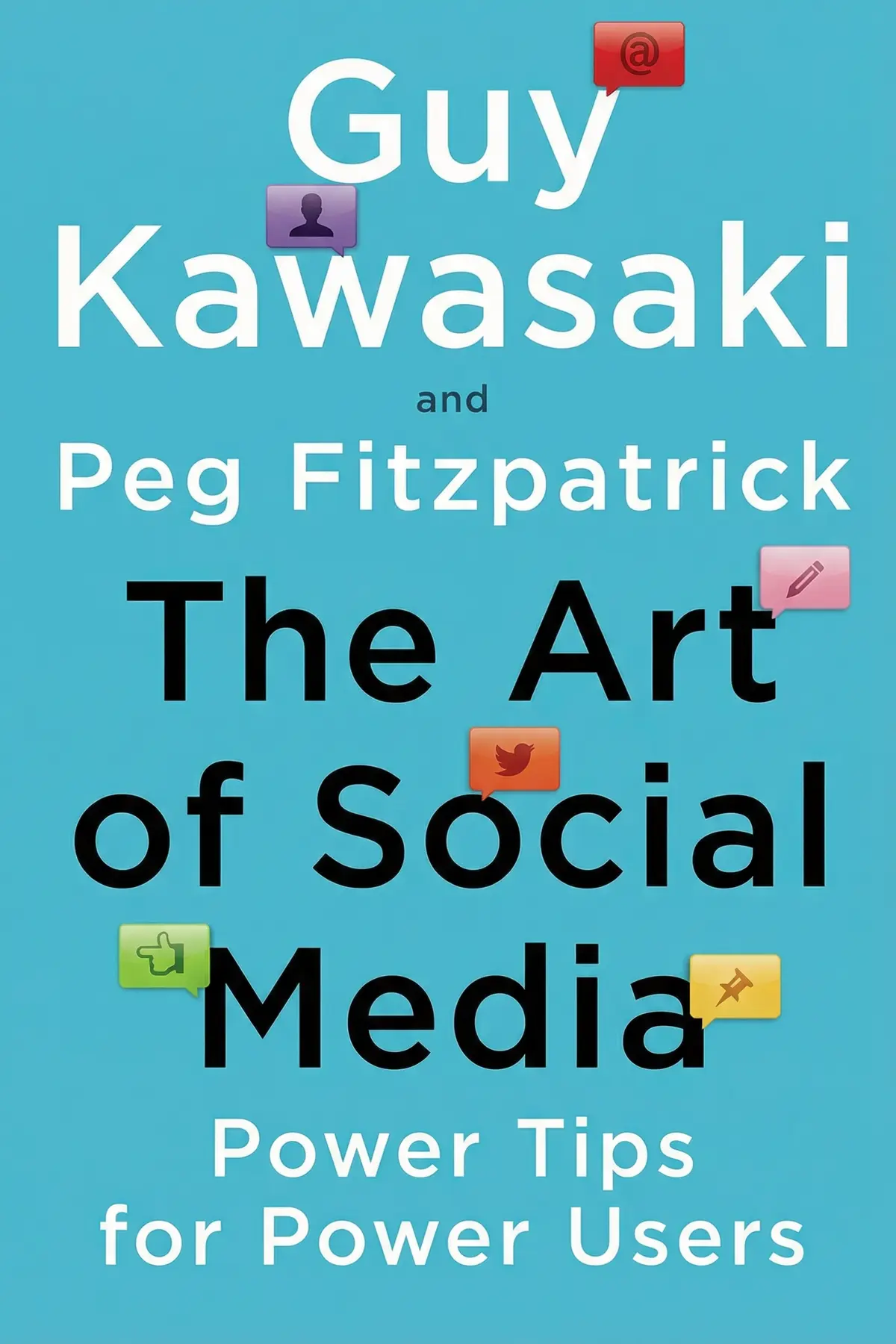
Table of Content
1. Introduction
58 sec
Plenty of people post every day and still speak to almost nobody, because posting and posting with purpose are different jobs. In The Art of Social Media, Guy Kawasaki and Peg Fitzpatrick argue that reach starts with details most users never think about: the name on your profile, the face in your photo and the title on each post. Their starting point is scale. Facebook alone counts some 1.3 billion users around the world, with Twitter not far behind, so a business that stays away is missing a huge audience.
Their case is that social media rewards people who treat it as professional work rather than a hobby. That means a credible identity, content people want to share, a blog and profiles that feed each other, and live formats prepared with care. What follows is a set of decisions you can make this week, from renaming an account to planning your first live broadcast.
2. Pick a name and photo that earn follows
1 min 53 sec
Strangers decide whether to follow you before they read a single post. Two tiny details settle that choice, and the clever option many people pick early can turn into an embarrassment years later.
3. Share what your audience already wants to pass on
1 min 46 sec
Millions of articles promise more followers, and most of them miss the one test that matters. A smartphone company that stops talking about phones shows where real interest comes from.
4. Write posts people stop scrolling to read
1 min 25 sec
A strong topic can still lose readers within seconds. The authors set a hard limit on length and name a few headline shapes they believe social media users find almost impossible to ignore.
5. Make your blog and profiles feed each other
1 min 52 sec
Running a blog and a social account side by side seems like enough. The authors show how wiring them together, and joining a group of fellow bloggers, can carry one post to millions of readers.
6. Host your own live show from home
1 min 46 sec
A television channel once needed a studio and a budget. The authors describe two live formats anyone can run, along with the small slips that make a broadcast or a public chat look amateur.
7. Conclusion
1 min 06 sec
Kawasaki and Fitzpatrick’s advice adds up to one change of attitude. The hours you spend online are work, and they deserve the care you would give any other professional output. A full name instead of a joke handle, a smiling photo, a post under 1,000 words with a picture and a clear title, a blog wired to your profiles, a live show with real lighting: each choice is small, and each one tells a stranger you are worth their time.
The authors call this going pro. If you make video, invest in the gear that makes it look professional. If you write, think your arguments through, then stay in the conversation by answering readers’ questions and comments. Followers recognize quality, the authors argue, and the ones who notice it help carry your work into their own networks.
So start where strangers start. Fix the name and the photo, then look at which of your posts people shared and write the next one for them. Reach, in this book’s view, is something you earn, one deliberate post at a time.
About this book
What is this book about?
Huge crowds gather on social networks every day. Facebook alone has some 1.3 billion users, and Twitter is not far behind. Yet many people and businesses post all the time and reach almost no one, because posting and posting with purpose are two very different things. Guy Kawasaki and Peg Fitzpatrick start with details most users skip: the screen name, the profile link and the photo strangers see before they decide to follow. From there they turn to content. They explain how to find out what your audience wants, where to find material on quiet days, and how length, images and titles keep readers' attention. The second half shows how to multiply reach. A blog and social profiles should promote each other, with sharing buttons, embedded posts, mailing lists and blogging networks that pass your work along. The authors also cover live formats that let you host a show from your own living room or run a public conversation on Twitter. Through all of it runs one instruction: go pro, and treat your hours online as serious work.
Book Information
Who it's for
Founders and business owners
Small business owners and founders who post regularly but see little reach.
Building a personal brand
Professionals building a personal brand who want a profile that looks credible to serious contacts.
Bloggers wanting more shares
Bloggers who want their posts shared more widely across social networks.
About the Author
Guy Kawasaki
Guy Kawasaki promoted the Macintosh to software and hardware developers at Apple and helped make evangelist an everyday marketing word. He later helped start Garage.com, served as chief evangelist of Canva and hosts the Remarkable People podcast. His books include Enchantment and The Art of the Start. Peg Fitzpatrick was Canva's first head of social strategy and has worked on social campaigns with brands such as Audi, Motorola, Google and Virgin. She is known for practical marketing advice for small businesses, and she tests the tips and tools she shares before recommending them.
Ratings & Reviews
Ratings at a glance

What people think
Listeners find this resource full of practical details, with one listener observing how it translates technical jargon into layman's terms. Furthermore, the work provides excellent advice for all facets of social media, is simple to digest, and explores various do's and don'ts of online platforms. The content is also overflowing with actionable steps, and one listener mentions that it features hyperlinks to the specific tools and sites recommended throughout. However, perspectives on the overall value are split, with some feeling it is worth every minute while others view it as a waste of money. Listeners also differ on whether the material is appropriate for beginners.
Top reviews
Weera
The chapter on creating a perfect profile was a total game-changer for my small business. I used to think social media was just about shouting into the void, but Kawasaki explains the technical terms in layman's terms so clearly that I finally felt empowered. This isn't just theory; it’s a practical manual filled with specific do's and don'ts for platforms ranging from LinkedIn to Google+. I especially loved the emphasis on using high-quality graphics to capture attention in a crowded feed. Not gonna lie, I was skeptical about whether a tech giant's advice would translate to my tiny shop, but the tips are surprisingly universal. It's a goldmine of information if you're willing to actually do the work.
Show morePong
Wow. As someone who is constantly overwhelmed by the sheer number of social media platforms, this book was a breath of fresh air. It’s jam-packed with actionable ideas that I could implement immediately, like changing my posting frequency and focusing more on visual storytelling. The way they explain technical terms in simple language is a gift for those of us who aren't naturally tech-savvy. I particularly liked the 'no-nonsense' approach—they tell you what works and what’s a waste of time without any corporate jargon. To be fair, it’s a quick read, but I’ve found myself referring back to it multiple times this week alone. It really is an indispensable manual.
Show moreJin
Frankly, if you're an author or entrepreneur looking to get noticed, you need to read this book immediately. Guy Kawasaki’s experience as a 'Chief Evangelist' shines through every page, offering a level of branding insight that few other authors can match. The collaboration with Peg Fitzpatrick was a brilliant move, as she provides the 'boots on the ground' tactics that make the strategies actually work. I loved the section on hashtags; I finally understand how to use them without looking like a spammer! Some people might find it too basic, but I think the simplicity is its greatest strength. It’s a clear, practical roadmap for building a digital legacy without losing your mind in the process.
Show moreSam
Ever wonder why some people just seem to 'get' the digital landscape while others flounder? Guy Kawasaki and Peg Fitzpatrick break down the mystery into bite-sized, actionable steps that even a total novice can follow. I specifically appreciated the focus on visuals and graphics, as I always struggled with what to post on Pinterest versus Twitter. The book includes numerous links to tools and sites, which makes the e-book version far superior to the print copy. While some of the advice feels a bit basic if you've been on social media for years, the 'do’s and don’ts' list is worth the price alone. It’s a fast read, jam-packed with no-nonsense advice for anyone looking to build a brand.
Show moreTak
This book is like having a mentor sit down and tell you exactly what not to do so you don't look like an amateur online. I picked this up because I wanted to improve my professional presence, and the advice on LinkedIn etiquette was exactly what I needed. Guy and Peg have a very direct, punchy writing style that makes complex digital strategies feel accessible and even fun. I'll admit that I preferred the electronic version because the hyperlinks allowed me to explore the recommended tools instantly. There’s a lot of 'evergreen' wisdom here about human connection that transcends the specific platforms. It’s not a deep academic study, but it is a very effective field guide for the modern entrepreneur.
Show moreAhmed
Not what I expected, but in a good way! I listened to the audiobook version first, which was great for getting the general concepts down, but I quickly realized I needed a physical copy for the lists. The book covers everything from profile optimization to content curation, and it’s all presented in a very easy-to-digest format. I noticed some reviewers complained about the 'pain in the ass' comment, but I took it as a prompt to be bold and not blend into the background. While the focus on certain platforms feels a bit lopsided, the core principles of engagement and sharing value remain incredibly relevant. It’s a great companion piece to Kawasaki’s other work like APE.
Show moreBenjamin
Look, this is a decent enough starting point if you are a complete beginner who doesn't know a hashtag from a handle. However, if you've spent more than a week on Facebook, a lot of this will feel like common sense or stuff you’ve already seen elsewhere. I found the heavy promotion of his own news aggregator and Canva to be a bit distracting after the third or fourth mention. To be fair, the section on Pinterest was quite thorough and offered some new perspectives I hadn't considered. It’s a slim volume that you can breeze through in an afternoon, but the value for money is questionable. If you can get it for free or at a discount, it's worth a skim.
Show moreChatchai
Finally got around to reading this, and while I enjoyed the casual tone, it felt a bit like a missed opportunity. The authors are clearly experts, but the book spends too much time on the 'what' and not enough on the 'why' behind social media strategy. I was particularly bothered by the superficial treatment of serious issues like online harassment, which is a major concern for anyone building a public profile. On the plus side, Peg Fitzpatrick’s contributions are fantastic and provide a much-needed practical balance to Guy’s high-level evangelism. It’s a helpful resource for writers or creators who are starting from zero, but seasoned pros will likely find it lacking.
Show moreOrm
After hearing so much about Guy's previous work like APE, I went into this with incredibly high expectations that sadly weren't met. The structure feels somewhat sloppy and rushed, lacking the deep strategic insights I was hoping for as someone who already works in marketing. My biggest gripe is the suggestion that if you aren't being a 'pain in the ass,' you aren't doing it right; that’s a dangerous philosophy for professional networking. Important topics like handling social media abuse or the ethics of follower purchasing were glossed over far too quickly. Truth is, it feels more like a long blog post than a fully fleshed-out book. There are gems from Peg Fitzpatrick regarding her workflow, but they are buried under too much fluff.
Show morePacharapol
Honestly, I felt like I was reading a 200-page advertisement for Guy’s favorite tools rather than a strategic guide. The book is incredibly thin on substance, relying on screenshots and links to pad out the pages instead of offering real insight. It’s particularly disappointing given his background at Apple; I expected something revolutionary, not a list of 'power tips' that are now largely outdated. For example, the extensive praise for Google+ feels like a relic of a different era and makes the book hard to recommend today. It’s frustrating to pay full price for a book that spends so much time telling you to go watch his LinkedIn videos instead. Save your money and just follow some marketing blogs for free.
Show moreQuestions about this book
What is the main idea of The Art of Social Media?
Guy Kawasaki and Peg Fitzpatrick argue that social media is a strong way to promote a business, but only if you treat it as professional work. That means a clear name and photo, content your audience wants to share, a blog and profiles that promote each other, and live broadcasts prepared with proper equipment. Their closing advice is to go pro rather than treat time online as a hobby.
What screen name and profile picture do Kawasaki and Fitzpatrick recommend?
They recommend your own full name, since clever handles like MartiniMom can become embarrassing when you want serious business contacts. Claim a vanity URL with your name so your profile is not just a string of numbers. For the photo, choose one where you are smiling and your face is clearly visible, so you look likeable, trustworthy and competent and people can tell the page is really yours.
How do you write social media posts people share?
First learn what your audience wants by checking which of your posts were shared most. Write some original pieces on topics with wider appeal, like a phone company writing about the 100 best Android apps of 2014. Keep posts under 1,000 words, add a photo, graphic or video, and use catchy titles that start with How to, Top 10 or The Ultimate.
How can I connect my blog to my social media accounts?
Promote each on the other. Add sharing buttons with ShareThis.com, let readers tweet your content with ClickToTweet.com, embed your social posts in the blog and turn on social logins. A mailing list reaches readers who do not use social media, and blogging networks such as Triberr.com get fellow bloggers sharing your posts, which the authors say can reach millions.
Who should read The Art of Social Media?
It suits small business owners, entrepreneurs and professionals who want more reach from the time they already spend online. The advice is practical and specific: what to name your profile, how long posts should be, which tools add sharing buttons and how to run a live broadcast or a Twitter Chat. It is less useful for readers looking for theory about how social networks shape society.
Readers also enjoyed


AUDIO SUMMARY AVAILABLE
Listen to The Art of Social Media in 15 minutes
Get the key ideas from The Art of Social Media by Guy Kawasaki, plus 5,000+ more nonfiction titles.
- 5,000+ titles
- Listen as much as you want
- 7-day free trial
- Cancel anytime









