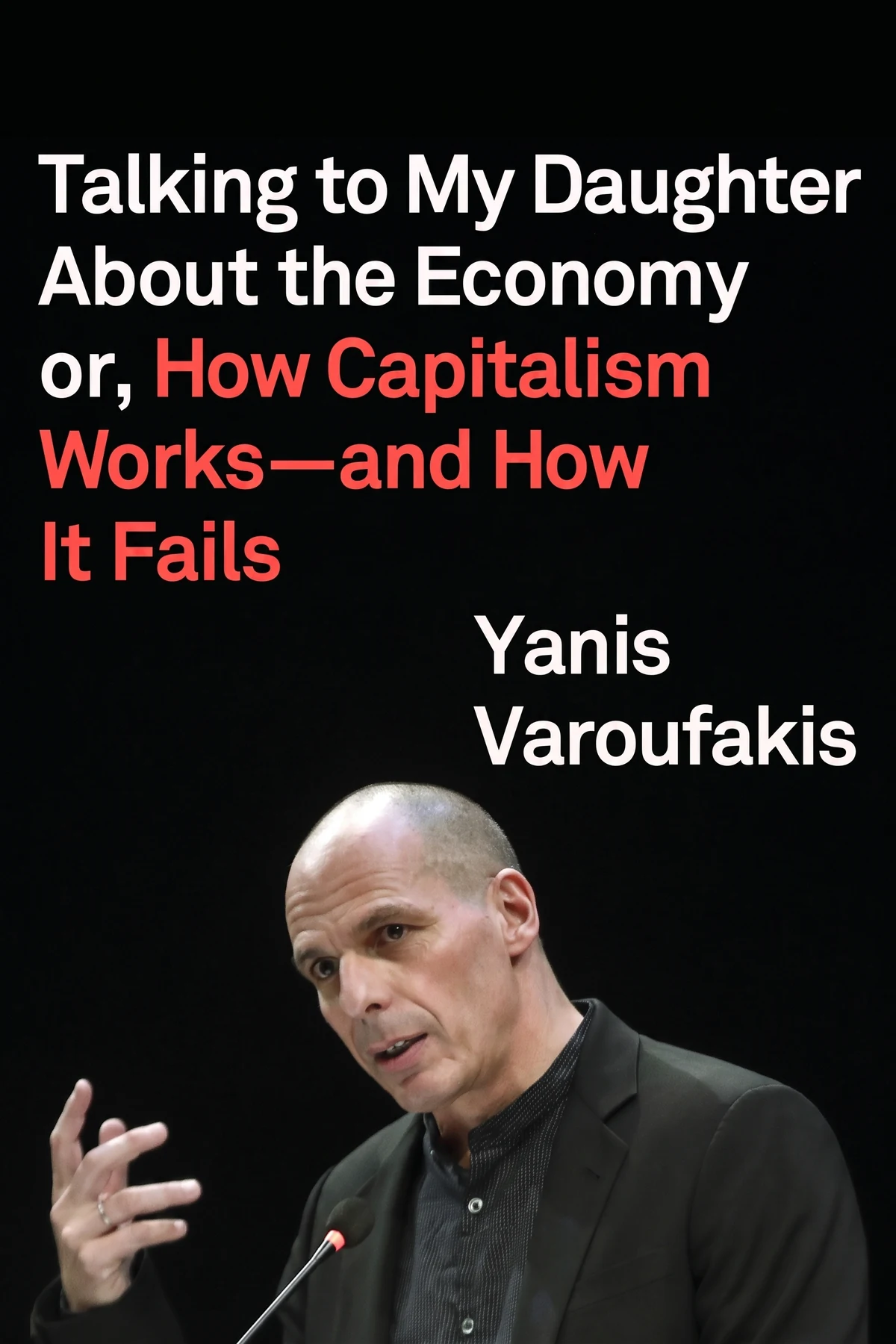
Adults in The Room: My Battle With Europe’s Deep Establishment
Yanis Varoufakis
 English
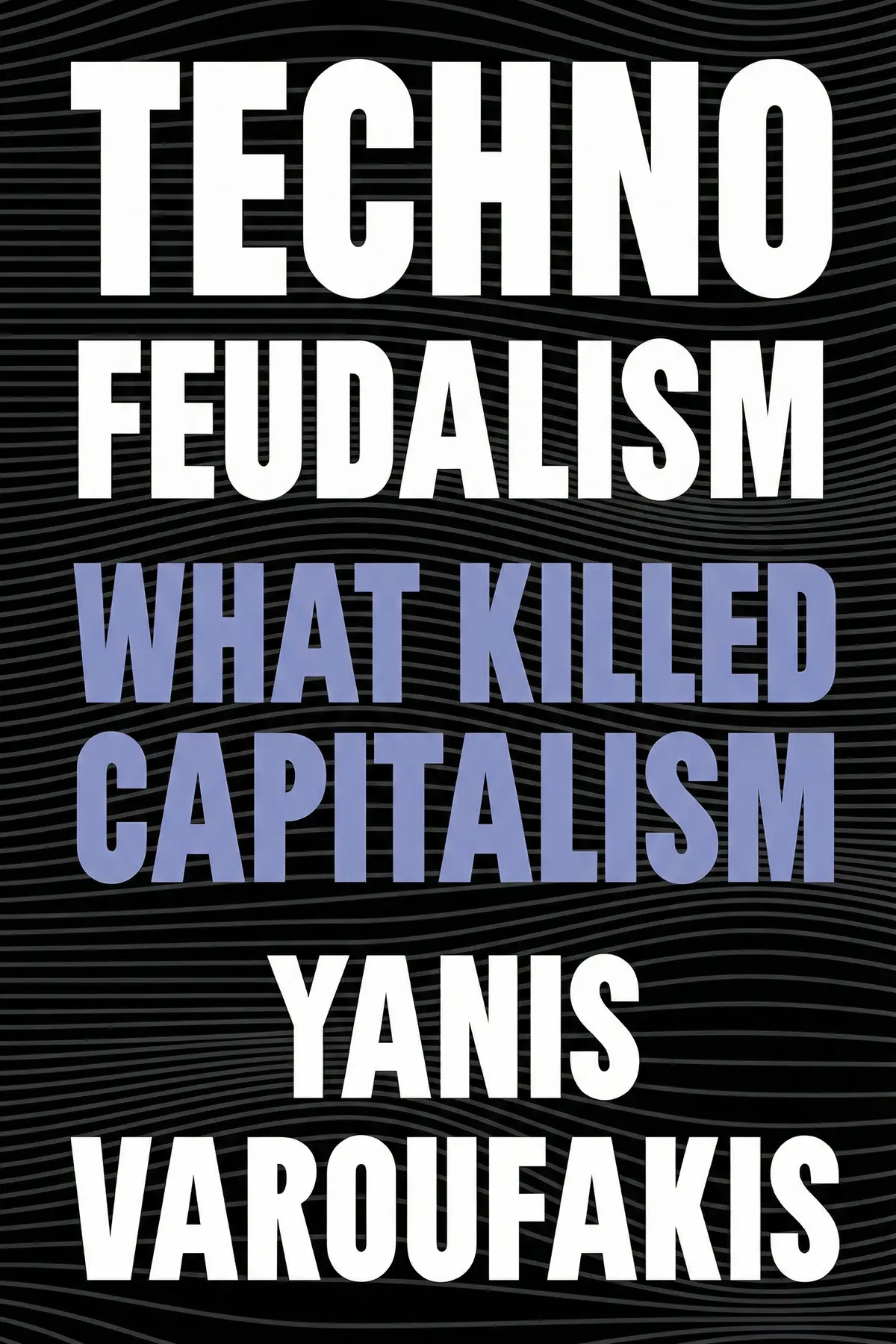
Varoufakis explains why Amazon, Google and other tech giants behave more like medieval landlords than capitalists, and how the money printed after 2008 helped them turn businesses into rent-paying vassals and users into unpaid serfs.
1 min 04 sec
If you sell anything online, post anything or simply own a smartphone, you probably assume you live under capitalism, with its markets, competition and profit. In Technofeudalism, economist and former Greek finance minister Yanis Varoufakis argues that this assumption is out of date. Much of economic life now runs on rent, collected by a few tech companies that own the digital ground everyone else stands on. Workers never overthrew capitalism, in his telling. It was demoted, and the blow came from the very rescue meant to save it after the 2008 crash.
Varoufakis builds that case from a few plain definitions, a walk through an imaginary town owned by one man, and a hard look at where trillions of central bank dollars went. Follow his argument and the apps on your phone get a new vocabulary: lords, vassals, serfs and the rent that flows between them. It also changes how you judge your own work, your business and the hours you spend online.
2 min 07 sec
A city where one man owns every bench and the shop windows change for each passer-by sounds like fiction. Varoufakis uses it to show what has really replaced the marketplace you think you shop in.
2 min 16 sec
A grocer lies awake when a rival opens down the street, while her landlord sleeps soundly. That small contrast holds the distinction Varoufakis needs to explain who really holds power today.
2 min 14 sec
Tech giants give away search results, employ tiny staffs and can go years without profit. Varoufakis argues they are building something other than products, and you are using it every day.
2 min 10 sec
A firm can be profitable, well run and loved by customers, and still vanish overnight. Varoufakis explains who holds that switch, and why dog walkers and street vendors answer to it too.
2 min 04 sec
Posting a holiday photo or arguing in a comment thread feels like leisure. Varoufakis finds a medieval name for it, and it explains how tech giants spend so little on wages.
2 min 05 sec
Central banks created trillions of dollars to save capitalism after the financial crisis. Varoufakis follows where that money actually went, and the trail ends somewhere its designers never intended.
1 min 22 sec
In 1993, as Varoufakis helped his father get online for the first time, the old man asked whether connected computers would make capitalism impossible to overthrow or would prove its weak point. His son’s answer is the second, with a twist. No revolution came. The network became the land of a new class of lords, and the money that built their estates came from the governments trying to save the old order.
Once you see it this way, ordinary things look different. A shop window that rearranges itself for you is a fief. A seller handing over half of each dollar is a vassal paying rent. Your evening of posting and scrolling is a harvest someone else collects. Profit and competing markets, the forces Adam Smith trusted to make nations rich, no longer set the rules.
The book supports a few habits of attention. Before you build a business or a career on one platform, measure how much of it the platform could take away. When an app becomes hard to leave, recognize the lock-in for what it is. And when cheap money floods an economy, watch whether it builds anything or simply raises the rent.
Capitalism survived its enemies, Varoufakis argues. It did not survive the rescue its friends designed.
Most of us still describe the economy in the language of capitalism: markets, competition and profit. Yanis Varoufakis argues that this language no longer fits. Behind the shop windows of Amazon, the feeds of Instagram and the matching software of Uber, he sees an older logic coming back. That logic is rent, collected by those who own the ground everyone else needs. Varoufakis builds his case from plain definitions of capital, profit and rent, and from Adam Smith's warning about landlords. He then follows the money printed by central banks after the 2008 crash, which flowed into assets and into the companies building what he calls cloud capital. Cloud capital is a machine for capturing attention and shaping behavior, not for making goods. Readers get a new vocabulary for the digital economy: lords who own the platforms, vassal companies that pay up to half their revenue for access, and users whose posts and clicks are unpaid labor. They also get a sharper way to judge their own business, career and screen time.
Founders and online sellers who hand a large share of every sale to a platform.
Professionals curious why tech giants earn so much while making so little.
Readers who want to understand what the money printed after 2008 actually built.
Yanis Varoufakis, born in 1961, is a professor of economic theory at the University of Athens and has taught at King's College London, Cambridge and the University of Sydney. He was Greece's Minister of Finance in 2015, when he became internationally known for opposing the austerity imposed by the European Union. He co-founded DiEM25 and the Progressive International, and he wrote Adults in the Room and Talking to My Daughter About the Economy.

Listeners find the book's encyclopedic content deeply researched and thought-provoking; one listener specifically notes that it offers an easy-to-follow history of economic principles. Beyond the information provided, they value its entertainment factor and perceive the author as patient in clarifying concepts from an external perspective. On the other hand, opinions are split regarding its value for money, as one listener found it not worth the investment.
Varoufakis has a talent for taking the dense, intimidating machinery of global economics and stripping it down to its chassis. By tracing the 'Historical Materialism' of our age, he argues we aren't even living in a capitalist society anymore. It sounds hyperbolic until you look at how Amazon or Google actually function. They don't just sell things; they own the digital ground we stand on. This book is a patient, well-researched guide through the wreckage of the 2008 crash and the rise of 'cloud capital.' While the ending felt slightly rushed, the core thesis is undeniably thought-provoking. It’s rare to find an economic text that feels this urgent and alive. I feel like my understanding of power has completely shifted.
Show moreWow, this was an emotional rollercoaster of an essay that actually made me feel something about macroeconomics. I went from anger at how Amazon exploits its workers to a weird kind of hope that we might actually be able to reclaim the 'commons.' Varoufakis writes with such passion and clarity that even the most complex ideas, like reinforcement learning or the Global Minotaur, feel accessible. He doesn't just describe the problem; he points a finger at the culprits and explains exactly how they rewired the world. It’s the first time an economic analysis has made me feel both smarter and more terrified. Absolutely essential reading for anyone living in the 21st century.
Show moreLook, if you’re trying to make sense of why the world feels so broken despite all our technological 'progress,' you need to read this. Varoufakis maps out the demise of capitalism with the precision of a surgeon. He explains how the 'Global Minotaur' of US debt and the rise of cloudalist monopolies have created a world where rent-seeking is king. It’s a stunning geopolitical narrative that connects the dots between Wall Street, Silicon Valley, and the new Cold War. The way he describes us as 'cloud serfs' providing free labor to tech giants is a perspective I won't forget anytime soon. This is easily one of the most important books of the year.
Show moreEver wonder why you spend hours creating content for free just to line the pockets of a billionaire? This book provides the answer, framing us all as 'cloud-serfs' in a new digital fiefdom. It’s an entertaining read that doesn’t require a PhD in economics to follow, which I really appreciated. Varoufakis is great at using metaphors to explain how 'cloud capital' has replaced traditional machinery. I did find the parts about the 'Nixon Shock' a bit long-winded, and he definitely repeats himself. However, the way he links the 2008 crash to our current tech addiction is eye-opening. Not perfect, but definitely a conversation starter for your next dinner party.
Show moreAfter hearing so much hype about this, I was worried it would be too academic, but it’s actually very readable. The author is remarkably patient in explaining how we moved from the industrial era to this weird post-capitalist state. I loved the breakdown of how Jeff Bezos doesn't just want profit—he wants to own the very marketplace where others trade. It’s a chilling narrative that explains our current geopolitical tensions with China much better than the nightly news does. My only gripe is that his solutions at the end feel a bit 'milquetoast' and unrealistic. Still, it’s a thought-provoking piece that is well worth the money.
Show moreFinally got around to finishing this, and I’ve got to say, it’s a lot more than just a catchy title. While I agree with some critics that the bibliography is thin, the actual logic of the 'technofeudal' shift is hard to argue with. He does a great job of showing how traditional capitalists are becoming vassals to the owners of cloud capital. The writing is punchy and moves fast, though he does get bogged down in his own metaphors occasionally. It’s a solid 4-star read that offers a much-needed lens for viewing the current economic landscape. I just wish he’d given more credit to the female thinkers who paved the way.
Show moreAs someone who isn't an economist, I appreciated how Varoufakis used metaphors to explain things like the 'Nixon Shock' and 'cloud capital.' It’s a narrative-driven history that helps you understand why our current era feels so fractured and strange. He makes a strong case that we are now 'cloud-serfs' to people like Musk and Bezos. I did find the second half a bit repetitive, and some of the technical explanations of neural networks were slightly shaky. But overall, it’s a necessary read for anyone trying to figure out where the power actually lies. It made my brain grow, even if it also made me feel a bit fatalistic.
Show morePersonally, I found the core argument about 'rent-seeking' vs 'profit' to be the most compelling part of the entire book. Varoufakis explains how the tech giants are essentially digital feudal lords, collecting tribute rather than competing in a fair market. However, I can’t ignore the lack of proper referencing throughout the text. It’s a bit dishonest to present these ideas as entirely original when so much of it leans on existing Marxist critiques. The writing style is entertaining, but at times it feels like he’s just babbling to hear his own voice. It’s a decent introductory text, but don’t expect a rigorous academic bibliography here. A bit of a mixed bag for me.
Show moreThe chapter on how cloud-based algorithms have replaced market competition was brilliant, but the rest of the book felt a bit scattered. Varoufakis tries to cover too much ground, moving from his parents' struggles in Greece to the intricacies of TCP/IP protocols. I found myself skimming the middle sections because the connections between these 'unrelated' topics felt a bit forced. He also seems to downplay the fact that people actually enjoy using platforms like TikTok and Facebook for their 'use value.' It’s a provocative thesis, but I’m not entirely convinced that capitalism is dead. It feels more like capitalism has just found a new, more efficient way to be horrible.
Show moreTo be fair, the title is the only truly clever thing about this entire production. I went in expecting a groundbreaking analysis of Big Tech, but instead, I got a series of superficial ruminations that any layman with a Twitter account could have written. The author jumps from Einstein to the 2008 market failure without ever tying these threads into a coherent whole. Most frustratingly, he seems to ignore the work of scholars like Shoshana Zuboff, essentially 'borrowing' her concepts of surveillance without giving an ounce of credit. It feels like an unproductive venting session for people who are already angry at the world. It’s certainly not worth the investment of time if you want actual data or rigorous citations.
Show moreVaroufakis uses the word for an economic order in which Big Tech companies act like medieval lords. They own cloud capital, the platforms and algorithms that capture our attention, and they charge rent for access to it. Businesses become vassals that pay fees of up to half their revenue, and users become serfs whose posts and clicks create value for free. Capitalism still exists, he argues, but it now ranks below this new system.
Profit comes from using capital, such as tools and factories, to produce goods that are sold in competitive markets, so rivals can compete it away. Rent comes from owning something others need, like land, and competition barely touches it. A grocer worries about new shops, while her landlord earns more as demand for property rises. Varoufakis argues Big Tech earns rent, which makes it feudal rather than capitalist.
After 2008, central banks created around $35 trillion and cut interest rates to almost zero, while governments imposed austerity that weakened demand. The money went into assets such as property, art and stocks instead of new production. It also funded tech firms: Varoufakis reports that nine in ten dollars behind companies like Facebook came from central banks. Big Tech spent it on cloud capital, building the digital fiefs.
The book suggests some practical checks. If you sell through a platform, calculate what share of each sale it keeps, since that is your rent. Ask how much of your business would survive if one company delisted you. Notice when an app is hard to leave because it knows you so well. And when you hear about an economic stimulus, ask whether the money will build things or inflate rent-earning assets.




Andrew Ross Sorkin

Ha-Joon Chang
Niall Kishtainy


William J. Bernstein
AUDIO SUMMARY AVAILABLE
Get the key ideas from Technofeudalism by Yanis Varoufakis, plus 5,000+ more nonfiction titles.