

14 min 12 sec
Available in: English
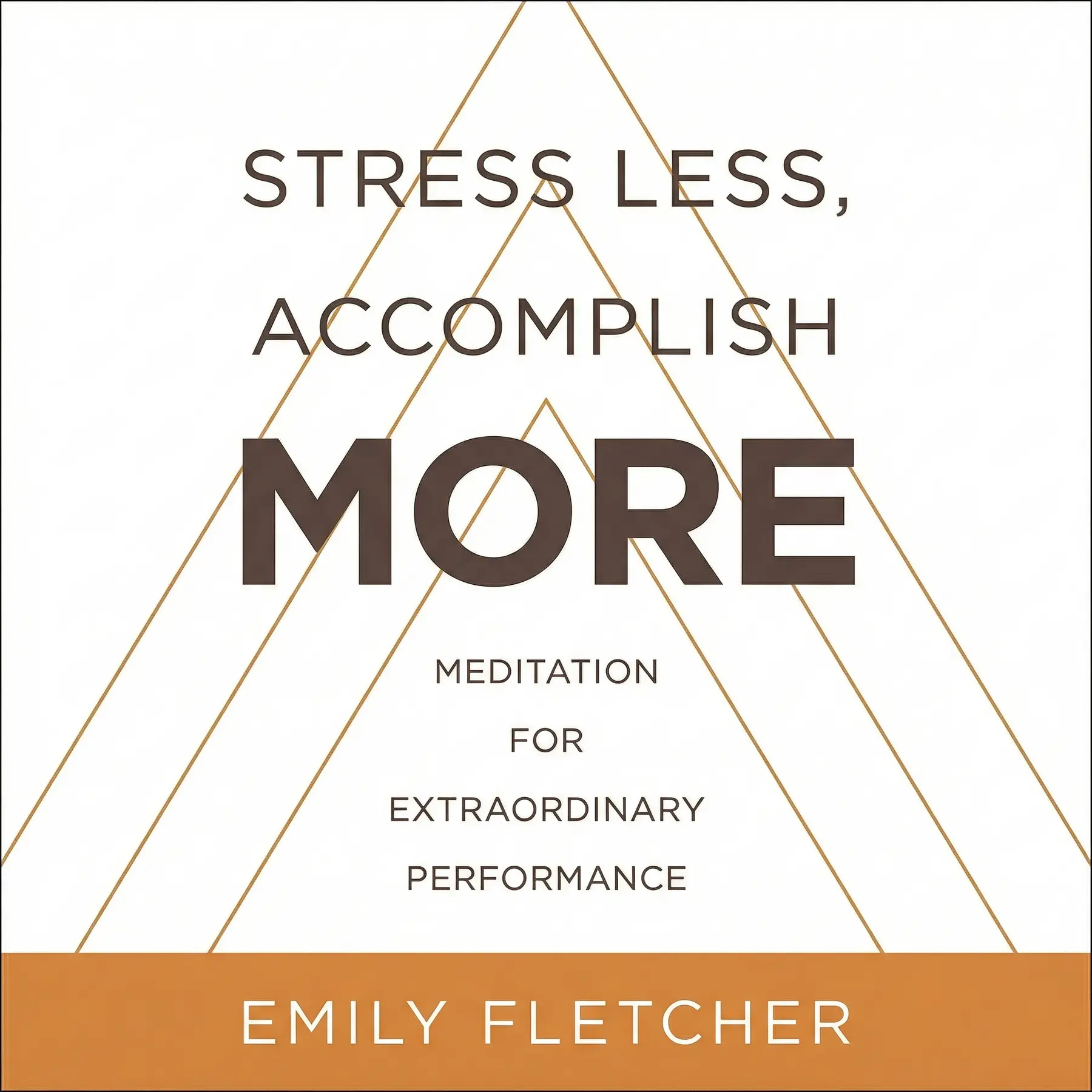
Stress Less, Accomplish More: Meditation for Extraordinary Performance
A former Broadway performer explains why stress slows high achievers down. She teaches a twice-daily, 15-minute meditation that needs no empty mind and aims to restore sleep, focus, health and creativity.
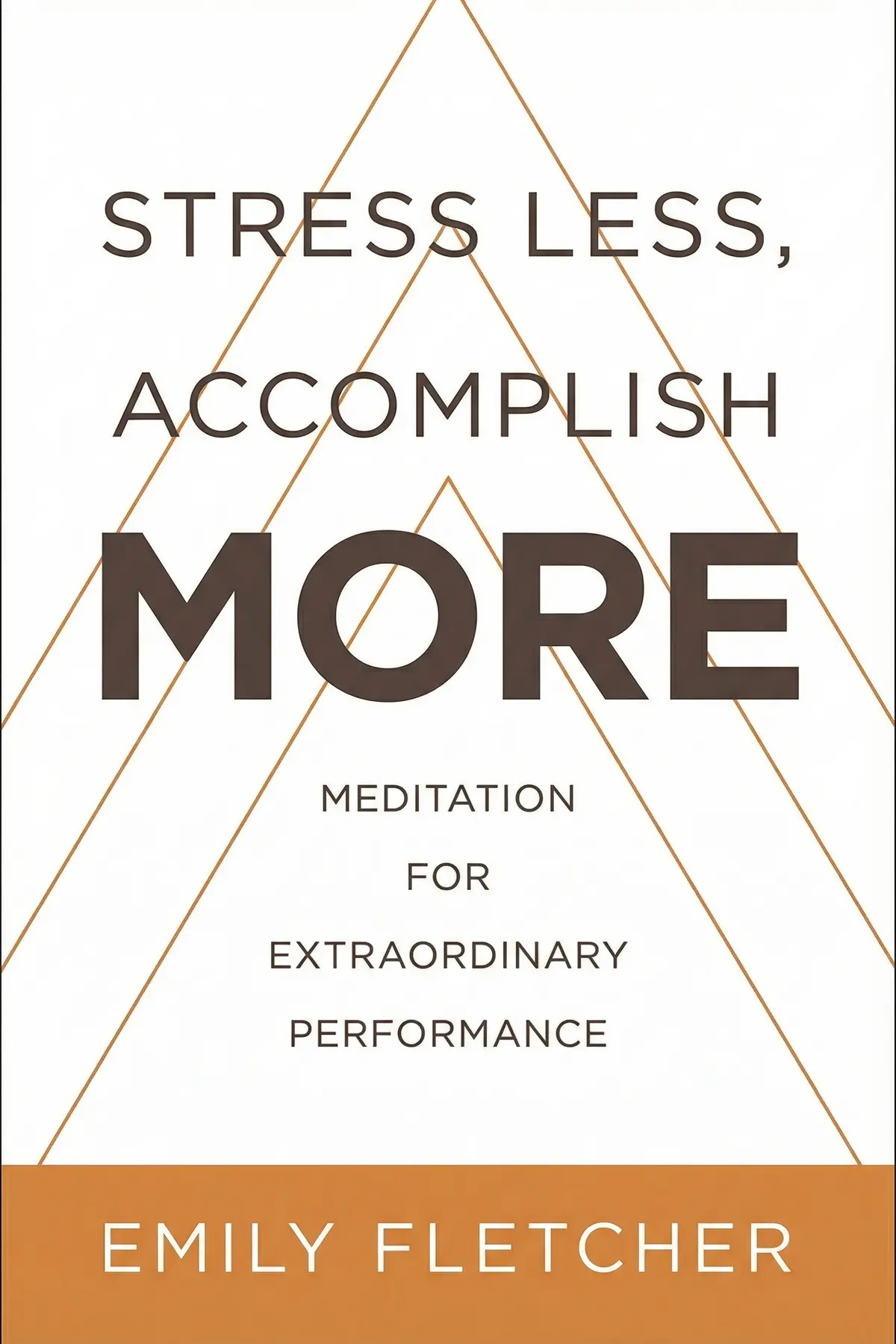
Table of Content
1. Introduction
59 sec
If your calendar is full and your nights are restless, stress probably feels like the price of doing well. In Stress Less, Accomplish More, former Broadway performer Emily Fletcher argues the opposite: stress makes high achievers worse at their work, and a short daily meditation can clear it out. Her method, the Ziva technique, asks for two 15-minute sittings a day and never asks you to empty your mind.
That last point matters. Fletcher believes most people give up on meditation because they decide they are bad at it, and in her view a failed session does not exist. Her central claim is simple: an easy, deep rest taken twice a day removes stored stress, and that releases the focus, health and creativity the stress was holding back. Along the way you get the full three-part practice, a plan for the bumpy first weeks and a simple way to check whether it is working for you.
2. Calm can be a performer's real edge
1 min 42 sec
She had landed her dream job on Broadway, and it was making her ill. A colleague under the same pressure stayed strangely calm, and her one-word explanation changed the direction of a career.
3. Clear out stress your body stored years ago
1 min 52 sec
The alarm system that once saved our ancestors from predators now goes off over emails and deadlines. Fletcher argues that exercise only deals with today’s stress, and that something else is needed for the rest.
4. Get rest that runs deeper than sleep
1 min 47 sec
Coffee feels like energy, but Fletcher says it only hides a debt. One financial advisor’s long struggle with insomnia shows what changed once she found a different kind of rest.
5. A fifteen-minute practice you can do anywhere
1 min 38 sec
No cushion, no perfect posture and no attempt to silence your thoughts. Fletcher’s method fits into a train ride or a lunch break, and it starts with your five senses.
6. End each sitting with gratitude and a goal
1 min 44 sec
The way most people time a meditation can leave them with a headache and a short temper. Fletcher swaps the alarm for a quieter exit and a short exercise that points the mind forward.
7. Survive the rough first weeks of practice
1 min 39 sec
Beginners often quit because they think they are failing, or because the first days stir up feelings they did not expect. Fletcher gives a schedule and a warning that make those weeks easier to get through.
8. Your calm spreads to everyone around you
1 min 35 sec
Taking half an hour a day for yourself can look selfish. Fletcher argues the effects show up in places people don’t expect, from the bedroom to a client meeting, and reach far more people than the one meditating.
9. Conclusion
1 min 16 sec
Fletcher’s book reverses a common belief. Ambitious people tend to see stress as the engine of their success. Fletcher spent her Broadway years anxious, sleepless and going gray at 27, and she argues that stress was really the brake. Remove it through a rest deeper than sleep, and the person underneath comes back: clearer, healthier, more creative and easier to be around.
The practice that does this is deliberately undemanding. It needs no empty mind, no special posture and no retreat. It takes half an hour a day split in two, one word to repeat, and the patience to get through a few rough weeks. Before your first sitting, try the exercise she recommends. Rate your stress from one to ten, then compare that number with your sleep, health, relationships, creativity, intuition and work. Put the morning session before your coffee and the afternoon one in your calendar, and close each with one thing you are grateful for and one goal pictured as real. After a few weeks, rate yourself again.
Ten years after her first session, the woman who used to shake at a microphone walked on stage at ease. That is the kind of evidence worth collecting for yourself.
About this book
What is this book about?
Many busy people have tried meditation and given up. They couldn't stop thinking, or they couldn't find the time. Emily Fletcher argues that both problems come from a wrong idea of what meditation is for. In her view the point is to give the body a rest deep enough to clear stress stored over years, not to empty the mind. Fletcher learned this the hard way. She was understudying three lead roles on Broadway, and she was anxious, sleepless and going gray at 27. She later built the Ziva technique for people with full calendars. It takes two 15-minute sittings a day and has three phases: a short mindfulness check-in, a mantra meditation using the word one, and a closing exercise of gratitude and picturing a goal. The book explains how stress harms the nervous and immune systems and why Fletcher believes meditation rests the body more deeply than sleep. It also gives a practical plan for the first 21 days, including the emotional ups and downs that many beginners go through. Readers finish with a routine they can start the next morning and a way to measure whether it is working.
Book Information
Who it's for
Professionals who quit meditating
Busy professionals who tried meditation, couldn't quiet their thoughts and gave up.
Running on coffee
People living on coffee and short sleep who feel stress is costing them focus and health.
Wanting calm under pressure
Performers, speakers and founders who want calm under pressure in a routine short enough to keep.
About the Author
Emily Fletcher
Emily Fletcher created the Ziva Technique and founded Ziva Meditation in 2011. Before that she spent ten years as a Broadway performer. She left the stage to train as a meditation teacher after seeing how meditation changed her body and emotions. More than 10,000 people around the world have learned from her, and she has spoken about meditation and performance at Google and Harvard Business School. The New York Times, Vogue, the Today Show and ABC News have all featured her work.
Ratings & Reviews
Ratings at a glance
What people think
Listeners find this meditation guide life-altering and simple to implement, helping them establish a daily routine through practical, real-world instructions. The material aids in stress reduction, as listeners describe their anxiety vanishing while they achieve a deeper state of peace. They value the inclusion of case studies and scientific data, and one listener highlights that the approach makes meditation approachable by not requiring one to stop all thoughts. Listeners report seeing improved performance and enjoying more joy-filled life experiences.
Top reviews
Sirichai
This book completely shifted my perspective on what it means to be productive. I used to think I had to push harder to get more done, but the Ziva method taught me that surrendering to 15 minutes of rest is actually the secret to high performance. My anxiousness has practically fallen away, and I’m making better decisions at work without the usual brain fog. The scientific information regarding dopamine and serotonin was the hook I needed to take the practice seriously. Honestly, it’s like mental hygiene. You wouldn't leave the house without brushing your teeth, so why leave without clearing your mind? It’s life-changing and surprisingly easy to maintain.
Show moreAnthony
To be fair, I was skeptical about the 'Accomplish More' part of the title because I'm already overwhelmed. However, this is essentially the 'Meditation 101' manual I didn't know I needed. It strips away all the intimidating fluff like burning sage or sitting in a painful lotus position. You can do this in a chair, on a train, or even at your desk. The most valuable part for me was the permission to have thoughts during the process. I’ve always felt like a failure at meditation because my mind wouldn't go blank, but Fletcher explains that thoughts are just the body’s way of releasing stress. This realization alone has made my daily practice much more sustainable and joy-filled.
Show moreManee
The '3 Ms' approach—Mindfulness, Meditation, and Manifesting—is a total game changer for anyone feeling stuck. I loved the real-life practical teachings and the diverse case studies that show how this works for people with actual jobs and families. The book does a great job of explaining that meditation isn't about getting good at meditating, but about getting good at life. My performance at work has improved, but more importantly, I feel a greater sense of calmness and presence with my children. The manifesting section at the end really helped me clarify my goals and approach them with intention. It’s a pillar of my daily health routine now.
Show moreOrawan
After hearing several friends rave about this, I decided to see if the hype was real. The results have been quite impressive, even if I have some reservations about the book's structure. Despite the marketing-heavy tone, the technique is incredibly accessible and effective for reducing the 'busyness sickness' we all suffer from. I’ve noticed my baseline level of stress has dropped significantly over the last month. I no longer react impulsively to minor inconveniences, and my sleep has improved too. It's a solid 5 stars for the method, even if the book itself feels a bit padded with testimonials. If you want to feel more alive and less like a robot, read this.
Show moreCarter
Ever wonder why you feel like you're carrying a literal backpack of anxiety every single day? Fletcher’s concept of 'stress packets' really hit home for me. We collect these tiny burdens throughout the day—a rude email, a spilled coffee, or a looming deadline—and if we don't clear them, they accumulate until we break. I found the explanation of how our bodies fail to process these during normal sleep very insightful. Using her 15-minute method twice a day has helped me 'defragment' my brain, much like cleaning up an old hard drive. I feel significantly more calm in traffic now. While the book could have been half the length, the central message is powerful enough to ignore the fluff.
Show moreTuck
Picked this up after hearing Emily Fletcher on a podcast and I'm glad I did. This isn't your typical 'clear your mind' type of meditation, which I always found impossible anyway. It is specifically designed for 'householders'—people with real lives, jobs, and stresses who can't just run away to a monastery. I really appreciated the focus on surrender rather than intense focus or concentration. The scientific breakdown of how meditation changes your brain's hardware was fascinating, though I could have done without some of the more 'kumbaya' anecdotes. Overall, it’s a very practical guide that has made me feel less reactive and more intentional in my day-to-day life. Highly recommended for those who think they can't meditate.
Show moreWipada
Finally, a meditation guide that doesn't require a mountain retreat or a specific brand of incense to work. I appreciate how Fletcher explains the biology of stress, particularly how adrenaline and cortisol make our bodies acidic while meditation encourages an alkaline state. It’s practical for anyone living a 'normal' life rather than sitting in a cave for ten hours. While the writing is a bit enthusiastic, the core technique of focusing on your senses before moving to a mantra is effective. My only gripe is the repetitive nature of the success stories, but the results speak for themselves. I’ve noticed a significant drop in my afternoon slumps since starting this routine.
Show moreCholada
As a busy professional who usually rolls their eyes at 'spiritual' practices, I found the Ziva technique surprisingly approachable. The truth is, the core exercise—grounding yourself in your senses followed by a mantra—is quite effective for a beginner. However, I struggled with the author’s tendency to name-drop celebrities and push her expensive online courses throughout every chapter. It makes the practice feel more like a productivity hack for CEOs than a genuine path to wellness. The information in Chapter 8 is pure gold, but the rest of the book feels like it’s trying too hard to justify the price tag. If you can get past the hype, there's a solid tool here for managing a hectic schedule.
Show moreManop
The first half of this book felt like one long, repetitive infomercial that nearly made me quit before getting to the actual instructions. I already bought the book because I'm stressed, so I didn't need seven chapters explaining why stress is bad for me. It was incredibly rage-inducing to wade through page after page of 'Why You Need This' and testimonials from her famous clients. Once you finally hit Chapter 8, the Ziva technique itself is actually quite helpful and easy to implement. It’s a shame the author buried the meat of the book under so much self-promotion and marketing for her $400 beginner course. To be fair, the method works, but the reading experience is deeply unpleasant. Just check it out from the library and skip straight to the middle.
Show moreWoramet
What a disappointment for anyone seeking a rigorous, evidence-based approach to mindfulness. As someone with a background in science, I found the constant use of pseudo-scientific jargon without direct citations to be incredibly frustrating. Emily Fletcher has managed to stretch a concept that could fit into a brief blog post into a full-length book filled with fluff. The tone feels less like a guide and more like a high-pressure sales pitch for her expensive online courses. If you are looking for a deep dive into the 'why' behind meditation, you won’t find much substance here beyond anecdotal evidence and celebrity name-dropping. It is frankly offensive to charge this much for such a thin nugget of actual information. Save your time and money; you can find the core technique summarized in a five-minute YouTube video.
Show moreQuestions about this book
What is the main idea of Stress Less, Accomplish More?
Emily Fletcher argues that stress makes people perform worse, not better. Two 15-minute meditations a day, she says, give the body a rest two to five times deeper than sleep, and that rest clears stress built up over years. Without it, she believes, people gain energy, focus, intuition, better health and better sleep. Her Ziva technique is designed for busy people and does not require clearing the mind.
What are the steps of the Ziva or Z technique?
There are three phases. First comes about two minutes of mindfulness: noticing each of the five senses, then all of them together. Next is about 13 to 14 minutes of repeating the mantra one, gently coming back to it whenever other thoughts arise. Last is manifesting: naming something you are grateful for, then picturing one personal goal as if it were already true.
Is it a failure if I can't stop thinking while I meditate?
No. Fletcher says that in ten years of practice she has never had a session without at least one thought. In her method the goal is a better life, not an empty mind, so every sitting counts as a success. A session that feels endless is no worse than one that passes easily. When thoughts come up, you simply return to the mantra.
When should I meditate, and what should I expect at first?
Fletcher suggests setting your alarm 20 minutes early and meditating before breakfast and coffee. Schedule the second session between noon and eight in the evening for the first 21 days. Many beginners go through an emotional detox, with anxiety, tears, vivid dreams or brain fog. She advises avoiding major decisions for two weeks and telling your family what to expect.
How do I know if meditation is working for me?
Fletcher recommends a simple check before you start. Rate your stress on a scale of one to ten, then compare that number with where you currently stand on health, intuition, creativity, relationships, sleep and how well you perform. Once you have practiced for a few weeks, repeat the exercise. The comparison shows what has changed and gives you a reason to keep going.
Featured in
Readers also enjoyed

A New Earth: Awakening to Your Life’s Purpose
Eckhart Tolle


Aflame: Learning from Silence
Pico Iyer
Aware: The Science and Practice of Presence
Daniel Siegel
Be Here Now
Ram Dass
AUDIO SUMMARY AVAILABLE
Listen to Stress Less, Accomplish More in 15 minutes
Get the key ideas from Stress Less, Accomplish More by Emily Fletcher, plus 5,000+ more nonfiction titles.
- 5,000+ titles
- Listen as much as you want
- 7-day free trial
- Cancel anytime









