

14 min 10 sec
Available in: English
Small Animals: Parenthood in the Age of Fear
By Kim Brooks
Kim Brooks explores why parents fear rare dangers like kidnapping, how those fears often hide judgments of other parents, and what the resulting loss of childhood freedom costs mothers and children.
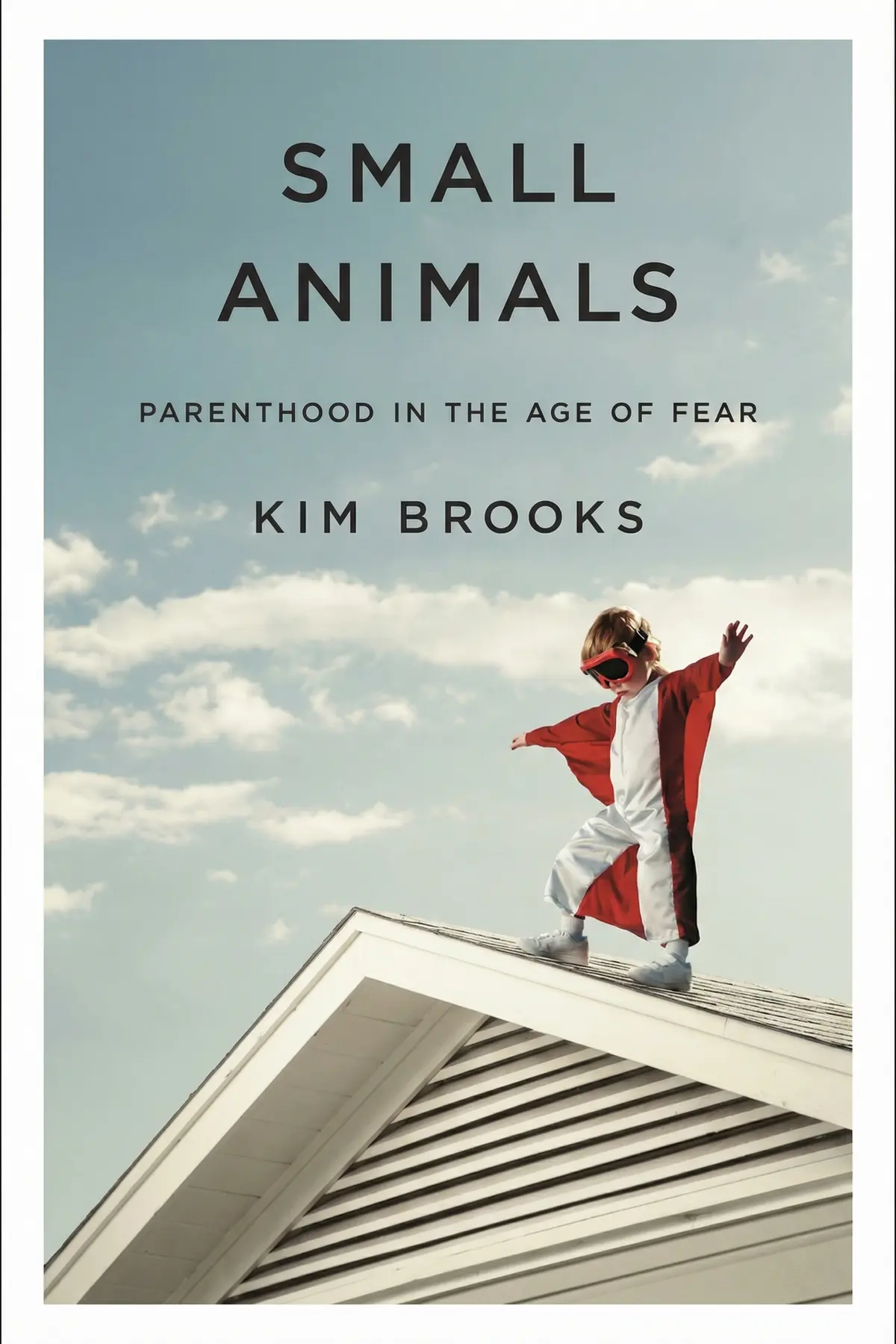
Table of Content
1. Introduction
1 min 01 sec
Most parents live with a constant low hum of fear, and most assume it keeps their children safe. In Small Animals, writer Kim Brooks argues that much of that fear points at the wrong dangers, and that it often has as much to do with judging other parents as with real risk. Her case starts with a number: by one statistical estimate, a child left alone in a public place would wait around 750,000 years before a stranger took them.
Brooks came to the subject the hard way. In 2011 she was charged with a crime for leaving her four-year-old in a locked car for five minutes, though no harm came to him. Trying to understand why, she found that American parents fear rare, vivid threats, punish each other for them and overlook the ordinary ones. The cost falls on poor mothers and on children who have lost their freedom. Follow her reasoning and you can tell the fears worth acting on from the ones that only feel urgent, and give your children more room to grow.
2. See how a harmless errand turned into a crime
1 min 31 sec
A locked car, a cool day, a child happily playing on a tablet, and a mother back within five minutes. Nothing went wrong, yet one stranger’s phone call started a legal case that changed how she saw parenting.
3. Notice when blame outruns any actual harm
1 min 41 sec
A close friend’s careful words and a flood of online comments told the author one thing about herself. The figures on missing children told her something very different, and the gap between the two became her question.
4. Understand why modern parenting feels like running a company
1 min 38 sec
A grandfather sent to the store alone at eight, a mother riding around town on a moped at ten. Their stories sound almost impossible today, and the reason may lie in why people have children at all.
5. Judge danger by the numbers you can check
1 min 55 sec
Parents shamed for a minute out of sight will buckle a child into a car without a second thought. A free-range campaigner and an old survival instinct explain why the two risks feel so different.
6. Catch the moral judgment hiding inside a fear
1 min 40 sec
In one experiment, the same child in the same parked car seemed safer or more endangered depending on where the parent had gone. That detail changes how to hear the warnings other people give you.
7. Understand who pays when parents are policed
1 min 44 sec
A working mother, a busy family park and a daughter with a phone in her pocket. One call to the police led to two weeks of separation, and the reasons show who carries the cost of public fear.
8. Give children back the freedom that keeps them healthy
1 min 52 sec
Adults over 40 tend to remember long afternoons with no grown-up in sight. Today’s children rarely get those, and the health trends that follow are far more threatening than the danger parents work so hard to prevent.
9. Conclusion
1 min 08 sec
Brooks’s story begins with five minutes in a parking lot, but its real subject is a culture where fear of rare disasters has become the test of a good parent. Headlines feed that fear, and the pressure of having chosen to have children sharpens it. Very often it is a way of passing moral judgment on someone else. Its cost falls on mothers like Debra Harrell, who could never afford to watch a child every minute, and on children with less room to play, roam and grow.
What the book supports is a calmer habit of mind. When a danger grips you, check how often it actually happens and compare it with risks you already accept without thinking, like the drive to school. When you feel the urge to judge another parent, ask yourself whether you are measuring risk or disapproving of a choice. And hand your child some of the freedom earlier generations took for granted: an errand, a park, an afternoon with nothing scheduled.
Decades later, her father could still recall the pride of coming home from the store with the right change. Fear takes that pride away from children, and parents can choose to give it back.
About this book
What is this book about?
In 2011, Kim Brooks left her four-year-old son in a locked car for about five minutes on a cool day while she bought headphones. Nobody was hurt. A stranger filmed the boy and called the police anyway, and Brooks ended up charged with a crime. Trying to understand why, she set out to examine the fear that now surrounds parenting. Drawing on her own case, conversations with her parents and friends, and the work of researchers and writers such as Lenore Skenazy, Barbara W. Sarnecka, Paul Bloom, Jennifer Senior and Steven Mintz, Brooks argues that parents fear the wrong things. Kidnapping by a stranger is extraordinarily rare, while car crashes and rising diabetes pose far greater risks to children. She shows how media coverage inflates rare threats, how fear often disguises a moral verdict on other parents, and how that verdict lands hardest on poor mothers. Readers get a clearer way to weigh real risks, a sharper ear for judgment dressed up as concern, and a case for giving children back the freedom earlier generations took for granted.
Book Information
Who it's for
Parents who feel judged
Parents who feel constant pressure to supervise and worry they are judged for every choice.
Curious about misplaced fears
Readers curious why rare dangers like kidnapping dominate public fear while common risks go unnoticed.
Uneasy about family policing
Anyone concerned about how poorer families are policed and about children's lost freedom to play.
About the Author
Kim Brooks
Kim Brooks is a writer and former personal essays editor at Salon, the news and opinion website. She wrote the novel The Houseguest, published in 2016, and her short stories have appeared in Glimmer Train, One Story and Five Chapters. Her essays have run in Salon, New York Magazine and Buzzfeed. She lives in Chicago with her husband and their four children, so she writes about parental fear from inside a busy family.
Ratings & Reviews
Ratings at a glance
What people think
Listeners find the book thought-provoking, with one review emphasizing the balanced research conducted throughout. Furthermore, the writing style receives positive feedback, as one listener points to the author's intimate and self-aware approach. Listeners also value the parenting content, with one describing it as one of the most important books for modern parents. However, the pacing gets mixed reviews, with some finding it very interesting while others consider it long and boring.
Top reviews
Woramet
Finally, a book that addresses the "peak parenthood" madness we are all currently living through. Brooks takes her traumatic experience at a Target parking lot and turns it into a brilliant critique of how we've basically criminalized mothering. The writing style is intimate and self-aware, making her feel like a friend sharing a horrifying secret. I especially loved the deep dive into how "good parenting" has become synonymous with 24/7 supervision, which actually stunts our children's growth and resilience. It’s an essential read for anyone tired of the playground side-eye. This isn't just a memoir; it's a necessary wake-up call for our entire culture. Look, we need to stop treating our children like they are made of glass.
Show moreUdom
Picked this up on a whim and couldn't put it down. The story of her being recorded by a stranger and then hounded by the police for a ten-minute errand is a horror story for the modern age. Brooks is a talented writer who manages to make statistics about kidnapping and car accidents feel personal and urgent. Truth is, we are raising a generation of kids who don't know how to navigate the world because we never let them out of our sight. This book gave me the courage to let my daughter walk to the mailbox alone without checking the street ten times. A bit dense in the research parts, but highly recommended for those feeling the burnout of modern supervision.
Show moreTim
The chapter on how poverty and race affect these child welfare cases was the most eye-opening part for me. Brooks acknowledges that her experience, while harrowing, was tempered by her status. She writes with a level of intimacy that makes the legal threats feel visceral. It’s a fascinating blend of memoir and social commentary that hits on exactly why modern parents feel so burned out and constantly "on." If you’ve ever felt like you’re failing as a parent because you can’t be in two places at once, read this. Personally, I think it's one of the most significant books on the American family to come out in years. Deeply moving and intellectually stimulating.
Show moreSureerat
Brooks dives headfirst into the modern parenting nightmare that began with a quick stop at Target. It is terrifying how quickly a momentary decision turned into a year-long legal ordeal involving child welfare services. I appreciated her vulnerability in describing her own anxiety, though at times it felt a bit repetitive. She masterfully blends her personal memoir with hard data about how our society has become obsessed with "stranger danger" despite it being statistically rare. It makes you question why we've replaced childhood independence with constant surveillance. A few sections dragged, but the overall message is vital for anyone raising kids in this climate of judgment. If you have ever felt the weight of a stranger’s stare at the playground, this will resonate.
Show moreJun
Why is it that mothers are always the ones under the microscope? Brooks explores the double standards of parenting with brutal honesty, showing how a dad doing the same thing might just get a shrug. The book is incredibly thought-provoking, especially when it talks about how we use "child safety" as a proxy for our larger cultural anxieties. I found the legal details of her case to be the most gripping part, though the pacing slowed down significantly toward the end when it moved into more abstract theories. Still, her point about the "idolatry of motherhood" resonated deeply with my own experiences. It’s a brave look at a broken system that penalizes parents for being human.
Show moreSomboon
This should be required reading for every person who has ever looked at a parent in public and felt the urge to judge. Brooks dismantles the idea that "more supervision" always equals "better parenting." I was particularly struck by the chapter on how we perceive risk differently depending on the parent's motivation for leaving the child. It’s a bit chilling to realize how much power a random bystander with a smartphone has over your life. My only gripe is that the book feels a little repetitive toward the final third, and the author's voice can be a bit grating. Overall, a very self-aware and deeply researched look at a toxic culture that I'm glad I read.
Show morePim
Wow. This book really got under my skin. It forces you to look at the "fear-filled" culture we’ve built and ask what it's costing our kids. Brooks is very open about her own mistakes, which I appreciated, even if I didn't always agree with her logic regarding the Target run. The writing is sharp and the interviews with experts add a lot of weight to her claims. I've been thinking about the "moral assessment vs. risk assessment" loop for days now. It’s not a perfect book—some parts are definitely a bit long and dry—but it is incredibly important for modern parents.
Show moreTuck
As a parent who struggles with helicoptering, I expected this to be a manifesto for freedom, but I found the author’s own high-strung nature a bit exhausting to read. Frankly, Brooks is so anxious that her writing occasionally transfers that stress right onto the reader. The middle section felt long and boring as she rehashed her legal fears over and over again. However, the sociological research she includes is fascinating. She uncovers the uncomfortable truth that we judge "risk" based on how much we moralize a mother’s choices rather than actual danger. It’s worth a read for the data alone, even if the personal narrative gets bogged down in self-justification and pacing issues.
Show moreSamuel
While the research into the history of parenting was genuinely enlightening, I struggled with the tone of the memoir bits. The author’s extreme anxiety before the incident even happened made it hard to relate to her perspective at times. It felt like she was constantly looking for someone to judge her, even before she gave them a reason. The pacing is a bit uneven; some chapters fly by while others feel like they are circling the same drain of legal jargon and repetitive self-reflection. Got to say, she raises important questions about class and race, but they often felt secondary to her own personal drama. It’s an okay read, but maybe a bit over-stretched for the content provided.
Show moreNina
I'm genuinely conflicted after finishing this. While the author makes great points about the "bubble-wrap" generation, I couldn't get past the core incident. Leaving a four-year-old alone in a car because you don't want to deal with a tantrum isn't "free-range parenting"—it's negligence, plain and simple. She spends so much time trying to justify her actions with statistics that she misses the point that a child that age can't help themselves in an emergency. Also, the glaring omission of her own privilege as a white, middle-class woman felt like a massive oversight until the very end. A woman of color would have faced much harsher consequences than she did. To be fair, her writing is decent, but I found her excuses hard to swallow.
Show moreQuestions about this book
What is Small Animals by Kim Brooks about?
It is a memoir and inquiry into parental fear. After Brooks was charged for leaving her four-year-old in a locked car for about five minutes, she investigated why American parents are so anxious. She argues that they fear rare dangers like stranger kidnapping, ignore common ones like car crashes and diabetes, and often use fear to judge other parents, with poor mothers and children paying the price.
How likely is it for a child to be kidnapped by a stranger?
Very unlikely, according to the figures Brooks cites. A child left alone in public would statistically face around 750,000 years before a stranger kidnapped them. Runaways made up 96 percent of missing person cases, and stereotypical stranger abductions only 0.1 percent. By comparison, car crashes in the United States injured 487 children and killed three on an average day in 2015.
Why do people judge parents who leave children alone?
Brooks points to a 2016 experiment by Barbara W. Sarnecka. Participants rated a child left briefly alone as in more danger when the absent parent was having an affair than when the parent was unconscious after an accident. Moral judgment came first and risk estimates followed. Yale psychologist Paul Bloom told Brooks that people invent danger to back up their disapproval.
How can parents apply the ideas in Small Animals?
Check how common a feared danger really is and compare it with everyday risks you already accept, such as driving. When you are tempted to criticize another parent, ask whether you are weighing risk or judging a choice. And give children real independence, like errands or unstructured outdoor play, since Brooks links its decline to rising childhood diabetes and to depression in students with helicopter parents.
Who should read Small Animals?
It suits parents who feel anxious or judged about how much freedom to give their children, and readers interested in how fear, media and morality shape public attitudes. It also speaks to anyone concerned about how poorer families are treated, through cases like Debra Harrell’s, a working mother charged after her daughter played in a busy park.
Readers also enjoyed

All About Love: New Visions
bell hooks


A Biography of Loneliness: The History of an Emotion
Fay Bound Alberti

A Force for Good: The Dalai Lama's Vision for Our World
Daniel Goleman


A Room of One’s Own
Virginia Woolf


Abolish Rent: How Tenants Can End the Housing Crisis
Tracy Rosenthal

Abortion: Our Bodies, Their Lies, and the Truths We Use to
Jessica Valenti
AUDIO SUMMARY AVAILABLE
Listen to Small Animals in 15 minutes
Get the key ideas from Small Animals by Kim Brooks, plus 5,000+ more nonfiction titles.
- 5,000+ titles
- Listen as much as you want
- 7-day free trial
- Cancel anytime









