

A Liberated Mind: How to Pivot Toward What Matters
Steven C. Hayes
 English
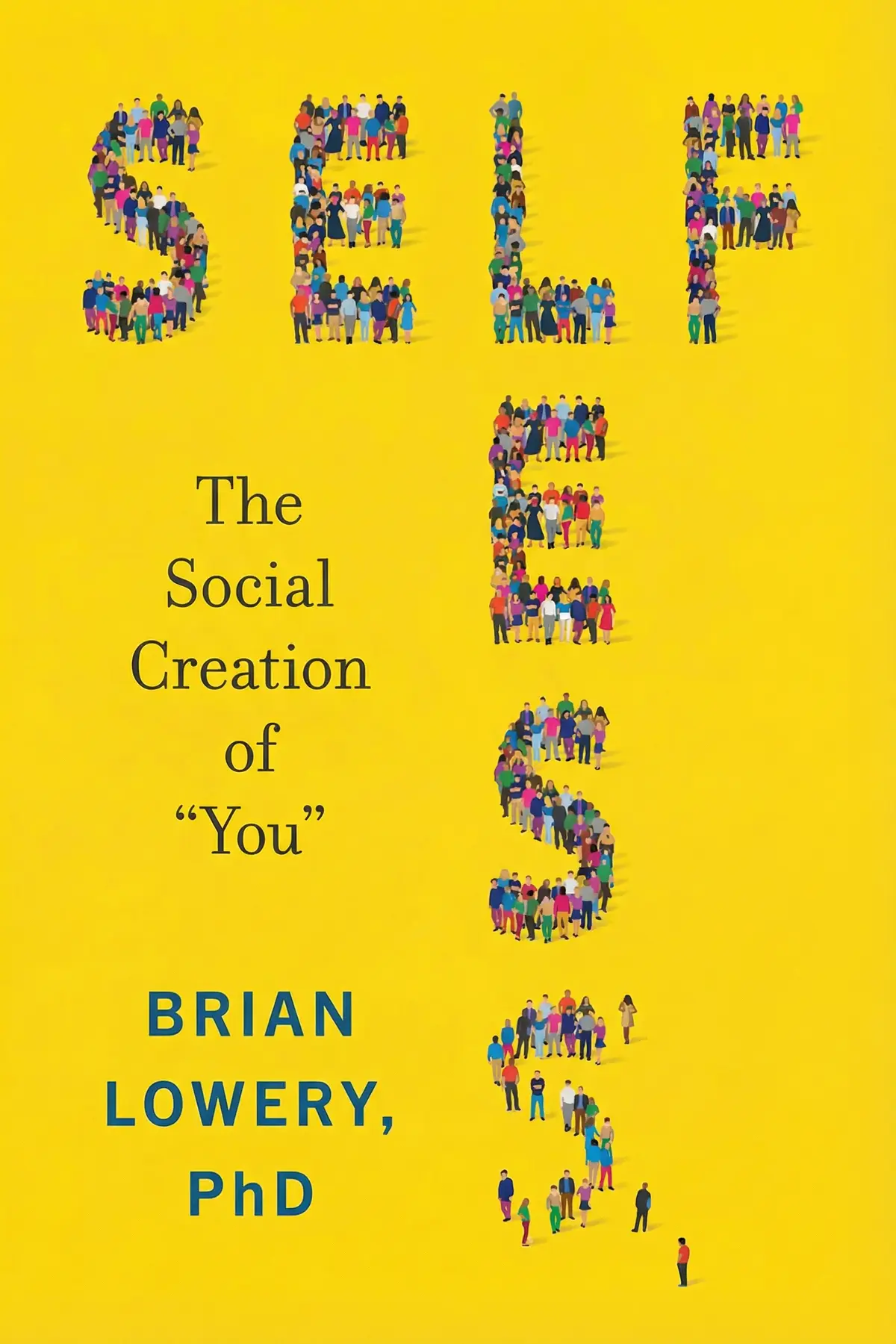
Brian Lowery argues that a self is built from relationships rather than born, and shows how family, groups, your country and your screens shape who you become, and what that means for freedom and kindness.
59 sec
If you have tried to find your true self by looking inward, Brian Lowery suggests you have been searching in the wrong place. In Selfless, the Stanford social psychologist argues that nobody arrives in the world with a finished self. Yours is assembled, piece by piece, from the people you meet: parents, friends, partners, neighbors, even a passing stranger. Because no one else has your exact mix of connections, no one else is you.
That single claim reshapes a lot. It changes how to read your family’s influence, why some groups welcome you and others do not, what your country and your phone are doing to you, and whether freedom means escaping other people at all. Lowery follows it from the kitchen table out to the nation-state. The reward is a clearer view of why you act differently with different people, and a reason to treat ordinary encounters with more care, since you are helping to build other selves too.
1 min 42 sec
Freud tied it to urges and Cooley to a mirror. Lowery’s answer to what makes you you is stranger, and it means part of you can outlast your own body.
1 min 35 sec
A famous parent, a sibling who fears debt, a breakup you never quite forgot. Some of your firmest habits may have been installed by someone else without either of you noticing.
1 min 32 sec
Choosing a group and being born into it both seem like they should make you a member. Lowery explains why neither is enough, and who actually holds the key.
1 min 29 sec
Few people think of their government as a sculptor of personality. Yet its laws, maps and paperwork reach deep into who you become, and who you are allowed to become.
1 min 24 sec
A screen can introduce you to friends across the world and to selves your hometown would never accept. It can also be doing something to you that you never agreed to.
1 min 31 sec
Being one person at work and another with family can feel like pretending. Lowery’s view of how selves form suggests that feeling rests on a mistaken assumption.
1 min 22 sec
Most of us picture freedom as getting other people out of the way. Lowery argues that this picture, taken seriously, would leave nobody behind to enjoy it.
1 min 05 sec
Selfless asks you to stop picturing the self as a small director inside the head, pulling the strings. Lowery’s picture is wider and more crowded. You are the meeting point of a family, a few friends, past partners, teachers, the groups that accepted or refused you, the laws of a country and the feeds on a screen. Change the mix and you change the person.
That has a sobering side and a hopeful one. Nobody chooses their starting relationships. Every encounter from here on is still open, though, and each one shapes the other person as much as it shapes you.
The book’s practical advice is brief and modest. Be careful about what you consume online, and try to treat the people around you in a kinder, friendlier and more inclusive way. Curate the voices on your screen as carefully as the people at your table. And act with a little more kindness and inclusion in ordinary moments, because a brief welcome from you may become part of who someone else turns out to be.
If you are made of other people, you are also helping to make them.
Many people treat the self as a fixed core waiting to be discovered: a set of values and traits that belong to them alone. Stanford social psychologist Brian Lowery disagrees. In Selfless, he argues that the self is created, piece by piece, out of the relationships and interactions a person has across a lifetime, from parents and friends to strangers on the street. Lowery follows that idea outward in widening circles. He looks at how close relationships pass on habits and beliefs, how social groups grant or refuse membership, how the nation-state shapes morality, residence and rights, and how technology both widens and narrows who we can be. He then draws out what follows: a self that keeps changing, a self with several equally real versions, and a freedom that exists within relationships instead of apart from them. Readers get a different way to understand their own habits and shifting personalities, a clearer view of the forces shaping them, and a reason to treat everyday encounters with more care, since each one helps build someone else.
People who feel like a different person at work, at home and with old friends, and wonder which one is real.
Managers and team leads who want to understand how belonging and rejection shape the people they lead.
Anyone rethinking how family, country or social media have formed their habits and values.
Brian Lowery is a social psychologist who earned his doctorate at UCLA and has taught at Stanford since 2002, where he is the Walter Kenneth Kilpatrick Professor of Organizational Behavior. At Stanford's business school he created Leadership for Society, an initiative for MBA students, and he is founding co-director of the Institute on Race. His research examines how people shape one another's sense of self, including social identities and the search for meaning. He also hosts the podcast Know What You See.
Listeners find the work deeply stimulating, as one listener mentions it presents intriguing philosophical questions to reflect upon. The content ignites curiosity, with one listener noting that it opens up new possibilities.
Finally got around to reading 'Selfless' and it definitely lived up to the hype I saw on social media. The idea that we are fundamentally shaped by the people around us isn't exactly brand new, but Brian Lowery frames it in such a fresh way. I found myself constantly reflecting on my own relationships and how I change when I'm around my parents versus my coworkers. It makes you realize there is no 'core' you that exists in a vacuum, which is both scary and liberating. While some chapters felt a bit denser than others, the overall message about our shared responsibility to one another is beautiful. It’s a call to be more patient and generous because we literally help create the people we interact with daily. We are mirrors for each other.
Show moreThis book changed how I view my friends and my inner circle almost immediately. Lowery makes a bulletproof argument that there is no such thing as a 'self-made' person because we are all products of our upbringing and influences. I love how he moves away from the 'nature vs nurture' debate to focus on the immediate interpersonal relationships that define us daily. The writing style is surprisingly digestible for a social psychologist, and he manages to tackle complex themes without being too condescending. It’s a must-read if you’ve ever wondered why you feel like a different person in different social contexts. It provides a platform for some really meaningful dialogue about how we treat those around us. This is definitely going on my favorite list.
Show moreWow, just wow. I’ve been waiting for a book that looks at identity through this specific sociological lens for years. Most authors get bogged down in brain scans, but Lowery understands that humans are social animals first and foremost. He breaks down how our sense of self is a vibrant, constantly changing thing that depends entirely on our context. It really helped me articulate things I’ve felt for a long time but couldn't quite put into words. The idea that every interaction is a chance to 'see' ourselves is such a beautiful way to move through the world. This book is a rare mix of high-level philosophy and deeply personal insight. I genuinely think the world would be a better place if more people read this and practiced a bit more kindness.
Show moreLowery presents a compelling case for the social construction of identity that moves far beyond the usual neuroscience-heavy explanations. Instead of looking at gray matter, he looks at our social landscape to explain why we feel the way we do. The discussion surrounding the Rachel Dolezal controversy was particularly enlightening because it avoided the typical vitriol found online. He uses these high-profile examples to show how group boundaries define our reality, whether we like it or not. I did feel like he glossed over the biological aspects of the self a bit too much, though. Sometimes the social constructivism feels like it’s being pushed as the only factor at play. Still, it’s an incredibly thought-provoking read for anyone interested in sociology.
Show moreAs a psychology student, I've read countless books on personality, but this is the first one that truly challenged my perception of 'selfhood' as a static thing. Lowery argues that we are a collection of mirrors, reflecting the expectations and histories of those we encounter. The example of how a friend acts differently around their mother really hit home for me. It’s not that they are being fake; they are simply navigating a different set of social boundaries. The book is well-written and generally easy to follow, even when the topics get heavy. I appreciated the non-judgmental tone he took when discussing sensitive issues like gender identity and race. It’s a solid addition to the conversation on what it means to be human in a connected world.
Show moreWhat if everything you thought you knew about your 'true self' was actually just a reflection of your environment? This book dives deep into that question, exploring how we are essentially creations of our social circles. The final section on death and legacy was particularly moving, suggesting that we die twice: once physically and once when we are forgotten. It’s a haunting thought, but it emphasizes why the 'I am because we are' philosophy is so vital. Personally, I found the middle section a bit slow, especially when it veered into the more abstract philosophical territory. However, the insights into how we navigate modern society while staying 'true' to ourselves are worth the price of admission. It is a heavy read.
Show moreThe chapter on Rachel Dolezal and the discussion of JK Rowling were the highlights of this book for me. Lowery manages to discuss these incredibly polarizing figures through a lens of social construction without taking the easy, judgmental path. He explains that these debates are actually about the defense of boundaries, which are necessary for us to have any sense of identity at all. Frankly, it’s refreshing to read a book that treats the reader like an adult capable of handling nuance. Even when I didn't fully agree with his conclusions, I respected the consistency of his logic throughout. The book forces you to ask: who are we to say who someone else is? It’s a powerful exploration of the labels we use to define ourselves and others.
Show moreTo be fair, the writing is solid and Lowery definitely knows his stuff, but I couldn't help feeling like I'd heard most of this before. The book emphasizes the social nature of the self, which is common sense to anyone who has studied basic sociology or even spent time thinking about their life. I was disappointed that he didn’t touch on Eastern or Buddhist philosophies that have been saying the self is an illusion for thousands of years. It felt like a very Western-centric take on a universal problem. There’s no real 'spark' in the prose, even if the arguments are logical and well-structured. It’s a decent introductory text for someone who has never questioned their identity, but seasoned readers might find it a bit surface-level. It’s fine, just not groundbreaking.
Show moreI really wanted to love this book, but it felt like sitting through a lecture from a professor who enjoys the sound of his own voice a bit too much. Lowery is clearly brilliant, yet the prose is often overly verbose and circles around the same points without adding much new evidence. I found myself checking how many pages were left in every chapter because the arguments lacked a strong, grounding underpin. It's more of a philosophical meditation than a rigorous psychological study, which might appeal to some, but I needed more substance. There’s some interesting stuff about how we are remembered after death, but it wasn't enough to save the experience for me. It’s a bit too 'ivory tower' for my personal taste.
Show moreGotta say, I found this incredibly frustrating and much too abstract for my liking. It feels like Lowery is just playing word games with the concept of the 'self' without ever providing a solid anchor. If we are only who other people say we are, then where does individual agency actually come from? He hand-waves away the biological and physiological aspects of our being as if the body doesn't matter at all. The prose is thick and academic, making it a real chore to get through some of the more repetitive sections. I was hoping for more practical insights from a social psychologist, but it felt more like a philosophy 101 seminar. It’s definitely thought-provoking, but often for the wrong reasons. It missed the mark.
Show moreLowery argues that the self is created, not inherited. It emerges from every relationship and interaction a person has, from family and friends to communities, the nation-state and technology. Because each person’s mix of connections is unique, each self is unique. This view also means the self is separate from the body, keeps living through relationships after death, and draws its values from the people around it.
No single version counts as the true self in Lowery’s account. Since people have many distinct relationships, they develop several versions of themselves. His example is a young woman who is an obedient daughter at home and an independent student leader at school. Both are equally her. The self also keeps changing, through major life shifts and through tiny moments like a colleague changing your opinion about bikes.
Lowery sees the nation-state as probably the biggest group shaping a person. Its laws define what society treats as right and wrong, it can restrict where people live, and it sets official rules for membership in groups such as citizenship, race and gender identity. When the nation-state, and by extension society, keeps you out of a group, you may lose confidence and trust, along with institutional recognition and rights such as health insurance and access to public infrastructure.
Trace your firmest habits and values back to the people who passed them on, then decide which to keep. Treat your online feeds as relationships and choose them deliberately, since Lowery warns that algorithms steer behavior. Notice which settings bring out the version of yourself you like best. And because you shape others too, offer more kindness and inclusion in everyday encounters.
It suits readers curious about identity who distrust the idea of a fixed inner core, people who feel torn between different versions of themselves, and leaders who want to understand how acceptance and rejection affect the people around them. It also speaks to anyone who feels hemmed in by obligations, since Lowery reframes relationships as the structure that makes a self possible.
Steven C. Hayes


Deborah Gruenfeld


Anthony Pratkanis




Richard Wiseman

AUDIO SUMMARY AVAILABLE
Get the key ideas from Selfless by Brian Lowery, plus 5,000+ more nonfiction titles.









