

A Liberated Mind: How to Pivot Toward What Matters
Steven C. Hayes
 English
Shows narcissism as a scale from zero to ten rather than a label. Explains its loud, quiet and charitable forms, how upbringing shapes it, the signs that give it away and how showing honest hurt can reach a narcissist.
1 min 09 sec
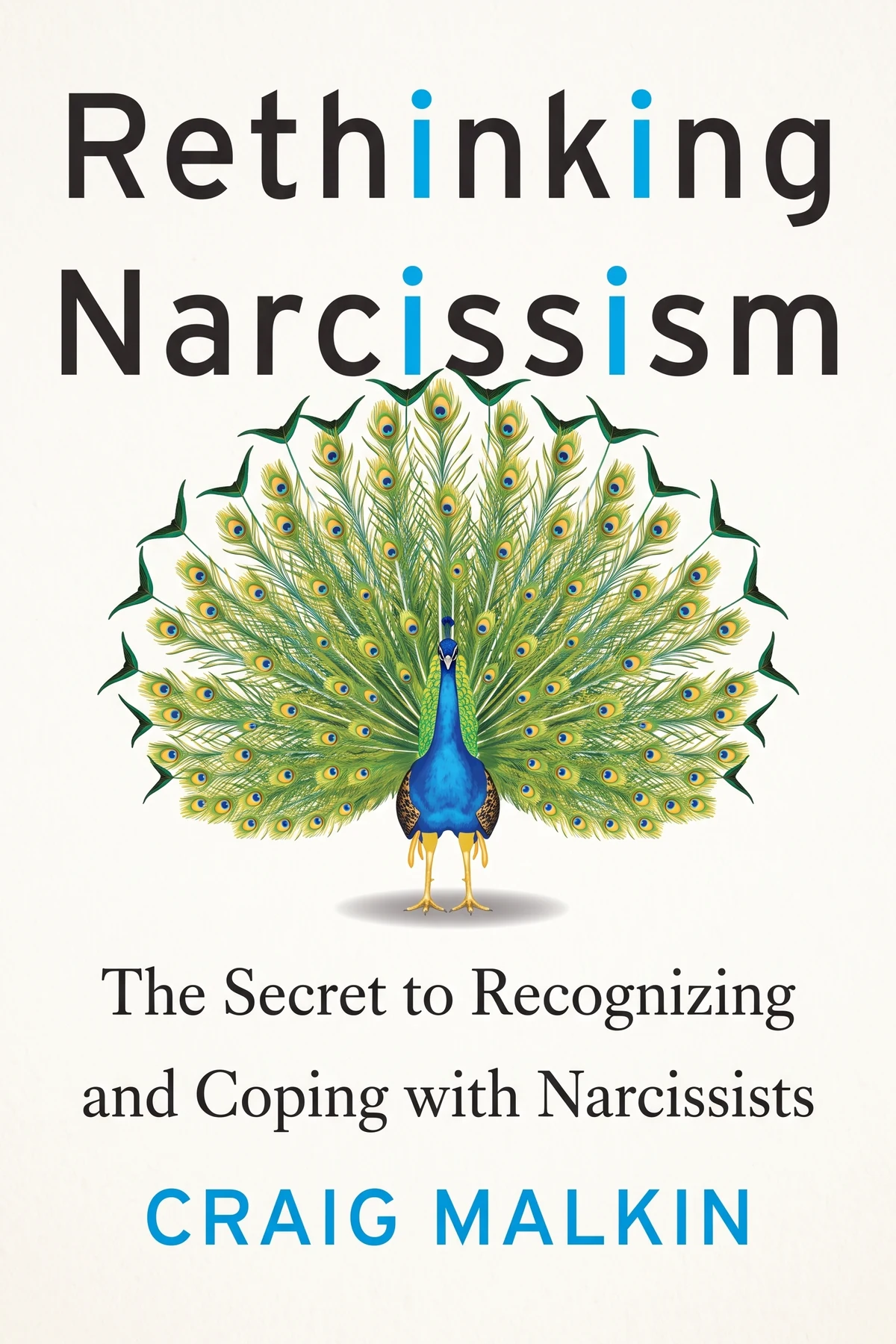
If someone close to you turns every conversation toward themselves, or punishes every mild criticism, you may be stuck between blaming yourself and writing them off. In Rethinking Narcissism, clinical psychologist Craig Malkin offers a third way: narcissism is a scale from zero to ten, and the healthiest place on it is not zero but the middle. Some self-love, he argues, is something everyone needs.
Too little and people feel unworthy of care. Too much and they live hungry for praise, pushing others away. Malkin’s case is that once you see narcissism as a spectrum with several forms, you can spot the harmful kind early, including the quiet version that never boasts, and respond in a way that protects you. The most hopeful evidence he cites, from other researchers’ studies, is that narcissists often do feel for others, and honest hurt can reach them. What follows is a working map: a scale, three types, two warning signs, and a sentence to try in your next hard conversation.
1 min 55 sec
Thinkers from Aristotle and the Buddha to Freud and Kohut have each weighed in on how much a person should love themselves. Their quarrel turns out to matter for how you judge the difficult people in your own life.
1 min 52 sec
Calling someone a narcissist feels like a diagnosis, yet it tells you almost nothing useful. A simple numbered line gives a sharper reading, and it may reveal that the person scoring too low is you.
2 min 00 sec
The show-off with the flashy car is easy to recognize. Two other kinds of narcissist hide behind shyness or generosity, which can make them harder to spot than the loud kind.
1 min 51 sec
One child was told never to dream big. Another was told daily that stardom awaited him. Both grew into unhappy adults, and the reason they failed in opposite directions is the same.
1 min 49 sec
A friend ignores your messages, then accuses you of ignoring him. A partner insists you are the angry one until you really are. These moves have a name, and once you see them, they lose their grip.
2 min 03 sec
Anger is the natural reply to a partner’s cutting remark, and it usually makes things worse. Research on narcissists’ racing hearts points to a different response, one that feels risky but often works.
1 min 08 sec
Malkin’s book replaces a verdict with a measurement. Narcissist stops being an insult you throw at someone and becomes a position on a line that everyone occupies, one that moves with age and pressure and shows up in loud, silent or generous forms. The middle of that line, around five, is where a person can want success and still make room for others. Both ends cost something, as Jean’s abandoned dreams and Chad’s lonely vanity show.
That view gives you two things to practice. When an accusation lands that fits the other person better than it fits you, treat it as a hot potato and set it down instead of carrying their guilt or anger. And when someone you love is cold or dismissive, tell them plainly how it made you feel, before anger takes over. The racing hearts in the Surrey and Southampton studies suggest the empathy is often there, waiting for a reason to show.
Narcissus died staring at a reflection that could never look back. The people Malkin writes about can still look up, if someone shows them a real face.
Most people know someone who makes every conversation about themselves, or who strikes back hard at the mildest criticism. The usual response is to call them a narcissist and either give up on them or blame yourself. Clinical psychologist Craig Malkin argues that the label hides more than it explains. In his view, self-love sits on a scale from zero to ten. Too little leaves people feeling unworthy of care. Too much leaves them hungry for praise and isolated. The healthy point is in the middle, and everyone moves along the line with age and circumstance. Malkin traces the debate from Aristotle and Buddha to Freud and Heinz Kohut, then describes three forms of narcissism: the loud extrovert, the quiet introvert and the communal type who takes pride in giving. Readers get a way to place themselves and others on the scale, an account of how cold parenting and empty praise each do harm, and two warning signs to watch for. Malkin also offers a hopeful method drawn from research on empathy: when someone you love is cold or dismissive, tell them calmly how it made you feel.
People in a relationship or family with someone who makes everything about themselves.
Managers and colleagues dealing with a coworker who strikes back at any feedback.
Anyone who suspects they love themselves too little, or too much, and wants a clearer way to judge it.
Craig Malkin is a clinical psychologist who has spent more than 25 years helping people with a range of problems, pathological narcissism among them. He directs YM Psychotherapy and Consultation, a practice that runs couples therapy workshops, and he has written about relationships for Time and Psychology Today. In Rethinking Narcissism he draws on his research and his own experience to help readers spot real red flags, including in narcissists who are quiet, and to find clearer ways to cope with or leave harmful relationships.
Listeners find the material educational and thoroughly investigated, with one listener noting it provides sufficient detail to back up its logic. Furthermore, the writing is clear and concise, which makes it simple to track. The book also helps in identifying narcissistic individuals, introduces a spectrum of the trait, and applies to all relationship types, fostering a sense of connection. Listeners value its practicality, with one listener highlighting its usefulness for childcare professionals, and they find the experience both invigorating and pleasant.
Picked this up after realizing I might be an 'echoist,' a term Malkin uses to describe people who feel uncomfortable being special. It was a total lightbulb moment for me. The way he describes the 0-10 scale is incredibly intuitive and less judgmental than most books on this topic. Honestly, the sections on how childhood experiences shape our place on that spectrum were hauntingly accurate. I loved the smooth flow of the prose—it didn't feel like a dry textbook at all. Truth is, I’ve already started using some of the 'empathy prompts' he suggests with my partner, and the results are promising. This isn't just a book about toxic people; it’s a guide for building genuine intimacy by finding a healthy middle ground. Highly recommended for those who always put others first.
Show moreFinally, a psychology book that doesn't make me feel like everyone I dislike is a sociopath! Malkin’s 'Rethinking Narcissism' is a breath of fresh air because it treats the trait as a human spectrum rather than a binary 'good vs. evil.' The stories he chooses are relatable and illustrate his points perfectly without being overly dramatic. I found the chapter on 'passing the hot potato'—how narcissists project their shame onto others—to be particularly eye-opening. It explained so many confusing interactions I've had in the past. The writing is clear, the research is deep, and the tone is surprisingly hopeful. It’s rare to find a book that manages to be both academic and deeply empathetic at the same time. This is essential reading for anyone trying to navigate modern relationships.
Show moreAfter hearing so much about this on social media, I decided to give it a go. It’s definitely more academic than your average self-help book, but still very readable. Malkin’s distinction between healthy and unhealthy narcissism is the most useful part of the book. We often forget that having no ego at all (echoism) is just as damaging as having too much of one. I appreciated the test included in the book; it gave me a lot to think about regarding my own score. My only complaint is that the audiobook version is a bit of a nightmare to navigate because the chapters aren't labeled. But content-wise? It’s a very well-researched and succinct look at a very misunderstood topic. It helps you see the 'why' behind the behavior, which is empowering in its own way.
Show moreMalkin’s take on the Narcissus myth is a masterclass in psychological reinterpretation. By focusing on Echo, he highlights a side of the personality dynamic that almost everyone else ignores. I found the section on communal narcissists—those who think they are the 'most helpful'—to be incredibly sharp and accurate. Not gonna lie, I saw a few people I know in those descriptions! The book is succinct and avoids the sensationalism that usually follows this topic. It’s more about understanding human connection and how to set boundaries without losing your empathy. It’s a refreshing, well-written, and ultimately very practical book that applies to bosses, partners, and parents alike. If you want to move past the name-calling and actually understand the mechanics of self-worth, this is the book to buy.
Show moreThis book offers a much-needed nuance to the current cultural obsession with 'narcissism' as a pure evil. Malkin argues that we all exist on a spectrum, which is a refreshing pivot from the usual demonization found in pop psychology. To be fair, seeing it as a scale from 1 to 10 makes a lot of sense, especially with the concept of 'echoism' on the low end. I appreciated the succinct writing style and how he grounds his arguments in clinical experience. However, I did find some of the advice for dealing with those on the higher end of the scale a bit too optimistic. It’s hard to imagine 'collaborating' with someone who is a level 9. Still, the research is top-notch and it really helped me reflect on my own tendencies. A solid read for anyone tired of the sensationalized headlines.
Show moreAs a childcare professional, I found Malkin’s insights into the development of narcissism absolutely fascinating. The way he breaks down how we can raise children to have a healthy sense of self without tipping into entitlement is practical and well-reasoned. He avoids the typical alarmist tone of many modern psych books. The 1 to 10 scale provides a great framework for understanding classroom dynamics too. My only gripe is that the editor missed a few things—the 'could care less' vs 'couldn't care less' error drove me slightly crazy. Regardless, the core message about the necessity of feeling 'special' in a balanced way is a powerful one. It’s a succinct, informative guide that offers more than just labels; it offers a way to foster connection in all types of relationships.
Show moreThe insights are solid, but the delivery is a bit of a mixed bag. On one hand, Malkin is a Harvard-level expert who clearly knows his stuff, and his 'echoism' concept is a brilliant addition to the conversation. On the other hand, the writing tries a little too hard to be hip with terms like 'SoMe' for social media. It felt out of place. Personally, I think he spends too much time on the 'middle of the road' folks and doesn't give enough actionable advice for people stuck at the extreme ends of the spectrum. If you’re a 2 or a 3, you get told you deserve to feel special, but then what? It’s a good introductory text for understanding the theory, but I left wanting more concrete steps for personal growth.
Show moreEver wonder why some people are just... a lot? Malkin attempts to answer that by moving away from the 'all or nothing' view of narcissism. The scale is a cool concept, but the book feels a bit lopsided. He spends a lot of time telling us how to manage level 7s and 8s, yet the advice for the 'echoists' at the bottom feels like an afterthought. I wanted more on how to bootstrap myself out of that 0-1 range. Instead, I got a lot of 'you deserve to feel special too.' Thanks, I guess? The writing is smooth, and his Harvard credentials definitely show in the depth of research, but I think the book aims for a 'middle road' that might be a bit too safe. It’s informative, sure, but maybe not the life-changing manual for abuse survivors that some might be looking for.
Show moreI’m genuinely baffled by the positive reviews here. Malkin’s suggestion that victims should essentially 'parent' the narcissists in their lives is dangerous and tone-deaf. If you are dealing with a true emotional hyena, 'voicing your fragility' will only give them more ammunition to use against you. He treats narcissism like a childhood phase that just needs more love, rather than the destructive, manipulative force it actually is. Not to mention, the constant use of 'SoMe' for social media was incredibly grating. Look, I get the desire to find a middle road, but some people are just plain toxic and shouldn't be handled with kid gloves. This book feels like it’s written for people dealing with slightly selfish friends, not those suffering under real narcissistic abuse. Disappointing and potentially harmful.
Show moreIf you’ve actually been through the wringer with a true narcissist, this book will feel like a slap in the face. Malkin seems more interested in defending the 'spectrum' than protecting the victims. He suggests that we should show our vulnerability to people who literally thrive on exploiting it. That's not clinical advice; it's a recipe for disaster. The book minimizes the soul-crushing reality of narcissistic abuse by turning it into a 'scale' where most people are just slightly off-center. Also, the author’s use of 'SoMe' is just cringey. Frankly, it feels like pop-psychology written by someone who hasn't spent enough time in the trenches with people whose lives have been destroyed by these manipulators. If I wanted someone to tell me my abuser just needs a hug, I'd talk to the abuser.
Show moreCraig Malkin argues that narcissism is a spectrum, not a simple label. He pictures it as a scale from zero to ten. Zero means no wish to feel special and a sense of being unworthy of care, while ten means a constant need for validation. The healthiest point is around five, where a person can pursue success and still put their needs aside to support others.
Malkin describes extroverted, introverted and communal narcissists. Extroverts seek attention openly, showing off wealth, looks or talent. Introverts avoid attention because they fear criticism, yet privately believe they are superior to everyone around them. Communal narcissists take pride in giving, seeing themselves as more caring and generous than others and treating each good deed as proof of it.
It is Malkin’s name for a narcissist’s habit of passing uncomfortable feelings to someone else. A friend who ignores your messages may then accuse you of ignoring him, shifting his guilt onto you. A partner who is grumpy under pressure may insist you are the angry one until you actually become angry. Knowing this pattern helps you notice when a feeling being pushed onto you really belongs to them.
Malkin recommends vulnerability instead of anger. He cites studies carried out at Surrey and Southampton universities in which narcissists’ heart rates rose while watching a woman describe domestic abuse, a sign of empathy. When a partner hurts you, calmly explain how their words made you feel and that their opinion matters to you. He argues this can draw out their compassion.
Malkin says genes play a part, but upbringing has a strong influence. In the book, Jean’s stern, distant parents discouraged her pride and dreams, and she grew into an adult who expected no care, around three on the scale. Chad’s parents gave constant but empty praise without real empathy, and he became vain, sad and isolated, around seven or eight.
Steven C. Hayes


Deborah Gruenfeld


Anthony Pratkanis




Richard Wiseman

AUDIO SUMMARY AVAILABLE
Get the key ideas from Rethinking Narcissism by Craig Malkin, plus 5,000+ more nonfiction titles.









