
14 min 31 sec
Available in: English
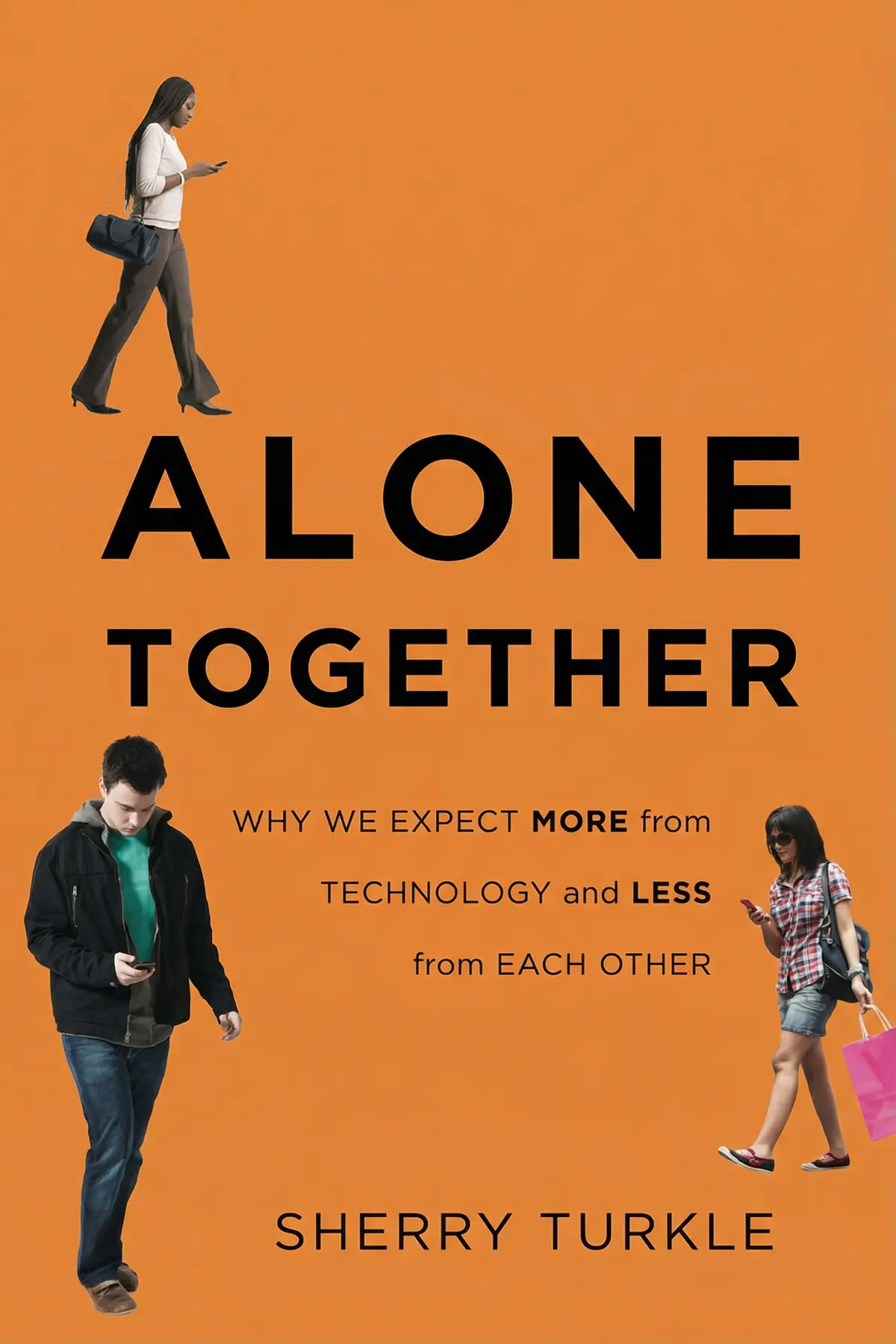
Reclaiming Conversation: The Power of Talk in a Digital Age
Shows how phones and social media are wearing down empathy, friendship, focus and public life, and why choosing real conversation and time alone is the way to win them back.
Table of Content
1. Introduction
1 min 04 sec
If your evenings end with a phone in your hand and a sense of being less connected than ever, part of the cause may be sitting on the table. In Reclaiming Conversation, MIT sociologist and clinical psychologist Sherry Turkle reports that even a silent phone in view pushes talk toward safer, shallower subjects. Her larger argument is that face-to-face conversation is where people learn empathy, think creatively and form deep bonds, and that a decade of screens has crowded it out of dinners, classrooms, friendships and families. She believes it can be won back by choosing when devices belong and when they do not.
The case runs from a child’s restaurant table to a lecture hall full of texting students, and on to a political campaign that never left the screen. It ends with moves to try this week: where to put the phone, how to answer a stressful email, and why to talk politics with a neighbor in person.
2. Keep the phone off the table to go deeper
1 min 38 sec
A friend sits down for a drink and sets her phone beside the glasses. Nobody says anything about it, yet Turkle argues the evening’s conversation has already shrunk, and the cost builds up across a whole generation.
3. Time alone that makes you better company
1 min 50 sec
An evening spent alone with a laptop can leave you strangely restless. Turkle explains why that hours-long scroll doesn’t count as being alone, and what real solitude does for empathy and ideas.
4. Your attention is how children learn to talk
1 min 47 sec
Turning a crying baby’s face away at a restaurant looks cold. Answering a phone instead of a child’s question looks normal. Turkle asks whether the two are really different, and what children lose either way.
5. See why texting feels safer than talking
1 min 44 sec
Teenagers answer phone calls with emails and sleep beside their phones in case a friend needs them. Those habits hint at a deeper change in what young people now expect a friend to be.
6. Fewer choices, a happier love life
1 min 39 sec
Dating apps promise more matches than any generation has ever had. A small experiment with chocolate suggests that abundance may be the very thing leaving people disappointed, and it has changed how relationships end.
7. Do one thing at a time and think better
1 min 50 sec
Checking a feed during a boring lecture feels like smart use of time. Turkle explains why the brain disagrees, and why a Harvard law professor bans laptops for note-taking.
8. Move from clicking to showing up
1 min 49 sec
Many people signed an online petition against the leader of a Ugandan guerrilla group. When the moment came to act in public, almost nobody appeared. The same convenience is also eating away at privacy.
9. Conclusion
1 min 10 sec
Turkle is not asking anyone to throw away their phone. Her point is that devices help only while they leave room for what made us capable in the first place: deep thought, honest talk and the empathy that grows from both. Screens take the risk out of connecting, and that risk turns out to be where much of the value lived.
She takes hope from an old dream. In 1945 the engineer Vannevar Bush imagined machines that would free people for slow, creative thinking. That future is still open if we decide where technology belongs.
A real break is a fine place to begin. A holiday without the laptop or wifi may bring panic at first, then something closer to peace and a looser sense of time. At home, keep phones off the dinner table even when a teenager protests, do one task at a time, and take one hard subject in person to someone who disagrees with you.
Empathy fades one ignored conversation at a time, and it can come back the same way.
About this book
What is this book about?
Dinners, phone calls and parties used to be about talking. Now people photograph the food, email their parents and scroll through clips while friends sit beside them. Sherry Turkle, an MIT scholar and clinical psychologist, argues that this shift costs more than it seems. Conversation, she says, is where people learn empathy, sharpen their thinking and form bonds that last. She follows the loss through ordinary life. A muted phone on a café table makes talk shallower. Parents absorbed in their screens leave children short of the attention they learn from. Teenagers text because a voice can't be edited, dating apps offer so many choices that nobody feels satisfied, students text through lectures, and online petitions rarely lead to anyone turning up in person. Turkle does not want people to give up their devices. She wants them used deliberately. Readers get a clear account of what screens take from relationships, work and civic life, along with practical moves: phone-free tables, real solitude, unitasking and the courage to disagree face to face.
Book Information
Who it's for
Professionals feeling distracted
Professionals who check their phone mid-conversation and feel their focus and friendships thinning.
Parents wanting phone-free meals
Parents trying to hold a phone-free table with distracted children and moody teenagers.
Students and dating-app users
Students and online daters tired of texting, swiping and multitasking through every day.
About the Author
Sherry Turkle
Sherry Turkle is the Abby Rockefeller Mauzé Professor of the Social Studies of Science and Technology at MIT. She holds a Harvard doctorate in sociology and personality psychology and is a licensed clinical psychologist. She has studied how people relate to technology since the early personal computer era of the late 1970s, and in 2001 she founded the MIT Initiative on Technology and Self. Her books include Alone Together and the memoir The Empathy Diaries.
Ratings & Reviews
Ratings at a glance
What people think
Listeners find the book accessible and stimulating, with one listener observing that it resonates with both younger and older audiences. The material is thoroughly researched; one listener emphasizes the way the author cites her evidence, and they value the focus on the core principles of communication. The book is lauded for its significance and timeliness, with one review characterizing it as an exhaustive look at a complex issue. However, the prose style draws mixed reactions, as several listeners describe it as repetitive, and perspectives are split on its influence on empathy.
Top reviews
Kofi
After hearing Turkle speak on a podcast, I knew this would be a deep dive into how we’ve traded depth for convenience. This book isn't anti-technology; it’s pro-conversation, and that distinction is crucial. She beautifully documents how the mere presence of a silent phone on a table can diminish the quality of a connection. As an educator, the sections on how children learn empathy—or fail to—were particularly eye-opening and frankly, a bit frightening. We are raising a generation that views boredom as a problem to be solved by a screen rather than an invitation to imagine. Turkle’s research is well-documented and her prose is incredibly readable for a scholarly work. It made me rethink my own habits, specifically the way I use my phone as an escape from the 'boring' parts of real-life interactions. This should be required reading for every parent and teacher. It's a foundational look at what makes us human.
Show moreCarter
The chapter on family dynamics hit me like a ton of bricks. I’ve definitely been that parent who checks a notification while my kid is trying to tell me about their day, and Turkle explains the long-term damage of that 'divided attention' with surgical precision. She argues that we are exchanging 'sentimental education' for quick digital fixes, and it’s heart-wrenching. The book is remarkably well-researched, moving from the classroom to the office to the public square to show how wide-reaching this epidemic of inattention is. I appreciated that she didn't just point out the problems but offered a foundation for how to fix them, like creating 'sacred spaces' where devices are banned. It’s a dense read, sure, but the insights into how eye contact and silence build character are priceless. It’s changed how I hold my phone—or rather, where I put it when I’m with the people I love.
Show moreDivya
Finally got around to reading this, and it’s a terrifyingly necessary look at what we're losing in the digital age. Turkle masterfully explains how conversation is the bedrock of empathy; without the face-to-face struggle of understanding another person, we become less human. I loved the way she broke down different spheres of life—home, work, and even the 'public square'—to show how pervasive the problem is. It’s not just about being 'distracted' at dinner. It’s about the fact that we are losing the capacity for deep, sustained thought because we’re constantly chasing the next hit of dopamine. Some might find her tone a bit dire, but frankly, I think the situation warrants it. The writing is engaging and the stories she shares from her interviews are both relatable and haunting. It’s a book that demands you put it down and go talk to someone.
Show moreMontri
Wow, what a comprehensive analysis of the way we interact today. Turkle provides a much-needed foundation for understanding why we feel so lonely despite being more 'connected' than ever. Her research into how technology enchants us and makes us forget the basics of human interaction is brilliant. I especially appreciated the focus on how this affects the next generation; it's our responsibility to pass on the art of talking, and we're failing. The book is readable, urgent, and deeply researched. While it covers some of the same ground as her previous work, it feels more solution-oriented here. It’s not about throwing away your iPhone, but about reclaiming your attention and prioritizing people over pixels. This book really changed the way I look at my 'connected' life. An absolute must-read for young and old.
Show moreNit
Is it possible that our phones have become a crutch for our social anxiety? Turkle argues exactly that, suggesting we use digital interfaces to 'edit' our personalities in ways real-time conversation doesn't allow. The book is incredibly thought-provoking, even if it feels a bit alarmist at times. I loved the emphasis on solitude; the idea that if we can't be comfortable alone, we can't truly be present with others is profound. However, I gotta say, the writing style is a bit dense in the middle sections. She relies heavily on anecdotes from her students, which are interesting but sometimes lack the 'hard data' punch I was looking for. Still, the core message about reclaiming our attention spans is something I can't stop thinking about. It's a wake-up call for anyone who feels like they’re 'always on' but never actually connected to the person sitting right across from them.
Show moreMan
Picked this up for a book club and was surprised by how much research went into documenting our slow slide away from face-to-face intimacy. Turkle isn't just ranting; she's providing a comprehensive analysis of how our brains are being rewired by the constant 'ping' of connectivity. I found her discussion on 'the flight from conversation' particularly relevant to my own life. We’ve become so used to the efficiency of a text that a real phone call feels like an intrusion. While I agree with other reviewers that the book is a bit repetitive, the core message is too important to ignore. Truth is, we are losing our ability to handle the 'boring' parts of relationships, and that’s where the real growth happens. It’s a thought-provoking read that will make you want to leave your phone in the other room, even if you find her tone a little overly dramatic at points.
Show moreOm
As a millennial who grew up in the transition from landlines to iPads, I found these observations uncomfortably accurate. I’ve seen my own attention span shorten and my patience for 'slow' conversation evaporate. Turkle’s point about the 'illusion of companionship' really hit home for me—it’s so easy to feel connected because of a like or a comment, but it doesn't feed the soul the same way. The book is long and could have been edited down significantly, as she tends to ramble through similar points across different contexts. Still, the sections on the importance of solitude were a revelation. Personally, I never realized how much my constant scrolling was a defense mechanism against being alone with my own thoughts. It’s an essential read for my generation, even if you have to ignore some of her upper-class biases to get to the gold.
Show moreRatthapong
Look, I really wanted to love this, especially as someone who feels the 'phantom vibration' in my pocket constantly. The central argument—that we are losing the art of spontaneous, messy, face-to-face talk—is absolutely right on the money. Turkle captures that feeling of 'alone together' perfectly. But man, the repetition is brutal. By the time I got to the workplace chapter, I felt like I’d read the same three anecdotes rebranded for different settings. It’s like she had a pre-determined conclusion and just looked for stories to fit the mold. I also found her tone a bit condescending toward younger generations, as if they're incapable of any depth because they use Snapchat. There is a lot of wisdom here, especially regarding the loss of empathy, but you have to wade through a lot of fluff to find it. It’s a 3-star book with a 5-star message.
Show moreNutnicha
To be fair, Turkle’s core thesis is vital, but the execution left me cold. While I agree that smartphones are eroding our ability to focus, the book spends way too much time circling the same drain. Every chapter feels like a rehash of the last: we don't talk at dinner, we text instead of calling, and we've forgotten how to be alone. My biggest gripe, though, is how much she focuses on the lifestyles of the elite—private schools and ivy-league campuses—as if those experiences represent everyone. It felt disconnected from the average person's reality. I found myself skimming the second half just to reach the conclusion, which I had already guessed by page fifty. She’s a brilliant thinker, but this could have been a powerful long-form essay rather than a bloated, repetitive 300-page book. It’s an important topic that deserves more diverse data and less preaching from a pedestal.
Show moreSuvannee
This felt more like a luddite's manifesto than a rigorous sociological study. Turkle starts with a foregone conclusion—technology is bad for the soul—and then cherry-picks stories from elite prep schools to 'prove' it. It's incredibly preachy. She acts like the sole authority on what 'authentic' interaction looks like, completely dismissing the way marginalized groups or younger people use digital spaces to build genuine community. Have you ever actually sat in a coffee shop lately? People are still talking, laughing, and connecting. Her claim that we are all becoming 'sociopathic' because we text is an egregious overreach supported by scant evidence. I found the writing circular and frustratingly light on actual data beyond her own observations. If you want a lecture on why the 'good old days' were better, this is for you. If you want a balanced look at tech and society, look elsewhere.
Show moreQuestions about this book
What is the main idea of Reclaiming Conversation?
Sherry Turkle argues that face-to-face conversation is where people learn empathy, think creatively and build deep bonds, and that phones and social media are crowding it out. She traces the loss through friendships, families, dating, classrooms and public life. Her conclusion is that people shouldn’t give up their devices. They should use them deliberately, so that time for real talk and real solitude survives.
Does having a phone on the table really affect a conversation?
Turkle says yes. Research she cites found that even a muted phone in view leads people to keep talk superficial and avoid emotional subjects, because either person might be interrupted. People also feel less connected when a phone lies on the table. A study of college students found the deepest bonds formed between those who talked in person rather than by video or messaging.
What does Sherry Turkle say about parents and phones?
Children learn conversation and empathy from attentive adults, so parents absorbed in screens leave them short of practice. Pediatrician Jenny Radesky watched 55 caregivers in restaurants and found they paid more attention to phones than to children. Turkle advises parents to set an example and keep rules such as no phones at the table, even when teenagers complain, as the student Amelie did while privately approving.
How can I apply Reclaiming Conversation in daily life?
Start small. Put your phone out of sight when a conversation matters. Protect some time alone with no device so your own thoughts can surface. Unitask: remove distractions and give one activity your full attention. When an email stresses you, reply that you will answer properly soon, then rest. And discuss a contested topic in person with someone who disagrees.
Who should read Reclaiming Conversation?
It suits anyone who feels their attention and relationships thinning under constant connectivity. Parents get a clear case for phone-free family time, students and workers get a case against multitasking, and online daters get a look at why endless choice leaves people unsatisfied. Readers who know Turkle’s Alone Together will find it belongs to the same body of work on digital culture.
Featured in
Readers also enjoyed










AUDIO SUMMARY AVAILABLE
Listen to Reclaiming Conversation in 15 minutes
Get the key ideas from Reclaiming Conversation by Sherry Turkle, plus 5,000+ more nonfiction titles.
- 5,000+ titles
- Listen as much as you want
- 7-day free trial
- Cancel anytime









