

A Long Way Gone: Memoirs of a Boy Soldier
Ishmael Beah
 English
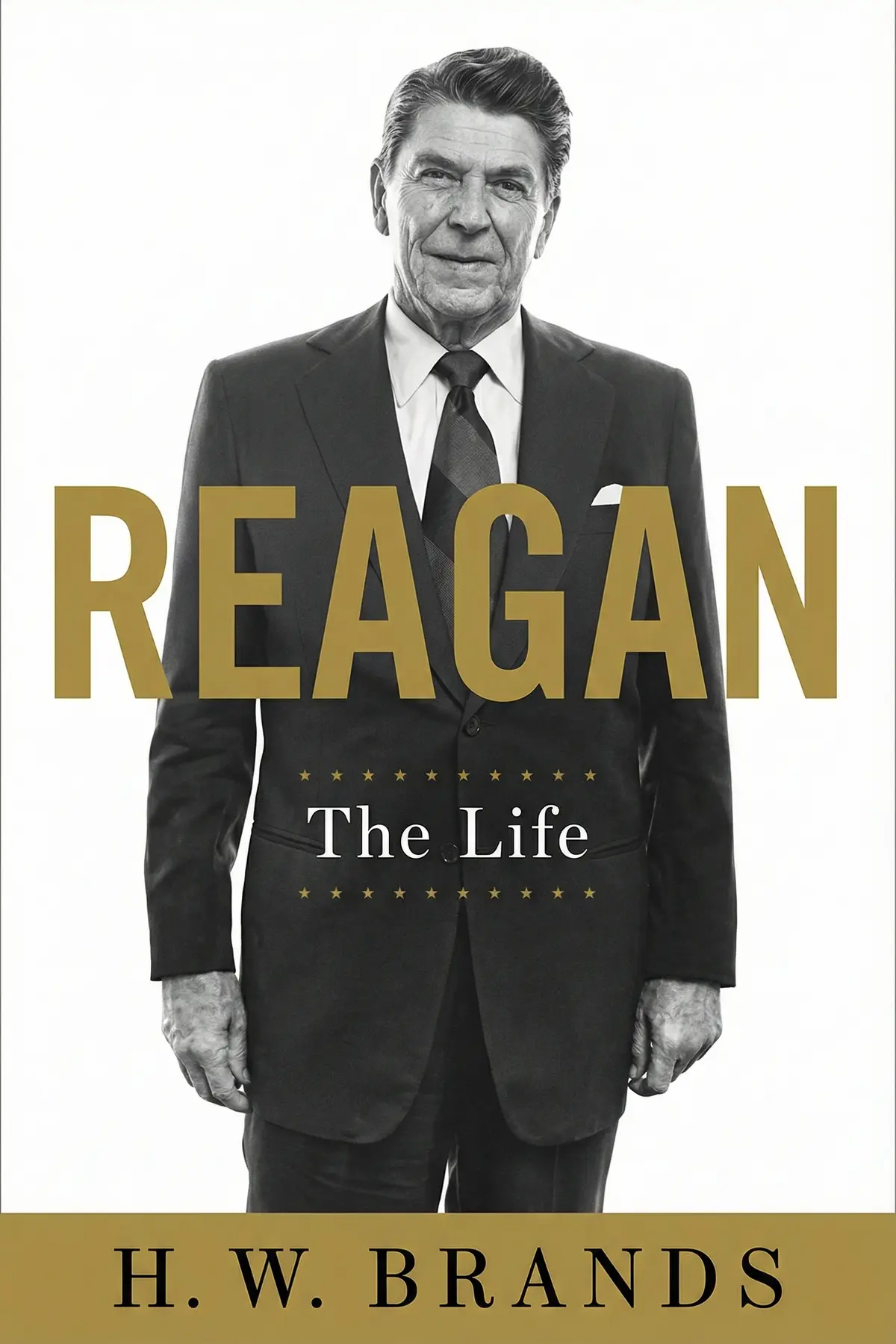
Follows Ronald Reagan from a poor, insecure Illinois boyhood to the White House. It shows how a plain, funny way of talking let a leader with little interest in detail turn America toward conservatism, and what that inattention cost.
1 min 02 sec
Most people with firm opinions persuade only those who already agree. Ronald Reagan won over a nation, including many who opposed his policies. In Reagan: The Life, historian H. W. Brands follows a poor, insecure boy from small-town Illinois who never cared much for detail, and shows how he turned the United States toward conservatism after half a century of liberalism.
His tool was a way of talking: plain, funny and full of everyday examples, built over decades on radio, in film and on television. Brands makes the case that this gift, more than any program, changed the country’s direction, for better and sometimes for worse.
Along the way come Reagan’s surprising first political hero, the medium that rescued his career, and an astrologer who helped set a president’s calendar. The life shows what charm and a few fixed convictions can achieve, and what it costs when the details are always left to someone else.
1 min 54 sec
A boy who was always the new kid, short on money and friends, found one place where he felt sure of himself. It shaped everything that followed, including a surprising choice of political hero.
2 min 08 sec
Hollywood made Reagan a star, then lost interest in him. What he did next, first in a union fight and then on a medium film stars looked down on, set his course for life.
2 min 16 sec
One speech for a losing candidate raised a fortune and launched a governor. The way Reagan spoke mattered as much as what he said, and it explains a radio choice that puzzled his advisors.
2 min 10 sec
A bullet beside his aorta, an anxious wife consulting the stars and a budget stuck in Congress. Reagan’s way out of the last problem became the tactic he trusted most for the rest of his presidency.
2 min 05 sec
He called Moscow an evil empire and then pushed for a summit. A friendship with Gorbachev opened doors, but in Iceland one weapons program and his own party closed them again.
1 min 51 sec
An illegal money trail, a furious former aide and an astrologer’s role made public should have ended his standing. Something else held it up, until a slower enemy arrived from within.
1 min 15 sec
Brands never pretends Reagan became a detail man. What he had was a voice, learned from Roosevelt’s Fireside Chats, tested on General Electric tours and perfected on camera, that let him lead people who rejected his ideas. With it he swung American politics toward conservatism after fifty years of liberalism and helped reset the Cold War, from calling Moscow the Evil Empire to an easy rapport with Gorbachev. Big plans still met hard limits: an unbalanced California budget forced tax hikes instead of cuts, the Iceland summit ended in failure, and his own staff ran a scheme that appeared illegal without telling him.
For anyone whose work depends on persuading, the life suggests a few things to watch. Plain stories and humor keep opponents listening when facts alone would lose them. When insiders stall, a clear appeal to the people they answer to can move them. And the big picture only holds if someone trustworthy is minding the details, because responsibility stays with the leader either way.
Reagan’s mother once served oatmeal as if it were a delicacy. Her son spent his life proving that how a thing is served changes how it tastes.
Ronald Reagan is now a symbol, praised by one side of American politics and attacked by the other. In his lifetime the picture was messier: many people disliked his policies, yet almost everyone liked the man. H. W. Brands sets out to explain how a poor, insecure boy from Illinois, an average student and then a fading film actor, became the president who turned the United States toward conservatism after fifty years of liberalism. Brands finds the answer in Reagan's voice. Reagan learned from Franklin Roosevelt's radio talks, sharpened his stories on General Electric tours, and used television to go over the heads of Congress. The biography follows him through Hollywood union fights, the California governorship, a near-fatal shooting, summits with Mikhail Gorbachev and the Iran-Contra scandal. Readers get a clear account of a decisive stretch of American history and a close look at how persuasion works: why warmth keeps opponents listening, and why a leader who leaves every detail to others still answers for them.
Readers who want to understand how modern American conservatism took shape.
Professionals who persuade for a living and want to see plain storytelling win over skeptics.
Students of the Cold War curious how Reagan handled Gorbachev, Nicaragua and Iran-Contra.
H. W. Brands was born in Portland, Oregon, in 1953 and trained first in mathematics before turning to history. After completing a history doctorate at the University of Texas at Austin in 1985, he taught at Texas A&M University and later returned to Austin as a member of its faculty. Traitor to His Class and The First American, two of his books, were both Pulitzer Prize finalists.
Listeners find this biography highly engaging and value its thorough examination of Reagan’s entire life and time in office. The work is deeply researched and perceptive, allowing audiences to better grasp and reevaluate the former president. Listeners admire the prose, as one mentions the moving depiction of Reagan’s early years, while another points out the compelling narrative of his presidential term. Opinions vary regarding the book's size; some enjoy the brief chapters, though others feel the overall length is quite extensive.
Brands has a gift for making massive historical biographies feel like page-turners. This is a compulsively readable look at the man who transformed American conservatism. While many focus solely on the presidency, I appreciated the deep dive into his childhood in Illinois. It helps explain how his "sunny mien" was forged long before he reached the White House. The book is well-documented but never feels like a dry academic text. Brands masterfully navigates the "Great Communicator" myth versus the actual conviction behind the rhetoric. Even if you disagree with his policies, the narrative of his rise from a radio announcer to a global leader is undeniably fascinating. The short chapters make it easy to digest despite the overall length.
Show moreFinally got around to reading this beast of a book, and it was worth every minute of the commitment. The way Brands details Reagan's time as a sports radio announcer is particularly revelatory. It shows how he learned to think on his feet and connect with an audience he couldn't see. This biography is both comprehensive and deeply human, touching on everything from his alcoholic father to his intense devotion to Nancy. I found the discussion of his shift from a New Deal Democrat to a conservative icon to be the most compelling part. It’s a well-documented journey that makes you understand why he was so persuasive. Brands has produced a stellar piece of work that feels both intimate and grand in scope.
Show moreWow, H.W. Brands has done it again by delivering a biography that is as entertaining as it is educational. The chapter on the assassination attempt was gripping and highlighted Reagan’s incredible grace under pressure. You really get a sense of his "sunny mien" and how it wasn't just an act for the cameras. The book is comprehensive, covering his Hollywood years with as much care as his two terms in the White House. Look, even if you aren't a fan of his politics, you have to respect the research that went into this. It helps you understand the man behind the myths. It’s an inspiring and remarkably insightful read for anyone interested in American history.
Show moreNot what I expected from a 700-page biography, but I found myself finishing it in just a few sittings. Brands creates a narrative that is both personal and political, showing how Reagan’s early experiences shaped his later convictions. The focus on his "wholehearted belief" in the United States is what makes this book so compelling. It captures that sense of infinite possibility he brought to his speeches, like the one after the Challenger disaster. This is a comprehensive look at a president who redefined his party for generations. The writing is clear, the research is exhaustive, and the story is simply fascinating. It’s a brilliant reassessment of Reagan’s place in the pantheon of American leaders.
Show moreEver wonder how a Hollywood actor became the most influential political figure of the late 20th century? H.W. Brands offers a comprehensive and balanced examination of Reagan's life that avoids the pitfalls of worship or vitriol. The sections on his foreign policy, particularly the summit meetings with Mikhail Gorbachev, were the highlights for me. Truth is, Brands captures the tension of the Cold War without getting bogged down in jargon. He portrays Reagan as a pragmatist who could be flexible when it mattered, despite his rigid public persona. Some might find the sheer volume of information overwhelming, but the writing style is so fluid that it carries you through. It’s an insightful reassessment of the 40th president's legacy.
Show moreThis book manages to be incredibly thorough without becoming a slog, largely due to the clever use of short, punchy chapters. I’ve always been curious about the "Star Wars" SDI program and how it factored into his negotiations with the Soviets. Brands explains the nuances of these summits beautifully, showing where Reagan stood his ground and where he almost missed opportunities. Not gonna lie, the sections on Nancy Reagan and her use of astrology were a bit wild to read in a serious history book. It adds a layer of reality to the White House that you don't always get in political biographies. While the book is long, the pacing is excellent throughout. It’s a balanced portrait of a leader who was both cerebral and intuitive.
Show moreAs someone who grew up during the 80s, reading this was like taking a deep dive into the architecture of my own memories. Brands does a fantastic job comparing Reagan to FDR, showing how both men used their communication skills to reshape the country's spirit. The book is insightful because it doesn't just list dates; it explains the "why" behind the "what." I liked the focus on how he moved away from the "pessimism of conservatives" like Goldwater to create something more aspirational. My only minor gripe is that some of the legislative battles in California could have been trimmed. Still, it remains a compulsively readable account of a man who truly believed in the American dream.
Show moreAfter hearing so much about the "Dutch" biography debacle, it was a relief to find a Reagan book that sticks to the facts while remaining engaging. Brands provides a balanced view of the Iran-Contra affair, confirming that Reagan knew more than he let on without being overly judgmental. The relationship between Reagan and Gorbachev is the emotional heart of the book’s second half. Frankly, the way they navigated their differences to end the Cold War is one of the most important stories of the century. The book is a bit lengthy, and some readers might find the detail on the Screen Actors Guild tedious. However, the overall insight into his "Great Communicator" persona makes it a necessary read.
Show moreBrands' writing style is smooth, but I couldn't help feeling that this biography is a bit too detached from the actual impact of Reagan's policies. The author touches on rising inequality and the federal debt, yet these issues feel secondary to the personal narrative of the "Gipper." It is an impressive, well-documented work, but the "Great Man" approach sometimes obscures the reality of those who lived through his era. I appreciated the detail regarding his relationship with Margaret Thatcher and the Pope, which fleshed out the global "superteam" aspect. However, for a book of this length, I expected a more rigorous deconstruction of the administration's failures. It’s a solid history, just one that plays it a bit too safe for my taste.
Show morePicked this up hoping for a definitive take on the Iran-Contra scandal, but I walked away feeling disappointed. Brands provides a broad overview, yet he seems to gloss over the darker complexities of the administration in favor of a "Great Man" narrative. The book is undeniably lengthy, and at times, it feels like it’s merely recounting events rather than analyzing the consequences. Personally, I found the chapters on his early acting career to be more engaging than the political analysis. He mentions the friction within the cabinet, but it lacks the grit you'd find in a more critical biography. If you want a celebratory look at Reagan’s life, this is fine, but it lacks the bite needed for a truly objective historical critique.
Show moreIt is a full biography of Ronald Reagan, from a poor Illinois childhood through Hollywood, the California governorship and two terms as president, to his final decade with Alzheimer’s. Brands argues that Reagan, never interested in detail, changed the course of American politics through a warm, plain way of speaking honed over decades of talking with ordinary people, and he shows where that style succeeded and where it failed.
Brands traces the label to skills Reagan built over a lifetime. He studied Franklin Roosevelt’s radio talks, polished relatable stories while touring for General Electric, and spoke with humor rather than anger. His 1964 televised speech for Barry Goldwater raised $1 million, and in 1981 a television appeal flooded Congress with calls until his budget passed. Many disagreed with him, but few found him unpleasant to hear.
Reagan publicly attacked the Soviet Union as the Evil Empire while keeping the door open to arms talks. After Gorbachev took power in 1985, Reagan pushed for a summit against hawkish advice. In Geneva the two men liked each other immediately but made no arms progress. In Reykjavík in 1986, talks collapsed over the Strategic Defense Initiative, which Reagan refused to limit, partly for fear of a backlash from his own party.
The administration sent weapons from Israel to Iran hoping to free seven Americans held by Hezbollah in Lebanon. Separately, Oliver North of the National Security Council moved between $3 and $4 million from those sales into an account for the Nicaraguan contras, whom Congress had barred the administration from supporting. Brands stresses that whether Reagan knew mattered less than the fact that it happened under him.
Ishmael Beah

James Herriot

Pankaj Mishra

Barack Obama

Anthony Pratkanis


Masaji Ishikawa

Ben Macintyre
AUDIO SUMMARY AVAILABLE
Get the key ideas from Reagan by H. W. Brands, plus 5,000+ more nonfiction titles.









