

14 min 38 sec
Available in: English
Radical Inclusion: Seven Steps to Help You Create a More Just Workplace, Home, and World
Shows how to spot who is being left out at work, at home or in society, then win lasting change and protect it, drawing on the campaign that brought pregnant girls back to school in Sierra Leone.
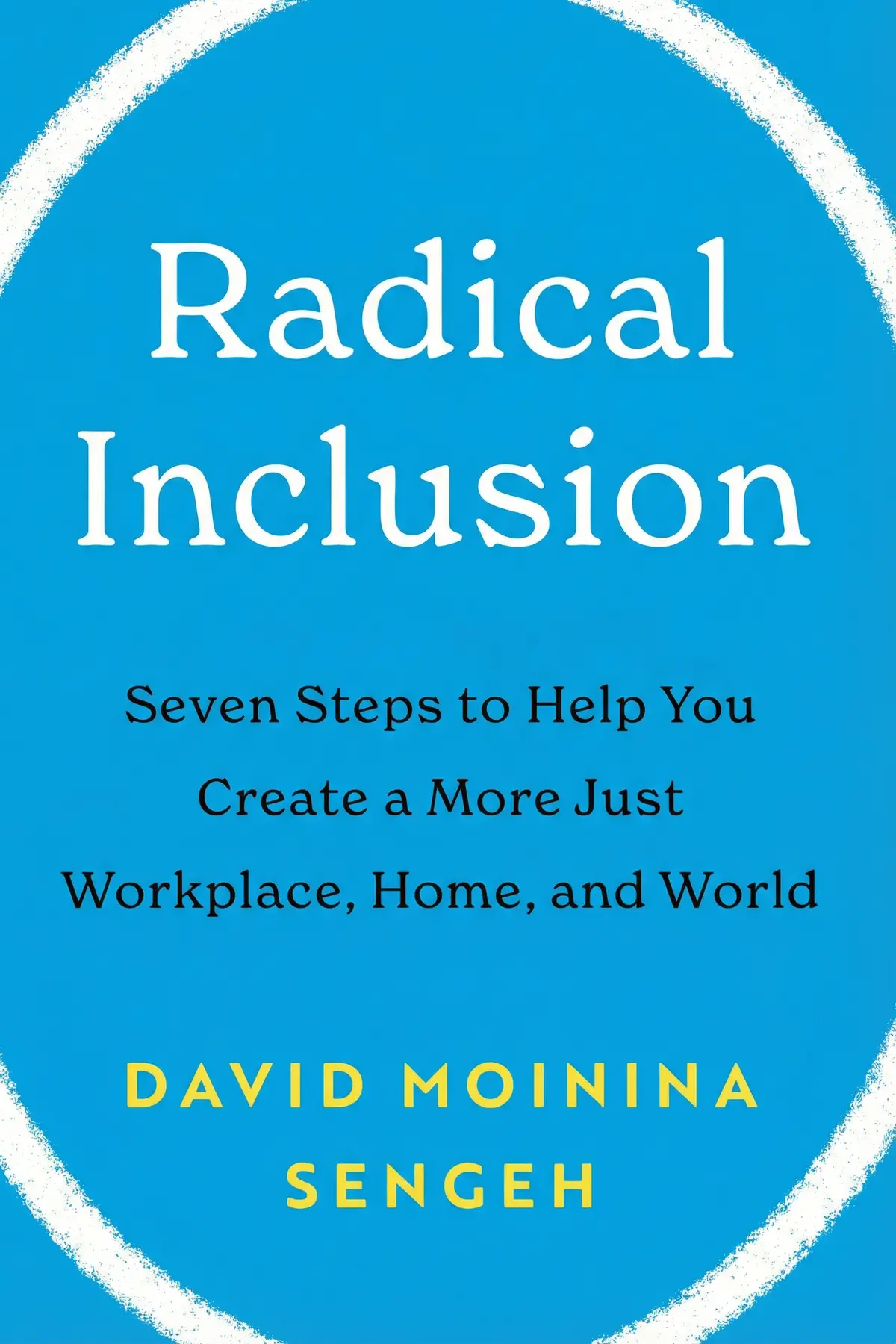
Table of Content
1. Introduction
1 min 01 sec
Most people who want a fairer team, school or family never get past good intentions, because the barriers that keep others out are built into habits and rules nobody thinks to question. In Radical Inclusion, David Moinina Sengeh, who served as Sierra Leone’s minister of education, argues that seeing those barriers starts with one plain question: who is missing, and why? He tested it on a national ban that kept pregnant girls out of school, a rule many people considered simple common sense.
His claim is that inclusion lasts only when you treat it as a series of deliberate steps, from noticing who is left out to guarding the change for years after you win it. His campaign against that ban runs from a tense town hall to a cabinet vote and beyond. Following it gives you a working method: how to spot exclusion where you live and work, how to persuade the people who resist and how to make the new way of doing things stick.
2. Spot the people nobody thinks to pick
2 min 08 sec
A boy who was never picked to play turned out to shine as a goalkeeper. What kept him out was never ill will, and the same force shapes who gets heard in your own groups.
3. Listen until the real objection surfaces
2 min 11 sec
A room full of teachers turned hostile the moment a reform appeared on screen. Then one principal stood up and told a story nobody expected, and the whole argument began to move.
4. Choose your role, then recruit your allies
2 min 09 sec
A surgeon uncle, an engineering doctorate and a family history all pointed in different directions. Sengeh explains how he found the one place he could do the most good, and why he refused to act alone.
5. Win the room by answering every fear
2 min 06 sec
Resistance in the cabinet stayed strong, and some ministers still hesitated over the reform. Months of groundwork, one lesson from an epidemic and a single sentence from the president decided the outcome.
6. Make the new rule feel normal
2 min 02 sec
The ban was gone, yet parental fears, practical hurdles and teacher bias still stood in the way. What finally changed minds involved home visits, a few comedians and a place for babies near the classroom.
7. Keep progress from sliding backward
1 min 54 sec
Universities that worked hard on diversity still had students stopped by campus police. And a pandemic exposed gaps nobody had noticed. Sengeh explains why winning inclusion once is never the end.
8. Conclusion
1 min 07 sec
Sengeh’s campaign shows that a fair workplace or home is something people build deliberately. To many teachers and officials, the ban on pregnant girls looked like common sense. It fell because someone asked who it was keeping out, listened to the anger it provoked, gathered unlikely allies, answered fears one by one and then kept working long after the vote. The same order of work applies when the barrier is a hiring habit, a meeting where the same voices always speak or a family rule nobody has questioned.
Start where Sengeh started. Look at one group you belong to and name who is absent and what stands in their way, backing it with both a story and a number. When someone resists, find out what they fear before you argue, and watch for your own Gloria, the person whose life crosses both sides. If you win a change, plan for the visits, the training and the follow-up that make it real, and come back later to check who it still misses.
Bakarr could always play. He was waiting for someone to notice him and invite him into the game.
About this book
What is this book about?
Exclusion rarely looks like cruelty. More often it hides inside habits and rules so familiar that nobody questions them, from the child never picked for a game to a national policy that keeps a whole group out of school. David Moinina Sengeh, who led Sierra Leone's education ministry, argues that good intentions are not enough to change this. Inclusion has to be built on purpose, and then defended. His case study is the campaign to overturn the rule in Sierra Leone that kept pregnant girls out of classrooms. He takes readers through a hostile town hall where a principal's personal story changed the room, the months of preparation behind a cabinet vote, and the slower work that followed: home visits by teachers, comedians making the idea familiar, and support so young mothers could study. From that campaign he draws seven steps: recognize exclusion, listen, define your role, build a coalition, advocate and act, adapt to a new normal and keep going beyond inclusion. Managers, parents and activists get a practical order of work for noticing who is missing, persuading people who resist and making change stick.
Book Information
Who it's for
Managers and team leads
Managers and team leads who want to know why some people never seem to get a voice or a chance.
Reformers facing cultural resistance
Activists, teachers and public servants pushing a reform past strong cultural resistance.
Parents and community members
Parents and community members who want a practical method for making their own circles fairer.
About the Author
David Moinina Sengeh
David Moinina Sengeh has held several government roles in Sierra Leone, including chief innovation officer and minister of basic and senior secondary education, and in 2023 President Julius Maada Bio appointed him chief minister. He holds a bachelor's degree from Harvard College and a PhD in biomedical engineering from MIT. He is a TED Fellow, a World Economic Forum Young Global Leader and an Obama Foundation Leaders Africa Fellow, and he was named to the 2013 Forbes 30 Under 30 list. Radical Inclusion is his first book.
Ratings & Reviews
Ratings at a glance

What people think
Listeners find that while perspectives differ on the book's usefulness for corporate settings, many are inspired by the author’s narrative regarding his advocacy in Sierra Leone. They are especially affected by Sengeh’s work to end the ban on pregnant girls attending school, with one listener observing that it serves as a "good blueprint for changing minds" through persistent action. Additionally, listeners appreciate the seven-step framework for coalition building and the unique international perspective shaped by the author’s background. They also emphasize the powerful summons toward intentional inclusion, with one listener noting the "thought-provoking truths about society" found in these personal anecdotes.
Top reviews
Cholada
David Moinina Sengeh delivers a masterclass in what it means to lead with both empathy and a scientific mindset. This isn't your standard, dry diversity training manual that you’d find in a corporate breakroom. Instead, we get a visceral, front-row seat to his battle against systemic exclusion in Sierra Leone, specifically his effort to get pregnant girls back into the classroom. The narrative is deeply personal, weaving his time at MIT and Harvard into his current role as a government minister. Truth is, the 'Radical Inclusion' he describes requires a level of persistence and coalition-building that most of us haven't even considered yet. I found the seven steps to be a helpful roadmap for any leader trying to navigate difficult cultural shifts. It is an inspiring, global perspective that challenges you to look at invisible barriers in your own community.
Show moreBenjamin
The seven-step framework Sengeh outlines is a game-changer for anyone who feels stuck in the 'awareness' phase of social change. I loved how he grounded every theory in the reality of his work in Sierra Leone, making the concept of inclusion feel tangible. Radical inclusion is about more than just inviting people to the table; it’s about changing the very structure of the room itself. Sengeh’s writing is accessible yet intellectually stimulating, bridging the gap between high-level policy and grassroots activism. I particularly enjoyed the sections on 'adapting to a new normal' and how to sustain progress once the initial excitement of a movement fades. This is essential reading for anyone who wants to move beyond performative gestures and toward real impact. It’s one of the few books that actually made me rethink my own biases.
Show moreSelin
Finally finished this over the weekend and I am still thinking about the concept of being a 'possibilist' rather than just an optimist. Sengeh’s journey is incredible, and he writes with a sense of urgency that is truly infectious. This book moved me because it isn't just about abstract theories; it is about real lives, real laws, and real progress. The anecdotes about his time at Harvard being racially profiled contrasted with his power as a minister provided a fascinating look at how exclusion shifts in different contexts. His seven steps are clear, actionable, and deeply rooted in a desire to make the world more just for everyone. If you care about education, leadership, or social justice, you need to read this book immediately. It is easily one of the most thought-provoking titles I’ve picked up this year.
Show moreRyan
Ever wonder what it actually takes to change the mind of an entire nation? This book provides a fascinating blueprint for that kind of high-stakes advocacy work. Sengeh doesn't just talk about inclusion as a vague corporate value; he treats it as a necessary, urgent mission that demands strategic planning and active listening. I was particularly struck by the chapter on building coalitions, which emphasized the importance of bringing even your harshest critics to the table. Some readers might find the personal stories a bit long-winded, but I felt they added much-needed color to his seven-step framework. It’s a refreshing change of pace from the typical American-centric business books we usually see on these lists. My only minor gripe is that some of the advice feels a bit repetitive by the final few chapters. Still, it’s a solid, thought-provoking read for anyone interested in real systemic change.
Show moreA
Picked this up on a whim after seeing a brief summary of the author's background as a scientist and a minister. I gotta say, the global perspective is exactly what the DEI conversation has been missing lately. Sengeh uses his personal journey to show that inclusion isn't just a buzzword, but a series of intentional and often uncomfortable actions. His story about the paralyzed boy playing soccer really stuck with me as a metaphor for how we define 'belonging' in society. While the book leans heavily on his experiences in Sierra Leone, the underlying principles of active listening and defining your role are universally applicable. It’s not a listicle of quick fixes, which might frustrate some, but the depth of the stories provides a different kind of utility. It’s a call to be more courageous in our everyday interactions.
Show morePacharapol
As someone who works in the non-profit sector, I found Sengeh’s insights on 'radical' action to be both validating and challenging. He doesn't sugarcoat how difficult it is to overturn long-standing traditions, like the ban on pregnant students. The way he describes the need for persistent, evidence-based advocacy is a helpful reminder that change rarely happens overnight. I did feel that some of the chapters could have been tightened up, as the narrative tends to meander into personal history that doesn't always serve the main point. However, the core message about identifying who is missing and why is something every organization needs to hear right now. It is a compassionate and practical guide that balances the 'why' with the 'how' quite effectively. A very timely read given the current global climate.
Show moreEnd
Truth is, we often talk about inclusion as if it’s a simple checklist, but Sengeh proves it’s a lifelong commitment to intentional action. I appreciated how he broke down the process into stages, particularly the focus on defining your specific role in a movement. Not everyone can be the face of a campaign, and his advice on building diverse alliances was spot on for today’s polarized environment. While some of the personal stories felt a little disconnected from the main framework, they did provide a necessary human element to the data. It’s a beautifully written book that feels both humble and ambitious at the same time. Even if you don't agree with every tactical choice he made, you have to admire the results he achieved for the girls in Sierra Leone. Definitely worth a read for any aspiring changemaker.
Show moreArnav
Not what I expected based on the title alone, though I did find some value in the author's perspective. Most of the book feels like a memoir focused on Sengeh’s specific work in Sierra Leone rather than a universal handbook for modern corporate environments. Frankly, if you aren't interested in the nuances of West African educational policy, the middle sections might feel like a bit of a slog. I appreciated the seven-step framework he laid out toward the end, but the anecdotes often felt too situational to easily translate into my own professional life. To be fair, his story about overturning the ban on pregnant girls in schools is undeniably powerful and moving. It just lacks the 'how-to' grit I was searching for in a book marketed as a radical guide for inclusion. It is a decent read for perspective, but don't expect a step-by-step HR manual for your office.
Show moreChloe
Frankly, your mileage will vary with this one depending on what you are looking to get out of it. If you want a memoir about a brilliant man doing important work in West Africa, you will absolutely love Sengeh's storytelling. However, if you are looking for a 'how-to' guide for your HR department, you might find the content a bit too specific to his unique political situation. The lessons on coalition building are great, but they require a lot of mental work to translate into a standard corporate setting. I appreciated the emphasis on active listening and the 'get close' philosophy from Bryan Stevenson, which was a nice touch. It’s a good book with a noble heart, but it occasionally gets lost in its own anecdotes. I’d recommend it as a library borrow before committing to a permanent spot on your shelf.
Show moreGin
Look, I have a massive amount of respect for the work Sengeh has done in his country, but this book was a bit of a letdown for me. It felt more like an extended resume or a collection of personal essays rather than a cohesive guide on radical inclusion. The writing style is somewhat rambling, and many of the anecdotes didn't seem to have a clear point beyond illustrating the author's own successes. I was looking for actionable tools to implement in a complex organization, but instead, I got very basic advice like 'listen more' and 'be persistent.' For someone already familiar with advocacy or public health, much of this content will feel redundant or overly simplified. It’s a heart-warming story, no doubt, but as a professional resource, it really missed the mark for my specific needs.
Show moreQuestions about this book
What is the main idea of Radical Inclusion by David Moinina Sengeh?
Sengeh argues that exclusion persists because it is built into everyday norms and policies, so it often goes unseen. Inclusion lasts only when it is pursued deliberately, through seven steps: recognize exclusion, listen, define your role, build a coalition, advocate and act, adapt to a new normal and go beyond inclusion. He illustrates each step with his campaign to end the ban in Sierra Leone that kept pregnant girls out of school.
How did Sierra Leone lift the ban on pregnant girls in school?
As education minister, Sengeh spent months listening to opponents and allies and gathering evidence. He then answered every objection in a cabinet meeting, pointing out that during the Ebola epidemic children in school were less likely to come to harm. President Bio told ministers that supporting the reform would not weaken his leadership, and the cabinet voted to end the ban. Afterward came home visits by teachers and support from groups like Girls Plus.
How can I apply Radical Inclusion at work?
Start by asking who is missing from a team, meeting or decision, and what keeps them out, using both stories and numbers. Listen to people who resist change until you understand their fears, and look for someone whose experience bridges both sides, as the principal Gloria did. Involve the people affected in designing solutions, and check back months later to see whether the change actually reached them.
Who should read Radical Inclusion?
It suits managers, team leads, educators, public servants and activists who want to make a group or institution fairer and need a method for dealing with resistance. Parents and community members will also find it useful, since Sengeh applies the same steps to a children’s football game, a town hall meeting and a national cabinet vote.
Readers also enjoyed

A Room of One’s Own
Virginia Woolf

Abolish Rent: How Tenants Can End the Housing Crisis
Tracy Rosenthal

Abortion: Our Bodies, Their Lies, and the Truths We Use to
Jessica Valenti


Afropean: Notes From Black Europe
Johny Pitts


All About Love: New Visions
bell hooks

A Bigger Prize: How We Can Do Better Than the Competition
Margaret Heffernan
AUDIO SUMMARY AVAILABLE
Listen to Radical Inclusion in 15 minutes
Get the key ideas from Radical Inclusion by David Moinina Sengeh, plus 5,000+ more nonfiction titles.
- 5,000+ titles
- Listen as much as you want
- 7-day free trial
- Cancel anytime









