

14 min 24 sec
Available in: English
 ไทย
EnglishไทยPredictably Irrational: The Hidden Forces That Shape Our Decisions
By Dan Ariely
Shows how comparisons, first prices, the word free, ownership, expectations and money itself steer everyday decisions in predictable ways, and how deadlines, reminders and deliberate choices help you work around those errors.
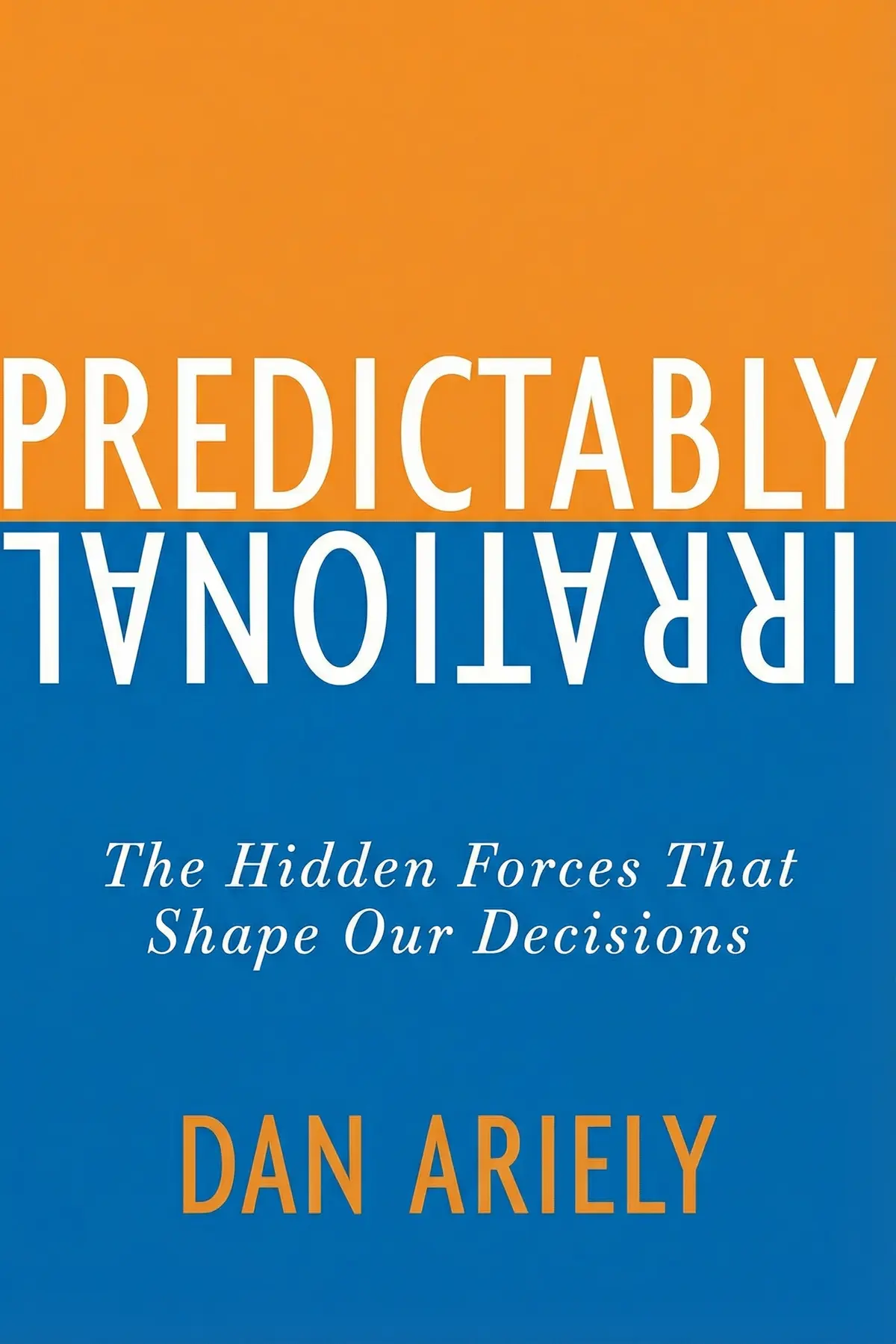
Table of Content
1. Introduction
53 sec
Most of us trust our sense of what things are worth, and a box of chocolates shows how shaky that trust is. Offered a fine truffle for 14 cents or a plain candy for nothing, most people took the free one, though when each cost a cent more they had picked the truffle by a wide margin. In Predictably Irrational, Dan Ariely, trained in cognitive psychology and business, argues that slips like this run through daily life, and that they follow patterns.
We lean on the nearest comparison, the first number we hear, the things we own and the story we expect. Because the errors are predictable, they can be planned for. Along the way come the price traps worth catching before you pay, the reason a small fee can ruin a favor, a reminder that stops cheating, and a way to keep your impulsive side from winning.
2. Spot the easy comparison steering your choices
1 min 29 sec
A slightly plainer friend at a nightclub and an absurdly priced dish on a menu play the same trick on your judgment. Once you see it, a lot of everyday envy starts to make sense.
3. Set your own price before hearing anyone else's
1 min 27 sec
Two digits that have nothing to do with wine or chocolate can change what you would pay for them. The reason reveals who really controls a negotiation, and it is often not the buyer.
4. Treat the word free as a warning sign
1 min 33 sec
Lowering two prices by the same single cent made most chocolate buyers switch to the worse option. The pull behind that switch drives free shipping offers and could even shape public health.
5. Price what you own the way a buyer would
1 min 32 sec
Students who camped out for the same basketball tickets ended up valuing them wildly differently, depending only on luck. The same bias makes sellers overprice their homes and makes people cling to old opinions.
6. Expectations change what you taste and feel
1 min 33 sec
Cola drinkers changed their favorite once they could see the can, and patients felt better from pills that were only said to cost more. What you believe before an experience can reshape the experience itself.
7. Ask for favors without putting a price on them
1 min 39 sec
Lawyers who rejected a modest fee for helping retirees agreed once the fee disappeared. That reversal reveals two rulebooks people switch between, and why one mention of money can be hard to take back.
8. One reminder that keeps honest people honest
1 min 36 sec
Most people cheat a little when they can, and making it riskless barely changes how much. Yet one short mental exercise before a quiz made the cheating disappear entirely.
9. Close some options to finish what matters
1 min 38 sec
A commander who burned his own ships and students who chose extra deadlines both did better by giving up freedom. Their stories show why keeping every option open can cost you what you want most.
10. Conclusion
1 min 04 sec
The errors in Predictably Irrational share a family likeness. A decoy dish, a random two-digit number, a free chocolate, a lottery ticket, a brand on a can and $50 on the dinner table all hand the mind a cue, and the mind takes it without checking. That is unwelcome news for anyone who thinks their choices are entirely their own. For anyone willing to plan, it is encouraging, because a mistake that repeats can be expected and guarded against.
Name what something is worth to you before a seller names a price, and pause whenever the word free appears. Keep money out of favors, and put a reminder of honesty just before the moment that tests it. For goals your impulsive side keeps undoing, set small deadlines and pair the hard task with a pleasure.
Xiang Yu’s soldiers fought hardest once the ships were burning. Sometimes the wisest choice is to take a choice away from the part of you that keeps getting it wrong.
About this book
What is this book about?
Most people assume they decide what to buy, what to charge and how to behave by weighing the facts. Dan Ariely argues otherwise. In Predictably Irrational he shows that our judgments bend in consistent directions: toward the easiest comparison, the first number we hear, anything offered for free and anything we already own. Ariely builds his case from experiments and everyday scenes. A choice between two chocolates flips when one price falls to zero. Students value the same basketball ticket at wildly different amounts depending on whether luck gave them one. Pills described as cheaper relieve pain less often. Lawyers turn down a small fee to help retirees yet agree to work for nothing, and a moment spent recalling the Ten Commandments stops people from cheating on a quiz. Because these mistakes repeat, Ariely argues, they can be anticipated. Readers learn to spot decoys and anchors, keep money out of favors, use reminders to support honesty, and beat procrastination with self-imposed deadlines and by closing the options that compete with what matters most.
Book Information
Who it's for
Hoping to stop overpaying
Shoppers and freelancers who want to stop overpaying and set prices with a clear head.
Leaders asking for effort
Managers and volunteer leaders who ask people for effort and need to know when money helps or hurts.
Putting off long-term goals
Procrastinators whose long-term goals keep losing to the sofa, the snack and the screen.
About the Author
Dan Ariely
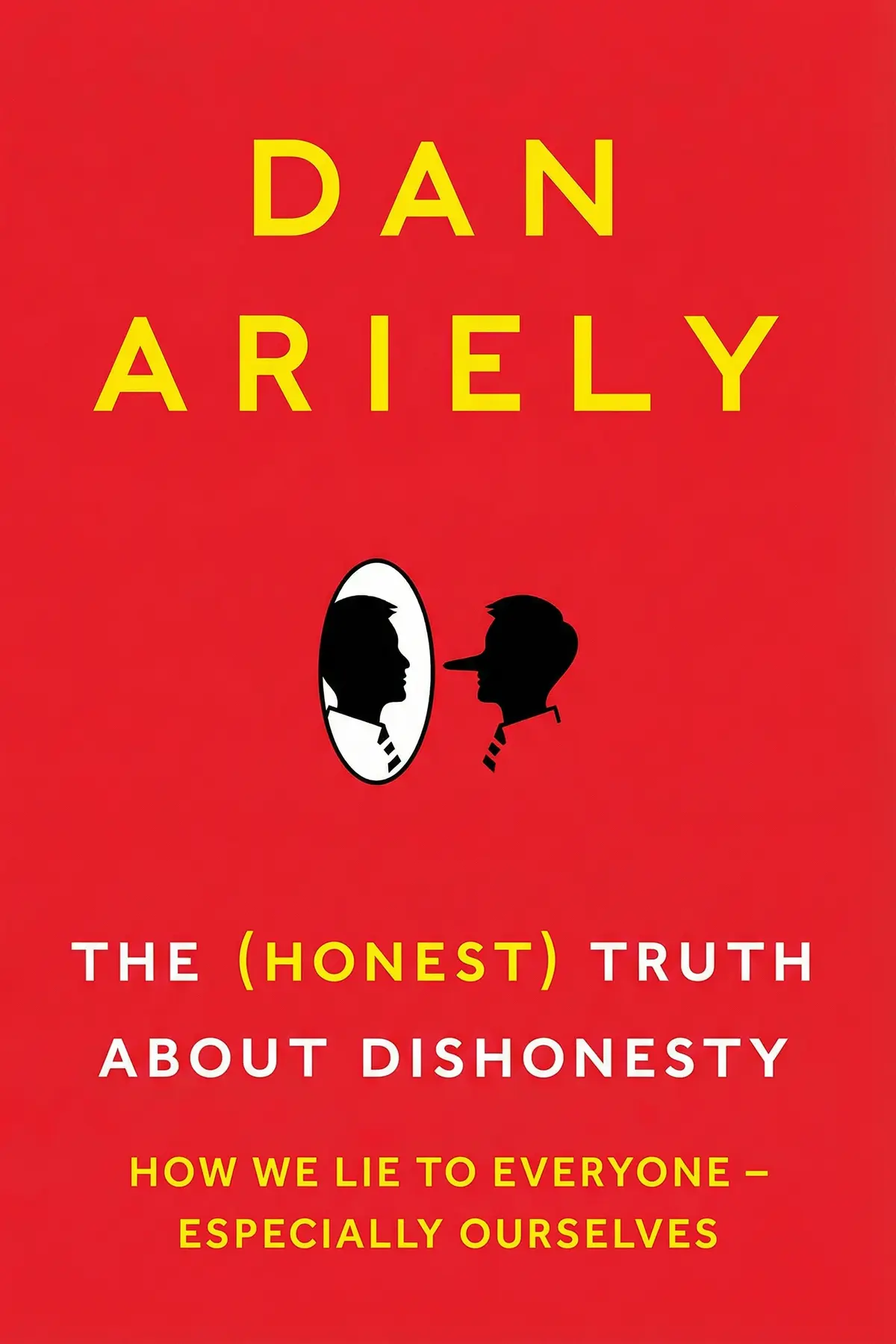
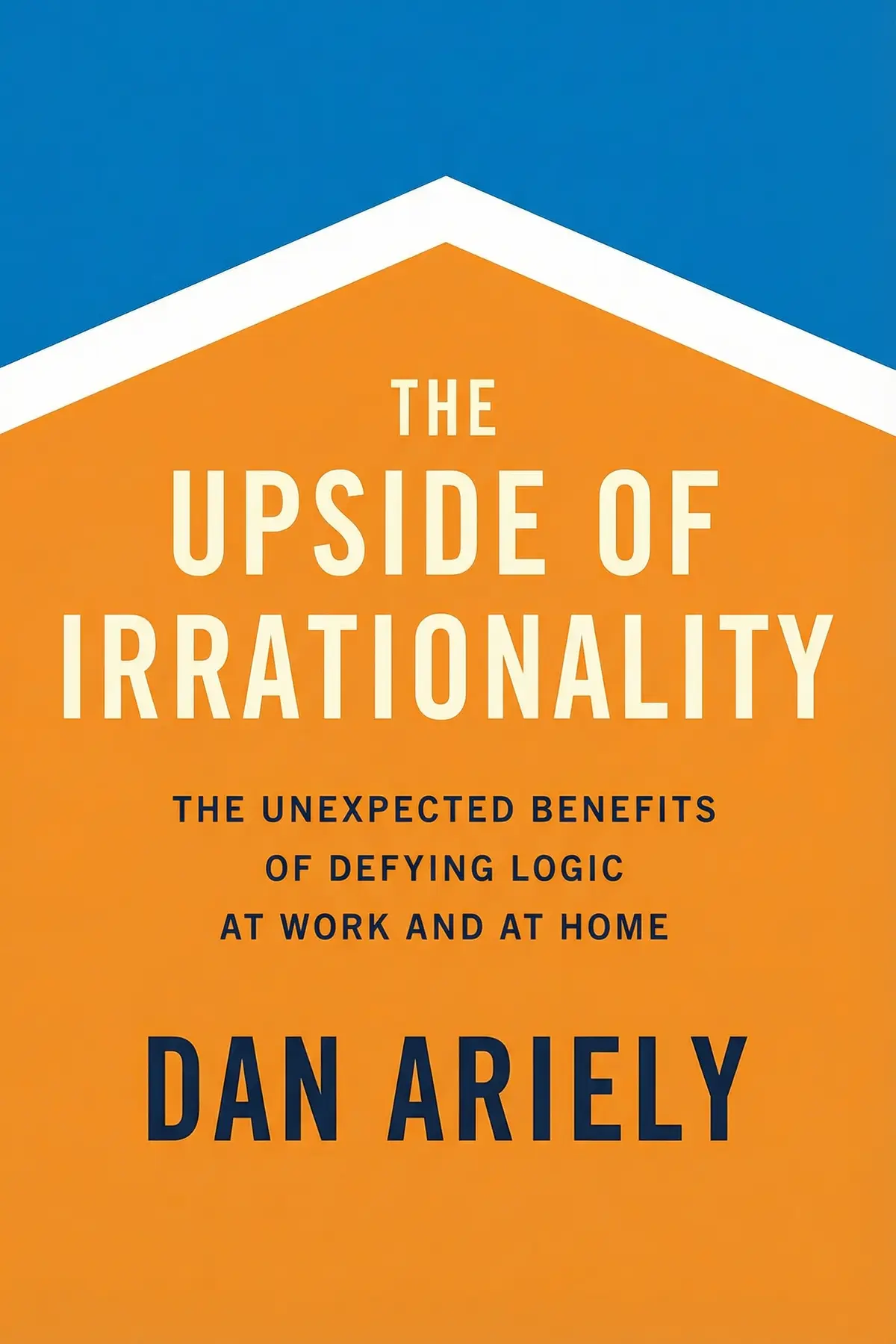
Dan Ariely was born in New York and grew up in Israel. After studying at Tel Aviv University, he earned a master's and a doctorate in cognitive psychology at the University of North Carolina at Chapel Hill, and Duke University later awarded him a second doctorate, in business. He has also worked at MIT, at both the Media Lab and the Sloan School of Management. His other books include The Upside of Irrationality and The (Honest) Truth About Dishonesty, and from 2012 to 2022 he wrote the Ask Ariely column for The Wall Street Journal. He has co-founded companies that apply behavioral science. Since 2021, the reliability of parts of his research has been questioned, and two articles have been retracted.
Ratings & Reviews
Ratings at a glance

What people think
Listeners find this work exceptionally accessible and fun to follow, noting that the informal prose maintains their interest throughout. Furthermore, the content is backed by extensive research and offers useful perspectives on human behavior and psychology, supported by numerous persuasive studies. Listeners also value the way it builds upon traditional economics while questioning established theories, all while maintaining a charming sense of wit across the chapters.
Top reviews
Jack
Ever wonder why a five-dollar coffee feels like a total rip-off until it is compared to a seven-dollar latte on the same menu? Dan Ariely takes the dry, dusty bones of classical economics and breathes life into them with a wit that is genuinely rare in non-fiction. This book is an absolute masterclass in explaining social versus market norms, particularly the awkwardness of offering to pay your mother-in-law for a delicious Thanksgiving dinner. The truth is, we aren't just random in our mistakes; we are systematically flawed in ways that can be measured and mapped. I found the conversational writing style incredibly refreshing compared to other academic texts. Ariely makes complex psychological experiments feel like lunchtime stories told by a brilliant friend. While some might find the heavy focus on MIT student samples a bit narrow, the broader implications for how we live and spend are undeniable. It’s a fascinating, hilarious, and deeply insightful look into the machinery of our own minds.
Show moreChamnong
Finally got around to reading this, and my brain is still buzzing with all the new connections Ariely makes between psychology and spending. The way he dismantles the 'rational actor' theory is both brutal and incredibly entertaining to watch. I was especially gripped by the section on relativity and how we almost never choose things in absolute terms, but rather based on what they are standing next to. It's a clever trick that marketers use every day, and seeing the data behind it was a total eye-opener for me as a consumer. The book is full of convincing experiments that are described with such clarity that even someone with zero background in economics can follow along. Frankly, it's one of those rare books that actually changes the way you look at your own daily decisions. If you enjoyed 'Blink' or 'Thinking, Fast and Slow,' this is right up your alley and perhaps even more practical in its application.
Show moreEye
Wow. Dan Ariely has a way of making you feel both smarter and slightly stupider at the same time, and I mean that as a high compliment. This book is a fascinating journey through the quirks of human nature, backed by experiments that are as clever as they are revealing. I was particularly struck by the research on how mentioning the Ten Commandments can drastically reduce cheating, even among people who aren't religious. It shows how much our behavior depends on the immediate context and the 'primes' we encounter in our environment. The writing is punchy, the humor is spot-on, and the takeaways are actually useful for everyday life. Personally, I think this should be required reading for anyone in a leadership position. It provides a much-needed correction to the idea that people are just machines responding to financial incentives. Sometimes, a little bit of social recognition goes much further than a cash bonus.
Show moreLily
This book should be required reading for anyone who works in marketing or just happens to have a pulse. It is an extraordinary look at the hidden motives that drive us, delivered in a style that is both entertaining and deeply researched. The experiment with the beer—where people's preferences changed based on whether they knew the ingredients beforehand—was a perfect illustration of how expectations shape our reality. Ariely manages to make every chapter feel relevant to your own life, whether he is talking about the frustration of multiple options or the weird ways we justify small acts of dishonesty. The humor throughout the text keeps it from ever feeling like a slog, and the insights are the kind that stay with you long after you've closed the cover. I’ve recommended this to several friends already because it’s just that good. It’s a rare book that manages to be both scientifically rigorous and genuinely fun to read.
Show morePrinya
Picked this up on a whim after a coworker mentioned the chapter on the power of 'free.' It is wild how the mere mention of a zero-dollar price tag can make us throw all logic out the window and wait in a three-hour line for a cheap keychain. Ariely’s research is extraordinarily thorough, yet he manages to keep the tone light and full of delightful humor throughout the text. I particularly appreciated the discussion on procrastination and how external constraints can actually help us achieve our goals more effectively than pure willpower. To be fair, some of the middle chapters felt a little repetitive, as if he was trying to stretch a few core concepts to fit a full book length. However, the insights into human nature and our strange relationship with ownership are worth the price of admission alone. It certainly enhances my understanding of why I keep things I don't need just because I already own them.
Show moreTod
As someone who has struggled with deadlines my entire life, the chapter on procrastination was a total gut punch that I desperately needed. Ariely’s experiment with the three different classroom settings—one with firm deadlines, one with no deadlines, and one with self-imposed ones—offered a brilliant look at how we sabotage ourselves. The results were surprising and provided a lot of food for thought regarding how we structure our workplaces and schools. My only minor gripe is that some of his personal anecdotes feel a bit self-indulgent at times, though they do help humanize the data. The book is extraordinarily researched, but it never feels like you are sitting through a boring lecture. Instead, it feels like a series of 'aha!' moments that slowly build a picture of why we are so predictably irrational. It’s a great read for anyone looking to understand the hidden forces that drive our choices, from the beer we order to the partners we choose.
Show moreDen
The chapter on the power of price and the placebo effect completely changed how I look at my own medicine cabinet. It is wild to think that a more expensive pill can actually 'work' better simply because our expectations are primed by the cost. Ariely does an amazing job of showing how our physical responses are tied to our economic perceptions in ways we don't even realize. The book is full of these kinds of insights, delivered with a sense of wonder and curiosity that is quite contagious. I appreciated how he challenged traditional theories without being overly condescending to the reader. While I found the section on 'keeping doors open' a bit long-winded, the overall message of the book is incredibly powerful. It forces you to confront the fact that you aren't as in control of your choices as you think you are. Highly recommended for anyone who likes their science with a side of humor.
Show moreRin
After hearing about behavioral economics for years, it was refreshing to see the 'rational actor' model finally dismantled with such glee and precision. Ariely doesn't just tell you that people are irrational; he shows you exactly how, why, and when it is going to happen. This predictability is the key to the whole book, and it makes the science feel much more applicable to real-world problems like healthcare and education. I loved the section on 'The High Price of Ownership' and how we overvalue what we have simply because it is ours. It explains so much about why we struggle to sell things or let go of bad ideas. The book is a joy to read, though I do wish he had addressed some of the potential flaws in his experimental designs a bit more directly. Still, it’s a brilliant piece of popular science that enhances our understanding of the human condition in a very accessible way.
Show moreGift
Frankly, if you have already read 'Thinking, Fast and Slow' or any of Malcolm Gladwell’s work, you might feel like you’ve seen a lot of this before. All these behavioral economics books seem to rehash the same core set of psychological studies, and Ariely doesn't always add enough new flavor to the mix. That said, his writing style is much more accessible and conversational than Kahneman’s, making it a better choice for a casual weekend read. The chapters on honesty and the way we cheat 'just a little bit' were definitely the highlights for me, especially the part about how people are less likely to steal cash than they are to steal a pencil. It raises some poignant questions about our moral compass in a digital world where money is becoming increasingly abstract. It’s a decent introductory text for the genre, but it might feel a bit thin if you are already familiar with the field's heavy hitters.
Show moreTar
Not what I expected from a book that claims to redefine human behavior. Look, I get that behavioral economics is the 'it' subject right now, but extrapolating a global worldview from a handful of horny MIT students is a bit of a stretch. The experiment involving sexual arousal and decision-making felt particularly problematic and leaned into some rather uncomfortable territory regarding how men perceive women. He ascribes deep emotional motivations to his subjects based on very narrow data sets, which made me question the scientific rigor of the entire project. While the writing is definitely readable and engaging, the logic often feels like a giant straw-man argument against an economic model that most people already know is flawed. It is entertaining enough as a collection of anecdotes, but I wouldn't use it as a manual for understanding the complexities of the human psyche. It feels like a 'Freakonomics' clone that tries too hard to be edgy without having the same level of analytical depth.
Show moreQuestions about this book
What is the main idea of Predictably Irrational?
Dan Ariely argues that people make irrational decisions all the time, and that the errors follow consistent patterns. We judge by easy comparisons, anchor on the first price we hear, overreact to anything free, overvalue what we own and let expectations change what we experience. Because the mistakes are predictable, he argues, vigilance and planning can help us act in our long-term interests.
What is the zero price effect?
It is Ariely’s name for the outsized pull of free. In one study, 73 percent of people chose a Lindt truffle at 15 cents over a Hershey’s Kiss at one cent. When both prices dropped by a cent, making the Kiss free, 69 percent switched to it. Since paying always risks a loss, a zero price feels risk-free, so the item seems worth more than it is.
What does Predictably Irrational say about social and market norms?
Ariely describes two sets of rules. Social norms govern favors between people who care about one another, while market norms govern trades of money for work or goods. Mixing them backfires: lawyers refused to help needy retirees at a reduced fee yet agreed to help for free. Mentioning money can push people into market thinking, and studies suggest it is hard to switch back.
How can I apply Predictably Irrational to procrastination?
Ariely suggests admitting the weakness and planning around it. Students who set themselves small, evenly spaced deadlines earned far better grades than those with one deadline at the end. You can also pair a dreaded task with a pleasure, as Ariely did by watching great films during unpleasant hepatitis injections, and close options that compete with your main goal.
Who should read Predictably Irrational?
It suits anyone who buys, sells, negotiates or manages people and wants to understand why choices go off track. Shoppers learn to spot decoy prices and anchors, managers learn when money undermines goodwill and how a reminder of honesty reduces cheating, and people fighting procrastination get simple tools such as self-set deadlines and deliberate commitments.
Featured in
Readers also enjoyed

A Splendid Exchange: How Trade Shaped the World
William J. Bernstein

Acting with Power: Why We Are More Powerful Than We Believe
Deborah Gruenfeld




Age of Propaganda: The Everyday Use and Abuse of Persuasion
Anthony Pratkanis



Adults in The Room: My Battle With Europe’s Deep Establishment
Yanis Varoufakis

AUDIO SUMMARY AVAILABLE
Listen to Predictably Irrational in 15 minutes
Get the key ideas from Predictably Irrational by Dan Ariely, plus 5,000+ more nonfiction titles.
- 5,000+ titles
- Listen as much as you want
- 7-day free trial
- Cancel anytime









