

A Room of One’s Own
Virginia Woolf
 English
Shows how police, well-meant laws and everyday slut shaming make sex workers less safe, and argues that treating sex work as legitimate labor, with rights and a voice, would protect them better.
59 sec
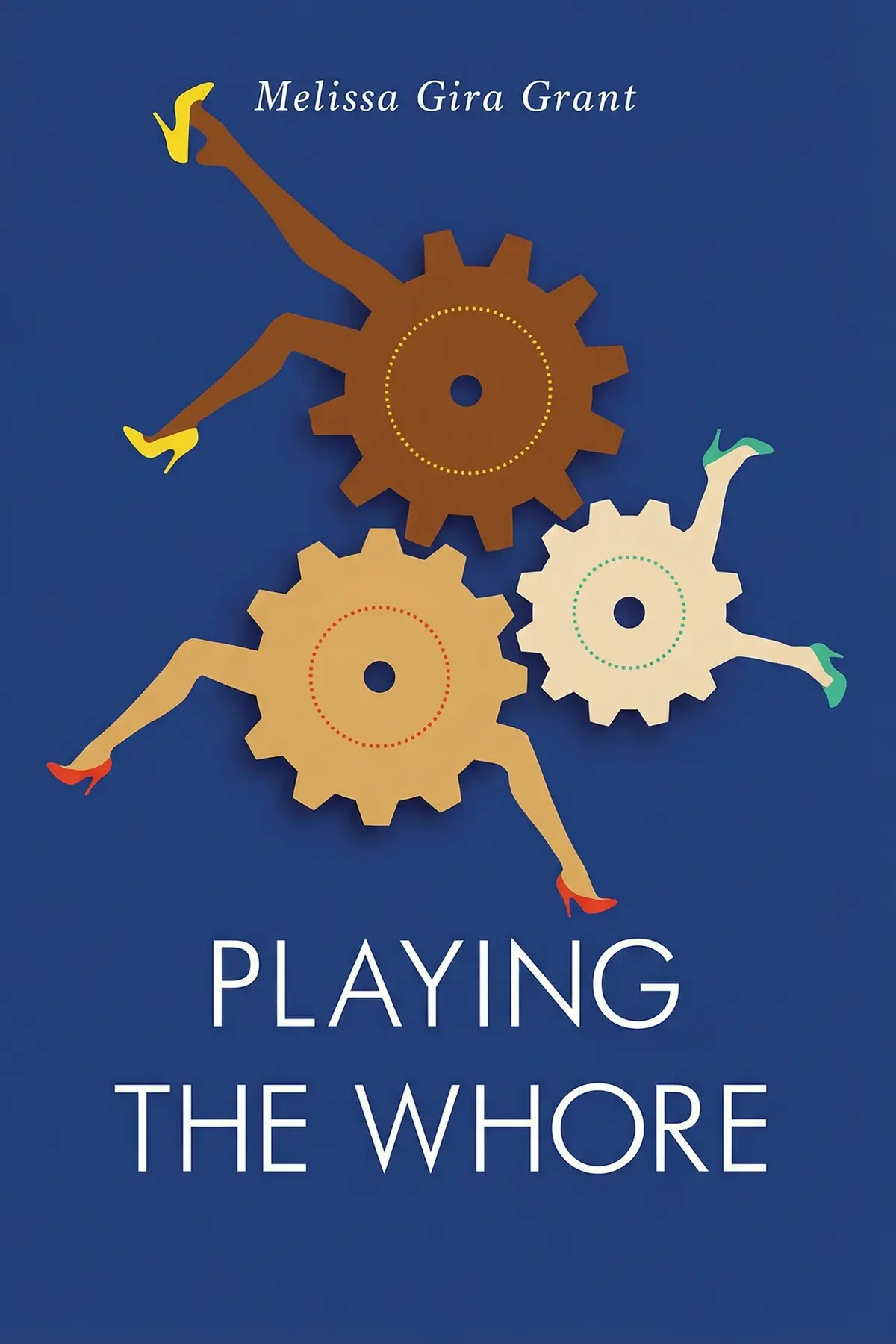
Most people see prostitution as a moral problem, with clients as the danger and police as the protection. In Playing the Whore, journalist and former exotic dancer Melissa Gira Grant turns that picture over. In one New York survey she cites, more than two-thirds of sex workers said police harassed them, usually every day.
Her argument is that sex work is work. The policing, laws and moral judgments built around it make the people who do it less safe, largely because nobody asks them. The evidence runs from New York and West Bengal to a Swedish law, a newspaper’s ad policy and a protest in Toronto. Along the way, familiar ideas about victims, criminals and respectable women start to wobble. What it leaves behind is a sharper test for any policy that claims to protect a group: look at what it actually does to them, and check whether they had a say.
1 min 32 sec
Ask who threatens a sex worker’s safety and most people point to the client. Surveys from two very different places point somewhere else, and to a source of harm that is much harder to report.
1 min 45 sec
An escort agency makes its workers promise never to do the very thing clients pay for. That strange contract reveals how criminal law pushes everyone into a pretense that leaves workers exposed.
1 min 46 sec
A celebrated Swedish law moved the blame from the women selling sex to the men buying it. The women it was meant to help saw something their lawmakers had missed.
1 min 43 sec
A newspaper agreed to clean up its escort ads, and campaigners counted it a win. For the women placing those ads, the new rule created two fresh problems, and the courts saw the issue differently again.
1 min 49 sec
A friend is called a slut, and her friends rush to say she is nothing of the kind. Grant explains why that kind defense keeps alive the very judgment it means to fight.
1 min 46 sec
In a mansion close to a city’s business center, clients ask for what they want and workers decide whether to grant it. Grant’s examples break the single image most people hold of who sells sex.
1 min 47 sec
Hollywood once showed the prostitute as a ruined outcast, then as an independent woman. Today some of the strongest support for sex workers comes from bodies that think about labor rather than sin.
1 min 13 sec
Grant’s title is a provocation with a purpose. She wants the word whore to stop working as an insult, because the insult does real damage. It lets police shrug off a rape report and lets agencies abandon their own workers. It lets lawmakers in Sweden write rules for people they never met. Her case is that sex work is a valid choice, made for pleasure or for money. The people who make it are denied rights most of us take for granted, through unfair laws, moral judgment and gender inequality.
The book’s habits reach well beyond its subject. When a policy promises to protect a group, look at what it does to their daily safety; a condom search works against the very health it should protect. Before anyone speaks about other people’s lives, find out whether those people were asked, as Margo St. James was not in 1983. When you defend someone’s reputation, notice whether you are building a lower category for someone else.
The woman in the dungeon mansion, the escort with her contract and the worker whose emergency call goes unanswered are all doing a job. Grant asks the rest of us to start treating it as one.
Prostitution is usually discussed as a moral problem. In that picture clients are the threat, police are the protection and the women involved are either criminals or victims. Melissa Gira Grant, a journalist and former exotic dancer, starts from the workers' side instead, and the picture changes. Drawing on surveys of sex workers in New York City and West Bengal, Grant shows that police are often the main source of violence and harassment. She traces how criminal law pushes escort agencies into dangerous pretending and leads police to treat condoms as evidence. She also shows how a Swedish law passed without consulting sex workers made their work riskier. She links the stigma around sex work to the way all women are judged for their sexuality, from victim blaming in Toronto to friends who defend a woman by insisting she is not a slut. Readers get a short, pointed argument for treating sex work as a legitimate job, as the International Labor Organization already does. They also get a test that applies to any policy aimed at protecting a group: look at what it does to people's safety, and check whether they had a say.
Readers who want to understand sex work from the workers' side instead of through moral debate.
Students, journalists and policy staff weighing laws on prostitution, policing or trafficking.
Anyone working on women's rights who wants to see how stigma against sex workers and slut shaming feed each other.
Melissa Gira Grant is an American journalist born in 1978. Her reporting and commentary have appeared in The Nation, Wired, The Guardian, The New York Times and The Washington Post, and she has been a staff writer at The New Republic. She is a former exotic dancer who has spoken up for the rights of sex workers and for human rights more broadly. She also co-edited the ebook Coming and Crying.

Listeners find this work highly informative, with one review pointing out the author’s obvious firsthand perspective. Additionally, the book earns praise for its clear prose and citation quality, with one listener noting its well-researched content. Listeners also appreciate the pacing, with one describing it as persuasive. Finally, they value its relevance, with one review mentioning how the historical context grounds the otherwise sensational topic.
Grant manages to strip away the sensationalist lens that usually clouds discussions about the sex industry. Instead of the typical 'victim or vixen' tropes, we get a nuanced look at labor rights and the systemic policing of women's bodies. The truth is, her perspective as an insider provides a level of depth that many academic texts lack. I was particularly struck by how she reframes 'whorephobia' as an economic tool rather than just a social prejudice. It’s a slim volume but incredibly dense with ideas that will stick with you long after you put it down. While some parts feel a bit more like a collection of essays than a single narrative, the overarching theme of autonomy is powerful. This should be required reading for anyone claiming to be a feminist in the modern age. It's not just about sex; it's about who gets to define work in a capitalist society.
Show moreHistorical context is usually where these kinds of books get dry, but Grant uses it to ground the sensationalism of modern headlines. She traces the evolution of 'the prostitute' as a social construct from the 19th century to now, showing how the label is used to police all women. Not gonna lie, I was skeptical about her claims regarding Pompeii and the antiquity of the trade, but her point isn't about the existence of sex-for-money. It's about how we've turned a specific group of workers into a 'problem' to be managed by the police. The pacing is quick, almost like a series of long-form journalism pieces. Even if you don't agree with every one of her conclusions, you can't deny the clarity of her prose. It’s a well-researched polemic that treats its subjects with a dignity they are rarely afforded in public discourse.
Show moreMelissa Gira Grant provides a perspective that is desperately missing from the mainstream feminist conversation. She completely upends the 'fallen woman' narrative by insisting that we view sex work through the lens of labor rights rather than morality. The book is educative in the best way possible, forcing you to look at the 'police-industrial complex' and how it profits from the marginalization of sex workers. I loved how she handled the 'yuck factor,' basically telling the reader that their personal discomfort shouldn't dictate someone else's legal rights. It’s a bold, unapologetic book that doesn't care if it makes you uncomfortable. For anyone who has only ever heard the 'rescue' side of the story, this is a necessary and eye-opening antidote.
Show moreThe section on the Cambodian 'rescue' industry was easily the most compelling part of this entire book. Grant brilliantly dismantles the 'savior' complex of NGOs that often leave women in worse positions than they found them. Personally, I found her argument that sex work is a performance of intimacy—not unlike the work of a therapist or a nanny—to be a total game-changer. She avoids the trap of glamorizing the industry, instead focusing on the mundane realities of labor and the 'yuck factor' that fuels bad policy. To be fair, her tone can get a bit sharp and dismissive toward those who disagree with her, which might alienate some readers. Yet, the research she brings to the table regarding the 'talking crime' of solicitation is vital. It’s a quick read but demands significant mental energy to process.
Show moreFew books challenge your gut reactions as effectively as this one does. I went in with a lot of preconceived notions about the 'dangers' of sites like Craigslist, but Grant’s analysis of the 'Peephole' and online autonomy really made me reconsider. She argues that these platforms actually provided a layer of safety that the 'rescue' industry fails to acknowledge. Of course, her dismissal of the grieving parents in the following chapter felt unnecessarily cold and was hard to stomach. It’s that kind of emotional friction that makes the book both important and difficult. She refuses to give you the easy, 'soft' narrative that makes non-sex workers feel comfortable. The writing is punchy, aggressive, and deeply informed by years of activism. If you want a book that confirms your biases, look elsewhere.
Show moreThink of this less as a memoir and more as an intellectual biography of an activist movement. Grant doesn't rely on 'trauma porn' to get her point across; she refuses to perform the 'reveal' that so many readers expect from former sex workers. Instead, she treats her readers like adults, focusing on the intersection of labor, technology, and the law. I found her discussion of the New Zealand model to be enlightening, even if I wish she had delved deeper into the specific legislative outcomes. The prose is sophisticated, but Grant has a way of making complex sociological concepts feel accessible. There’s a certain 'insider knowledge' here that you just won't find in a book written by a detached academic. It’s a persuasive call for the decriminalization of survival, grounded in the reality of the 21st-century economy.
Show moreAfter hearing the buzz around this book on various blogs, I finally picked it up and was impressed by how readable it actually is. Grant avoids the dense jargon that usually kills these kinds of political texts. She makes a very clear case for why solicitation is essentially a 'talking crime' and how criminalization creates the very dangers it claims to prevent. I did find her treatment of other feminists to be a bit uncharitable at times, which made the book feel somewhat insular. But the historical context she provides—especially regarding the shift from 'whore' to 'prostitute'—is masterfully done. It’s a persuasive, fast-paced read that manages to be both an activist's handbook and a serious piece of social criticism. Definitely worth your time if you're interested in labor politics.
Show moreI really wanted to love this, but the editing left me feeling a bit adrift. Grant is clearly brilliant, and her points about the role of the state in criminalizing survival are provocative. However, the book lacks a cohesive structure, often leaping from one polemic to another without a clear bridge. Look, I agree with her core premise that sex workers should lead the conversation about their own lives. But the refusal to engage in traditional debate makes the book feel like it's preaching to the choir rather than building a bridge for skeptics. The chapter on the history of the term 'prostitute' was fascinating, even if the lack of formal citations in some sections made me want to double-check her sources. It’s a valuable perspective, but the execution is just a little too scattered for a five-star rating.
Show moreWhile the central message is vital, the writing style in this collection is a bit hit-or-miss for me. At times, Grant is incredibly sharp, particularly when she's discussing how police use 'stings' to harass workers rather than protect anyone. Other times, she wanders aimlessly into lyrical elegies for red-light districts that feel out of place in a political manifesto. Truth is, the book could have used a much stronger editorial hand to weave these disparate threads together. I appreciated the citations of sociologists and ethnographers, which lent the book some much-needed weight. However, the tone fluctuates between 'Wonkish Academic' and 'Angry Activist' so quickly it can give you whiplash. It’s still a 3-star read because the perspective is so rare, but it’s definitely a flawed work.
Show moreFrustrating is the only word I can find for my experience with this text. Grant makes sweeping generalizations about 'anti-prostitution feminists' without ever quoting them directly, which feels intellectually dishonest. The lack of proper references and evidence was a massive disappointment for a book that purports to be a serious political intervention. Frankly, her assertion that sex work is no more dangerous than cutting cuticles or diapering babies ignores the staggering rates of violence and trauma inherent in the industry. She spends so much time castigating the public’s curiosity while providing very little concrete data to support her own claims. By lumping together every form of sexual labor, from high-end escorting to street-based survival, she renders the term 'sex work' almost meaningless. It feels more like a collection of rants than a coherent argument.
Show moreMelissa Gira Grant argues that sex work is legitimate work and a valid choice, whether made for pleasure or money. The police, criminal laws and moral judgments aimed at sex workers often make them less safe. She traces this to unfair legislation, gender inequality and the habit of leaving sex workers out of debates and lawmaking about their own lives.
Yes. Grant cites the Sex Worker’s Project’s surveys in New York City. In 2003 more than two-thirds of sex workers reported police harassment, usually daily, and 30 percent had been threatened with violence by officers. In 2005, 14 percent reported police violence. A survey of 21,000 sex workers in West Bengal found that most violent attacks came from police, not clients.
Sweden’s 1999 law made buying sex illegal instead of selling it, and some hailed it as a feminist victory. Grant notes it was passed without consulting sex workers, who criticize it. Clients afraid of arrest became scarcer and more rushed, which forced workers into quick decisions about whether a man was safe or drunk and possibly dangerous. A law meant to protect them made the work riskier.
She argues that judging sexually active women and stigmatizing sex workers come from the same idea: that women must prove their virtue. Victim blaming, like a Toronto officer’s 2006 advice to university women about their clothes, relies on it. Even friends who insist a woman is not a slut reinforce it, because their defense implies other women are sluts and that this is shameful.
Use her test on any policy that claims to protect a group. Look at what it does to their daily safety, as with police using condoms as evidence, which discourages safe sex. Check whether the people affected were consulted. When you defend someone’s reputation, avoid doing it by placing others in a shameful category.
Virginia Woolf

Tracy Rosenthal

Jessica Valenti



Johny Pitts


bell hooks


Fay Bound Alberti
AUDIO SUMMARY AVAILABLE
Get the key ideas from Playing the Whore by Melissa Gira Grant, plus 5,000+ more nonfiction titles.









