


A Biography of Loneliness: The History of an Emotion
Fay Bound Alberti
 English
Explains why so many working parents feel they never have enough time, how outdated ideas about work and gender keep them stressed, and what workplaces, governments and individuals can change to win back time and calm.
1 min 01 sec
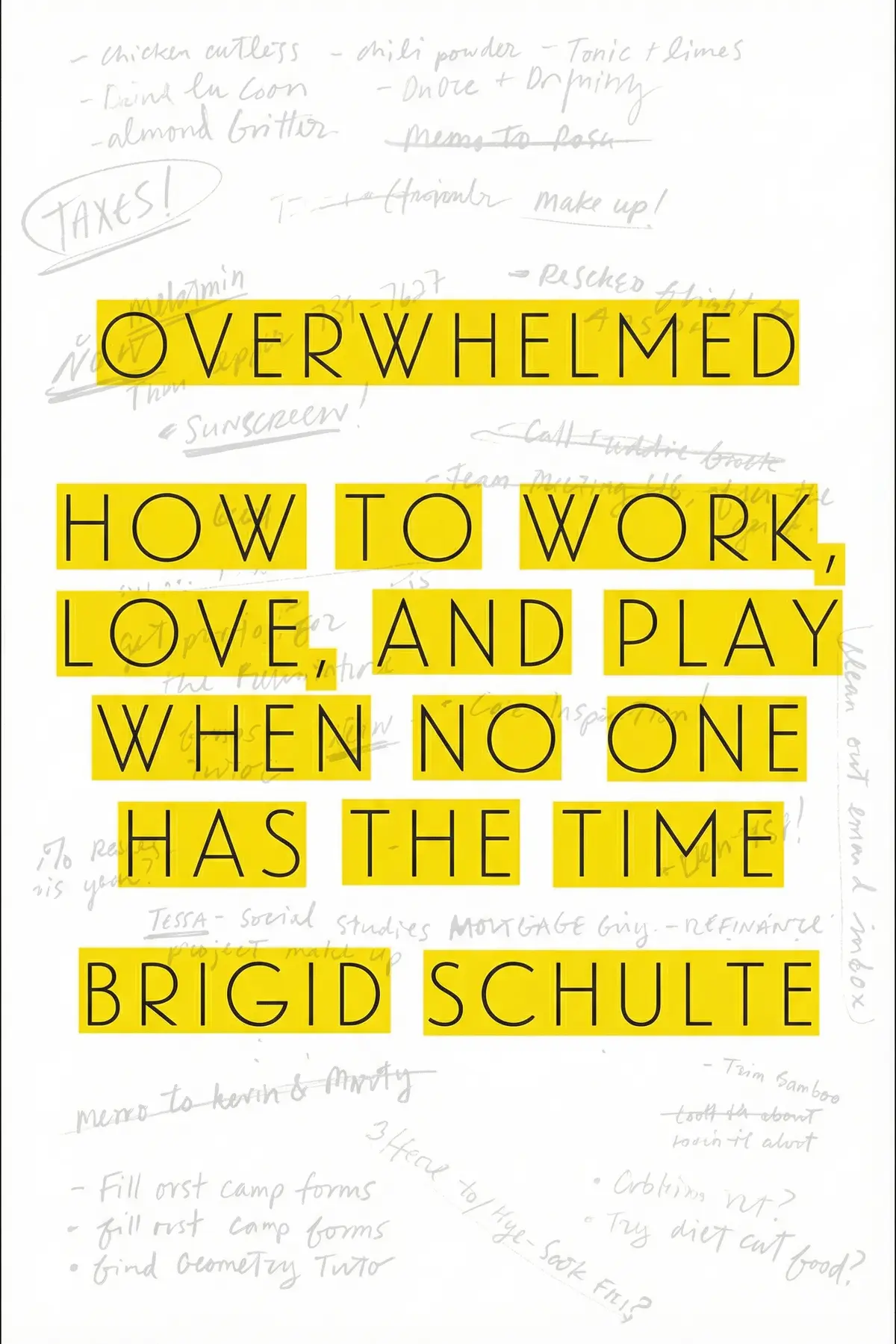
If your days end with emails unanswered, children half-heard and no hour left for yourself, the problem may be bigger than your calendar. In Overwhelmed, Washington Post journalist Brigid Schulte argues that much of modern exhaustion grows from a belief our grandparents held: men belong to their jobs and women belong to the home. That picture still shapes how long we work, who gets promoted and who does the dishes, and it leaves mothers and fathers alike stretched thin.
Schulte follows the problem from brain scans of chronically stressed people to the factories of the Industrial Revolution, then to a software company and to Denmark, a whole country that chose differently. Her case is that the overload was built, so it can be rebuilt: at work, in public policy and in your own daily expectations. She also offers a practice of a few minutes a day that can begin to repair what stress wears down in the brain.
1 min 37 sec
Ask working parents whether they often have free time and the answers are startling. The figures suggest that the tired feeling at the end of your week says less about you than you might think.
1 min 45 sec
A little stress once kept our ancestors alive. Researchers at Yale found that when the pressure never lets up, it changes the size of two parts of the brain, in opposite directions.
1 min 56 sec
The pace that drains so many people today was set more than two centuries ago, then sped up again by a flood that lands in every inbox. Some of your tiredness has a surprisingly old source.
1 min 39 sec
Most managers would say they have moved past old ideas about mothers and fathers. A survey of more than 2,000 of them tells a different story, and men who ask for flexibility pay a price too.
1 min 44 sec
Dropping the long-hours culture sounds like a recipe for slipping results. A software firm and an online law firm tested the idea, and one of them won national recognition for doing it.
1 min 46 sec
If mothers really were nature’s only carers, the old script would be hard to fight. A desert people in Africa and four decades of Danish policy suggest the script is far less fixed than it looks.
1 min 42 sec
An endless list of chores creates a stress of its own, and a restless mind adds more. Harvard neuroscientists found that a few weeks of one simple practice changed the very brain regions that stress damages.
1 min 13 sec
Overwhelmed builds a hopeful case out of grim material. The exhaustion so many parents and workers feel is real enough to show on a brain scan, yet Schulte traces it to choices people made: factory-era ideas about productivity, a gender script that ties men to desks and women to homes, and workplaces and laws that still assume both. What was built can be changed, and Menlo and Denmark show that it has been.
That moves the question from why you cannot keep up to which piece of the arrangement you can shift. At work, you can ask to be judged on clear goals and give the same trust to the people you manage. At home, you can look honestly at who carries the care and the chores, and whether that split was ever really chosen. Each morning, you can pick the few tasks that count, let the rest wait, and spend a few minutes simply noticing your body and your thoughts.
After just eight weeks of practice, the Harvard meditators showed a larger prefrontal cortex and a smaller fear center. A culture takes longer. Both begin when overload stops being treated as normal.
Half of American workers say their days hold more tasks than they can finish, and in one study not a single mother of young children said she often had free time. Brigid Schulte, a journalist who spent years reporting on work and family life, sets out to explain why modern life feels so crowded and what that overload costs. Her answer reaches past personal time management. Schulte traces the pressure to factory-era ideas about productivity, to an information flood that can take up over half a workday, and to a gender script that still casts men as full-time workers and women as sole carers. That script punishes mothers who work and fathers who ask for flexibility, and chronic stress literally reshapes the brain. The book then turns to what works: a software company that judges people by goals instead of hours, a law firm run online, Denmark's decades of family-friendly policy, and research showing that eight weeks of meditation can begin to reverse stress's effects on the brain. Readers come away with a clearer view of where their exhaustion comes from and practical places to start changing it, at work, at home and in their own heads.
Working parents who feel they never have a free hour and want to know why.
Managers and HR leaders weighing flexible hours, remote work and how they judge commitment.
Anyone worn down by chronic stress who wants both the bigger picture and a daily practice.
Brigid Schulte is a journalist from Eugene, Oregon, who worked at The Washington Post and its magazine and was part of a team that won a Pulitzer Prize. Her reporting has covered work-life issues and poverty, and she has written for the Style and Outlook sections. She has directed the Better Life Lab at New America and works as a keynote speaker.
Listeners value the deep research and the expertly crafted mix of sociology and self-improvement strategies. They describe the writing as immersive and easy to follow, helping them reframe their outlook while offering useful guidance, especially for mothers balancing careers. Listeners are moved by its motivating message, and one listener specifically mentions how the book grants a sense of empowerment to live a real life.
This book changed how I view my weekends and my self-worth entirely. For years, I wore my 'busyness' like a badge of honor, thinking that a packed calendar meant I was successful. Schulte deconstructs this toxic mindset with such precision that you can’t help but re-evaluate every 'to-do' list you’ve ever written. The section on the importance of unstructured play for adults was a revelation for me; I realized I hadn't truly played in over a decade. While it’s a bit long and can feel repetitive toward the middle, the message is too vital to ignore. I’m now much more intentional about protecting my time from 'mental clutter' and work-related intrusions. If you feel like you're drowning in expectations, this book is the life raft you didn't know you needed.
Show moreAfter hearing the author on a podcast, I knew I had to read the full book to understand the 'overwhelm' phenomenon. It exceeded my expectations by providing a global perspective on how other cultures prioritize human connection over corporate output. The contrast between the US and countries like Denmark is both enlightening and deeply frustrating. Schulte doesn't just complain about the problem; she seeks out people who are successfully living differently and shares their secrets. Her writing is sharp and often funny, making a heavy subject feel much more approachable and less like a lecture. I especially loved the appendix, which summarizes the key takeaways into manageable chunks for those of us with limited reading time. This is essential reading.
Show moreWow, this was a dense but necessary read that gave me a whole new vocabulary for my daily stress. I finally understand why I feel so exhausted even on days when I haven't 'done' much—it's the mental load and the contaminated time. The way Schulte connects our personal struggles to broader policy failures is brilliant and keeps the book from feeling too individualistic. It provides a sense of empowerment by showing that we can make small changes to reclaim our leisure, even within a broken system. I loved the chapters on the history of work and how we reached this point of peak busyness. This book is a must-read for anyone who feels like they are running a race they can never win.
Show moreAs a working mother of three, I felt like Schulte was peering directly into my fractured, exhausted soul. The way she describes 'time confetti'—those tiny scraps of time we try to use for ourselves that are constantly interrupted—is the most accurate thing I’ve read in years. I’ve spent so much of my life feeling guilty for not being the 'ideal worker' or the 'perfect mom,' and this book finally gave me permission to breathe. It’s part memoir and part rigorous social science, which kept me turning pages even when the statistics about American work culture got depressing. Frankly, the comparison to Denmark’s social safety net made me want to pack my bags and move immediately. It’s an empowering read that challenges you to reclaim your right to play and leisure without the nagging sense of shame.
Show moreEver wonder why we're so obsessed with being busy in this country? Brigid Schulte explores this question with a perfect blend of personal vulnerability and hard data that makes for a compelling read. I particularly appreciated the deep dive into the 'Ideal Worker' myth and how it’s designed for a world that no longer exists. The book highlights how we’ve traded our well-being for a performance of productivity that doesn't actually make us more productive. My only minor complaint is that the author’s own domestic situation in the beginning was so frustrating to read about that I almost put the book down. However, the way she evolves and finds 'time serenity' throughout the narrative is ultimately quite inspiring. It’s a wake-up call for anyone who feels like their life is just a series of tasks to be managed.
Show moreSchulte does an incredible job of articulating the invisible labor that consumes so many of our lives. I picked this up during a particularly frantic month at work and found myself nodding along to every single page. The way she blends interviews with neuroscientists and sociologists ensures that her arguments aren't just anecdotal—they are backed by science. It was shocking to see the hard numbers on how much less leisure time women have compared to men, even when both work full-time. Some might find the level of detail a bit much, but I appreciated the thoroughness. It’s a highly readable piece of nonfiction that provides a necessary framework for understanding our modern 'time-poor' existence. I’ve already recommended it to several colleagues who are struggling with their own work-life balance.
Show moreFinally got around to reading this after seeing it on several 'must-read' lists for professionals. While Schulte’s research is undeniably thorough, I struggled with how much of the narrative centers specifically on mothers in high-pressure corporate roles. As a single man without children, I found the chapters on the ‘Ideal Mother’ myth interesting from a sociological perspective, but they didn't offer much for my own daily grind. The concept of 'contaminated time' is brilliant and certainly universal, yet the solutions felt gated behind a specific socioeconomic privilege. To be fair, the writing style is engaging and doesn't feel like a dry academic text despite the heavy data. It’s a solid 3-star read for me because it’s well-executed, even if the marketing makes it seem more universal than it actually is.
Show moreThe term 'time confetti' is going to haunt me for a long while because it describes my life perfectly. I’m constantly multitasking—checking emails at my kid’s soccer game or planning dinner during a conference call—and Schulte explains why this is so damaging. This book isn't just a self-help guide; it’s a serious critique of American corporate policy and social expectations. Truth is, the middle section drags a little bit with the historical data, but the payoff in the later chapters is worth it. I wish there were more concrete 'how-to' steps for those of us who can't just move to Denmark, but the shift in perspective is a great first step. It helped me realize that my stress isn't a personal failure, but a systemic one.
Show morePersonally, I think this book functions better as a sociological study than a practical handbook. The author spends a vast amount of time establishing the problem—which we all already feel—and less time on diverse, actionable solutions. If you are a mother in a high-stakes job, you will likely find this life-changing. If you are anyone else, you might find yourself sifting through a lot of irrelevant anecdotes to find the gems of wisdom. The research is definitely top-notch, and the writing is polished, as you would expect from a Washington Post journalist. Still, the irony of a book about being busy being this long was not lost on me. It’s an interesting look at our 'always-on' culture, but it could have been much tighter.
Show moreLook, the research is impeccable and Schulte is a gifted journalist, but this book was a slog for me. At over 300 pages excluding the massive appendix and footnotes, it ironically feels like it’s contributing to the very 'overwhelm' it tries to solve. My biggest gripe is the narrow focus on upper-middle-class families who have the luxury of debating flex-time or hiring help. What about the people working two service jobs who don't have 'time confetti' because they have no time at all? It feels like a very specific book for a very specific demographic of Martha Stewart wannabes and corporate climbers. The repetitive nature of the anecdotes made me start skimming by chapter eight. It’s not a bad book, but it lacks the intersectional perspective I was hoping for.
Show moreSchulte argues that the constant time pressure many people feel comes largely from outdated ideas: factory-era beliefs that more hours mean more productivity, and a gender script that casts men as full-time workers and women as sole carers. Because these arrangements were built by society, she says, they can be changed through better workplaces, public policy and more realistic personal expectations.
Schulte cites Yale researcher Emily Ansell, who found that people who felt overwhelmed all the time had a smaller prefrontal cortex, the region for planning and self-control, and a larger amygdala, linked to fear and anxiety. Ansell expects this to make emotions harder to control. Bruce McEwen found stressed medical students made poorer complex decisions and more careless mistakes.
According to sociologist Joan Williams, such men are viewed by their colleagues and bosses as lazy and lacking commitment. When men ask for flexible hours to care for children or relatives, colleagues and managers often judge them uncommitted and lazy, and they are frequently passed over for promotion. A 2012 WFD Consulting survey found more than half of managers doubted a family-focused man could be fully committed to his job.
Schulte points to Menlo Innovations, which set realistic targets, built a culture of regular constructive feedback and let staff work when and how they chose, earning recognition from the American Psychological Association. She also cites Clearspire, an online law firm where staff work from home. The lesson is to judge people by clear goals rather than hours logged.
Accept that you cannot do everything, set realistic expectations for each day and finish the most important tasks first, as psychotherapists David Hartman and Diane Zimberoff advise. Add a few minutes of daily mindfulness or meditation: Harvard neuroscientists found eight weeks of practice enlarged the prefrontal cortex and shrank the brain’s fear center.
Fay Bound Alberti

Daniel Goleman


Virginia Woolf

Tracy Rosenthal

Jessica Valenti



Johny Pitts

AUDIO SUMMARY AVAILABLE
Get the key ideas from Overwhelmed by Brigid Schulte, plus 5,000+ more nonfiction titles.









