

A Liberated Mind: How to Pivot Toward What Matters
Steven C. Hayes
 English
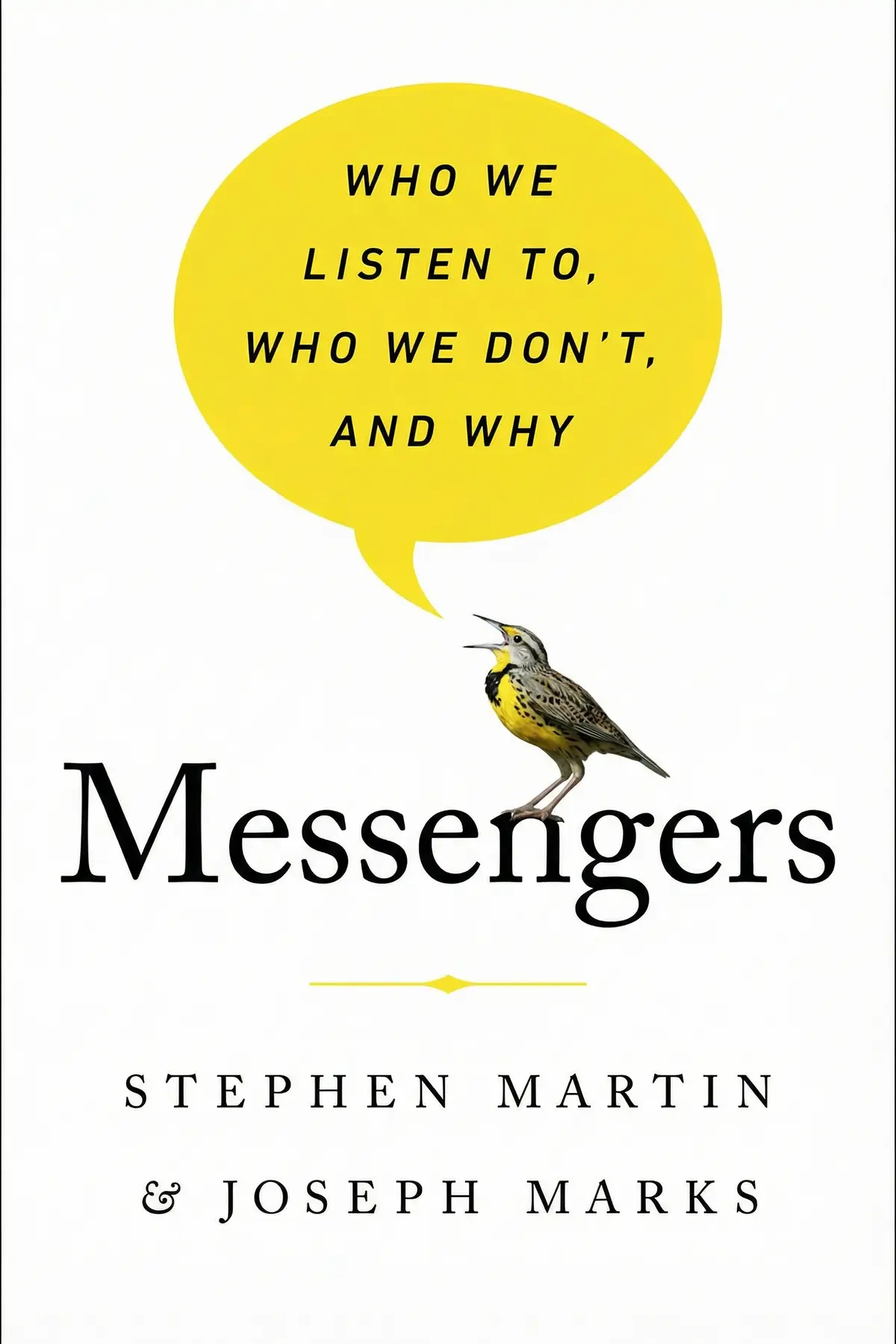
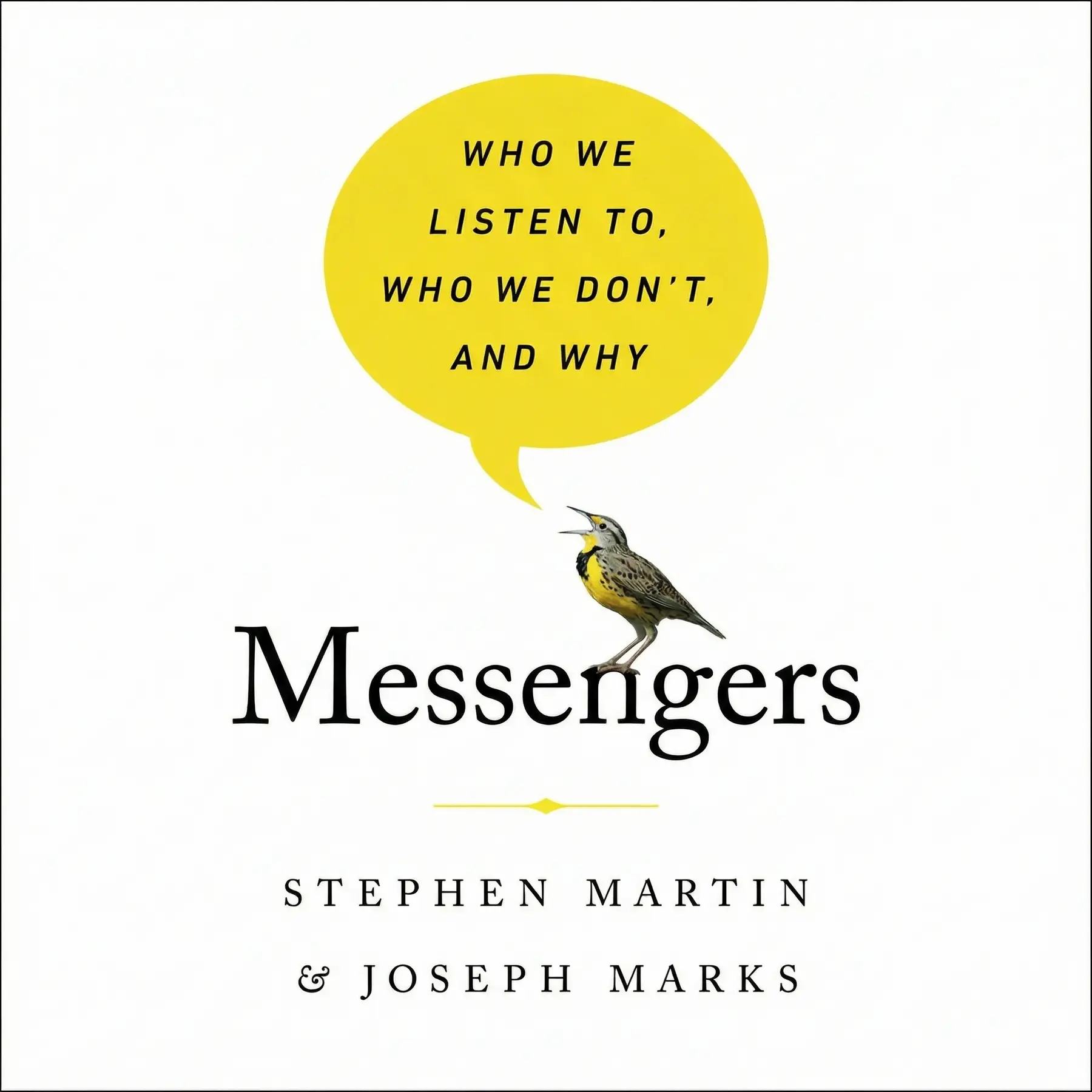
Shows why audiences judge the speaker before the message, which signals of status and connection decide who gets heard, and how to send better signals while catching the ones that sway your own judgment.
1 min 10 sec
If your ideas keep landing with less force than they deserve, the problem may not be the ideas. In Messengers, behavioral scientist Stephen Martin and researcher Joseph Marks argue that people judge the speaker first and the message second, often within moments. In 2018, Taylor Swift endorsed two Democratic candidates to her 110 million Instagram followers, and within 48 hours 212,871 people had registered to vote through Vote.org, even though being a great musician hardly makes her a political adviser.
The authors trace these snap verdicts to two families of cues. Some signal status: wealth, competence, dominance and good looks. Others signal connection: common ground, warmth, vulnerability and trustworthiness. Whichever cues a speaker sends, the audience decides fast whether to listen.
With that map, persuasion becomes something you can see. It shows the signals you send without meaning to, the ones you can change, and the ones steering your own judgment of other people.
1 min 52 sec
Long before the 2008 crash, one investor saw it coming and made millions from it. Yet when officials wanted answers, they talked to someone else. The reason shows how fast audiences decide whose voice counts.
1 min 49 sec
Drivers swore they would not be swayed by the price of the car blocking them. A rusty station wagon and a polished Chrysler proved otherwise, and a hospital mix-up shows how far authority can go.
1 min 53 sec
A senator who stood close enough for colleagues to feel his breath changed votes in minutes. Two prime ministers took advice on something even subtler, and the reason lies in human biology.
2 min 08 sec
Babies, recruiters and mock jurors all share the same preference, and it can shape who gets a job call-back and who is found guilty. The bias cannot be erased, but some decisions can be built to resist it.
1 min 58 sec
A man history judges harshly became a little less disliked over one trivial detail. That detail, and a multibillion-dollar court verdict, point to a route to influence that status alone cannot buy.
1 min 50 sec
A prime minister mocked for her stiff dancing got up and danced again, no better than before. The reaction surprised many people and points to an unexpected way of winning over a doubtful audience.
1 min 45 sec
Supporters can know a leader often says false things and still call him trustworthy. Behind that puzzle sits the way people really judge reliability, and what it takes to earn it over time.
1 min 06 sec
What Martin and Marks describe is an audience that is always deciding, faster than it realizes, who deserves a hearing. A polished car, a stethoscope, a low voice, a symmetrical face or a shared birthday can tip that decision before a single fact is weighed. Good arguments still count, yet Burry’s warning shows how little distance they travel without the right carrier.
That works in two directions. If you want to be heard, choose your messenger as carefully as your words, and accept that sometimes the best messenger is someone else, the way trusted hair braiders reached women a doctor might not. Show the signs of skill your field recognizes, open with warmth, and keep your central promises long enough for trust to take hold.
If you are the one listening, catch the moment when a suit, a famous name or a pleasant manner starts making the case for someone. Ask how the same words would sound from a stranger in denim. The next Michael Burry you meet will probably not be wearing a suit.
Good ideas are ignored every day, while weaker ones spread because of who says them. Stephen Martin and Joseph Marks set out to explain why. Their answer is that audiences rarely weigh a message on its own. They size up the messenger in moments, then accept or reject what follows. The authors sort those instant judgments into two groups. Status cues include wealth, competence, dominance and attractiveness. They explain why drivers honk sooner at a rusty car and why a nurse followed a badly written prescription without a second thought. Connection cues include common ground, warmth, vulnerability and trustworthiness. They explain why hair braiders in Zimbabwe became effective health messengers and why a jury came down hard on a company whose lawyers seemed rude. Readers get a clear map of the signals that decide who gets heard, with practical ways to send stronger ones, from showing visible signs of skill to opening with warmth. Just as useful, the book helps you notice when a suit, a face or a famous name is doing the persuading for someone else.
Professionals whose good ideas keep getting overlooked in meetings, pitches and interviews.
Managers and recruiters who want to catch the biases shaping who gets hired and heard.
Marketers, campaigners and health communicators choosing the right voice to carry a message.
Stephen Martin is CEO of INFLUENCE AT WORK (UK) and Visiting Professor of Behavioural Science at Columbia University's Graduate School of Business. He co-wrote Yes! 50 Secrets from the Science of Persuasion, a bestseller that has sold a million copies in 26 languages. Joseph Marks has been a doctoral researcher at University College London and a visiting researcher at MIT, and his writing has appeared in academic journals, The New York Times, The Guardian and the Harvard Business Review.
Listeners find that this work offers a stimulating exploration of behavioral psychology, even if some feel the depth of analysis is occasionally surface-level or relies too much on anecdotes. Nevertheless, many value the perceptive categorization of "hard" and "soft" messengers along with the examination of how qualities such as warmth, competence, and status shape our perceptions. Furthermore, the evidence-based writing provides actionable strategies for enhancing personal communication; one listener specifically points out that it gives useful guidance on utilizing body language and vocal tone to connect with others more effectively. They also remark that the book is quite revelatory, clearly clarifying why the individual conveying information is frequently prioritized over the actual content of the message.
This book is a complete game-changer for anyone working in communications, marketing, or even just trying to be heard in a crowded office environment. The distinction between hard powers like dominance and soft powers like trustworthiness is explained with such clarity that it’s hard to put down. Not gonna lie, I started adjusting my own tone of voice and body language after finishing the chapter on charisma. The authors use a brilliant mix of historical examples, like Churchill’s leadership style, and modern data points to show how we are instinctively wired to respond to certain cues. It explains so much about our current political climate and why misinformation spreads so easily when delivered by a 'favored' messenger. It is an essential companion to books like 'The Status Game.' I’ll definitely be coming back to this one for a second read to really internalize the research on vulnerability.
Show moreWow, the chapter on 'vulnerability' really changed my perspective on how to lead my team at work. I always thought showing any sign of weakness was a negative, but Martin and Marks prove that when combined with competence, it actually makes you a more persuasive messenger. This book is packed with these kinds of counter-intuitive findings. The research-backed text offers practical advice that you can apply immediately, from adjusting your posture to understanding the tribal nature of how we connect with others. It's one of those rare non-fiction books that answers a question you didn't even know you were asking. Why do we ignore the truth when it's told by someone we dislike? Why does a low-pitched voice command so much respect? It’s all here. This is easily one of the most underrated books on human behavior I’ve encountered recently.
Show moreFinally got around to reading this, and I’m already planning a second pass to take more detailed notes on the 'soft power' section. This book is much more than a guide on how to be a better communicator; it’s a mirror held up to our own biases. The way it explains our susceptibility to certain 'messengers' regardless of fact or fiction is both brilliant and terrifying. I loved the specific research on how doctors who are perceived as warm get sued less—it’s such a tangible example of these theories in action. Whether you’re a content creator, a leader, or just someone curious about human behavior, you need to read this. It sheds new light on the 'why' behind our social connections and tribal loyalties. It’s definitely a recommended read that I'll be gifting to friends this year.
Show moreEver wonder why we're so easily swayed by a confident speaker, even when they're talking absolute nonsense? Messengers provides a compelling dive into the behavioral psychology behind why the 'who' often trumps the 'what' in our daily interactions. The authors split the concept into hard and soft messengers, which I found to be a really helpful framework for understanding influence. Frankly, it’s a bit scary to realize how much we prioritize traits like height, socio-economic status, or even just a square jawline over actual data. While some of the research felt familiar if you've read a lot of Gladwell, the specific focus on 'soft' traits like vulnerability and warmth offered fresh insights. It’s a well-organized read that makes you second-guess your own instincts. I especially appreciated the sections on how we perceive competence based on physical appearance—it’s a wake-up call for anyone who thinks they are a purely rational decision-maker.
Show moreAfter hearing a podcast interview with the authors, I picked this up to better understand why certain public figures command such intense loyalty despite contradictory facts. Messengers really delivered on that front. The breakdown of how we rapidly assess someone's socio-economic position and dominance within seconds of meeting them is eye-opening. Personally, I found the research on 'soft' messengers the most useful; it’s heartening to know that warmth and consistency can sometimes overcome the raw power of status. The book is deftly packaged and moves at a brisk pace, though I do agree with other reviewers that it can feel a bit light in the middle sections. Still, the insights into how we are manipulated by artful messengers are well worth the price of admission. It's a necessary manual for navigating our misinformation-heavy world.
Show moreLook, we all like to think we're rational beings who make decisions based on facts, but this book exposes that lie pretty effectively. The authors walk us through the many ways we are influenced by the messenger's warmth, charisma, and even their clothes. It’s a very timely read given how much we rely on influencers and 'experts' online these days. I found the section on how we respond to 'dominant' messengers particularly relevant to current events. The writing is clear and the examples are engaging, making complex psychological concepts easy to digest for a casual reader. My only minor gripe is that some of the sections on socio-economic status felt a bit drawn out. Overall, it’s an insightful and well-written book that effectively explains why we often value the person more than the message itself.
Show moreTo be fair, I expected a bit more meat on the bones of this one given the academic credentials of the authors. The central thesis—that we judge the messenger before the message—is undeniably true and well-supported here, but the execution felt a bit anecdotal at times. It works perfectly as a light introduction to behavioral science, but if you’re looking for a deep, technical dive, you might find it a little superficial. I did enjoy the practical tips on how to project warmth and the importance of posture, though. It’s the kind of book that’s great for a long flight; it keeps you engaged with interesting stories about why certain leaders succeed and others fail, even if it repeats itself occasionally. It’s a solid 3.5 stars for me, primarily because it's so readable, despite the lack of groundbreaking new theories.
Show moreThe central premise—that the person delivering the message matters more than the content itself—is fascinating, but I found the pacing a bit uneven. At points, the book feels like a collection of interesting trivia rather than a cohesive reference work. Truth is, while I enjoyed learning about why we trust doctors more when they show warmth, or how babies react to attractive faces, the 'hard messenger' section felt a little repetitive. The authors do a great job of highlighting how we suspend rational thinking when faced with a high-status influencer, which is a vital lesson for today’s world. However, I wish there was more focus on how to combat these biases rather than just identifying them. It’s an insightful read for a general audience, but experienced students of psychology might find themselves skimming the more basic chapters.
Show moreMessengers offers a solid breakdown of why we listen to some people and ignore others, though it reads a bit like a textbook in the middle chapters. The authors are clearly experts, and they provide a ton of data points to support their claims about status, competence, and attractiveness. In my experience, the most interesting parts were about how we are fundamentally 'corrupted' by our instincts, like favoring attractive criminals or trusting people just because they share our birthday. It’s a bit cynical at times, but probably realistic. I think the book would have benefited from fewer anecdotes and more synthesis of the actual science. It’s a good book with simple points that are worth knowing, but I’m not sure it has much re-read value once you’ve grasped the main 'hard vs. soft' concept.
Show moreDisappointingly, I felt like I had heard most of these stories before in other behavioral economics bestsellers. While the writing style is accessible and the organization is clear, it didn't offer the 'deep dive' I was hoping for after seeing the initial praise. Much of the research quoted, like the stuff on facial symmetry and dominance, feels like recycled material from older studies. I also found the tone a bit too 'business-lite' for my taste. Look, if you’ve never read a book on social influence, this is a fine place to start. But if you’re already familiar with the basics of how charisma and status work, there isn't much here that will surprise you. It’s informative in a very general sense, but it lacks the analytical depth required to be a truly transformative text.
Show moreThe authors argue that people rarely judge a message on its merits alone. They size up the messenger within moments and accept or reject the message accordingly. Those snap judgments rest on two kinds of cues: status, such as wealth, competence, dominance and attractiveness, and connection, such as common ground, warmth, vulnerability and trustworthiness. That is why investigators of the financial crisis questioned journalist Michael Lewis instead of Michael Burry, the investor who had predicted it.
Martin and Marks describe status traits and connection traits. Status shows in visible wealth, signs of competence like a stethoscope, dominant posture and a low voice, and good looks. Connection shows in shared ground, warmth, openness about weaknesses and consistent behavior over time. Connection can sometimes beat status: a Zimbabwean health program succeeded by training trusted hair braiders, not doctors, to talk with women about condom use.
Keep a visible sign of competence that your field recognizes, the way a stethoscope helped patients remember advice. Open conversations with real warmth; one of the authors found bus drivers given a friendly send-off had fewer avoidable accidents. Admit an obvious weakness lightly, as Theresa May did with her dancing. Build trust through repeated two-way contact with colleagues, which a study of 161 engineers linked to being seen as trustworthy.
Only partly, the authors say. Babies already prefer attractive faces, and attractive résumé photos drew 20 percent more call-backs than the same résumés without photos. Decision processes can limit the effect: recruiters can refuse résumés that include photos and avoid face-to-face contact early in hiring. At some point, though, candidate and recruiter meet, so attractive people keep some built-in advantage.
It suits anyone who needs to be heard: professionals whose ideas get overlooked, managers trying to lead with authority and warmth, and recruiters wary of bias. It also helps marketers and public health communicators choose the right voice for a message, and any reader who wants to notice when status, looks or a famous name is shaping their own judgment more than the argument is.
Steven C. Hayes


Deborah Gruenfeld


Anthony Pratkanis





AUDIO SUMMARY AVAILABLE
Get the key ideas from Messengers by Stephen Martin, plus 5,000+ more nonfiction titles.









