Energy: A Beginner's Guide
Vaclav Smil
 English
Vaclav Smil shows how the modern world runs on an ever larger flow of materials. He explains why efficiency and going digital often raise consumption, and why less waste and more recycling matter more than fears of scarcity.
1 min 03 sec
If you assume that going digital or buying lighter gadgets shrinks our footprint on the planet, Vaclav Smil has an uncomfortable correction. In Making the Modern World, the energy and environment scholar shows that when Boeing swapped nearly eight tons of paper drawings for computer files, it did not stop using materials. It switched to different ones.
That swap captures his whole argument. Modern civilization rests on a vast and growing flow of wood, stone, metals, plastics, gases and silicon. Using each material more cleverly often makes products cheaper, and cheaper products mean we buy more of them. Smil’s case is that real savings come only from deliberate choices: honest accounting, smarter design, less waste and more recycling.
Follow his reasoning and you gain a way to see the hidden weight behind everyday things, a reason not to panic about running out of sand, and a sharper sense of which green-sounding choices actually help.
2 min 00 sec
A finished ring or phone weighs very little in your hand. The soil and rock moved to make it can outweigh everything else a mining nation produces, yet most tallies of material use leave it out.
1 min 57 sec
We name whole ages after stone and metal, yet one humble material outlasted them all as the most common in daily life. And each new material arrived without retiring the ones before it.
1 min 51 sec
Most people could name metals and plastics as pillars of the economy. Fewer would think of the invisible family without which a modern steel plant could barely run.
1 min 55 sec
Natural stone sounds like the kinder choice for a city sidewalk. Once every step of its life is counted, the numbers point somewhere few people would guess.
2 min 03 sec
Boeing replaced eight tons of paper with a computer system and called it progress. Smil follows where the materials went next, and why efficient cars and phones ended up consuming more.
1 min 56 sec
Rising populations and living standards keep pushing demand for materials upward. Smil explains why the planet will not run dry, and where the real problem, and the easier fixes, actually sit.
1 min 12 sec
Smil’s book adds up to a picture of a civilization that is heavier than it looks. Behind a slim phone stand factories in a dozen countries. Behind a granite sidewalk lies the fuel to cut and carry stone. Behind a paperless jet design sit rooms full of servers. Each age added new materials without dropping the old ones, and each gain in efficiency tended to make things cheaper and more numerous. The good news in his account is that the planet is not about to run dry. The harder news is that nothing will shrink our material appetite automatically.
That leaves choices. When a product claims to be green, look past the finished object to the earth moved and the energy spent across its whole life. When someone promises that lighter or digital means less, ask what happens to total demand. And where you have a say, in a purchase, a design brief or a supply contract, push for less packaging, less waste and parts that can be recycled.
The eight tons of paper behind the 747 did not simply disappear. They turned into something else, and the work now is choosing what that something else should be.
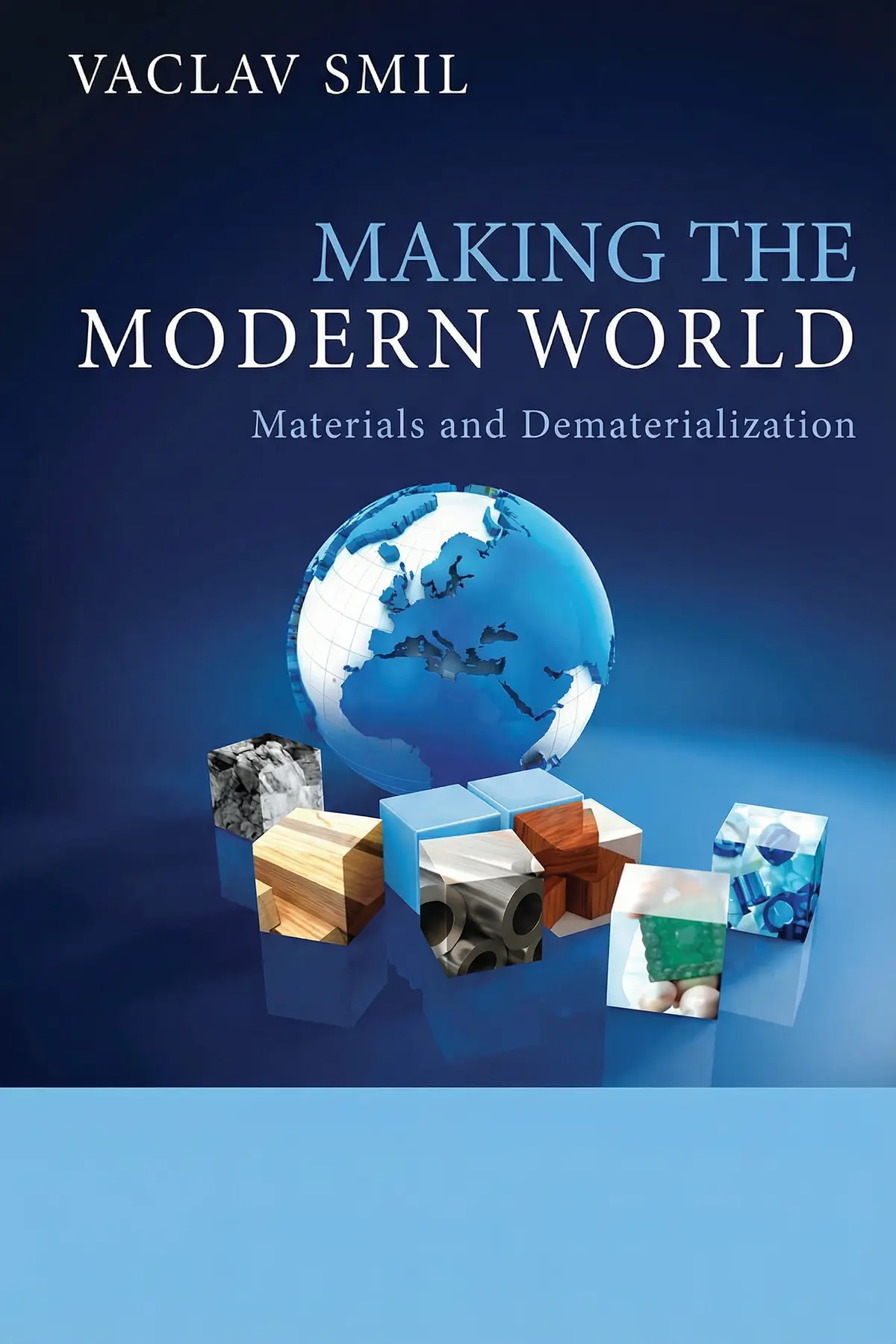
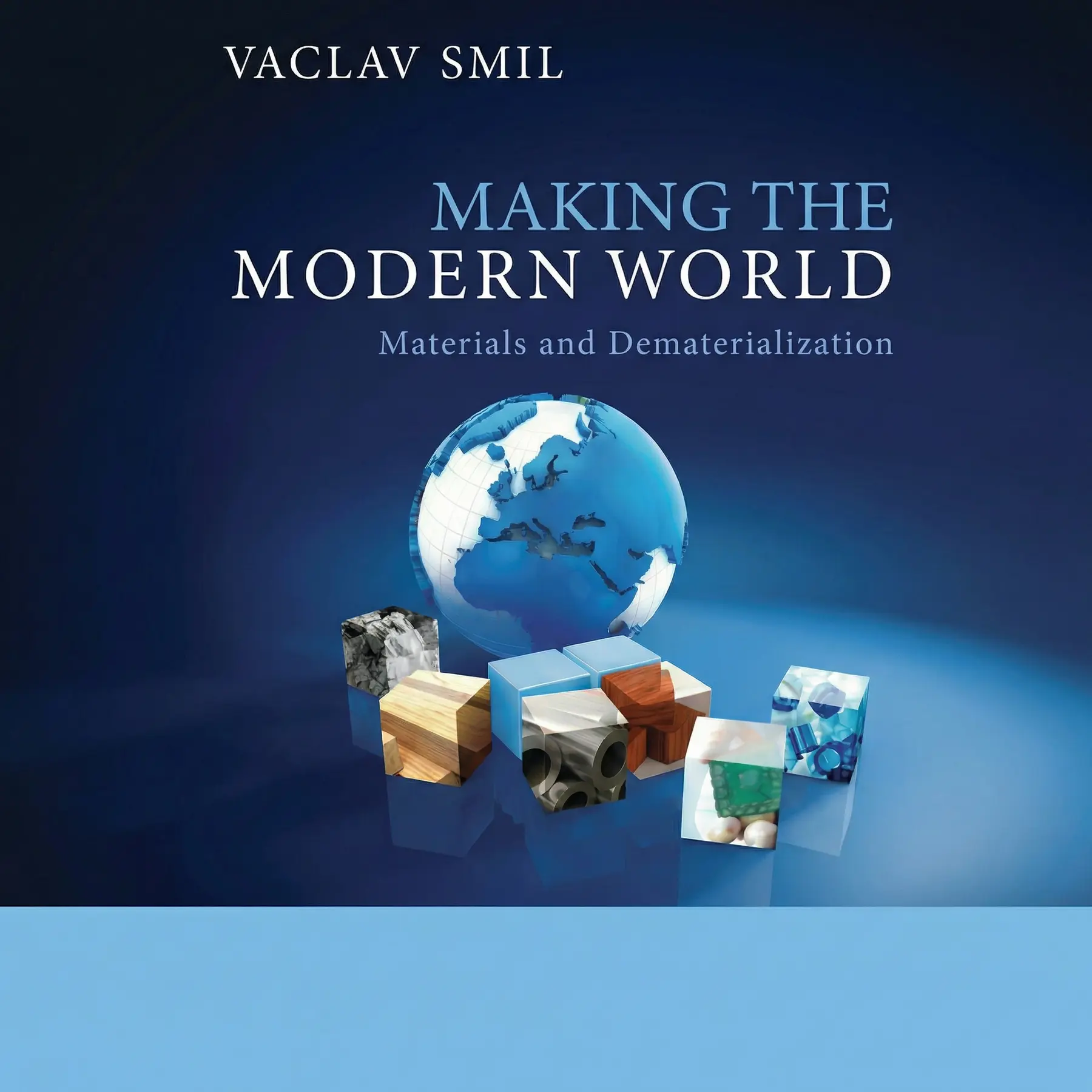
Every road, phone, package and building draws on a supply of materials so large and so varied that most of us never think about it. Vaclav Smil, a scholar of energy and the environment, sets out to make that hidden flow visible: what we use, how to count it, and whether we can keep using more. He follows humanity's signature materials from stone tools and wooden ships to steel, plastic and silicon. He sorts today's materials into six families, from cotton and concrete to the industrial gases without which steel could not be made efficiently. Along the way he takes on comfortable assumptions. A granite sidewalk can do more environmental harm than a concrete one. And the paperless design of the Boeing 747 did not erase material use. It moved it into computers and servers. His central warning is that making things lighter and cheaper tends to increase total consumption. His central reassurance is that the world is not about to run out of any major material. Readers come away knowing how to judge a product's real material cost and where real savings lie: design, manufacturing, packaging and recycling.
Professionals in sustainability, product design or supply chains who want a clear map of material use.
Founders and managers weighing packaging, sourcing and recycling decisions.
Curious readers who suspect going digital is not as weightless as it sounds.
Vaclav Smil was born in Plzeň in 1943, studied in Prague and earned a doctorate in geography at Pennsylvania State University. He joined the University of Manitoba in 1972 and is now Distinguished Professor Emeritus in its Faculty of Environment. His research spans energy, environment, food, population, economics, history and public policy, across more than 400 papers and 35 books. A Fellow of the Royal Society of Canada, he was the first person from outside the US to win the AAAS Award for Public Understanding of Science and Technology.
Listeners find this book an excellent read that offers high-quality content, while one review highlights that it is packed with knowledge and features tons of statistics brilliantly compiled. Its pacing earns positive remarks, and one listener characterizes the work as extraordinarily meticulous.
Ever wonder how much steel and concrete actually underpins your daily existence? Smil provides an extraordinarily meticulous breakdown of the material flows that define our civilization. I was floored by the statistic that China used more cement in three years than the US did in the entire 20th century! This isn't just a book about 'stuff'; it’s a sobering look at our addiction to material acquisition and the energy constraints of our pre-industrial past. The writing is dense, sure, but the information/page rate is unparalleled. Truth is, we live in a world built on materials we rarely think about, and Smil makes them visible. If you can handle the statistics, it’s a masterpiece of industrial history. It changed how I view every object in my house, from my iPhone to my car’s internal combustion engine.
Show moreAs someone who works in industrial design, I found Smil's focus on material flows to be absolutely revolutionary. He tracks the shift from the 'wooden age' to our current era of silicon and aluminum with surgical precision. The book brilliantly compiles statistics that most authors would ignore. I particularly liked the discussion on how Canadian hydroelectricity makes their economy appear more material-intensive than it actually is. It’s a nuanced take that avoids the typical 'morality play' of environmental writing. Look, this isn't a beach read. It’s a dense, academic, and unapologetically quantitative account of human civilization. But if you want to understand the physical reality of the modern world, there is no better resource. Smil doesn't just tell you things are changing; he proves it with a relentless wall of evidence.
Show moreWow. This is the definitive history of global material flows. Smil has a way with numbers that makes even the production of nitrogenous fertilizers seem like a gripping drama. The pacing is extraordinarily meticulous, covering everything from ancient copper smelting to the rise of plastics like PVC and PE. I was particularly struck by the section on the Haber-Bosch process and how it’s the only reason we can feed billions today. Not gonna lie, it’s a heavy lift, but the sheer density of knowledge per page is incredible. It’s the kind of book you keep on your shelf and refer to for years. If you can handle the lack of pretty pictures, you’ll walk away with a much clearer understanding of the physical world.
Show moreAfter hearing Bill Gates rave about Vaclav Smil for years, I decided to dive into this one. It’s a total reality check. We talk so much about the 'digital' world, but Smil reminds us that our servers are made of rare gases and silicon, and they sit in buildings made of massive amounts of concrete. The scale of human material use is mind-boggling. I loved the Mr. Money Mustache vibes in the sections where he calls out our incessant materialism. Personally, I think the section on the iPhone’s material flow was a highlight—it really puts into perspective how much mining goes into a single gadget. It’s dense, yes, but also brilliantly compiled. It makes you realize that our 'weightless' economy is anything but.
Show moreThe concept of 'dematerialization' always felt like a tech-bro pipe dream to me, and Smil confirms those suspicions with brutal efficiency. He explores whether we are actually using fewer materials as technology advances. Spoiler alert: we aren't, at least not in absolute terms. The book is a bit of a slog initially because of the heavy focus on raw outputs of wood, plastics, and metals. Personally, I found the sections on recycling efficiency to be the most enlightening part of the text. He argues convincingly that household recycling is often less effective than industrial-scale scrap reuse. My only real gripe is the organization; the chapters feel like they could have been rearranged without losing much. Still, for anyone interested in environmental policy or global economics, this is essential, albeit dry, reading.
Show moreFinally got around to finishing this, and I'm left with a profound sense of cognitive dissonance. Smil highlights our addictive behavior toward material acquisition, describing shopping as a tool for self-identity in a rootless society. It’s a deep philosophical point buried under tons of statistics about steel and ammonia. To be fair, the first half is quite tedious, focusing heavily on the technical minutia of mineral reserves versus resources. However, the later sections on the decarbonization of fuel and the role of Moore's Law are fascinating. The author is strangely optimistic about resource availability while being pessimistic about our cultural ability to stop consuming. It’s a complex, contradictory, and deeply informative book. I just wish he had used a few more diagrams to break up the dense blocks of text.
Show moreThe chapter on recycling alone is worth the price of admission. Smil debunks so many myths about what is actually 'green' versus what just makes us feel good. The truth is that industrial-scale efficiency beats out local efforts almost every time. This book is a fascinating tour through the materials that enable our lives, though I'll admit it's not the easiest read. It’s quantitatively dense and occasionally repetitive. I would have liked more discussion on the social implications of these material flows, as he tends to stick to the hard data. But as a reference work for how the world is actually constructed, it’s unparalleled. Just be prepared to read it slowly; you can't skim Smil without losing the thread of his argument. A solid four stars.
Show morePicking this up felt like a chore, yet I couldn't bring myself to put it down because the facts are just too good. Smil is a master of the 'fun fact' buried in a mountain of data. Did you know James Watt’s steam engine had a power-to-weight ratio similar to a draft horse? That’s wild. But the author’s refusal to use a single timeline or graph is baffling. He writes as if the reader already possesses his level of encyclopedic knowledge. Frankly, the structure is a mess, jumping between Life Cycle Analysis and energy intensities without a clear narrative thread. I appreciated the deep dive into why we won't run out of phosphorus anytime soon, but I shouldn't have to work this hard to find the point. It’s 4-star research trapped in a 2-star format.
Show moreThis book is essentially a massive spreadsheet disguised as prose. Vaclav Smil is obviously a genius, but he seems to have a personal vendetta against charts and graphs. Why describe a decade of global cement production in three paragraphs of dense figures when a single bar chart would suffice? I struggled to keep my eyes open through the first hundred pages. The sheer volume of data is overwhelming, often burying genuinely fascinating insights about the Haber-Bosch process and the staggering scale of China’s recent construction boom. To be fair, the second half picks up when he discusses dematerialization and the myth of 'using less.' However, the lack of visual aids makes it nearly inaccessible for anyone who isn't a professional statistician or a masochist. It’s an important data set, but a grueling reading experience.
Show moreNot what I expected at all. I tried to push through, but this book is essentially a phone book for industrial materials. Page after page of numbers regarding metric tons of zinc and per capita consumption of paper. I usually enjoy non-fiction, but this was like reading a manual for a furnace. There are no charts. No graphs. Just endless paragraphs of 'X increased by Y percent between year Z and year A.' I found it impossible to retain any of the information because there was no story or visual context provided. I finally gave myself permission to stop reading halfway through. If you love spreadsheets, you might like this. If you enjoy readable prose and a coherent narrative, look elsewhere. Absolute snooze-fest.
Show moreThe book examines the huge and growing flow of materials behind modern life, from wood and stone to steel, plastics, industrial gases and silicon. Smil explains how to count material use, traces humanity’s signature materials through history, and argues that smarter use of materials does not automatically lower consumption. His conclusion is that we must use materials more efficiently while improving recycling and cutting waste to meet future demand.
Smil uses dematerialization to mean large reductions in material use, not the total disappearance of a material. His example is Boeing, which replaced about eight tons of paper drawings for the 747 with a computer design system. The catch is that computers, data storage, servers and energy replaced the paper, and cheaper, lighter products such as cars and phones have driven total material demand higher.
No. Smil argues that major materials such as sand, clay, stone and silicon are extremely plentiful. He adds that no material could ever be fully exhausted, because mining very deep or very sparse deposits becomes too expensive long before the last of a resource is reached. In his view the real challenge is waste, not scarcity.
Smil uses this example to show the value of life-cycle assessment, which counts a material’s environmental effects across its whole life. Because cutting and transporting stone takes so much energy, a granite sidewalk can have between 25 and 140 percent more environmental impact than a concrete one. Natural-sounding choices are not always the lighter ones.
Judge products by their whole material life, including hidden flows like rock moved in mining and the energy used in processing and transport. Be skeptical when efficiency alone is promised to cut resource use, and ask what happens to total demand. Where you have influence, favor less packaging, less wasteful manufacturing and designs that make recycling easier, especially for electronics.


J. Craig Venter

Carl Zimmer

Bill Bryson

Jeff Hawkins




Lisa Kaltenegger

AUDIO SUMMARY AVAILABLE
Get the key ideas from Making the Modern World by Vaclav Smil, plus 5,000+ more nonfiction titles.