Energy: A Beginner's Guide
Vaclav Smil
 English
 ไทย
Shows how energy conversions, from ancient microbes to fossil-fuel fertilizer and electric motors, made modern life possible. Argues that knowing these basics is what lets ordinary citizens judge debates about food, fuel and power.
58 sec
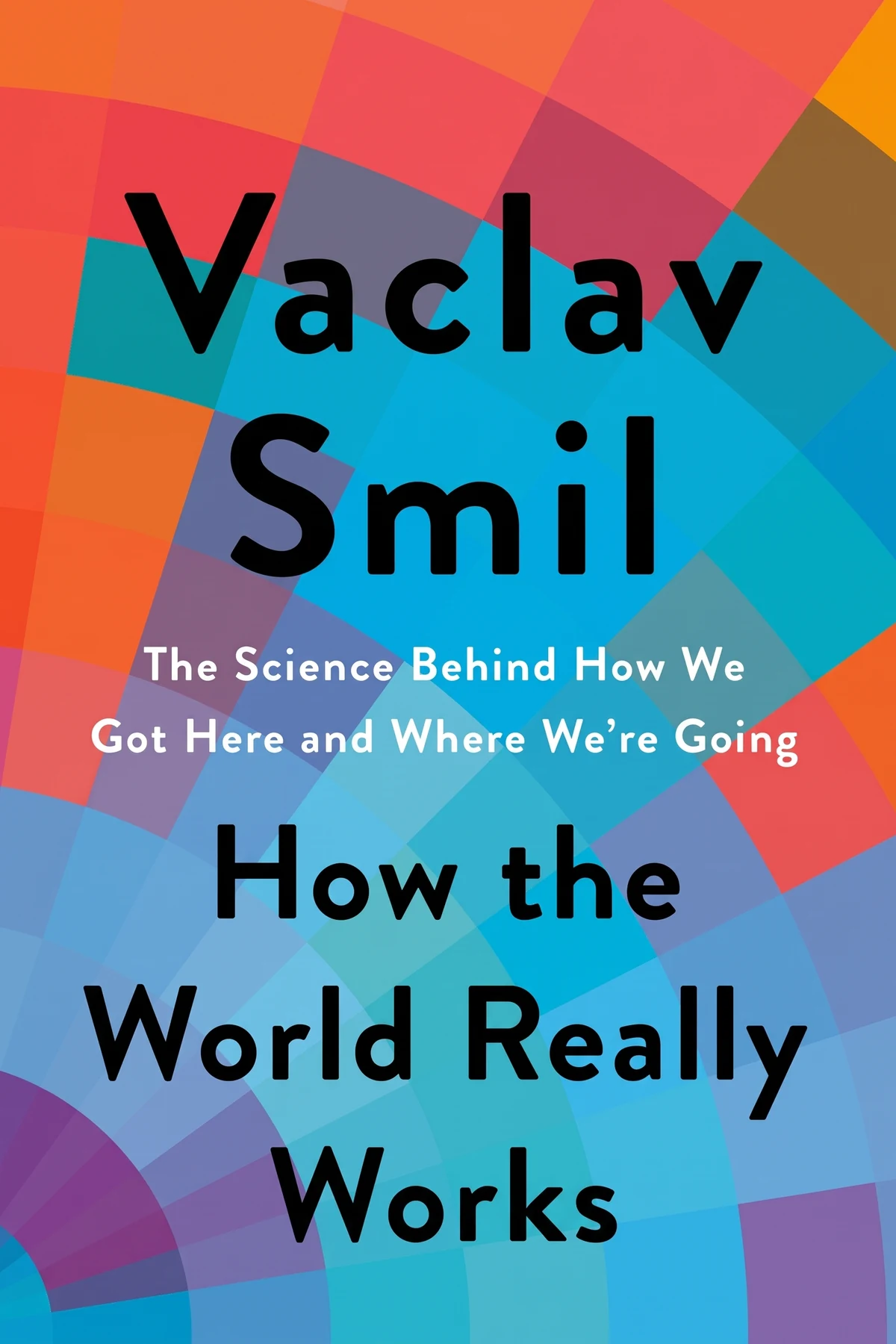
Most of us can use a phone, order dinner and switch on the heating without any idea of what makes it possible. In How the World Really Works, energy and food scientist Vaclav Smil argues that this gap is dangerous, and that closing it starts with one fact: almost every comfort you enjoy is energy changed from one form into another. Your bread, he shows, depends on natural gas as surely as on sunshine.
Smil is not asking anyone to master viral immunology. He asks for something humbler: a working grasp of how food reaches the plate and how power reaches the plug, because citizens who lack it cannot make sound choices about the biggest questions of the day. Follow his argument and you will be able to explain why fertilizer is a fossil fuel product, why one farmer now does the work of many, and why a long blackout would be a crisis rather than an inconvenience.
1 min 50 sec
Nobody can master every field anymore, and even top scientists get lost outside their own. Smil still thinks there is a short list of things every adult should understand, and he has a sharp reason why.
2 min 09 sec
Drifting microbes, a campfire, a pair of oxen and a steam engine look like separate chapters of history. Smil sees one continuous story in them, and it explains nearly every comfort you have today.
2 min 02 sec
Physics says energy can never be destroyed, so how can we ever run short of it? A cardboard box sliding down a ramp shows what really gets lost, and why it matters for every fuel debate.
2 min 17 sec
The world’s population tripled in seventy years, yet hunger fell sharply instead of rising. The explanation sits in every field and every loaf, and it ties your breakfast to the gas industry more tightly than you might expect.
2 min 15 sec
Three wheat farms, a century apart, tell one of the biggest stories of modern life. The change in how long it takes to grow a kilogram of grain is so large it reshaped where billions of people live and work.
2 min 13 sec
Even physicists cannot say exactly what electricity is, yet almost nothing in a modern city works without it. Its share of the world’s energy use turns out to be surprisingly small, which makes its reach even more striking.
1 min 15 sec
Smil’s book adds up to a way of seeing. Behind the light in your kitchen, the loaf on your counter and the city outside your window runs one long chain that began with drifting microbes and sunlight. Our species earned its place by getting steadily better at capturing free energy, first with fire, then oxen, then coal, gas and the electric motor. Every step brought comfort, and every step made us more dependent on systems most of us never think about.
That dependence is why Smil wants the basics to be common knowledge. Debates about food, fuel and power are decided by citizens, and someone who believes bread comes only from sunshine and soil is arguing about a world that no longer exists.
The habit he asks for is small. When you eat, remember the natural gas in the fertilizer and the diesel in the combine. When you flip a switch, think of the pumps, motors and power plants behind it. When you flip a switch or eat a meal, pause to consider the processes and energy conversions that made it possible.
A wheat farmer in 1801 spent ten minutes on each kilogram of grain. Today it takes two seconds, and the difference is energy.
Most people can use a phone, buy bread and turn on the heating without knowing what makes any of it possible. Vaclav Smil argues that this gap matters. Knowledge has become so specialized that nobody can follow every field, but everyone can and should understand how their food is grown and how their power is made. Without that grounding, he says, citizens cannot make informed choices on the biggest questions facing democracies. Smil's angle is energy. He reads the story of life as a series of energy conversions, from microbes that filled the air with oxygen to fire, working animals, coal, oil and electricity. He explains the physics in plain terms, then shows how fossil fuels sit inside modern farming through diesel, machines and synthetic nitrogen fertilizer, and how a wheat farm's labor fell from ten minutes per kilogram in 1801 to two seconds today. Readers come away with a clear picture of what keeps eight billion people fed and the lights on, and why a long power cut would be a disaster.
Professionals who follow energy, food and climate debates and want the physical facts underneath them.
Students who want one clear frame linking physics, farming and economic history.
Curious readers who use modern comforts daily and want to know what really keeps them running.
Vaclav Smil, born in Plzeň in 1943, holds a doctorate in geography from Pennsylvania State University and is Distinguished Professor Emeritus in the Faculty of Environment at the University of Manitoba. His research spans energy, environment, food, population, economics and history, with more than 400 papers and 35 books, including Making the Modern World. A Fellow of the Royal Society of Canada, he was the first person from outside the US to win the AAAS Award for Public Understanding of Science and Technology.
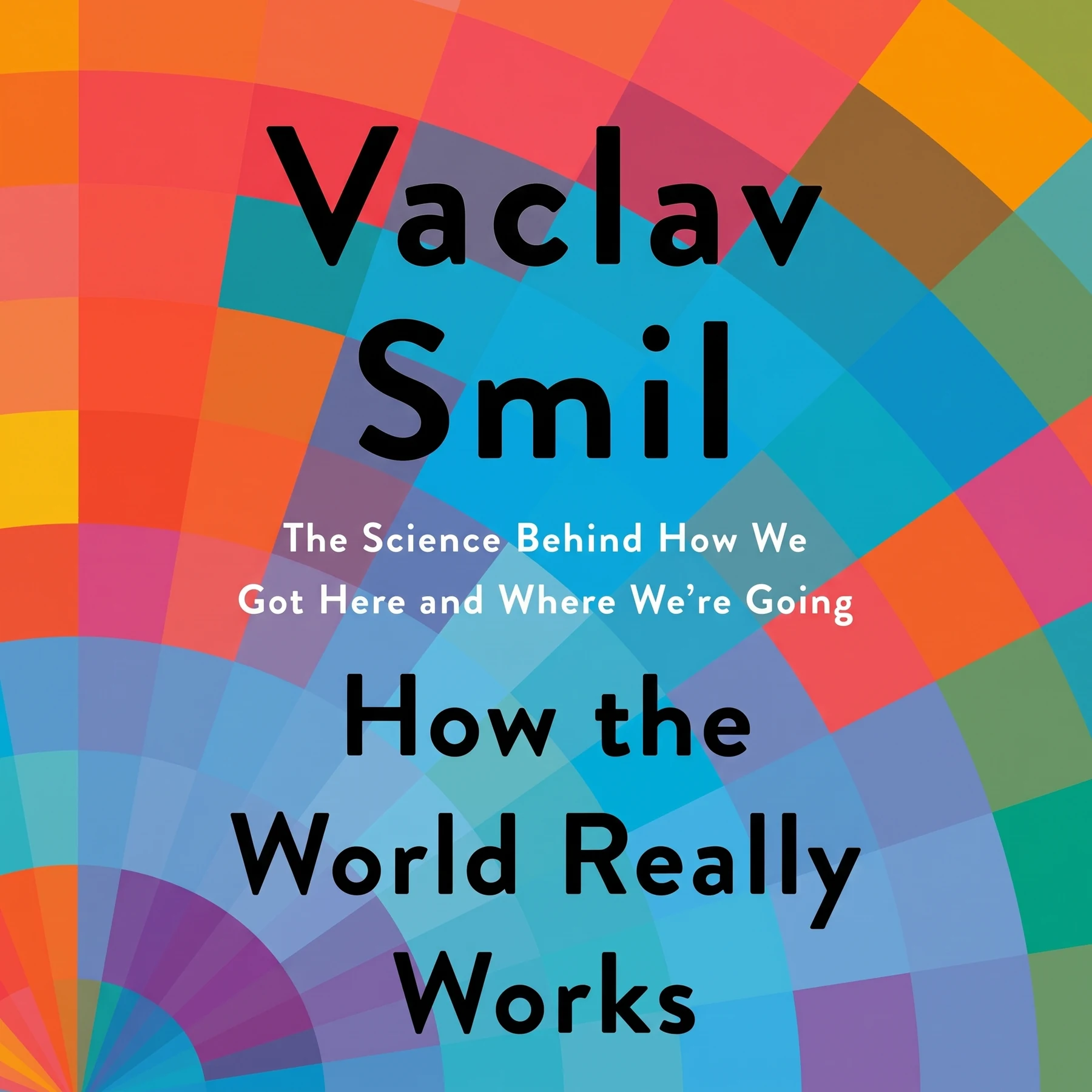
Listeners describe the book as extremely educational, offering systematic factual data and new viewpoints on a variety of topics. Additionally, the prose is organized and easy to follow, as the author excels at clarifying complicated ideas. They value its grounded perspective and stimulating material, with one listener mentioning that it forces people to examine their ideological convictions. On the other hand, responses to the tempo are varied, as several listeners point out that it lacks a narrative-heavy style.
Picked this up after seeing it on several 'must-read' lists, and it certainly delivers on the promise of explaining the physical foundations of our civilization. Smil breaks down the 'four pillars'—ammonia, steel, plastics, and concrete—in a way that makes you realize how fragile and fossil-fuel-dependent our modern life truly is. To be fair, he can come across as a bit condescending toward anyone who isn't a scientist, but the data is so compelling that it's hard to look away. I appreciated the deep dive into nitrogen and why organic farming simply cannot feed 8 billion people without massive starvation. It isn't a page-turner in the traditional sense, and some sections on energy transitions feel repetitive if you've read his previous work. However, the sheer density of facts makes it an essential reference. If you want to move beyond slogans and understand the actual energy cost of a loaf of bread, start here.
Show moreThis book is a masterclass in scientific literacy. Smil addresses the 'comprehension deficit' that most of us have regarding the industrial processes that keep us alive. I was particularly struck by the sections on ammonia production; it’s wild to think that half the world’s population depends on synthetic fertilizers for their very existence. The writing is dense but remarkably accessible if you're willing to pay attention to the numbers. Look, he isn't trying to be your friend or give you hope; he’s trying to give you the facts. The way he connects energy to food production changed how I look at my local grocery store entirely. It’s a thought-provoking piece of work that forces you to confront your own biases about how fast the world can actually change. Highly recommended for anyone who values reality over rhetoric.
Show moreVaclav Smil has written the ultimate reality check for the 21st century. In a world of polarized takes, he stakes out a 'rational middle ground' that is both refreshing and slightly terrifying. He doesn't offer a vision of utopia or apocalypse, just a very detailed explanation of why energy transitions take generations, not years. The chapter on the environment is particularly strong, as it avoids the usual hyperbole to look at actual rates of change. Sentence by sentence, the book is packed with information that challenges conventional wisdom. I particularly enjoyed the focus on concrete and steel—the unsexy materials that actually build our world. It’s a dense read, and Smil’s tone can be quite blunt, but that’s exactly what we need right now. This is a book that rewards slow, careful reading.
Show moreThe chapter on food production alone is worth the price of admission. It is mind-blowing to see the sheer amount of fossil fuels 'hidden' in the food we eat every day. Smil avoids the 'techno-optimist' trap and stays grounded in the laws of physics. His writing is structured and logical, providing a clear-eyed view of why net-zero targets are so incredibly difficult to hit. Got to say, I actually appreciated his 'snarky' tone; it feels like the frustration of a man who has been saying the same things for forty years while no one listens. It’s an extraordinary job of explaining complex concepts without oversimplifying them. If you’re tired of the shouting matches on the news and want to understand the actual mechanics of our existence, this is the book for you.
Show moreEver wonder why the world hasn't just 'switched' to green energy yet? Smil explains the 'how' with brutal, mathematical efficiency. He focuses heavily on the material realities—things like the massive amounts of diesel required to move cargo ships and the carbon footprint of the very wind turbines we hope will save us. Frankly, it’s a sobering read that challenges both the techno-optimists who think AI will solve everything and the doomers who think the world ends in ten years. My only real gripe is that the pacing is quite uneven. Some chapters, like the one on globalization, are fascinating and move quickly, while others feel like wading through a textbook. Still, the systematic way he builds his case is impressive. It’s an antidote to the shallow takes we see on social media every day.
Show moreFinally got around to reading this and I'm glad I did, though it's definitely not a light 'beach read.' Smil’s strength lies in his ability to show the sheer scale of our material world. We talk about 'decarbonization' like it’s a software update, but Smil reminds us that it’s more like rebuilding the entire physical foundation of the planet. I liked the chapter on risk perception—how we fear things that are involuntary, like nuclear power, while ignoring much larger voluntary risks. The truth is, the book is a bit dry and isn't story-driven at all, which might bore some readers. But the information is too important to ignore. It’s a systematic dismantling of the idea that there are easy, 'magic' solutions to our global problems. It might leave you feeling a bit pessimistic, but at least you'll be better informed.
Show moreJust finished this and my brain feels like it’s been through a gym session. Smil’s ability to synthesize massive amounts of data into a coherent narrative about energy and materials is second to none. I especially liked the section on globalization and how it has evolved from spice trades to the complex, just-in-time shipping we have today. Personally, I found the chapter on diet a bit contentious, as he seems to hand-wave away some very legitimate nutrition studies. However, the core of the book—the energy stuff—is rock solid. It’s not a fun read, but it’s a necessary one. It forces you to reflect on your own ideological beliefs about the environment and see the hard physical limits of what we can achieve. A must-read for anyone interested in policy or engineering.
Show moreAs someone who spends way too much time on environmental Twitter, reading Smil was like a splash of cold water to the face. On one hand, he provides a necessary reality check regarding the scale of the energy transition, correctly identifying that electricity is only a small part of the total energy puzzle. On the other hand, his tone is often insufferable. He frequently uses snide asides and exclamation marks to mock 'catastrophists' without always engaging with their strongest arguments. Truth is, his dismissal of certain dietary shifts felt poorly researched, especially when he suggests that meat consumption is the primary driver of life expectancy without accounting for other variables. The book is well-structured but lacks a narrative heart, making it feel more like a series of lectures than a cohesive book. It's informative, yes, but you have to ignore the author's apparent arrogance to get through it.
Show moreNot what I expected from the 'favorite author' of so many billionaires. The book is essentially a long lecture on why we shouldn't get our hopes up. While I appreciate the focus on materialism and the 'four pillars,' I found his dismissal of the digital world a bit short-sighted. He views things like AI and data as 'disembodied information' that doesn't really impact material reality, but surely the efficiencies gained through better software are part of how the world works now? The pacing is a real issue here; it feels like the book could have been half as long and still made the same points. To be fair, his breakdown of why globalization isn't going anywhere was quite insightful. It’s a solid 3-star read for the data, but it didn't quite live up to the hype for me.
Show moreI frankly expected a more balanced approach given the title, but this felt more like a defense of the status quo. Smil’s dismissal of veganism and organic agriculture is particularly weak. He claims we can't get enough nitrogen from organic sources, yet he ignores a wealth of ecological research showing how high-intensity organic systems can actually work at scale. Also, his advocacy for nuclear energy, while acknowledging the waste and depletion issues, feels like a massive contradiction. He calls for more milk consumption in Africa despite widespread lactose intolerance, which just feels like he's out of touch with global realities. The book is essentially a collection of statistics used to justify a very specific, fossil-fuel-heavy worldview. If you're looking for an objective look at the future, keep looking. This is mostly just an exercise in scientific elitism.
Show moreVaclav Smil argues that the history of life and of humanity is a history of energy conversions, from microbes producing oxygen to fire, working animals, coal, oil and electricity. Modern comforts rest on these conversions, especially fossil fuels in farming and electricity in machines. He believes every citizen should grasp these basics, because without them people cannot make informed choices about food, energy and the environment.
Smil calls modern food production a hybrid of sunlight and fossil energy. Diesel runs harvesters and the vehicles that carry grain, and factories burning fossil fuels make farm machinery. The biggest input is synthetic nitrogen fertilizer, made by combining natural gas with nitrogen from the air. Its production uses almost 1.5 percent of global energy supply and helps feed nearly eight billion people.
Electric motors transformed factories and doubled American manufacturing productivity between 1900 and 1930, quadrupling it by 1960. Today service economies, household heating and cooling, water pumping and fuel transport all depend on electricity, and a typical car contains 20 to 40 electric motors. Smil warns that a few days of severe shortage would plunge a crowded region into chaos, even though electricity supplies only 18 percent of final global energy use.
It suits anyone who takes part in debates about energy, food or climate and wants to understand the physical systems behind them. Students get a clear link between thermodynamics, agriculture and economic history. General readers learn why a wheat farm’s labor fell from ten minutes per kilogram in 1801 to two seconds in 2021, and what that change did to where people live.
Smil suggests a habit of noticing. When you eat, think of the fertilizer made from natural gas and the diesel used to harvest and transport the grain. When you switch something on, think of the motors, pumps and power plants behind it. Asking which energy conversion makes any comfort possible gives you a firmer footing when judging claims about food and energy.

Carl Zimmer

Bill Bryson

Jeff Hawkins




Lisa Kaltenegger


AUDIO SUMMARY AVAILABLE
Get the key ideas from How the World Really Works by Vaclav Smil, plus 5,000+ more nonfiction titles.