

14 min 30 sec
Available in: English
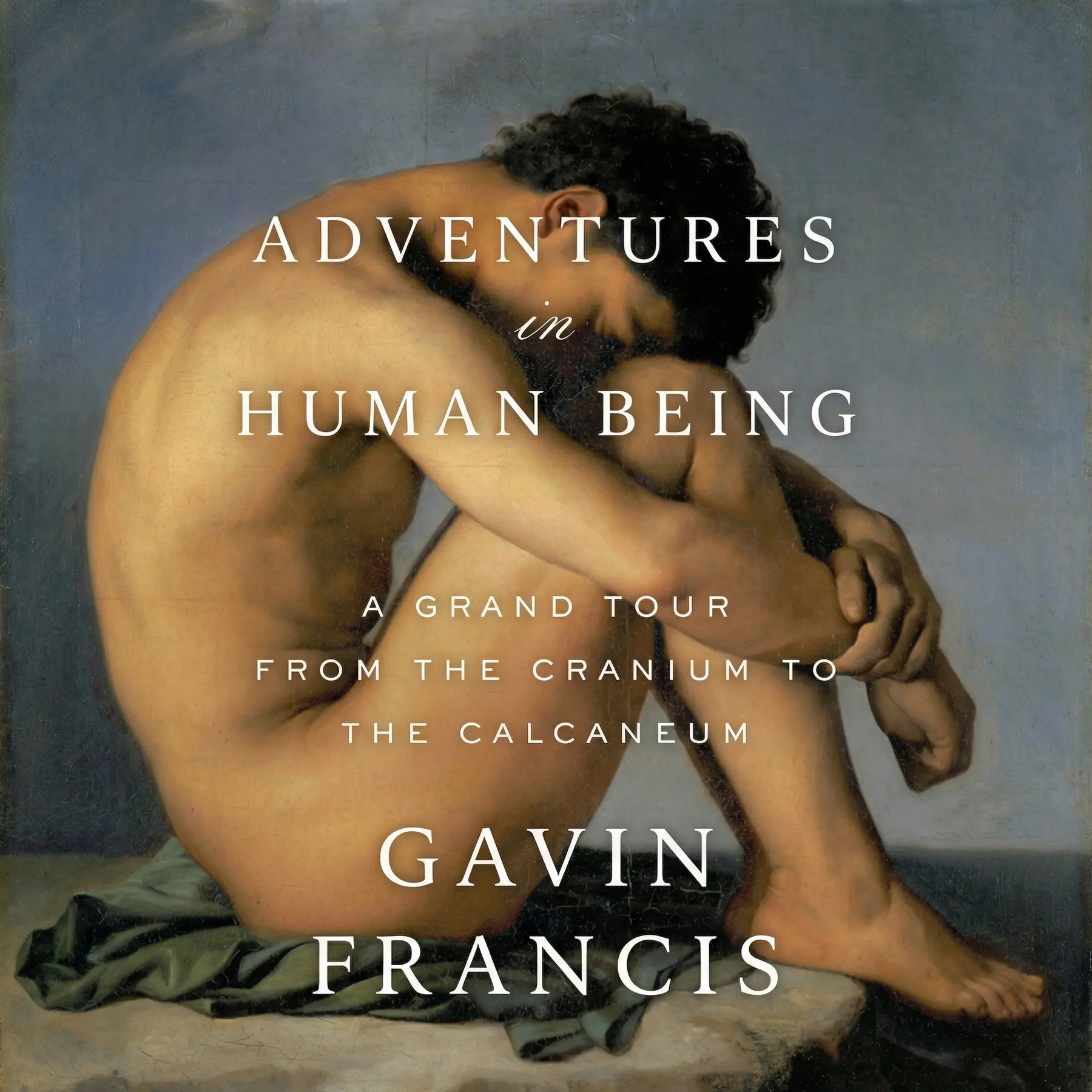
Adventures in Human Being: A Grand Tour from the Cranium to the Calcaneum
A doctor tours the human body organ by organ, from the face to the foot, and shows what each one reveals about how it works and about what makes us human.

Table of Content
1. Introduction
59 sec
Most of us live inside a body we have never really explored, and much of what we believe about it is half physiology, half myth. In Adventures in Human Being, Edinburgh family doctor Gavin Francis shows how much a body records. After dissecting more than 30 faces, he could tell who had laughed through life and who had frowned.
His tour runs from organ to organ, with a playful contest along the way: which part of us is the most human? His answer is that our humanity is spread across the body. Some organs set us apart from other animals. Some carry our culture and our capacity for love. One made the species possible.
Along the way you will watch surgeons wake a patient in the middle of an operation and hear why a heart without a beat worries doctors. You will also follow one young donor’s gifts to strangers across a country.
2. Credit your feet for making you human
1 min 45 sec
Most people would name the hand, with its clever thumb, as the most human part of the body. Three trails of footprints in volcanic rock tell a different story, and they reverse an assumption about our past that sounds almost biblical.
3. Learn which brain tissue surgeons can safely remove
1 min 41 sec
A woman lies awake on the operating table with a window cut in her skull, naming pictures on cards. What the surgeon does next, and how she feels two days later, upends what most of us assume about the brain.
4. Read a life story in facial muscles
1 min 46 sec
An anatomist can look beneath the skin of a stranger’s face and guess whether that person laughed, loved or grieved. The same knowledge may explain why one Renaissance painting looked so shockingly alive to its first viewers.
5. Discover what your heartbeat does beyond moving blood
1 min 49 sec
Engineers can already design a heart that pumps without beating. After bypass surgery, one of Francis’s patients saw a strange darkness rising in his mind, and his story suggests the rhythm itself may matter to who we are.
6. See why human pleasure outgrew reproduction
1 min 42 sec
For centuries, European doctors were sure a woman could not conceive without pleasure. They were wrong, yet not entirely. The real mechanics explain an old puzzle about female bodies and say something larger about our species.
7. One short-lived organ that carries a world of customs
1 min 50 sec
Some cultures eat it, others plant it beneath a sacred tree or send it floating toward the sea. Now some Western parents keep it frozen for decades, which brings an ancient belief back by an unexpected route.
8. A kidney shows how far kindness reaches
1 min 48 sec
A gray, shrunken organ comes out of the cold and turns pink inside a stranger’s body. Behind that small miracle there is usually a tragedy, and one family’s decision shows how many lives a single loss can touch.
9. Conclusion
1 min 10 sec
Francis never names a winner, and that is the lesson. Each organ earns its place for a different reason. The brain and the face are more developed in us than in any other animal. The heart, the placenta and the kidney stand for what we value most: life, culture and love. The foot belongs because without it, none of the rest would have followed. On this tour, humanity runs from the skull to the heel.
Knowing this makes ordinary moments look different. A smile in the mirror builds the very muscles a future anatomist could read. If the pump head theory holds, the pulse under your fingertips may be doing more than moving blood. A walk to the bus repeats the step that left prints on a Tanzanian plain 3.5 million years ago and set our ancestors on the way to becoming us. And a choice like the one that grieving family made can carry one body’s gifts to five strangers.
Most of us spend our whole lives on this unexplored continent without ever looking around. Francis makes a strong case for taking the tour.
About this book
What is this book about?
Most people live their whole lives inside a body they barely know. What they do know is often a mix of physiology and old myth. Gavin Francis, a family doctor in Edinburgh who has also trained in neurosurgery and worked as an expedition medic, treats the body as an unexplored continent and takes the reader around it one organ at a time. At each stop he explains how the organ works and what people have believed about it. He also runs a playful contest to find the organ that is most distinctly human. The stories come from his own medical life. He reads emotions in the facial muscles of cadavers, watches surgeons wake a patient during brain surgery and sees a gray, chilled kidney turn pink inside a stranger. By the end there is no single winner. Instead the reader gets a clear picture of how our humanity is spread across the body: the brain and face that set us apart, the heart, placenta and kidney that stand for life, culture and love, and the foot that started it all.
Book Information
Who it's for
New to human anatomy
Curious readers who know little about their own anatomy and want it explained through real medical stories.
Considering medicine or biology
Students and people thinking of a career in medicine or biology who want a human side to the science.
Curious about body history
Anyone interested in how cultures have understood the body through history.
About the Author
Gavin Francis
Gavin Francis is a general practitioner in Edinburgh. He was born in 1975, grew up in Fife, Scotland, and qualified in medicine at Edinburgh in 1999. He then spent ten years traveling, reaching all seven continents. He has worked in pediatrics, surgery and emergency medicine, trained in neurosurgery and served as an expedition medic in the Arctic and Antarctic. He has written eleven nonfiction books. One of them, Empire Antarctica, won the Scottish Book of the Year prize in 2013.
Ratings & Reviews
Ratings at a glance
What people think
Listeners find the book absorbing and accessible for the general public, featuring high-quality prose and narratives that cover everything from common injuries to rare ailments. They value the depth of expertise presented; one listener highlights the vast scope of medical knowledge, while another points out the intriguing details regarding evolutionary perspectives and history. The author’s sincere tone and narrative style earn praise.
Top reviews
Bond
Ever wonder what really happens when a surgeon opens up a skull? This book is a magnificent journey from head to toe, blending clinical expertise with a surprisingly poetic touch. Dr. Francis shares a fascinating anecdote about a neurosurgeon who compared brain surgery to 'gardening' rather than high-stakes micro-engineering, which totally changed my perspective on the field. The way he weaves together the history of medicine with modern practice is seamless. For instance, I had no idea the liver was the only organ capable of regenerating itself so effectively. It is refreshing to see a doctor who respects the literary roots of his craft, citing the Iliad for its anatomical accuracy while treating his own patients with deep empathy. This isn't just a textbook; it’s a celebration of the human machine in all its messy, fragile glory. Truly one of the best books in this genre I've encountered in years.
Show moreChaiwat
Wow, what a beautiful and sensitive look at what it means to be alive. Dr. Gavin Francis is not just a surgeon; he is a storyteller who sees the poetry in a pulse. The way he connects classical literature—like the injuries in the Iliad—to modern emergency room cases is absolutely brilliant. I found the section on the brain particularly moving, especially his description of the delicate balance between life and death during surgery. He brings a personal touch to every subject, whether he's discussing the regeneration of the liver or the trauma of a broken shoulder. Personally, I think the book is highly entertaining and perfect for anyone who wants to learn surprising facts to share at parties. Did you know people used to think simultaneous orgasms were required for conception? It’s full of little gems like that. It’s a deeply respectful and enlightening journey through the human frame.
Show moreSaowalak
As someone who usually finds science books a bit dense, I was pleasantly surprised by how accessible this was. Gavin Francis has a gift for explaining medical procedures in a way that feels like a conversation rather than a lecture. I loved the head-to-toe format; it felt like a guided tour of a complex museum. The most memorable part for me was the chapter on the liver and its amazing ability to grow back. It’s also fascinating to see how much we owe to military medicine. The author’s background as a GP and ER specialist gives him a wide range of stories to draw from, making the book feel very comprehensive despite its quick pace. Not a single chapter felt like filler. If you have even a passing interest in how your body works, you should definitely pick this up. It’s an engaging, heartfelt, and eye-opening read.
Show moreThanakorn
This book reads like a series of thoughtful, interconnected essays rather than a dry medical manual. Gavin Francis takes the reader through the body's various systems, using patient stories to ground the science. I particularly enjoyed the chapter on the liver and the strange historical beliefs about conception that persisted until the 1700s. While some of the transitions into philosophy felt a little forced, the medical anecdotes were consistently gripping. His respect for military doctors and their trauma-care expertise was an eye-opener for me as a layperson. Not gonna lie, some of the descriptions of injuries—like the motorcyclist with the paralyzed arm—were a bit hard to stomach, but they highlight the complexity of our nerves and bones. It’s a solid, engaging read that makes you appreciate the simple act of breathing or moving your hand. Highly recommended for fans of Atul Gawande or Henry Marsh.
Show moreGabriel
Picked this up during a long flight, and it was the perfect companion. Francis has a way of making complex anatomy feel accessible without ever talking down to the reader. The structure of moving from head to foot works well, giving the book a natural rhythm. I was especially struck by the connection he drew between a simple thorn bush infection and the story of Sleeping Beauty; it’s that kind of literary flair that sets this apart from a standard science book. However, I did feel he painted himself as a bit too much of a 'perfect' doctor at times. Every interaction with a patient seemed to have the textbook perfect response, which felt slightly less authentic than the raw vulnerability you see in books like Do No Harm. Still, the breadth of medical knowledge on display is impressive. It’s a very nice read if you can overlook the occasional clinical detachment.
Show moreBee
After hearing so much about medical memoirs lately, I finally dived into this one. It is a series of essays that manage to be both educational and deeply human. Francis avoids excessive jargon, which I appreciated, focusing instead on how our bodies break and how we try to fix them. The chapter on the wrist and hand was a highlight for me, especially the detailed look at how we've learned to treat trauma through the experience of battlefield medics. To be fair, he does approach the body mostly as a machine, which might feel a bit reductionist to readers looking for a more psychological or spiritual exploration. But for a purely clinical and historical focus, it hits the mark. The writing is smooth and the pace is fast, making it easy to digest in short sittings. It's a fascinating tour of our own internal geography.
Show moreEleni
Gavin Francis takes us on a literal head-to-toe tour that feels part travelogue and part anatomy lesson. He has this wonderful ability to blend personal experience with folk tales and history, like linking a thorn infection to Sleeping Beauty. The book is filled with surprising facts that make you realize how little we actually know about our own bodies. I especially appreciated his insights into the pressure military doctors face and how that translates to civilian care. My only real gripe is that he occasionally comes off as a bit of a know-it-all in his patient interactions, which can be a little annoying. But the writing itself is very smooth and the technical information is kept to a minimum, which keeps the momentum going. It’s an intriguing, sometimes endearing look at the complex machine we inhabit every day. Definitely a good one for the bookshelf.
Show moreNam
To be fair, the anecdotes about patients are the strongest part of this collection. When Francis sticks to the medicine and the concrete cases, the book is quite interesting. However, I found it a bit clunky whenever he tried to be too literary or philosophical. It felt like he was checking boxes rather than offering deep insights. For instance, the section on the 'wink with both eyes' was a bit of an odd metaphor that didn't quite land. Look, it’s a decent book for a plane ride and you will definitely pick up a few novel facts, but it isn't something that will stay with me for a long time. It feels a bit like a high-quality blog series that was bound into a book. It’s informative and readable, but it lacks the 'revelatory' quality of the best medical writing. A middle-of-the-road experience for me.
Show morePreeda
Frankly, I expected more depth regarding the psychological side of healing. While the clinical descriptions are top-notch and the historical trivia is fun, the book treats the body as a series of mechanical parts. Francis is clearly a brilliant doctor, and his expertise in procedures is obvious, but the human element felt a little secondary to the 'facts.' I found myself skimming some of the more technical sections. It reminds me a bit of a more modern version of those old Picador medical anecdote books, but with slightly less enthusiasm. It’s not that it’s a bad book—it’s actually quite well-written—it just didn’t grab me the way I hoped it would. The scenes describing brain surgery were definitely hard to stomach. It’s worth a read for the facts, but don't expect a deeply emotional or life-changing experience.
Show moreSai
The truth is, I found this incredibly dry compared to the works of Gonzalez-Crussi. Where Gonzalez-Crussi made even the most mundane parts of the body sound majestic and philosophical, Francis feels a bit too technical and, frankly, a bit dull. These are recounted chapters with plenty of erudition but none of the wit or charm I was expecting. He covers the body from head to toe, but the facts didn't really stick with me. For example, the section on the eyes and face felt like a series of clinical notes rather than a compelling narrative. I also found his 'hero' persona a bit grating—he never seems to make a misstep or have a moment of doubt. It's an okay resource for basic facts in layman's terms, but it lacks the soul and 'wow' factor that makes a science book truly memorable for me.
Show moreQuestions about this book
What is Adventures in Human Being about?
In this book, Edinburgh doctor Gavin Francis tours the human body organ by organ. At each stop he explains how the organ works, tells stories from his own medical career and describes the myths and customs that have grown up around it. A playful contest runs through the whole book: finding the organ that is most distinctly human.
Which organ does Gavin Francis consider the most human?
There is no single winner. Francis says the brain and the face qualify because they are more developed in humans than in other species. The heart, placenta and kidney stand for life, culture and love. The foot qualifies because walking upright came before our big brains, freeing the hands for tools that then spurred the brain to grow.
Why are brain surgery patients sometimes woken up during the operation?
Francis describes an operation on a woman with severe epilepsy whose seizures began in a region that also handled speech. The team woke her while a speech therapist asked her to name pictures. The surgeon briefly switched off small patches of brain with a nerve stimulator and spared the areas where her speech faltered. He removed tissue elsewhere, and two days later she seemed completely normal.
What is pump head after heart bypass surgery?
Pump head is a form of cognitive impairment that frequently appears after bypass surgery. Patients may see strange darkness in their minds, become violent or behave unlike themselves. Doctors are not sure of the cause. One popular theory, which Francis discusses, is that bypass machines do not copy the heart’s rhythmic beat, and several studies argue that the body’s cells prefer blood that arrives in pulses.
Readers also enjoyed



A Life Decoded: My Genome: My Life
J. Craig Venter
A Planet of Viruses
Carl Zimmer

A Short History of Nearly Everything
Bill Bryson

A Thousand Brains: A New Theory of Intelligence
Jeff Hawkins

AUDIO SUMMARY AVAILABLE
Listen to Adventures in Human Being in 15 minutes
Get the key ideas from Adventures in Human Being by Gavin Francis, plus 5,000+ more nonfiction titles.
- 5,000+ titles
- Listen as much as you want
- 7-day free trial
- Cancel anytime









