
14 min 21 sec
Available in: English
Energy: A Beginner's Guide
By Vaclav Smil
A short, clear account of what energy really is and how converting it shaped Earth, living things and human societies. It also explains why our rising demand for fossil fuels is now a pressing problem.
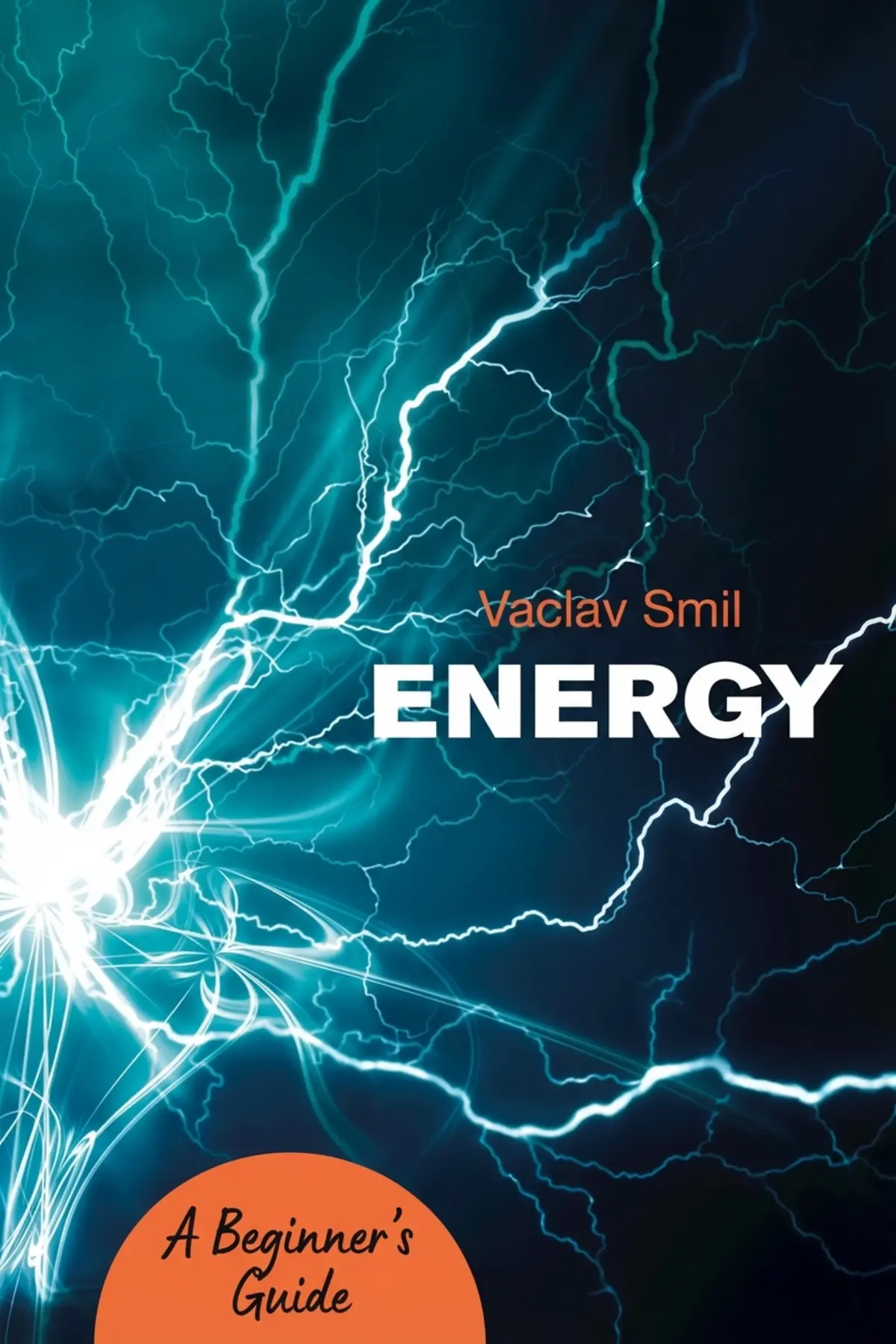
Table of Content
1. Introduction
1 min 03 sec
Most of us use the word energy loosely, for a good night’s sleep or a lively speaker, and then feel lost when the talk turns to oil prices, power plants or climate. Rub your hands together quickly and they grow warm. No new energy has appeared there. Motion has simply turned into heat.
In Energy: A Beginner’s Guide, Vaclav Smil, a geographer who has spent decades studying energy, food and the environment, builds a whole picture of the world from that simple fact. His argument is that energy is never created, only converted, and that the story of our planet, of every living thing and of human civilization is a story of finding better ways to convert it.
That story now has a hard edge. Our appetite for energy keeps rising, and the ways we feed it threaten the climate that made us possible. Follow Smil’s thread and the headlines about fuel, nuclear power and emissions fit into one map you can explain to anyone.
2. Talk about energy the way a scientist does
1 min 41 sec
People say a good speech or a hard workout leaves them full of energy. Physics says something stranger about where that energy comes from, and a simple test with your own two hands proves it.
3. Two energy flows made Earth a livable home
1 min 46 sec
Astronomers have searched a vast universe and still found no other life. Smil points to two sources of energy, one above us and one far below, that make our planet so unusual and so fragile.
4. Follow the energy to understand any ecosystem
1 min 45 sec
Why does any wild place hold far more plant eaters than hunters, and why can a wolf outlast a much faster cat? The answers come from one rule about where each animal’s fuel comes from.
5. Each new energy source built a bigger society
1 min 44 sec
Early foragers skipped small game, and the first villages crowded the coast. Those choices look random until you see the calculation behind them, the same one that later produced windmills and cities.
6. The fuels behind modern comfort cannot last
1 min 45 sec
Coal, oil and gas brought high life expectancy, trade across the globe and modern cities. Smil weighs those gifts honestly against three costs that grow harder to ignore every year.
7. See the energy hidden in your phone and flights
1 min 36 sec
The power a device draws from the wall is only part of its real cost. Smil traces the rest through factories, cargo ships and oil routes that can fail when distant countries fall into conflict.
8. Plan for an energy future nobody can forecast
1 min 49 sec
Experts have repeatedly failed to predict where energy use was heading. Smil still draws firm conclusions about fossil fuels, renewables and nuclear power, including one many readers will find uncomfortable.
9. Conclusion
1 min 12 sec
Smil’s guide makes one simple idea do a great deal of work. Once you see energy as conversion, the same pattern appears at every scale. The sun’s radiation becomes a stable climate, then green leaves, then the muscles of a cheetah or a wolf, then a harvest pulled in by an ox, then coal and oil that took millions of years to form and only generations to burn. Each better conversion widened what life and societies could do. The fossil fuel era widened it most, and it is the one we cannot keep.
That view changes how you hear the news. A warming planet becomes a question of how much of the sun’s steady heat the air holds. A gas dispute in a distant region becomes a risk to your own heating. A new phone carries the energy of the factory and the cargo ship as well as the charger.
So ask of any energy claim what is being converted into what, and at what cost. Count the hidden energy when you buy or travel. And since no one can forecast what comes next, judge each option by what it can supply today. Adapting, after all, is the one thing our species has always managed.
About this book
What is this book about?
Most people use the word energy every day without being sure what it means. Then the news turns to oil supplies, nuclear plants or rising emissions, and that vagueness makes it hard to follow. Vaclav Smil, a geographer who has spent decades studying energy, food and the environment, starts from basic physics. Energy cannot be created or destroyed. It can only change form. From that rule he builds a wide picture. The sun and the Earth's hot core shaped a planet fit for life. Plants and animals spend energy in ways that decide how ecosystems work, which is why cheetahs sprint and wolves endure. Human societies grew larger with each new energy source, from foraging and fishing to oxen, windmills and finally coal, oil and gas. That last step brought long lives, global trade and modern cities, but it cannot last. Smil shows how much energy daily life hides, why fragile supply routes matter, and why he thinks fossil fuels and nuclear power will stay with us for some time. Readers come away with a simple way to make sense of any argument about energy.
Book Information
Who it's for
Energy news-following professionals
Professionals who follow news about oil, nuclear power or climate and want the basic science behind it.
Energy and policy newcomers
Students and career switchers moving toward energy, environment or policy work who need a clear first map.
Everyday energy questioners
Curious readers who use the word energy daily and want to know what it really means.
About the Author
Vaclav Smil
Vaclav Smil is Distinguished Professor Emeritus in the Faculty of Environment at the University of Manitoba, where he has worked since 1972. Born in Plzeň in 1943, he earned a doctorate in geography at Pennsylvania State University. His research covers energy, environment, food, population, economics, history and public policy, and he has written more than 400 papers and 35 books. He is a Fellow of the Royal Society of Canada, and he was the first person from outside the US to win the AAAS Award for Public Understanding of Science and Technology.
Ratings & Reviews
Ratings at a glance
What people think
Listeners find the book highly informative and filled with thorough explanations, making it an excellent primer on the subject of energy. They also value the quality of the writing, its readable nature, and the purchase's value for money. The content is simple to use, and one listener specifically highlighted the inclusion of numerous helpful tables. However, opinions regarding its accessibility are varied; while some find it clear to follow, others feel it becomes tiresome due to an overabundance of specifics.
Top reviews
Emma
Finally got around to reading Smil’s overview and I must say it is a masterpiece of factual synthesis. He manages to tie together disparate topics like animal power, steam engines, and even the energy density of our food into one cohesive story of human progress. The book explains the leap from 1 billion to 6 billion people not just as a social change, but as an energetic one. I loved the intuitive refreshers on Newtons, Joules, and Watts because they grounded the grander theories in actual physics. Look, this isn't a fluffy read, but it’s remarkably readable if you actually want to understand the mechanics behind our standard of living. It's the perfect starting point for anyone who wants to move beyond headlines and understand the actual flow of power in our society.
Show morePracha
This is easily one of the most data-rich introductions to the physical world I have ever encountered. Smil doesn't waste time with fluff; he gets straight into the energy conversions that allow us to exist. I particularly appreciated the detailed tables regarding energy densities and engine efficiencies. It makes the transition from coal to hydrocarbons feel like an inevitable shift rather than just a historical accident. For a book about science, it is remarkably easy to use as a reference guide. Not gonna lie, some parts are technical, but he explains things like energy-mass equivalency and the laws of thermodynamics with surprising clarity. If you want to understand why our world looks the way it does, start here. It is an essential read for anyone interested in policy or history.
Show moreOtt
How did we get from wooden plows to deep-sea drilling? Smil answers this by looking at energy as the fundamental currency of our species. This book is a brilliant refresher on high-school physics that quickly evolves into a complex look at international standardized units and energy flows. I found the section on how fossil fuels created a feedback loop of industrial production and population growth to be absolutely eye-opening. We take our 230,000 kilocalories per day for granted, but Smil shows just how much infrastructure is required to maintain that standard. It’s a well-written, dense, and ultimately rewarding look at the invisible forces that drive our markets and our daily lives. Even though it's an older title, the core principles remain entirely relevant.
Show moreThida
If you're looking for a comprehensive primer on the physical forces that power our world, this is a solid choice. Vaclav Smil provides an incredibly informative overview that moves from basic thermodynamics to the complex energy flows of modern civilization. Personally, I found the chapter on the biosphere particularly enlightening because it connects solar radiation to human metabolic rates in a way that feels fresh. While the book claims to be a beginner's guide, be prepared for some heavy lifting. The information density is high, and you'll find yourself pausing to digest the numerous tables and data points provided. To be fair, it can feel a bit like a condensed textbook at times, but the value for money here is undeniable. It’s a well-written, if somewhat academic, exploration of how we transitioned from oxen and wood to steam and hydrocarbons.
Show moreSkylar
After hearing Bill Gates rave about Smil for years, I decided to start with this shorter volume. It's a fantastic introduction to how energy applications have shaped human history from the bottom up. The sections on nutrition and basal metabolic rates were surprisingly fascinating, linking human biology directly to industrial production. Smil does a great job illustrating how prime movers became more efficient over time, allowing us to escape the trap of subsistence farming. My only gripe is that it lacks connective tissue between the chapters. You’re often left to assemble the 'big picture' yourself from a mountain of facts and figures. Still, it's a high-information read that provides a perspective you just won't get from standard history books. Definitely worth it for the data alone.
Show morePetch
As someone who struggled through Smil’s more academic work like 'Energy and Civilization,' I found this to be a much more accessible entry point. It covers a vast range of topics without getting bogged down in the extreme depth of his larger tomes. You get a little bit of everything: from the way the sun heats the oceans to the way internal combustion engines revolutionized travel. To be fair, some readers might find the focus on 'human application' a bit limiting if they are looking for deep theoretical physics. This is a book about how we use energy, not a treatise on the Big Bang. The writing is occasionally stiff, but the sheer volume of useful background information makes up for the lack of literary flair.
Show moreCooper
Ever wonder why we are so much taller and healthier than our ancestors? Smil argues it all comes down to the capture and use of energy. This book provides a big picture outlook that few other authors can match, covering everything from photosynthesis to geothermal dams. It's a relatively short read but the information density is so high that it feels much longer. In my experience, the best way to approach this is as a reference work rather than a narrative. The tables are incredibly useful for visualizing the scale of our energy needs. While Smil’s tone can be a bit arrogant when he discusses non-scientific viewpoints, the quality of his research is top-notch. It’s a perfect starting point for anyone serious about energy policy.
Show morePim
The information density here is through the roof, which is both a blessing and a curse. Smil is clearly a master of his craft, but the writing style is incredibly dry and lacks much of a narrative thread to keep you engaged. I often felt like I was reading an abridged textbook rather than a popular science book intended for a general audience. The truth is, the book's 2006 publication date means it misses crucial recent developments like the massive surge in Tesla’s influence or the Fukushima disaster. I also found his disdain for non-scientific language a bit much; he spends way too much time mocking how people use 'energy' as a metaphor. It’s a useful reference with great tables, but it isn't exactly a page-turner for your weekend reading.
Show moreWittaya
Don't go into this expecting a treatise on quantum mechanics or the mysteries of the universe. Smil is focused on the practical, the measurable, and the historical. While the book is packed with detailed explanations of things like ATP and steam engines, it can get very tedious if you aren't a fan of raw data. The author has a habit of veering abruptly from his topic sentences, which makes the flow feel disjointed. Frankly, it felt like I was reading a collection of very high-quality encyclopedia entries rather than a unified book. It’s great for looking up specific energy services or historical production rates, but as a cover-to-cover read, it’s a bit of a grind. It’s a serviceable overview, but far from Smil's most engaging work.
Show moreAria
I really wanted to like this, but frankly, it reads like an instruction manual written by someone who hates metaphors. Smil’s discipline snobbism is on full display here, and he seems more interested in being technically correct than in being a compelling writer. The sentences are often clunky and require multiple readings just to parse the basic meaning. Why are there so many commas in places they don't belong? Beyond the prose, the book is starting to feel quite dated. Since this was written in 2006, there is no mention of the shale revolution or the current state of renewable energy tech. It’s a very unlovely guide to an important topic. If you aren't already a fan of dense, non-linear scientific writing, you will likely find this to be a tedious slog through minutiae.
Show moreQuestions about this book
What is the main idea of Energy: A Beginner's Guide by Vaclav Smil?
Smil argues that energy is never created or destroyed, only converted from one form to another, and that this simple rule explains a great deal. It shaped a planet fit for life, it decides how plants and animals live, and it drove human societies from foraging to fossil fuels. He ends on the challenge of meeting a rising demand for energy without damaging the climate further.
How does Smil define energy?
He traces the word back to energeia, a Greek term used by Aristotle that meant motion, action or work. In modern usage, energy is commonly defined as the capacity to do work, meaning the ability to cause change. Under the first law of thermodynamics it can only change form, as when rubbing your hands together turns the energy of movement into heat.
Why are there more herbivores than carnivores in an ecosystem?
Smil explains that the farther a creature is from the sun, the original source of energy, the less energy reaches it. Plants capture sunlight through photosynthesis. Plant eaters only need to eat plants, while meat eaters must eat animals that ate plants, and energy is lost along the way. So any complex ecosystem can support more herbivores than carnivores or omnivores.
What does Smil say about renewable and nuclear energy?
He argues that wind, water and solar power cannot yet meet the growing demand by themselves, so fossil fuels will stay in use for a while. He calls nuclear power contentious but the cleanest source we have, notes real risks such as terrorist attacks and waste disposal, and says public acceptance most needs to improve. He sees flowing water as a largely untapped option.
How can I apply the ideas in this book?
Ask what is being converted into what, and at what cost, whenever you hear an energy claim. Count the hidden energy in devices and flights, including manufacturing and shipping as well as use. Notice where your fuel comes from, since Smil shows that distant conflicts can cause shortages. And be wary of confident forecasts, since past experts missed events like the Iraq War.
Readers also enjoyed


A Life Decoded: My Genome: My Life
J. Craig Venter

A Planet of Viruses
Carl Zimmer

A Short History of Nearly Everything
Bill Bryson

A Thousand Brains: A New Theory of Intelligence
Jeff Hawkins




Alien Earths: The New Science of Planet Hunting in the Cosmos
Lisa Kaltenegger

AUDIO SUMMARY AVAILABLE
Listen to Energy in 15 minutes
Get the key ideas from Energy by Vaclav Smil, plus 5,000+ more nonfiction titles.
- 5,000+ titles
- Listen as much as you want
- 7-day free trial
- Cancel anytime









