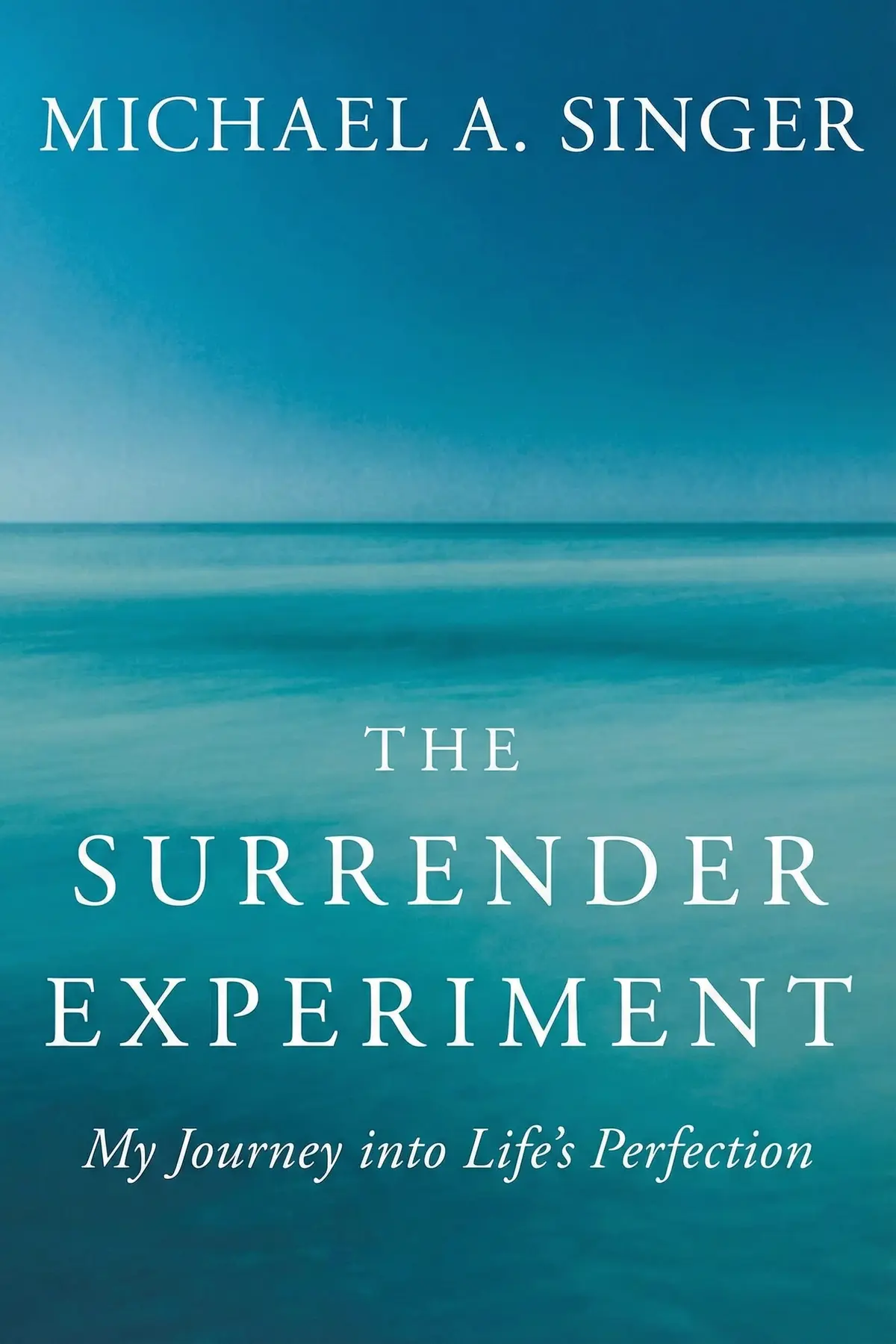
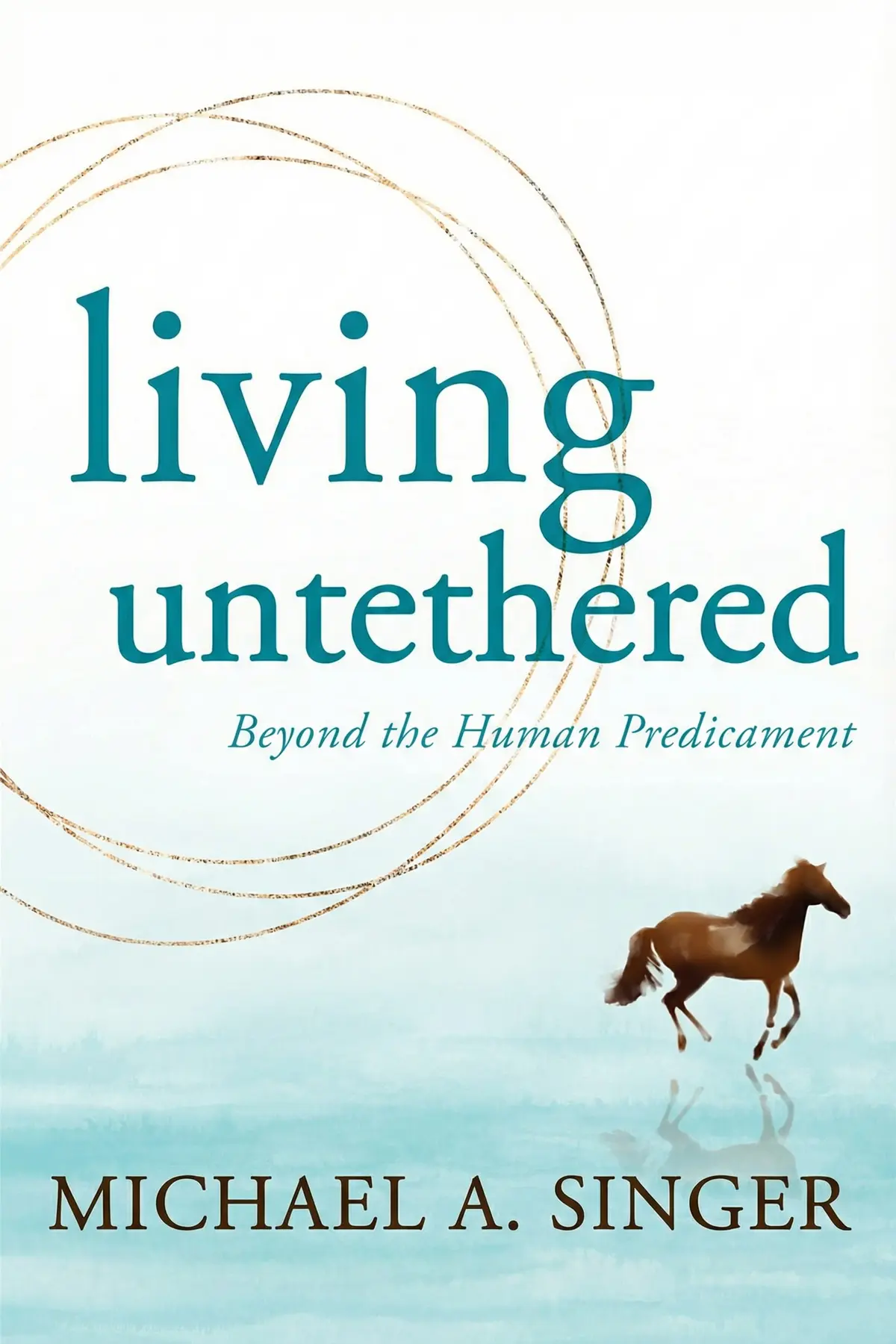
The Surrender Experiment: My Journey into Life’s Perfection
Michael A. Singer
 English
 ไทย
Shows why everyday upsets cling to you and how to release them, using Singer's idea that you are the awareness behind your thoughts, plus three methods and a simple meditation routine.
1 min 04 sec
If small disappointments can spoil your whole day, Michael A. Singer points to a surprising place to look: not the events, but the one who experiences them. In Living Untethered, the spiritual teacher and software entrepreneur argues that everything you will ever live through comes down to three things passing before your awareness: the world outside, your thoughts and your emotions. Those three keep changing. The one noticing them does not.
His central idea is simple to say and hard to live. Inner trouble comes from clinging to some experiences and pushing others away, and peace returns when you stop resisting and let them pass through. Singer moves from a mirror exercise to a rattlesnake to a sun 93 million miles away. Along the way he offers three practical ways to release what you are holding, and an order for practicing them, starting with a hot afternoon and ending with memories carried for years.
1 min 49 sec
Your face at ten, today and thirty years from now are three different faces. Singer asks what has stayed exactly the same through all of them, and why the answer changes how a bad day feels.
1 min 51 sec
A drink, a thrill, a new relationship: most of us reach outward when we feel bad inside. Singer suggests the problem lies in the question we ask, and a different question leads somewhere more useful.
1 min 44 sec
Look right, then left, and you have seen two separate moments that never needed you. Singer uses this tiny exercise to make a bold claim about why ordinary events manage to hurt so much.
1 min 48 sec
Some thoughts you choose, but most simply show up. Singer traces those uninvited thoughts and sudden moods to a single source, illustrated by a rattlesnake and a butterfly that never got to finish.
1 min 46 sec
Fighting a troubling thought usually feeds it. Singer offers three traditional methods for letting go, from the familiar to the demanding, and the deepest one starts with an instruction that feels backward.
1 min 46 sec
A song on the radio can bring back something that hurt years ago and spoil the whole day. Singer’s training plan starts far from that pain, with a hot afternoon, and builds toward it.
1 min 20 sec
Singer’s book adds up to a change of address. Most of us live as the image in the mirror, the mood of the hour and the thought that just arrived, so every bad moment feels like an attack on who we are. Move your sense of self back to the one watching, and those same moments become weather passing through.
The practice that holds this together is meditation, which Singer recommends in whatever form helps you release thoughts: following the breath, counting, repeating a mantra. If you have no routine, sit twice a day at fixed times, perhaps fifteen minutes in the morning and fifteen in the evening, and watch thoughts and feelings come and go. As it gets easier, rest your attention on the breath. Count each in and out breath up to 25, then begin again at one. When the mind wanders, return without scolding yourself.
Outside the chair, start small: the next hot afternoon, the next delay, the next song that brings back an old hurt. Let each one pass all the way through. With enough clarity, Singer promises, nothing out there feels personal anymore. The world goes on existing, and so do you, at ease beside it.
Life feels easy when things go our way and heavy when they don't. Michael A. Singer argues that the heaviness rarely comes from events themselves. It comes from how we resist them, holding on to some experiences and pushing others away until they lodge inside us as unfinished patterns. Singer starts with identity. Through a mirror exercise and a few thought experiments, he makes the case that you are the conscious awareness that notices your body, your thoughts and your emotions, and that everything you experience falls into those three categories. From there he explains where automatic thoughts come from, using the yogic idea of samskaras, and why old memories can ambush an ordinary day. The practical heart of the book is letting go. Singer offers three traditional methods, positive thinking, a mantra and witness consciousness, and a sensible order for practicing them, from small irritations like hot weather to painful memories. He closes with a simple twice-daily meditation routine. Readers get a clear model of their own inner life and concrete ways to stop carrying what no longer serves them.
People whose mood is easily wrecked by small setbacks or sudden old memories.
Professionals under stress who want a simple daily meditation and letting-go practice.
Spiritual seekers of any faith curious about yogic ideas like samskaras and witness consciousness.
Michael A. Singer, born in 1947, earned a master's in economics at the University of Florida in 1971. During his doctoral studies he had a deep inner awakening and withdrew into seclusion to focus on yoga and meditation. In 1975 he founded Temple of the Universe, a yoga and meditation center open to people of any faith. He also co-founded the medical software company Medical Manager in 1981. The Untethered Soul, The Surrender Experiment and Living Untethered were all New York Times bestsellers.
Michael A. Singer
Michael A. Singer
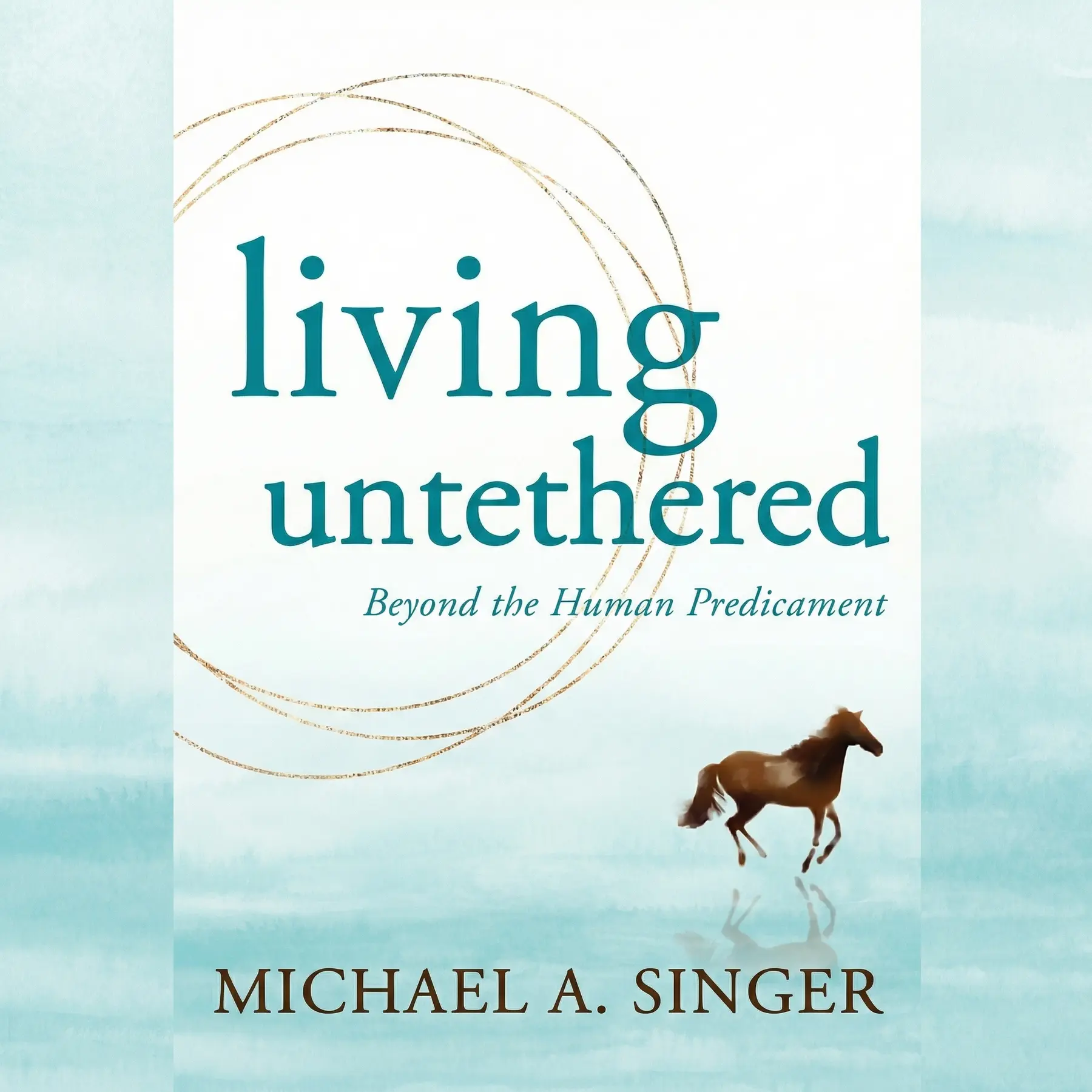
Listeners find this work a complete delight to experience, offering profound lessons that simplify intricate spiritual ideas. Furthermore, the content is straightforward and accessible, utilizing a sequential method that guides individuals toward tranquility by releasing internal obstacles. Listeners also value the realistic perspective and useful exercises, mentioning that the material improves their daily feelings of love.
Finally got around to finishing this, and it feels like a weight has been lifted from my shoulders. Singer has this incredible way of making the most abstract spiritual concepts feel like common sense you’ve just forgotten. While some might find the "letting go" advice a bit oversimplified, I found the step-by-step breakdown of how we trap energy to be exactly what I needed. It’s not just about positive thinking; it’s about becoming the witness of your own chaos instead of drowning in it. My day-to-day experience of love and connection has shifted because I'm no longer fighting every uncomfortable sensation. If you're looking for deep peace that doesn't require moving to a monastery, this is the guide for you. It’s a beautiful, fluid read that I know I’ll be revisiting whenever life starts feeling too heavy again.
Show moreWow, what an absolute masterclass in inner clarity and emotional resilience. Singer doesn’t just tell you to be peaceful; he explains the mechanics of the mind so clearly that you start catching your own "samskaras" in real-time. I’ve read a lot of self-help, but the way he describes the heart as a valve for energy flow is a total game-changer for my practice. It’s one thing to hear about mindfulness, but it’s another to have a roadmap for transmuting old scars into higher energy. Some might say it’s repetitive, but I found the reinforcement helpful for actually changing my habitual thought patterns. The writing is incredibly digestible and lacks the pretension you often find in these types of spiritual manifestos. I finished it feeling more grounded and less reactive to the typical stressors of my job. Highly recommended for anyone seeking a more harmonious life.
Show morePicked this up during a really turbulent time in my life, and it has been a total lifeline. Singer’s words have this calming, fluid quality that makes you feel like everything is going to be okay as long as you stop fighting the flow. I especially loved the emphasis on serving the present moment with all your heart regardless of whether you like it or not. This book provides a clear path to inner peace by helping you identify those old scars that keep you tethered to the past. Not gonna lie, I was skeptical about whether a follow-up was necessary, but this felt deeper and more practical than his first book. It’s packed with common sense that we often ignore in our rush to fix everything around us. It’s a transformative read that I’ll be keeping on my nightstand for a long time.
Show moreMichael Singer has a gift for making you realize that most of your problems are just "frictions" you've created in your own mind. I found this book to be an absolute joy, providing a clear and compassionate framework for letting go of the need to control everything. The distinction between the "inner roommate" and the "Self" is a concept that has stayed with me every single day since I finished reading. While some critics say he repeats himself, I think the different analogies he uses are vital for grasping the depth of his message. It’s a practical approach to spirituality that doesn’t require you to change your life, just your perspective on it. This book truly enhances your day-to-day experience of love and joy by showing you how to get out of your own way.
Show moreNot what I expected at first, but exactly what I needed to hear. This book is a game changer because it focuses on the sheer reasonableness of acceptance as the starting point for any real change. Singer explains that resisting reality is like trying to make a past event not have happened—it’s just a waste of energy that creates internal tension. I appreciated the mix of ancient wisdom and modern science, even if the "God stuff" was a bit heavy for my personal taste in some sections. The writing is so fluid and the tone is so encouraging that it’s hard not to feel a sense of grounding while reading. It’s a wonderful reminder that we can live untethered from our past and our anxieties if we just learn to let the energy flow. Highly recommend this for anyone who felt the first book was a bit too abstract.
Show moreAfter hearing so much hype about the sequel to The Untethered Soul, I went in with high expectations and mostly came away satisfied. The book is an absolute joy to read because the prose is so accessible, even when he’s diving into the physics of the Big Bang or the nature of consciousness. Look, I’ll admit there is a decent amount of repetition here that could have probably been trimmed down by fifty pages or so. However, maybe that repetition is necessary to hammer home the point of non-resistance to reality. I especially appreciated the focus on "low-hanging fruit"—starting small with minor annoyances before trying to tackle the big traumatic blockages. It’s a practical, grounded approach to spirituality that avoids being too "woo-woo" for the average person. Definitely worth the time even if it covers some familiar ground.
Show moreAs someone who struggles with anxiety, the concept of being the "witness" rather than the participant in my thoughts was a much-needed perspective shift. This book builds on his earlier foundation by offering a more granular look at how we build mental models of how the world "should" be. Truth is, we spend so much energy resisting reality that we have none left for actually enjoying the present moment. I did find the sections on the vastness of the universe a bit long-winded, though they do help put your problems into a cosmic perspective. The step-by-step approach to letting go of inner blockages is useful, even if the execution is easier said than done. It’s a gentle, encouraging read that makes the daunting task of spiritual growth feel like a series of small, manageable choices.
Show moreThe chapter on samskaras and how we suppress energy flow was the highlight of this book for me. Michael Singer explains that we are not our bodies or our fleeting emotions, but the consciousness experiencing them. It’s a powerful realization that can transform your daily experience of love and frustration if you actually apply it. Frankly, I think some readers might be put off by the frequent references to "the Divine" or God, especially when mixed with talk of light-years and atoms. However, if you can look past the specific terminology, the underlying logic of non-resistance is incredibly sound. The book is a bit less "punchy" than The Untethered Soul, but it feels more like a warm conversation with a wise mentor. I’m taking it slow and trying to implement the "low-hanging fruit" advice before moving on to bigger things.
Show moreEver wonder why we spend so much time trapped in our own heads ruminating on things that happened years ago? This book tackles that head-on by teaching you how to remove the blockages that stop your natural energy from flowing. It’s an easy-to-read guide that breaks down complex Vedantic and yogic concepts into something you can actually use while sitting in traffic. To be fair, I think he could have been a bit more specific about actual meditation techniques rather than staying purely conceptual. Still, the idea of "witness consciousness" is explained better here than in almost any other book I’ve encountered. It’s a solid addition to his work, providing a helpful reminder that we are just on an eighty-year ride on a spinning planet. Definitely makes you want to stop sweating the small stuff and just enjoy the view.
Show moreTo be fair, this felt like a bit of a retread of his previous work without adding enough new material to justify the page count. I loved his first book, but here I found the constant back-and-forth between spiritual "God" talk and scientific "Big Bang" theories to be slightly jarring and contradictory. Is it a science book or a theology text? He tries to bridge the gap, but for me, it just muddied the waters and affected the overall credibility of the message. The core advice—to just release negative emotions—sounds great on paper but feels a bit dismissive of the actual work required in therapy or deep meditation. It’s still a decent introduction if you’ve never read Singer before, but for long-time fans, it might feel like he’s just capitalizing on his earlier success. I found myself skimming several chapters toward the end.
Show moreMichael A. According to Singer, your true self is the awareness that observes what happens in the world around you, as well as the thoughts and feelings that move through you. Distress comes from resisting experiences, clinging to some and pushing others away, which leaves unfinished patterns called samskaras. Letting those patterns pass through, rather than storing them, is what Singer means by living untethered, and it is how he says inner peace returns.
Samskaras are unfinished mental or emotional patterns. Singer illustrates them with a rattlesnake you keep at a distance and a butterfly you refuse to let go: neither experience completes its passage through the mind. These stored patterns block the flow of inner energy, which he calls shakti, and when life touches them, old thoughts and feelings return and steer present decisions.
He offers three traditional methods. Positive thinking replaces a negative thought with a positive one. A mantra, religious or not, such as I’m always fine, gives the mind a calm place to rest. Witness consciousness, the deepest, means observing thoughts and emotions without engaging them, and relaxing the body whenever you feel the urge to act.
Singer suggests starting with small irritations such as hot weather, first with positive thinking and then by witnessing and relaxing. Next, when a painful memory rises, let it come and release it instead of pushing it down. He also recommends meditating twice a day, perhaps fifteen minutes each time, counting breaths up to 25 and starting again.
It suits people who feel easily thrown by daily setbacks or ambushed by old memories, and anyone curious about meditation and yogic ideas of the self. Singer writes for readers of any faith, offering both religious and nonreligious options, such as choosing a mantra like God, Allah or the plain phrase I’m always fine.


Daniel Goleman

Marianne Williamson

Deepak Chopra

Alcoholics Anonymous World Services

Eckhart Tolle


Pico Iyer
AUDIO SUMMARY AVAILABLE
Get the key ideas from Living Untethered by Michael A. Singer, plus 5,000+ more nonfiction titles.