
15 min 54 sec
Available in: English
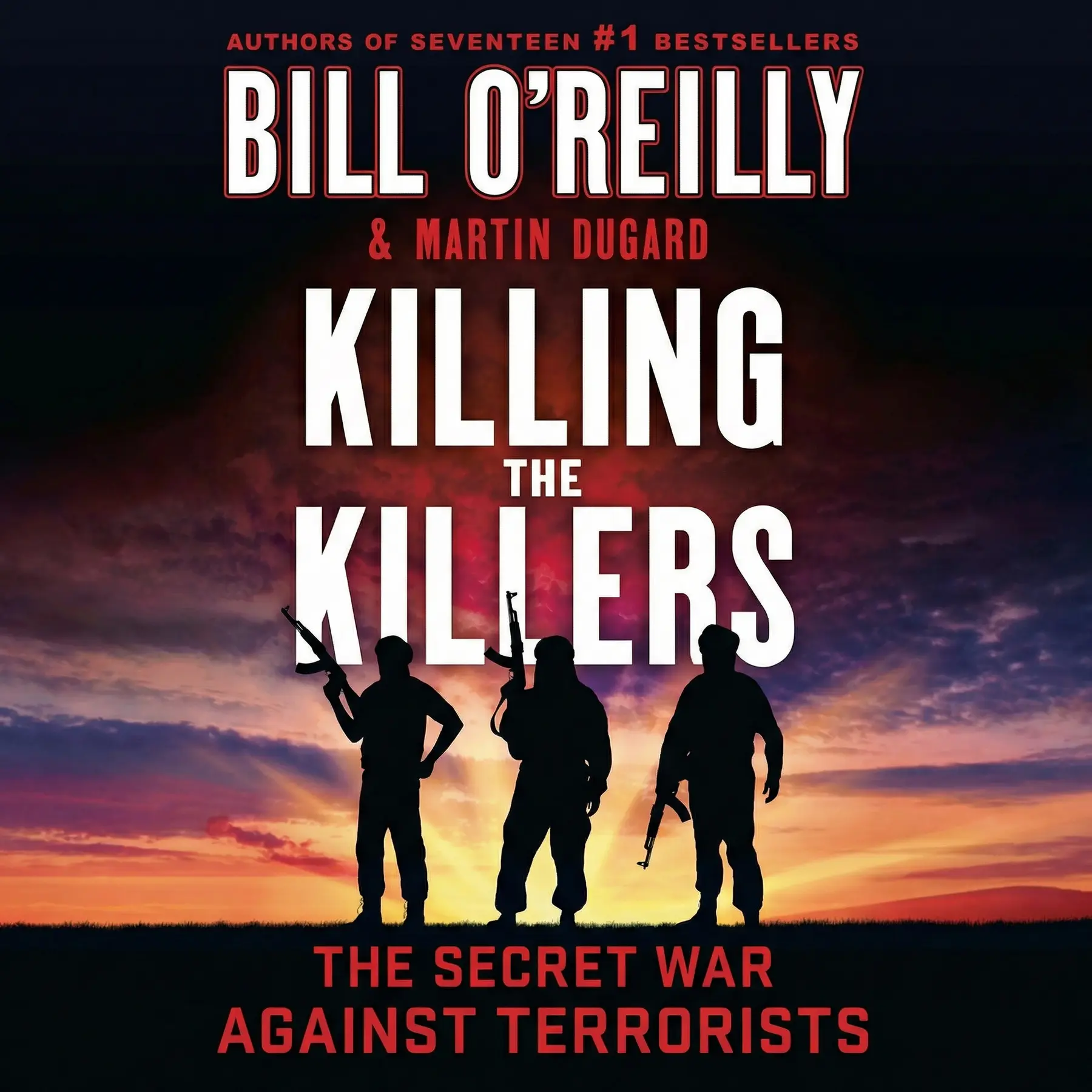
Killing the Killers: The Secret War Against Terrorists
Follows Iranian general Qasem Soleimani from untrained recruit to feared commander of the Quds Force. It also traces the American hunts that killed him and ISIS leader Abu Bakr al-Baghdadi, and the deaths that followed.
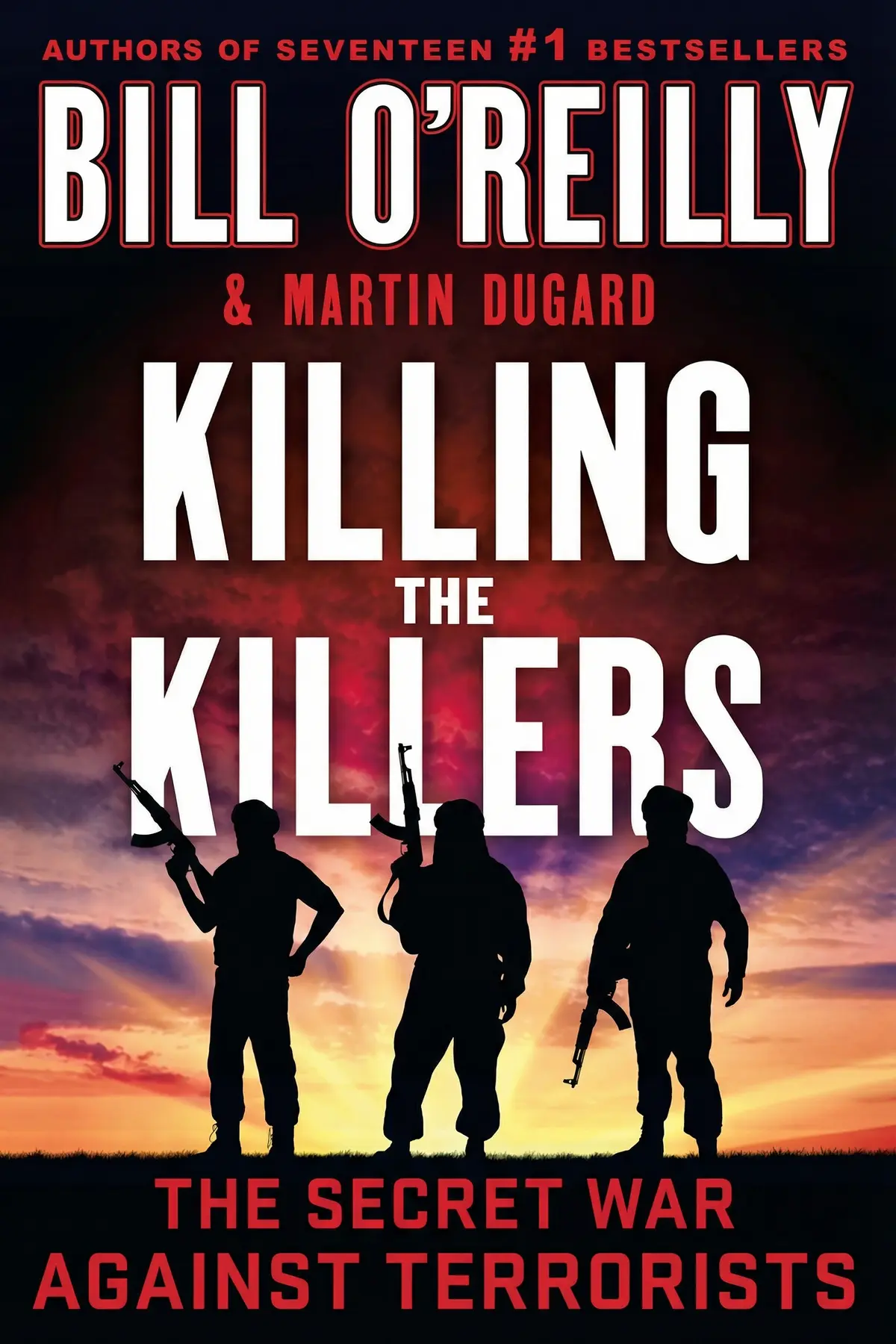
Table of Content
1. Introduction
59 sec
Most people remember the killing of Qasem Soleimani as one night of headlines in January 2020, not as the end of a story four decades long. In Killing the Killers, Bill O’Reilly and Martin Dugard tell that longer story, and they start from a striking judgment. In 2013, former CIA officer John Maguire ranked Soleimani as the most powerful operative alive, and added that almost nobody had heard of him.
The authors follow two hunts side by side, one for ISIS leader Abu Bakr al-Baghdadi and one for the Iranian general they consider the greater danger. Their throughline is that the deadliest men in this secret war were the least visible. Removing them took years of tracking, some luck and a willingness to face consequences nobody could control. By the end, you can explain how an untrained recruit became a regional power broker, and why his death went on costing lives.
2. Learn how a raw recruit became Iran's shadow general
1 min 38 sec
A young man with no military training joined a brand-new militia and refused to rest even after being shot. Within two decades he commanded one of the most feared forces in the region, driven by one lasting grudge.
3. Map the many fronts of a secret war
1 min 44 sec
From Bosnia to Yemen, one command trained other people’s fighters and kept its own name out of the news. Yet the man in charge wrote boastful letters to an American general and finally posed for the cameras.
4. Spot the bigger threat behind loud headlines
1 min 41 sec
In 2015 America and Iran found themselves fighting the same enemy in Iraq. Months later, a room full of lawmakers worried about one man while the news cycle kept pointing at another.
5. Two letters that turned rivalry into war
1 min 47 sec
A victorious general sent his supreme leader a report that ended by blaming America. Around the same time, the head of the CIA sent the general a warning he refused even to open.
6. What it really took to corner al-Baghdadi
1 min 49 sec
The world’s most wanted terrorist hid behind wives, couriers and tunnels for years. His end came through a captured lieutenant, a borrowed phone and a betrayal from inside his own walls.
7. Trace the week that led to the airport strike
1 min 43 sec
For weeks, rockets fell on a base in Iraq and nobody died. Then one attack killed a contractor, and each response set up the next until a mob was at the gates of an American embassy.
8. Inside the drone strike at Baghdad airport
1 min 46 sec
A general who had escaped assassination for years stepped off a late flight believing he was safe. Thousands of miles away, pilots in the desert were watching his car on a screen.
9. Learn the lasting cost of one killing
1 min 34 sec
Iran promised revenge, fired its missiles and killed no American soldiers. The deadliest moment came afterward, when a commander misread a radar image, and it fell on people who had nothing to do with the fight.
10. Conclusion
1 min 13 sec
The book frames one man between two pictures. In 2015, Soleimani knelt in the desert for his first photograph, calm and gentle-looking, with thousands of deaths already behind him. Five years later, all that could be identified of him was a hand beside a Baghdad road, recognized by its ring. Between those images, O’Reilly and Dugard describe a war fought mostly out of sight, in which the most dangerous figure was the one a congressional hearing barely mentioned.
They also show what such a war costs. Al-Baghdadi fell to a captured lieutenant, a wife’s courier and an insider’s betrayal. Soleimani fell to years of watching and a few minutes on an empty road. Neither death stopped the killing: rockets, a truck bomb, an embassy siege and a downed airliner surround these strikes.
When the next conflict fills your feed, look past the loudest name and ask who is arming, training and directing the fighters. Then watch the days after any strike, when frightened people decide fast. The 176 travelers on that flight to Kyiv had no part in this war, and they paid for it anyway.
About this book
What is this book about?
In January 2020, an American drone strike killed Qasem Soleimani on a road outside Baghdad airport. Most people saw only the headlines. Bill O'Reilly and Martin Dugard tell the longer story behind them: how a 22-year-old with no military experience joined the IRGC, the armed force Iran's new rulers built in 1979, came to hate the United States during the war with Iraq, and rose to run the Quds Force and its wars across several continents. The authors set his story beside the hunt for Abu Bakr al-Baghdadi, the far more famous leader of ISIS. Their argument is that Soleimani was the bigger threat because his brilliance would make him impossible to replace. A former CIA officer called him the world's most powerful operative, and in a two-hour congressional hearing his name came up only twice. The book follows both men to their deaths. One fell in a Delta Force raid after an arrested wife, her courier and an inside informant revealed his hideout. The other died in a drone strike that came after a week of rockets, bombings and an embassy siege. The authors then follow what came next, as Iran's missile strike killed no US soldiers but a panicked mistake soon cost civilian lives.
Book Information
Who it's for
Wanting the Soleimani story
Readers who followed the 2020 Soleimani strike in headlines and want the full story behind it.
News followers
News followers trying to understand how Iran, ISIS and the United States collided in Iraq and Syria.
Fans of hour-by-hour history
Fans of fast true-crime and military history told hour by hour.
About the Author
Bill O’Reilly
Bill O'Reilly reported for CBS News and ABC News and anchored Inside Edition before hosting The O'Reilly Factor on Fox News, which was the top-rated cable news program for 16 years. He holds a history degree and master's degrees from Boston University and Harvard's Kennedy School. Martin Dugard is a historian and journalist who covered the Tour de France for a decade. Together they wrote the Killing series, including Killing Lincoln and Killing the Rising Sun.
Ratings & Reviews
Ratings at a glance
What people think
Listeners find this book to be a captivating listen with expertly crafted content that ensures they stay fully engaged. The work delivers excellent details regarding terrorism and recounts the actual history behind various events, creating an informative and revelatory experience. They value its basis in fact and deem it an essential pick for patriots, while one listener remarked that it serves to illuminate a particularly bleak subject matter.
Top reviews
Samira
The detailed account of the Soleimani assassination was absolutely riveting. I found myself holding my breath during the description of the MQ-9 Reaper drones circling Baghdad. O’Reilly and Dugard have a knack for taking complex military operations and turning them into a narrative that feels like a high-stakes thriller. While some might find the graphic descriptions of the atrocities committed by ISIS difficult to stomach, it’s necessary to understand the stakes involved. The book sheds light on the dark corners of the war on terror with a precision that few other authors manage. It’s an eye-opening look at the people tasked with protecting us. Some of the political commentary is a bit pointed, but it doesn't detract from the incredible storytelling. It’s a must-read for anyone interested in modern military history.
Show moreRungrat
Picking up this latest installment in the Killing series reminded me why these books are always on the bestseller list. It is a deeply factual and well-researched exploration of the most dangerous men in the world. The authors do a fantastic job of humanizing the victims while showing the cold reality of those who orchestrate terror. I found the section on al-Baghdadi particularly enlightening because it gave context to events I only saw in snippets on the news. This is a must-read for any patriot who wants to understand the real stories behind the global headlines. The writing is punchy, direct, and keeps you turning pages late into the night. It’s fascinating stuff that really highlights the bravery of our intelligence community.
Show moreJib
Wow, the level of research O’Reilly and Dugard put into their work never ceases to amaze me. This book provides a chilling look at the reality of modern warfare and the persistent threat of extremism. I was particularly struck by the description of the aftermath of the Paris attacks; it was heartbreaking but essential for setting the stage. Some people might find the content too dark or graphic, but that is the reality of the world we live in. It's an eye-opening experience that makes you appreciate the intelligence community's tireless work. I finished it in two sittings because I just couldn't put it down. Truly a fascinating read for anyone who wants the facts without the sugar-coating.
Show moreIvan
Truth is, I wasn't sure if I wanted to read another book about terrorism, but this was surprisingly refreshing. It’s written with a sense of urgency that makes the history feel alive. The authors do a great job of explaining why certain targets were prioritized and the logistical nightmares involved in these operations. It feels like a tribute to the patriots in our military and intelligence services who work in the shadows to keep us safe. For anyone who wants a clear, factual account of how the US dismantled ISIS leadership, this is the book. It’s eye-opening and provides a perspective that often gets lost in the noisy 24-hour news cycle. Highly recommended for history buffs.
Show moreSaengdao
The chapter detailing the strike on Soleimani is perhaps one of the best pieces of non-fiction writing I’ve read this year. Every detail, from the silver ring on his severed hand to the drone pilots sitting in Nevada, was perfectly captured. It’s a grim subject, but the authors handle it with a narrative flair that makes it accessible to a wide audience. I appreciated how they tied in the domestic politics of the time, even if it showed some clear preferences. This book helps shed light on the immense pressure our leaders face when making life-and-death decisions. It is a fascinating, well-written, and ultimately rewarding experience that provides the real story behind the headlines.
Show moreKasemsan
Is it possible for a history book to be both exhaustive and a page-turner? This one comes close. To be fair, the book leans heavily on the actions of the Trump administration, which might rub some readers the wrong way, but the operational details are hard to argue with. I especially appreciated the extensive footnotes that provided extra context on the intelligence gathered. The transition from the hunt for ISIS leaders to the strike on Soleimani felt seamless. My only gripe is that it occasionally feels like a sequence of events without enough deep geopolitical analysis. Still, for a general audience, it's a very informative read that clarifies a very dark topic and makes you appreciate the complexity of global security.
Show moreNannapat
After following this series since the beginning, I had high expectations for this one. It delivers a visceral, almost cinematic experience of the war on terror. The narrative flow is excellent, focusing on the "killers" and the "hunters" in a way that feels balanced in terms of pacing. You get a real sense of the technology used, like the Hellfire rockets, and the sheer bravery of the special forces involved. There were moments where the tone felt a bit repetitive, especially when describing the various terror cells. However, the insights into the IRGC and the inner workings of Tehran were worth the price of admission alone. It’s a great read that keeps you engaged, even when the subject matter gets incredibly dark.
Show moreChloe
Look, I know O’Reilly is a polarizing figure, but you can’t deny that his collaborations with Martin Dugard are consistently well-written. This book takes you behind the scenes of the most significant anti-terror operations of the last decade. The maps and diagrams are helpful for visualizing the complex movements in Iraq and Syria. I liked how they focused on Soleimani’s background, showing how he rose from a simple laborer to a global threat. While it can be a bit heavy on the "Fox News" style of commentary in the footnotes, the core history is sound. It’s a solid addition to the series that keeps the reader engaged from start to finish with its page-turning style.
Show moreSook
As someone who spends a lot of time keeping up with current events, I didn't find much "new" information here. The book is definitely a page-turner and easy to digest, which is the hallmark of this series. But I felt like it skimmed the surface of very complex issues. The accounts of the various massacres are truly horrifying and, at times, felt like they were included more for shock value than for historical necessity. I would have liked more focus on the long-term strategy of the US military rather than just the "killing" aspect. It’s a decent summary of the era, but it lacks the "trove of information" I was expecting based on the marketing.
Show moreFort
Honestly, this felt more like a recitation of facts I could have easily found on Wikipedia or in old news archives. I was hoping for a deeper dive or some fresh investigative journalism, but instead, it felt quite dry. The author’s voice is strangely absent, replaced by a series of chronological events that lack any real analytical weight. Furthermore, the political bias is glaring. The way the authors praise one administration's use of drones while criticizing another’s for the same thing felt hypocritical. It’s a fast read, sure, but it lacks the substance found in earlier books like Killing Lincoln. Save your time and find something with more depth and a more balanced perspective.
Show moreQuestions about this book
What is Killing the Killers about?
Bill O’Reilly and Martin Dugard trace the rise of Iranian general Qasem Soleimani, from a 22-year-old recruit in 1979 to commander of the Quds Force. They set his story beside the hunt for ISIS leader Abu Bakr al-Baghdadi. The book follows both to their deaths, al-Baghdadi in a 2019 Delta Force raid and Soleimani in a January 2020 drone strike in Baghdad, and then looks at what followed.
Why did the authors see Soleimani as a bigger threat than ISIS?
The authors describe Soleimani as running wars through the groups he trained and armed, spanning Europe, Africa, the Middle East, plus Afghanistan and Pakistan. A former CIA officer called him the world’s most powerful operative, almost unknown to the public. At a 2015 congressional hearing, one lawmaker argued al-Baghdadi could be replaced, but losing Soleimani’s leadership would be a loss Iran could not recover from.
How was al-Baghdadi found?
The authors describe a chain of information more than a show of force. Turkey arrested his top lieutenant, Ismael al-Ethawi, whose phone the CIA used to trap four senior ISIS leaders. Then one of al-Baghdadi’s wives and her courier revealed his compound at Barisha, and an Arab insider betrayed its layout. Delta Force raided it in October 2019, and al-Baghdadi blew himself up in a tunnel.
What happened after Soleimani was killed?
Iran vowed revenge and fired missiles meant to burst into shrapnel at a US airbase in Iraq, killing no American soldiers. Russia condemned the strike, Israel and Saudi Arabia backed it, and the UN called it a breach of its charter. Amid the tension that followed, an Iranian commander mistook a Ukrainian passenger jet for a cruise missile and it was shot down, killing all 176 passengers and crew.
What lessons does Killing the Killers offer readers today?
The book suggests looking past the most famous name in a conflict to whoever is quietly training and supplying the fighters. It also shows how each strike invites the next, from the K-1 rocket attack to the embassy siege. And it warns that the tense days after a strike can produce mistakes as deadly as the strike itself.
Readers also enjoyed

A River in Darkness: One Man’s Escape from North Korea
Masaji Ishikawa

A Splendid Exchange: How Trade Shaped the World
William J. Bernstein

A Theory of Justice
John Rawls

A Spy Among Friends: Philby and the Great Betrayal
Ben Macintyre




A Year in the Life of William Shakespeare: 1599
James Shapiro

A Warning
Miles Taylor
Agent Sonya: The Spy Next Door
Ben Macintyre
AUDIO SUMMARY AVAILABLE
Listen to Killing the Killers in 15 minutes
Get the key ideas from Killing the Killers by Bill O’Reilly, plus 5,000+ more nonfiction titles.
- 5,000+ titles
- Listen as much as you want
- 7-day free trial
- Cancel anytime









