A Spy Among Friends: Philby and the Great Betrayal
Ben Macintyre
 English
 ไทย
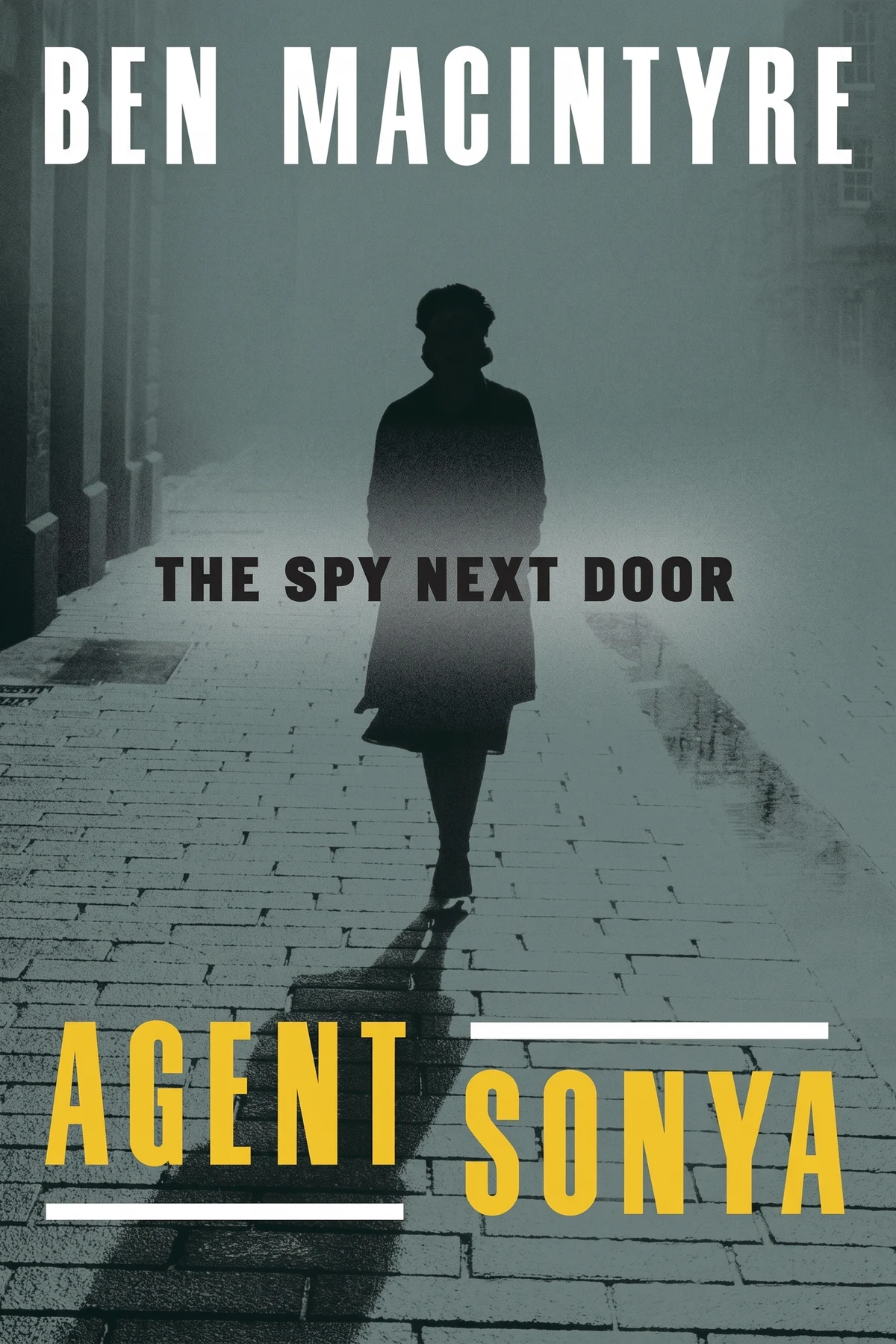
The true story of Ursula Kuczynski, a communist mother hidden in English village life who ran Soviet spy rings, plotted against Hitler and passed atomic secrets, and of what her double life cost her.
55 sec
Most of us judge people by the role they seem to play, and Ursula Kuczynski built a spy career on that habit. In Agent Sonya, Times journalist Ben Macintyre tells how a Berlin-born mother, known to her English neighbors as Mrs. Burton who made excellent scones, passed atomic secrets to Moscow. In the 1930s and 1940s, almost nobody suspected a well-dressed housewife with a child at her side.
Macintyre’s throughline is that this invisibility, joined to an unbending faith in communism, made her one of the century’s most effective agents, and cost her nearly everything else. Her path runs from Shanghai through Manchuria and Switzerland to the English countryside, with a lunchtime plot against Hitler, a nanny who almost exposed her and a leak historians tie to the Cold War. The reward is a sharper eye for what ordinary lives can hide, and for the price a cause can demand.
1 min 32 sec
A rich Berlin girl joined the communist party at 17, then found herself bored at Shanghai garden parties. One drink at a luxury hotel changed the direction of her whole life.
1 min 32 sec
A love affair, a fugitive hidden at home and six months of training far from her son. Each new step into Soviet intelligence asked Ursula to give up something she could not get back.
1 min 35 sec
Radio parts in a child’s teddy bear, explosives bought like groceries and a friend who shared her fears as a mother. Then a breathless boy arrived at the door with a note.
1 min 47 sec
A British recruit in a white scarf became a regular at Hitler’s favorite restaurant, and a bomb plan took shape. Then Moscow signed a deal that turned the whole operation upside down.
1 min 18 sec
No counter-spy came close to exposing Ursula in Switzerland. The person who nearly did lived under her roof, cared about her children and tried to report her to the British.
1 min 47 sec
Every few weeks a respectable mother took a morning train into the English countryside. What she collected there became one of the largest hauls of secrets in the history of spying.
1 min 40 sec
A secret Allied deal on the atomic bomb reached Moscow just sixteen days after it was signed. One determined MI5 officer had a suspect, but her own service kept getting in her way.
1 min 40 sec
A defector’s protective lie, an interrogator’s slip and a letter waiting in a hiding place decided Ursula’s escape. Her last act of defiance, decades later, was aimed at her own side.
1 min 10 sec
Ursula Kuczynski’s life is finally a story about what people fail to see. Richard Sorge grasped it when he welcomed her baby as cover, and Macintyre shows it working for years: in the 1930s and 1940s, a woman with children and a tidy kitchen did not register as a threat. Melita Norwood, another Soviet agent, spent nearly 60 years in Britain without being caught. The one officer who suspected Ursula, Milicent Bagot, was herself a lone woman among MI5’s men.
The story also shows what a cause can charge. Ursula left her son for training, lost a lover to a phone call, abandoned comrades in Mukden and lived for years expecting a knock at the door, then watched the state she served betray her ideals.
So when you size someone up, notice how much rests on the role they appear to play, and who that leaves unexamined. And keep checking whether your commitments still match what first drew you in. The woman with the excellent scones was always more than the village saw.
Her neighbors in Oxfordshire knew her as Mrs. Burton, a housewife who baked excellent scones and grew vegetables through the war. In fact Ursula Kuczynski was a Soviet intelligence officer, code name Sonya, who from the 1930s into the early 1950s helped carry nuclear secrets to Moscow. Ben Macintyre follows her from a radical Berlin youth to Shanghai, where Richard Sorge recruited her. From there she went to training near Moscow, then to guerrilla support in Japanese-occupied Manchuria and a Swiss posting that produced a plan to bomb Hitler over lunch. In England she became the contact for physicist Klaus Fuchs, carrying hundreds of pages of atomic research toward Moscow while an MI5 officer, Milicent Bagot, tried to catch her. The book shows how being underestimated as a woman and mother gave Ursula her best cover, and how much her faith in communism took from her: a son left behind, loves lost, comrades abandoned. It ends with her in East Germany, a best-selling author who at 82 sided with protesters against the state she had served.
Readers of spy history who want a true story as tense as a thriller.
People curious how the atomic race and the Cold War began behind closed doors.
Anyone interested in women whose work history overlooked because nobody thought to suspect them.
Ben Macintyre was born in Oxford, England, in 1963. He writes for The Times and has made BBC documentaries based on his work. His best-selling books include Operation Mincemeat, Double Cross and Rogue Heroes, he has received numerous awards for both fiction and non-fiction, and he also wrote A Spy Among Friends and The Spy and the Traitor.

Listeners find this work compelling and expertly crafted, presenting an absorbing biography of a global Soviet spy. The meticulously documented book traverses decades of history and highlights remarkably vivid personalities. They value the author's depiction of Sonya as a preeminent operative, and one listener notes how it reveals Soviet infiltration in spying networks. The momentum of the story draws varied opinions; while some listeners felt consistently gripped, others considered the content to be repetitive.
Macintyre has a gift for unearthing stories that feel too cinematic to be true, and "Agent Sonya" might be his most incredible subject yet. Ursula Kuczynski, or "Sonya," is a masterpiece of historical biography that manages to be both a high-stakes espionage thriller and a grounded domestic portrait. I was gripped by her journey from a radicalized youth in the Weimar Republic to her time as a Soviet colonel in the English countryside. The way she used the inherent sexism of the era—the idea that a "housewife" couldn't possibly be a threat—was brilliant. It’s a dense, meticulously researched book that never feels dry because the protagonist is so vibrant and her life was so genuinely improbable.
Show moreWow, the level of institutional sexism displayed by MI5 is genuinely staggering throughout this entire narrative. They literally couldn't conceive of a mother of three being a top-tier GRU colonel, even when the evidence was staring them in the face. Macintyre writes with a dry wit that makes the incompetence of British intelligence both hilarious and frustrating to read about in hindsight. Ursula herself is a complex figure. You don't necessarily have to agree with her politics to admire her sheer audacity and skill. This is narrative non-fiction at its absolute best, blending world-altering history with the very human struggles of motherhood and marriage. It is a fantastic read.
Show moreEver wonder how the Soviet Union actually managed to get the blueprints for the atomic bomb so quickly after the war? This book gives a front-row seat to the recruitment and handling of Klaus Fuchs, arguably one of the most important moments in Cold War history. Ursula Kuczynski was the linchpin of the whole operation, and reading about her life in the Cotswolds while she was passing nuclear secrets is surreal. Macintyre’s prose is accessible and fast-paced, making complex geopolitical shifts easy to follow. It’s rare to find a history book that you can’t put down, but this one definitely qualifies. Highly recommended for any history buff or spy enthusiast.
Show moreTruth is, I had no idea who Ursula Kuczynski was before this, which is a testament to how well she hid in plain sight for decades. Her commitment to Communism remained unshakable even after the horrors of Stalinism became public, which Macintyre explores with a refreshing lack of bias. The book captures the atmosphere of the 1930s and 40s perfectly, from the poverty of Shanghai to the paranoia of post-war England. It’s amazing to realize that she ended her life as a successful children’s author in East Germany after such a harrowing career. This is a brilliant piece of work that sheds light on a truly unsung and dangerous figure of history.
Show moreFinally got around to this after loving "A Spy Among Friends," and the transition from the streets of Shanghai to the quiet villages of England is handled with such precision. Macintyre does an excellent job explaining how Ursula managed to juggle a high-pressure career in the GRU while raising three children under various aliases. While some might find the heavy focus on her domestic life a bit slow, I thought it was essential to understanding her cover. The section on her relationship with the physicist Klaus Fuchs was particularly illuminating. It’s a sobering look at how close the Soviets were to the Manhattan Project and how easily they infiltrated the system.
Show morePicked this up on a whim and was immediately sucked into Ursula’s world of radio transmitters, secret ink, and daring escapes across multiple continents. It’s a dense read, though, and Macintyre packs in a lot of names and dates that can be hard to keep track of if you aren't paying close attention. I particularly enjoyed the chapters set in Switzerland, where the tension of being surrounded by Nazi influences was palpable. Ursula is portrayed as a true believer, which makes her actions both impressive and terrifying depending on your perspective. It’s a balanced look at a woman who lived through the most turbulent parts of the 20th century without blinking.
Show moreAfter hearing so many people recommend "Agent Sonya," I had high expectations and mostly, they were met. The way she balances the mundane tasks of motherhood with high-level espionage is absolutely harrowing to read about. There are scenes where she is literally building a radio while her kids are in the other room, which is just insane to imagine. Macintyre has a way of humanizing these larger-than-life figures without making them into caricatures. My only minor gripe is that the ending felt a little rushed compared to the deeply detailed accounts of her early career in China. Still, it's a fantastic, eye-opening read for anyone interested in the realities of spycraft.
Show moreThe chapter detailing her escape from the UK to East Berlin was the highlight for me, as it perfectly encapsulates the tension of the early Cold War era. It is fascinating to see how a German Jewish woman became such a vital cog in the Soviet machine while navigating the dangers of being a double outsider. Macintyre’s ability to weave together the personal and the political is what makes this book stand out from other biographies of the period. You get a real sense of her internal struggle and the sacrifices she made for her ideology. It’s a complex, challenging, and ultimately rewarding read that stays with you long after finishing.
Show moreTo be fair, while the research is clearly impeccable, the narrative flow felt a bit disjointed in the middle chapters of the book. I found the focus on her domestic help and her various lovers' side-stories to be a bit excessive, occasionally distracting from the core espionage plot. Don't get me wrong, it's a fascinating life, but the pacing definitely drags when Macintyre dives into the minutiae of her children’s schooling and village life. I wanted more of the high-stakes radio transmissions and less about the scones. It’s still a solid historical account, but be prepared for a very "domestic" spy story that moves at its own pace.
Show morePersonally, I struggled with the tone of this biography compared to Macintyre’s other work. It feels more like a domestic drama than a spy thriller at times, which I suppose is the point, but it wasn't exactly what I was looking for. There is a lot of repetition regarding her "housewife" cover, and I felt the author spent too much time justifying her parenting choices. While her achievements as a spy are undeniable, the book often gets bogged down in her personal letters and romantic entanglements. It’s a well-written book, but I found myself skimming some of the family-focused sections to get back to the actual tradecraft. It just lacked the usual punch.
Show moreAgent Sonya was Ursula Kuczynski, a German communist born in Berlin in 1907 who worked for Soviet intelligence from the 1930s into the early 1950s. Recruited in Shanghai by Richard Sorge, she later operated in Manchuria, Switzerland and England. In Oxfordshire she lived as Mrs. Burton, a housewife known for her scones, while passing atomic secrets from physicist Klaus Fuchs to Moscow.
Macintyre argues that Ursula succeeded because she was underestimated. As a wife and mother she drew little suspicion, and her firm faith in communism drove her to sacrifice family, love and safety for the cause. The book follows her from activism in Berlin to atomic espionage in England, and finally to disillusion with the East German state she fled to.
In 1942 and 1943 she traveled every few weeks by train from Summertown, near Oxford, to Banbury. There she left meeting details in a dead letter box, and Klaus Fuchs met her later the same day. He passed her 750 pages of scientific secrets, which she radioed, microphotographed or smuggled out. Moscow called the operation Project Enormo.
Yes, according to Macintyre. From Switzerland, Ursula managed two British recruits, Alexander Foote and Len Beurton, in Munich. Foote became a regular at Osteria Bavaria, Hitler’s favorite restaurant, and the plan was to put a suitcase bomb under Hitler’s table. After Nazi Germany and the Soviet Union put their names to the Molotov-Ribbentrop pact on August 23, 1939, Ursula canceled it.
The book’s lesson is that appearances deceive and that people who are underestimated often go unexamined. Ursula and another Soviet agent, Melita Norwood, used that blind spot for decades. Her late life adds a second lesson: she kept her ideals but, at 82, publicly backed East German protesters, showing that loyalty to a cause and loyalty to a state can part ways.

J. Craig Venter

James Herriot

William J. Bernstein

Ishmael Beah


Pankaj Mishra

Barack Obama


Masaji Ishikawa
AUDIO SUMMARY AVAILABLE
Get the key ideas from Agent Sonya by Ben Macintyre, plus 5,000+ more nonfiction titles.