

14 min 26 sec
Available in: English
 ไทย
EnglishไทยJust Mercy: A Story of Justice and Redemption
Shows how American courts since the 1980s met small crimes with extreme sentences, filled prisons to 2.3 million people, and pushed the heaviest costs onto Black Americans, children, women, the mentally ill and the poor.
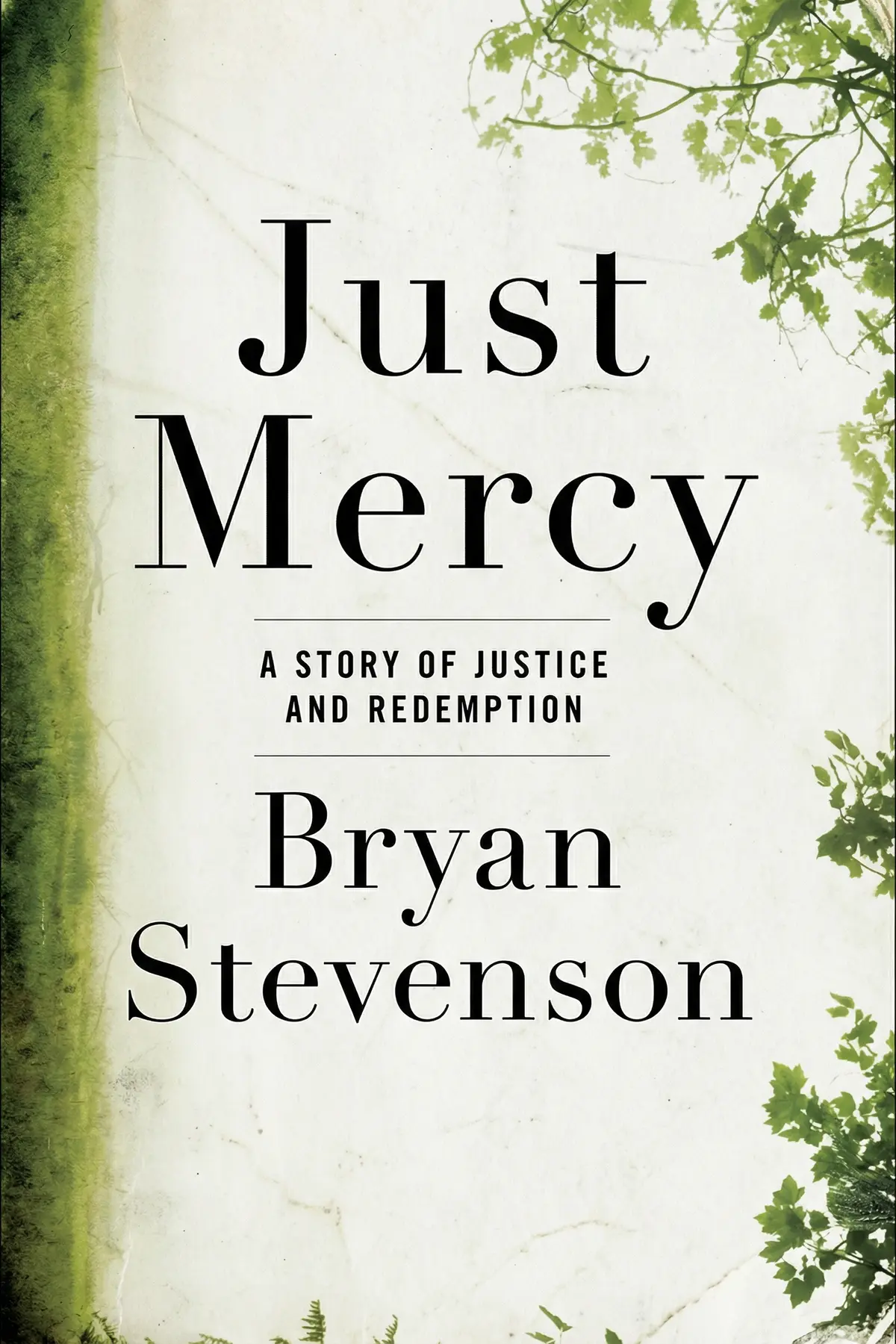
Table of Content
1. Introduction
1 min 08 sec
If you trust that prisons mostly hold the people who did the worst harm, Just Mercy makes that trust hard to keep. In it, attorney Bryan Stevenson recalls meeting a woman in the 1980s who was serving a long sentence for five bad checks, none worth more than $150, written to buy her children Christmas presents. Her case was no accident.
From the 1980s on, Stevenson argues, American courts handed out extreme sentences for small offenses, and the weight of that harshness fell on those least able to fight back: Black Americans, children, women, the mentally ill and anyone too poor to pay for a good lawyer. That thread runs through everything that follows, from an Alabama women’s prison to a Louisiana cell block to one crowded family home in Monroe County. By the end, you can explain how a prison population grew from 300,000 to 2.3 million, who paid for that growth, and what the first real reforms reveal about the mercy still missing.
2. Read the numbers behind America's prison boom
1 min 37 sec
A mother’s Christmas shopping once ended in a long prison term. Her case sits inside a set of figures so large that a child born in 2001 faces odds most parents would never guess.
3. Spot the racial bias in arrests and juries
1 min 43 sec
A lawyer sitting in his own car outside his own home ended up looking down a police pistol. His story opens onto an older problem in the courtroom that a Supreme Court ruling failed to fix for a century.
4. See the double price children pay in adult prisons
1 min 57 sec
A boy convicted at 13 spent the next 18 years almost entirely alone. The reason was not only his sentence, and it exposes what happens when courts decide a child is simply a small adult.
5. Understand the surge in women behind bars
1 min 37 sec
Women’s imprisonment grew far faster than men’s, yet most of these prisoners were never violent. Inside one Alabama prison, the real danger came from an unexpected direction, and it lasted for decades.
6. Understand how prisons became the new mental hospitals
1 min 54 sec
American prisons now hold far more seriously ill people than its mental health facilities do. The path there began with a reform meant to free the innocent, and it ended in a cell at Angola.
7. One sentence can shake a whole community
1 min 32 sec
Stevenson went to meet a condemned man’s wife and daughter and found a crowded house instead. What waited for him there changes how a prison term should be measured.
8. Reform is real, and money still decides fairness
1 min 41 sec
Executions fell sharply and courts drew new lines around punishing children. Yet Stevenson warns that the most stubborn unfairness has nothing to do with sentencing law and everything to do with what a defendant can afford.
9. Conclusion
1 min 17 sec
At first, Just Mercy can sound like a string of separate cruelties: a mother jailed over Christmas presents, a seizing man sprayed with fire extinguishers, a 13-year-old left alone in a cell for 18 years. Stevenson’s case is that they are one cruelty. A system that answered small crimes with enormous sentences needed somewhere to put all those people, and it found them among those with the least power, the least money and the fewest defenders.
That changes how his numbers sound. One in 15 for every American born in 2001 is alarming. One in three for Black Americans says something about who gets watched, who is allowed onto a jury and who can pay a lawyer.
There is something here to carry into ordinary life. When you hear that a group fills the prisons, ask what defense those people could afford before deciding what they did. When a sentence is announced, picture the more than 30 relatives in Walter McMillian’s home, waiting for news. And keep in mind that executions fell by nearly half in a single decade, proof that the system can change. Mercy, in Stevenson’s telling, is a choice a society can still make.
About this book
What is this book about?
Most people assume prisons hold those who did the most harm. In the United States, argues Bryan Stevenson, an attorney who has won relief for dozens of condemned prisoners, this assumption collapsed during the 1980s. Courts started imposing extremely long terms for minor offenses, and the number of people behind bars rose from roughly 300,000 in the early 1970s up to 2.3 million. Stevenson follows the weight of that harshness to the people least able to resist it. Black Americans faced suspicion on the street and all-white juries in court. Children as young as 13 were tried as adults. Women were abused by the guards meant to protect them, and the mentally ill were sentenced as if their judgment were sound. His own cases, including Walter McMillian, sent to death row for a murder he did not commit, show the cost to families and whole communities. The book also records real change: falling executions, new limits on punishing children and the first drop in the prison count in 40 years. Readers get a clear picture of how mass incarceration works and why a fair trial still depends on being able to pay for one.
Book Information
Who it's for
Curious about mass incarceration
Readers who want to understand mass incarceration through real cases and hard numbers.
Studying how sentencing failed
Students of law, social policy or race who need a clear picture of how sentencing went wrong.
Questioning who's judged guilty
Voters, jurors and managers who want to question who gets judged guilty, and why.
About the Author
Bryan Stevenson
Bryan Stevenson is an American attorney and social justice activist who teaches at New York University School of Law. He founded the Equal Justice Initiative in Montgomery, Alabama, and leads it as executive director, challenging bias against poor people and minorities in criminal justice, especially children. He has won relief for dozens of condemned prisoners, argued five times before the Supreme Court and helped secure rulings barring death sentences for juvenile offenders. He received a MacArthur Foundation Genius Grant.
Ratings & Reviews
Ratings at a glance
What people think
Listeners find this account eye-opening and skillfully written, calling it a gripping true story that moves them to tears. Furthermore, the book provides deep insights into the criminal justice system, with one listener highlighting how it reveals social injustices within the legal process. Listeners also value its thought-provoking nature; one review mentions how it impacted their thoughts and feelings, while one describes it as an inspirational and life-changing book.
Top reviews
Evelyn
Wow. I was sobbing by the middle of the first chapter. Bryan Stevenson writes with such profound grace that you can’t help but be moved by the plight of those on death row. It’s a life-changing account of the systemic rot within our courts, specifically focusing on the story of Walter McMillian in Alabama. I found myself highlighting passages on every page because the wisdom is just so dense and necessary. Not many books actually shift your worldview, but this one managed to dismantle my assumptions about the death penalty entirely. Truth is, we often look away from these social injustices because they feel too heavy to carry. But Stevenson forces us to look, to feel, and ultimately, to care about the "broken" among us. If you only read one non-fiction book this year, make it this one.
Show moreSayan
This book should be mandatory reading for every American high school student. It provides a gut-wrenching insight into how the legal system functions—or fails to function—for those at the margins of society. Stevenson doesn't just rant about the problems; he shows them to us through the eyes of people like Walter McMillian. Frankly, it’s horrifying to realize that a person’s wealth often determines their level of justice more than their actual guilt or innocence. I was particularly struck by the "judge override" system in Alabama and how easily a single person can decide a life sentence. The writing is incredibly accessible, avoiding dense legal jargon in favor of human stories that will stay with you long after you close the cover. It’s a call to action that left me feeling both angry and deeply inspired to support the Equal Justice Initiative. We need more people like Bryan Stevenson who are willing to fight for the voiceless and the vulnerable in our society. It is rare to find a book that challenges your core beliefs while simultaneously offering a path toward hope and redemption.
Show moreKwan
After seeing the movie, I knew I had to go back and read the source material to get the full picture. Bryan Stevenson’s voice is so calm and steady, yet the facts he presents are enough to make your blood boil. He managed to weave together the history of racial terror in the South with the modern-day crisis of mass incarceration in a way that feels seamless. Not gonna lie, I had to stop several times just to process the sheer unfairness of how mentally ill inmates are treated in our prisons. The book is much more intimate than the film, offering a look into the soul of a lawyer who refuses to give up on the "condemned." It’s an inspirational story of redemption that reminds us that each of us is more than the worst thing we’ve ever done. Absolute masterpiece.
Show moreGai
Picked this up on a whim after hearing a podcast interview with the author and I am so glad I did. It’s a compelling true story that manages to be both heartbreaking and hopeful at the exact same time. Stevenson’s central thesis—that the opposite of poverty isn't wealth, but justice—is a thought-provoking concept that I’ve been ruminating on for weeks. It made me cry to think about how many innocent people are currently sitting in 5x8 cells because they couldn't afford a proper defense. This isn't just a book about law; it’s a book about our shared humanity. It definitely earned its place as a life-changing read.
Show moreDaranee
I was not prepared for the visceral reaction I had to Walter McMillian’s story and the blatant corruption of the Alabama authorities. It was infuriating. Bryan Stevenson captures the atmosphere of the South with such precision that you can almost feel the heat and the tension in those courtrooms. This book is a powerful indictment of a system that often treats the rich and guilty better than the poor and innocent. His dedication to the EJI is saintly. He lets the victims speak for themselves, which makes the ultimate "mercy" found in these pages feel earned rather than forced, especially considering the decades of injustice endured. This is essential reading for everyone.
Show moreNutnicha
Bryan Stevenson is a modern-day hero, and this book serves as his powerful manifesto for a more compassionate world. It is an inspirational account of one man’s tireless fight against the death penalty and the systemic racism that fuels it. Every chapter reveals another layer of the social injustices that plague our country, from the neglect of the mentally ill to the over-sentencing of minors. Not gonna lie, I was a sobbing mess by the time I reached the end, but I also felt a renewed sense of hope. The book is well-written and provides invaluable insights into the criminal justice system without ever feeling like a textbook. It’s a compelling true story that reminds us why we must never stop fighting for the voiceless and the vulnerable. Five stars aren't enough for a book this important.
Show moreVilaiporn
While I expected an emotional journey, I didn't anticipate how much legal detail Stevenson would pack into these pages. The book is an eye-opening deep dive into the criminal justice system that exposes how we treat the poor and the innocent. I really appreciated the focus on children receiving life sentences without parole, which is something I had never considered before. However, to be fair, the structure can get a little bit jumbled at times. With so many different case files interweaving through Walter’s main narrative, I occasionally struggled to keep the names straight. Despite that minor hurdle, the writing remains compelling and the message is undeniably urgent for every citizen. It’s a powerful testament to the necessity of mercy in a system that often prioritizes finality over actual truth.
Show moreBank
Ever wonder how deep the cracks in our legal system actually go? This book provides a sobering answer that will likely leave you feeling quite shaken. Stevenson highlights the social injustices inherent in the "tough on crime" era, specifically regarding how we treat vulnerable children in adult facilities. It’s an eye-opening account that doesn’t shy away from the gritty, uncomfortable realities of prison life. I will say that the audio version narrated by the author adds a layer of sincerity that makes the stories even more impactful. My only slight complaint is that the timeline jumps around quite a bit, making it a challenge to track the progression of specific legal appeals. But overall, it’s a well-written and deeply moving piece of non-fiction.
Show moreYaowaluk
As someone who typically avoids non-fiction, I found this to be surprisingly engaging and readable. Stevenson has a gift for taking complex legal issues and making them feel like a personal conversation over coffee. The stories of women caught in the system were particularly moving and highlighted a perspective that is often missing from the national conversation on reform. Truth is, I went into this thinking it might be a bit dry, but the emotional core of Walter’s story kept me turning pages late into the night. It isn't a perfect book—some of the later chapters feel a bit repetitive in their message—but the impact is undeniable. It forces you to confront the reality that our system is often more interested in retribution than in finding the truth. Definitely a thought-provoking read that everyone should experience.
Show moreOoi
Look, the subject matter is undeniably vital and Stevenson’s work with the EJI is heroic beyond words. However, as a reading experience, I found the pacing to be somewhat sluggish due to the heavy reliance on statistics and case law. I struggled to maintain my focus through some of the middle chapters where the narrative felt more like a legal brief than a memoir. I realize these details are necessary to prove the systemic failures he’s highlighting, but it made for a very dense read. Personally, I found it hard to stay connected to the individual stories when the book would pivot so frequently to broader policy discussions. It is an important educational tool for understanding social injustice, but I didn't find it quite as "unputdownable" as others have suggested. Still, the core message about the lack of mercy for the poor is impossible to ignore.
Show moreQuestions about this book
What is the main idea of Just Mercy by Bryan Stevenson?
Stevenson contends that from the 1980s onward, American courts met even minor crimes with extreme punishments, so the number of prisoners swelled from roughly 300,000 in the early 1970s up to 2.3 million. That harshness falls hardest on the most vulnerable: Black Americans, children, women, the mentally ill and the poor. In his view, who ends up in prison reflects who can afford a defense as much as who committed a crime.
Who was Walter McMillian in Just Mercy?
Walter McMillian was a man sent to death row for a murder he did not commit, and Stevenson defended him. Stevenson visited the Monroe County house where Walter lived, hoping to meet his wife and daughter, and more than 30 relatives had gathered there, every one of them affected by the conviction. Former business partners and close friends also contacted Stevenson to help, showing how one wrongful sentence reaches an entire community.
How does Just Mercy describe the treatment of children in prison?
In the 1980s, children as young as 13 were often tried as adults, and Alabama sentenced more minors to death than anywhere else in the world. In adult prisons, underage inmates are five times more likely to be sexually abused, and solitary confinement is the only protection. One of Stevenson’s clients, convicted at 13, spent 18 years in isolation. Joe Sullivan received life without parole for a crime committed at 12.
Does Just Mercy say anything has improved?
Yes. From 1999 to 2010, annual executions fell by nearly half, and New York and Maryland ended the death penalty. In 2010 and 2012 the Supreme Court sharply limited life without parole for children, and in 2012 the number of people in American prisons fell for the first time in 40 years. Stevenson stresses that unfairness remains, because many defendants still cannot pay for adequate legal help.
How can I apply the lessons of Just Mercy?
The book suggests a few habits of mind. When a statistic shows one group filling prisons, ask whether it measures behavior or access to a lawyer. When a sentence sounds short, remember that prison can traumatize a person for life and harm whole families. And when judging any institution, look at who holds power over whom, as the abuse at Tutwiler Prison shows.
Readers also enjoyed


Afropean: Notes From Black Europe
Johny Pitts


All About Love: New Visions
bell hooks

A Biography of Loneliness: The History of an Emotion
Fay Bound Alberti

A Force for Good: The Dalai Lama's Vision for Our World
Daniel Goleman


A Room of One’s Own
Virginia Woolf
AUDIO SUMMARY AVAILABLE
Listen to Just Mercy in 15 minutes
Get the key ideas from Just Mercy by Bryan Stevenson, plus 5,000+ more nonfiction titles.
- 5,000+ titles
- Listen as much as you want
- 7-day free trial
- Cancel anytime









