
11 min 17 sec
Available in: English
Information Doesn’t Want to Be Free: Laws for the Internet Age
Cory Doctorow explains why digital locks and outdated copyright laws end up hurting artists and audiences, and why making payment easy, and aiming the law at industry rather than fans, works better.
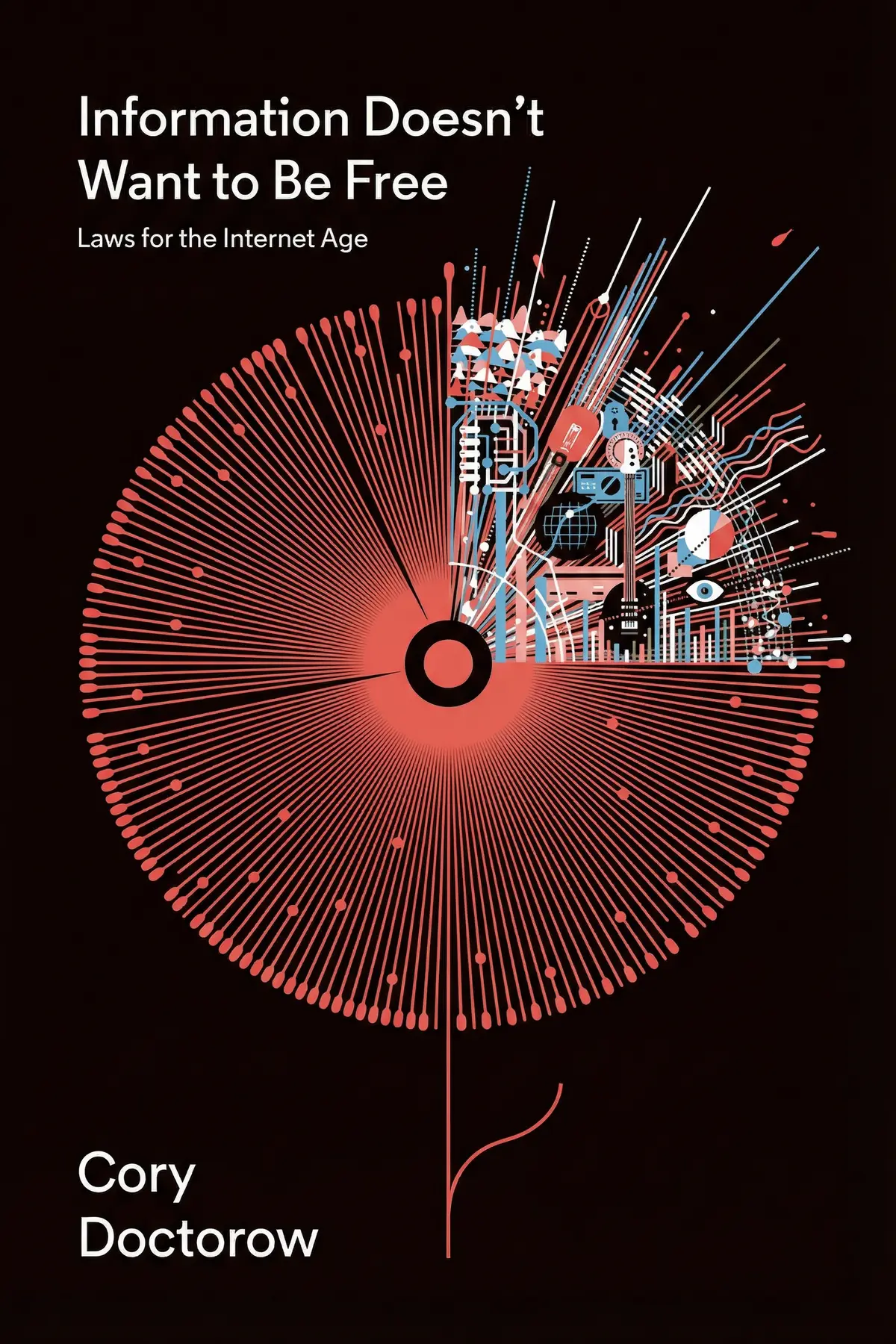
Table of Content
1. Introduction
1 min 08 sec
If you make things for a living, or simply buy music, films and books online, the rules about who controls a copy shape your life more than you might think. In Information Doesn’t Want to Be Free, blogger, journalist and science fiction author Cory Doctorow starts from a reassuring point: even when a song is free on YouTube, some listeners will pay the artist, as long as paying takes only a moment. The real danger to creators, he argues, lies less in free copies than in the tools built to stop them.
His case is that copyright was designed for a time when only businesses made copies. Today it enables censorship and harms creators and audiences alike, so it must be rebuilt for the internet. The evidence includes a cracked DVD format, a publisher whose books vanished from the Kindle, music CDs that opened computers to spyware and a school whose laptops secretly photographed students, one of them in his bedroom. What you gain is a way to judge any digital lock, platform deal or copyright proposal by whom it really serves.
2. Get paid even when free copies are everywhere
1 min 44 sec
Most people who hear a song for free will never spend a cent on it. Doctorow argues that this is the wrong number to watch, and that the people who do pay have been around since Michelangelo’s day.
3. Keep the middleman from holding your work hostage
1 min 36 sec
A major publisher allowed a digital lock to be placed on all the e-books it sold through one retailer. Then one refusal of an unfair Amazon renegotiation made all of its books vanish from the Kindle within hours, and it could do little more than complain.
4. Spot the security risk hidden in copy protection
1 min 41 sec
In 2005, a major record label sent more than six million music CDs out to its customers. None of them knew what else they had just let in, and a school’s laptop program shows how far the same trick can go.
5. See how tighter rules fuel piracy and censorship
1 min 56 sec
Lawmakers wrote two bills to stop online piracy, and millions of citizens picked up the phone. Doctorow explains why every squeeze on the internet seems to produce the opposite of what it promised.
6. Aim copyright at industry and leave fans alone
1 min 50 sec
A ten-year-old writing stories about Harry Potter is, on paper, breaking the rules. Doctorow uses that child, and a court fight over private videos, to show where copyright should stop.
7. Conclusion
1 min 22 sec
Doctorow’s title questions a slogan often heard from file-sharers. File-sharers like to say information wants to be free, but Doctorow asks whether it really does. People do. They want to enjoy art, to pay the artists they love when it is easy, and to use their own computers without being watched.
The trouble, in his telling, is a copyright system still built for a world where only businesses made copies. Stretched over the internet, it produces locks that fail against hackers yet work perfectly against publishers. It is tied to software that spies on students, laws that could push users toward the deep web, and platforms that largely decide what most of us see.
What follows is practical. If you create, put your effort into making payment simple, and think hard before letting any distributor lock your work. As a buyer, treat copy protection as a question about who controls your device. As a citizen, judge each copyright proposal by whether it governs industry or polices ordinary culture.
Hachette’s books disappeared from the Kindle in a matter of hours, and the publisher could only watch. Whoever holds the key holds the work, and Doctorow wants that key back with the people who make the work and the people who enjoy it.
About this book
What is this book about?
File-sharing has made it feel old-fashioned to pay for songs, films or software. Creators fear they can no longer earn a living, and companies answer with digital locks and tougher laws. Cory Doctorow argues that these defenses cause more harm than the copying they are meant to stop. His case moves from the marketplace to the machine to the law. Fans still pay artists when paying is simple. Digital locks are easy to crack, and they give distributors like Amazon control over a publisher's whole catalogue. The hidden software behind them has opened computers to spyware, and in one case it let a school secretly photograph its students, one of them in his bedroom. Strict bills provoke public revolt, and a few platforms decide what most people ever see. Readers come away with a clear test for any digital lock, platform deal or copyright proposal: who holds the key, and whose freedom does the rule limit? Doctorow's answer is a copyright system that protects creators from exploitation, regulates industry and leaves ordinary people's culture, speech and privacy alone.
Book Information
Who it's for
Musicians, writers and creators
Musicians, writers and creators deciding whether to lock their work or sell it openly.
Considering big platform deals
Publishers and founders weighing distribution deals with big platforms.
Curious about digital rights
Curious readers who want to understand the fights over piracy, censorship and online privacy.
About the Author
Cory Doctorow
Cory Doctorow, born in Toronto in 1971, is a blogger, journalist and science fiction author. He co-edited the blog Boing Boing and spent more than twenty years at the Electronic Frontier Foundation working on digital human rights. He co-founded the UK Open Rights Group, campaigns for more liberal copyright laws and releases some of his own books under Creative Commons licenses. He writes the daily newsletter Pluralistic.net and entered the Canadian Science Fiction and Fantasy Hall of Fame in 2020.
Ratings & Reviews
Ratings at a glance
What people think
Listeners find the writing both accessible and educational, with one review highlighting its thorough exploration of IP locking and DRM concerns. Furthermore, the content earns praise for its persuasive case concerning copyright legislation, and listeners value the depth of insight provided, with one remarking on how the text reshaped their view of the topic. The book is also lauded for its ingenuity, as one review emphasizes how beneficial it is for those in creative industries. Nevertheless, the discussion surrounding copyright prompts varied responses among listeners.
Top reviews
Rod
Ever wonder why the digital landscape feels like such a struggle for independent creators? Doctorow dismantles the persistent myth that strict copyright laws protect artists, arguing instead that they often serve as a tool for powerful intermediaries to control the market. I loved the clear breakdown of how DRM doesn’t actually stop piracy but definitely succeeds in locking consumers into specific platforms. It’s a fast-paced, punchy read that feels incredibly relevant to anyone uploading work to YouTube or selling on Amazon today. Frankly, it changed my whole perspective on digital ownership and the future of creative work.
Show moreThida
Wow, I never realized how much DRM actually protects the distributor rather than the creator until I picked this up. Doctorow argues that when we allow companies to dictate how we use our media, we’re handing them a monopoly on our culture. His "three laws" of the digital age are brilliant summaries of the current mess we’re in. This isn’t a dry legal text; it’s a passionate call for a copyright system that encourages diversity rather than consolidation. It is absolutely essential reading for the internet age and should be on every creator's shelf.
Show moreLaddawan
The chapter on how digital locks compromise our security was terrifying yet necessary reading for anyone with a smartphone or a computer. Doctorow explains that when companies hide their code to protect "intellectual property," they are often just hiding vulnerabilities that hackers can exploit. He moves seamlessly between the philosophy of free culture and the technical realities of encryption. I particularly appreciated his focus on "intermediaries" like Amazon and how they use DRM to keep users from switching to competitors. It's a wake-up call for everyone who values their digital autonomy in an increasingly connected world.
Show moreKenji
This book completely reframed how I view "piracy" and the way large corporations use copyright as a cudgel against innovation. Doctorow’s writing is accessible, energetic, and filled with the kind of common-sense logic that is missing from most policy debates. He makes a compelling case that a healthy culture is one where everyone can create, not just those with the biggest legal departments. The ending, where he discusses the choice between summer blockbusters and the vast creativity of YouTube, really resonated with me. Truth is, we need more thinkers who understand both the code and the culture.
Show moreTee
As someone who makes a living online, I found this to be an incredibly eye-opening look at how copyright really functions in the 21st century. The way the author explains "digital locks" and their impact on security—like the anecdote about reverse-engineering HP printers—is honestly chilling. It’s not just about movies and music; it’s about the devices we own and who actually controls the code inside them. My only real gripe is that the formatting of the sidebars can be a bit distracting when you're trying to maintain a reading flow. To be fair, though, the central message is too important to ignore.
Show moreAnong
Finally got around to reading this, and the historical analogies are definitely the highlight of the experience. I was fascinated by the story of how the movie industry moved to California specifically to escape Thomas Edison’s patents—essentially "pirating" their way to success. Doctorow uses these examples to show that new technology always terrifies the old guard, regardless of the era. While some of the sections on hacker culture felt a bit like "inside baseball," the advice for independent creators is gold. It’s a quick read that packs a significant punch for such a complex subject.
Show moreSupaporn
If you're an artist trying to navigate the mess of modern IP law, you need to pick this up immediately. The book does a fantastic job of explaining why "information doesn't want to be free," but people do. It highlights how the current system favors a few massive blockbusters while squeezing out the middle-class creator. While I found the author's tone a bit overly aggressive at times, his point about the "diversity of creators" being the measure of a good copyright system is spot on. It’s a provocative and necessary contribution to the debate that will make you rethink your digital habits.
Show moreJib
Doctorow is clearly a brilliant guy, but this book reads more like a curated collection of Boing Boing posts than a cohesive manifesto. The first half is exceptionally strong, laying out the power dynamics between creators and distributors with sharp clarity. However, the second half starts to feel a bit like a series of ideological rants on net neutrality and hardware that lack the same depth. While the anecdotes are engaging, I wanted more of a methodology to back up the rhetoric. It’s worth a read for the core concepts, but the organization feels a bit scattered at times.
Show moreFon
Look, the message here is vital, but the delivery feels a bit repetitive if you’ve followed Doctorow’s work for years. He covers a lot of ground—from net neutrality to the old SOPA/PIPA battles—but doesn't always connect the dots in a way that feels like a singular, cohesive argument. I enjoyed the anecdotes about musicians complaining that radio would kill live music, which provides great perspective on our current technological fears. However, the book's structure is a bit chaotic, and some of the smaller sidebars felt out of place. It’s a good introduction to the topic, but it lacks the deep-dive analysis I was craving.
Show moreSuthinee
Not what I expected from such a prominent figure in the tech world. While I agree with many of Doctorow’s sentiments regarding internet freedom, the book relies far too heavily on rhetoric rather than rigorous analysis. It often feels like a long-form TED talk that meanders into complex topics like national security and banking without providing the necessary groundwork. The short, page-long sections make it feel disjointed, almost like I'm scrolling through a social media feed instead of reading a book. I was hoping for something more academically sustained like Lessig’s work, but this felt more like an anecdotal screed.
Show moreQuestions about this book
What is the main idea of Information Doesn't Want to Be Free?
Cory Doctorow argues that today’s copyright law, built for a time when only businesses made copies, often enables censorship and harms both creators and consumers online. Digital locks fail against hackers but give distributors control over creators’ work. Hidden copy-protection software exposes users to spyware. Harsh laws provoke backlash. He calls for a new approach that protects creators from exploitation without policing ordinary people.
Why does Cory Doctorow oppose digital locks?
He gives two reasons. First, they are easy to break: a hacker called Muslix64 cracked the HD-DVD key quickly, and the method spread online. Second, they hand control to middlemen. When Hachette refused Amazon’s contract terms, its locked books, including J.K. Rowling’s, disappeared from the Kindle within hours. Locks can also require hidden rootkits, like those on Sony BMG’s CDs, that open computers to malware.
Can artists still make money when content is free online?
Doctorow says yes. People have always paid for art, from the patrons behind Michelangelo to labels like EMI paying The Beatles, and the internet now lets fans pay artists directly. Most people who come across free music just carry on, but some always want to back the artist, particularly when paying takes no more effort than entering a song title in the iTunes Store.
How does Doctorow think copyright should change?
He wants copyright limited to regulating industry, not the cultural lives of ordinary people. A ten-year-old writing Harry Potter fan fiction should not need permission from Warner Bros. He also treats copyright as a human rights issue, because it can restrict free expression, access to information and privacy, as Viacom’s lawsuit against Google and YouTube over private videos showed.
Who should read Information Doesn't Want to Be Free?
It suits creators deciding whether to protect their work with locks, founders and publishers negotiating with large platforms, and anyone who wants to understand debates over piracy, censorship and digital privacy. Its main practical lesson is to ask who holds the key to any piece of content and whose freedom a given rule actually limits.
Readers also enjoyed









AUDIO SUMMARY AVAILABLE
Listen to Information Doesn’t Want to Be Free in 15 minutes
Get the key ideas from Information Doesn’t Want to Be Free by Cory Doctorow, plus 5,000+ more nonfiction titles.
- 5,000+ titles
- Listen as much as you want
- 7-day free trial
- Cancel anytime









