
14 min 30 sec
Available in: English
 ไทย
EnglishไทยHyperfocus: How to Be More Productive in a World of Distraction
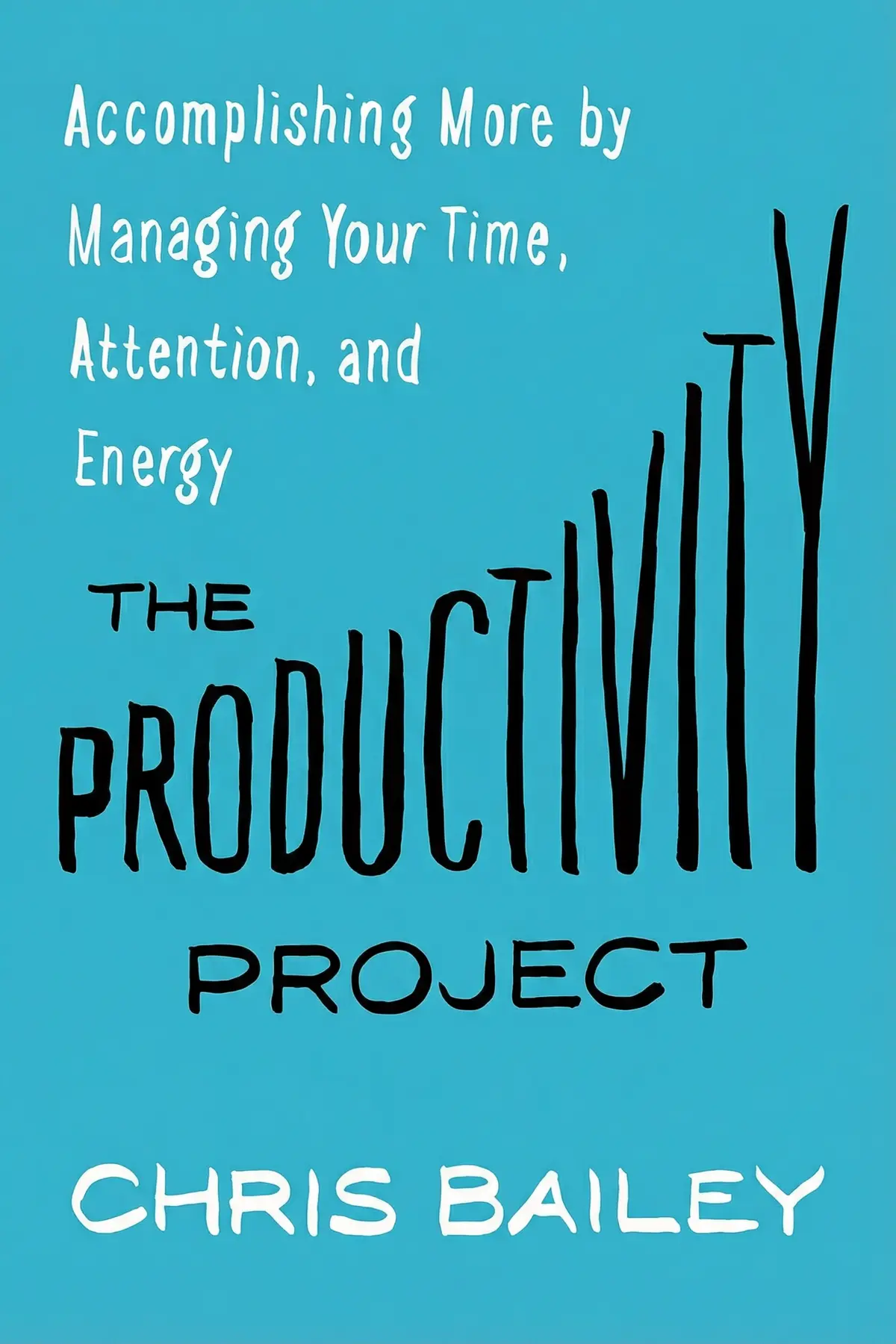
By Chris Bailey
Shows how to work with your very limited attention: protect it for one meaningful task at a time, and set aside time for deliberate mind-wandering that produces plans and creative ideas.
Table of Content
1. Introduction
1 min 09 sec
If big tasks keep stretching from hours into days and your concentration breaks every few minutes, the issue may be how you spend a resource far smaller than you think. In Hyperfocus, productivity consultant Chris Bailey cites one psychologist’s estimate: around eleven million bits of information reach the brain every second, yet we can consciously handle only about 40 of them.
Bailey’s argument is that attention works like a small room, and what you let into it decides how well you work and think. He describes two ways to use that room. Hyperfocus fills it with one chosen task and keeps everything else out. Scatterfocus lets the mind wander on purpose, so it can plan ahead and link ideas that seemed unrelated.
Both can be trained. What follows is a working method: an hourly check that catches a drifting mind, ways to strip distractions from your desk and phone, three kinds of deliberate daydreaming, and a habit that keeps unsolved problems simmering until an answer arrives.
2. Make your best workdays happen on purpose
2 min 12 sec
Everyone has had a day when work flowed and hours vanished. Most people treat those days as luck. Bailey looks at what actually happens on them and finds a pattern that can be repeated.
3. Catch a drifting mind with an hourly check
2 min 03 sec
You can sit through an entire meeting while your thoughts are somewhere else, and never notice. Bailey explains why that happens so often, and offers a strangely simple device for catching it.
4. Remove distractions before they reach your desk
1 min 53 sec
Willpower against a buzzing phone is a fight most people lose. Bailey argues the battle should be over before the work begins, and he has a plan even for people who must stay reachable.
5. Plan better by letting your mind wander
1 min 58 sec
After all the advice about blocking distraction, Bailey turns around and defends daydreaming. A wandering mind, it turns out, has a strong habit that makes it surprisingly good at one particular job.
6. Let unfinished problems find answers in the background
1 min 56 sec
Archimedes did not solve his famous puzzle at a desk. Bailey explains what was happening in his head before he stepped into the bath, and how to set up the same conditions on purpose.
7. Feed your mind better material for ideas
2 min 01 sec
Your brain can store almost anything, yet what goes in is tightly limited. Bailey shows why an evening of scrolling costs more than time, and offers one question that changes what you choose.
8. Conclusion
1 min 18 sec
Bailey’s book comes down to treating attention as something you aim in two directions. Narrow it, and a small attentional space holds one meaningful task with nothing competing for room. Widen it, and the same mind looks ahead, sorts open loops and joins scraps of information into answers, the way an ordinary bath gave Archimedes his idea. Most people value the first mode and fight the second. Bailey’s case is that hyperfocus alone isn’t enough: the mind also needs time to rest and room to be creative, and wandering pays off more when it has good material to work with.
The practice can start small. Set an hourly alarm and use it to ask what was just in your head and whether it was what you intended. Before your most important task, put the phone in airplane mode or in another room, and choose fixed times for email. Once a week, sit with paper and capture everything on your mind, then keep a written list of unsolved problems and reread it before a walk. And judge each show, feed and podcast as a bid you are free to turn down.
You cannot make your attention bigger. You can decide, many times a day, where it goes.
About this book
What is this book about?
Many professionals feel their concentration has shrunk to a few minutes, and work that once took hours now stretches across days. Chris Bailey argues that the cause is how we manage attention, a resource far smaller than most people assume. Bailey describes two modes. Hyperfocus means choosing one meaningful task, clearing distractions from your desk, phone and inbox, and bringing your mind back each time it drifts. Scatterfocus is the opposite: letting the mind wander on purpose so it can capture loose ends, circle a stuck problem and connect ideas that seemed unrelated, the way Archimedes did in his bath. Readers get simple tools for both modes: an hourly alarm that checks where attention has gone, airplane mode and scheduled email, weekly capture sessions, a written list of open problems, and a way to judge every show, feed or podcast as a bid for your attention.
Book Information
Who it's for
Office workers juggling alerts
Office workers whose days dissolve into email, alerts and half-finished tasks.
Hoping to focus longer
Students and young professionals who want longer stretches of real concentration.
Too busy to think
People who feel too busy to think and want their best ideas to arrive more often.
About the Author
Chris Bailey
Chris Bailey is a Canadian writer and productivity consultant whose articles have appeared in the New York Times, the National Post and Harvard Business Review. He has written four books, including The Productivity Project, Intentional and How to Calm Your Mind, published together in more than 40 languages. He gives talks to organizations around the world about becoming more productive while still enjoying the work.
Ratings & Reviews
Ratings at a glance

What people think
Listeners find the book exceptionally easy to read and knowledgeable, offering excellent actionable tips for enhancing concentration and mindfulness. They value its impact on boosting efficiency, as one listener pointed out how it enabled them to reduce their working hours while actually accomplishing more. The work earns praise for its inventive nature, with one listener emphasizing the unique method for encouraging creative thinking, and for its logical layout, with one review calling out the useful 2x2 grid tool. Listeners appreciate the way it is written, with one characterizing the prose as dynamic.
Top reviews
Vipawan
If you're tired of feeling like your brain is a browser with fifty tabs open, this is your manual. Bailey breaks down productivity not as a matter of time management, but as attention management. I particularly loved the 2x2 grid for categorizing tasks; it sounds simple, but seeing it on paper changed how I prioritize my morning. The writing is incredibly dynamic and keeps you engaged even through the more research-heavy sections. While some tips are standard—like turning off notifications—the way he connects them to 'hyperfocus' vs. 'scatterfocus' feels fresh. It’s helped me cut down my working hours while actually getting more done. Definitely a must-read for any modern professional.
Show moreKamol
Finally got around to reading Bailey’s work, and the scientific approach really set it apart from typical 'hustle' culture fluff. He doesn't just tell you to 'work harder'; he explains how the brain’s attentional space actually functions. I ended up with pages of notes, specifically regarding how to enter a state of hyperfocus more reliably. The book is structured logically, making it easy to jump back in and reference specific techniques. It’s less about motivational quotes and more about hacking your biology for better output. Even if you think you know everything about focus, the way he frames 'attentional space' provides a new lens to view your workday. It’s easily one of the most actionable guides I’ve encountered recently.
Show moreKai
Chris Bailey has a knack for making complex cognitive concepts feel accessible and, more importantly, actionable. Unlike other authors who rely on grandiose quotations, Bailey stays grounded in research and personal experimentation. The concept of 'attentional space' is something I now think about every time I pick up my phone. The book is structured beautifully, moving from the mechanics of focus to the creative benefits of letting go. Not gonna lie, I was skeptical about the 'scatterfocus' idea, but it has genuinely improved my problem-solving skills at work. It’s a well-organized guide that doesn't just tell you what to do, but why your brain reacts the way it does. Highly recommended for anyone in a creative field.
Show moreNoi
Picked this up thinking it would be another generic productivity manual, but I was pleasantly surprised by how much I actually implemented. Bailey’s writing is dynamic and moves at a clip that makes the pages fly by. The most valuable part for me was the exploration of 'scatterfocus'—the idea that our brains need structured downtime to be truly creative. I’ve started scheduling boredom into my day, and the impact on my problem-solving has been immediate. It's well-organized and the 2x2 grid application is a tool I’ll keep on my desk for years. While some tips, like unplugging LAN cables, are a bit specific, the overall framework is transformative if you actually do the work.
Show moreChon
As someone who struggles with a wandering mind, I found the section on 'Scatterfocus' surprisingly refreshing. Most productivity books treat any form of distraction as a sin, but Bailey argues for the importance of letting your mind drift to foster creativity. Frankly, the idea of walking without music or podcasts sounded boring at first, but it really does help the brain make new connections. The book is well-organized and doesn’t feel like a lecture. I did find some of the personal anecdotes about his coffee habits and Ed Sheeran a little repetitive after a while, though. Still, the practical advice on how to recover from mental fatigue is worth the price of admission alone. It’s a very human approach to a technical problem.
Show moreHarper
Ever wonder why you're exhausted after a day of doing nothing? This book explains that exact phenomenon through the lens of mental fatigue and how we mismanage our focus. The 2x2 grid application mentioned in the summary is a standout feature that helps visualize where your energy is going. Bailey’s tone is friendly and approachable, making the more academic parts of the book fly by. Truth is, I’ve started working fewer hours but I’m significantly more productive because I’m being intentional about my 'hyperfocus' blocks. It’s not a perfect book—some chapters feel like they repeat the same point three times—but the core message is incredibly effective. It’s a great tool for anyone feeling overwhelmed by digital distractions.
Show moreSara
The chapter on intentionality was a game-changer for my morning routine. As a student with ADHD, I usually find productivity books to be patronizing or impossible to follow, but Bailey’s style is more about understanding the brain than forcing it into a box. He acknowledges that focus is a finite resource. The tips on minimizing distractions and setting up a dedicated environment were simple but helped immediately. I appreciate that he doesn't just focus on work; he also talks about the importance of rest and 'mind-wandering.' My only gripe is that the book can be a bit wordy in the middle sections. However, the overall structure is so well-informed that I’ve already recommended it to several classmates.
Show moreSomsri
To be fair, much of the advice here feels like common sense wrapped in a very shiny package. Do we really need a whole chapter telling us that phones are distracting or that we should unplug our internet cables? The author relies heavily on academic studies that aren't always explained with the depth I was hoping for. It feels a bit like he read ten other books and summarized them for us. That said, his perspective on 'intentionality' is a solid takeaway. If you are new to the world of self-help, this is a great starting point because it’s so readable. But for those of us who have already read Allen or Newport, there isn't much here that will blow your mind.
Show moreChatchai
Look, I really wanted to like this, but the author spends way too much time talking about his own coffee habits and favorite cafes. The book feels like a collection of random research papers patched together with very personal, sometimes privileged, perspectives. Telling someone to 'hit the gym' or use a 'sleeping room' at work just isn't realistic for most people working 9-to-5 jobs in the real world. I found the writing style to be quite showy, with the author constantly reminding us how fast he can write because of these methods. Quantity doesn't always mean quality, and this book desperately needed a tighter edit. Many of the 'stunning insights' are just basic tips you can find for free online.
Show moreNaomi
This book could have easily been a blog post or a single magazine article. While the writing is dynamic, the actual 'meat' of the book is buried under mountains of filler and repetitive anecdotes. Did you know that turning off your phone helps you concentrate? Riveting. If you've never read a single book on productivity, you might find this ground-breaking, but for everyone else, it’s just a remix of ideas that other authors have explained much better. I felt like I was wasting my time—the very thing the book tells you not to do. It’s a lot of talk with very little substance, despite the scientific-sounding labels.
Show moreQuestions about this book
What is the main idea of Hyperfocus by Chris Bailey?
Bailey argues that attention is a small, limited space and that productivity depends on managing it well. He describes two modes. Hyperfocus fills that space with one meaningful task while distractions are removed and the wandering mind is brought back. Scatterfocus lets the mind wander deliberately so it can plan, capture loose ends and connect unrelated ideas into creative solutions.
What is the difference between hyperfocus and scatterfocus?
Hyperfocus is intense, sustained attention on one task, best for demanding work when you already know your approach. Scatterfocus is deliberate mind-wandering. Bailey notes that a wandering mind spends 48 percent of its time on the future, which makes scatterfocus useful for planning. It comes in three modes: capturing what is on your mind, circling a single problem, and reflecting during simple repetitive tasks.
How do you get into a state of hyperfocus?
Bailey describes four stages. Choose one meaningful task, remove distractions both external and internal, direct your attention to the task, and bring your mind back each time it wanders. Practical aids include putting your phone in airplane mode or another room, checking email at set intervals, writing down intrusive thoughts and setting an hourly alarm to check where your attention has gone.
What is the Zeigarnik Effect in Hyperfocus?
It is the brain’s tendency to keep dwelling on unfinished tasks more than completed ones. Bailey explains that an unsolved problem keeps working in the background, so new information can suddenly complete it, as when Archimedes saw bath water rise and understood how to measure irregular objects. He suggests keeping a written list of open problems and reviewing it often.
Who should read Hyperfocus?
It suits knowledge workers, students and managers who feel their attention breaking apart under phones, email and constant interruptions, and who also want more good ideas. The advice is concrete and small in scale, from an hourly attention check and scheduled email to weekly capture sessions and choosing biographies or online courses over endless scrolling.

Readers also enjoyed




AUDIO SUMMARY AVAILABLE
Listen to Hyperfocus in 15 minutes
Get the key ideas from Hyperfocus by Chris Bailey, plus 5,000+ more nonfiction titles.
- 5,000+ titles
- Listen as much as you want
- 7-day free trial
- Cancel anytime









