
15 min 21 sec
Available in: English
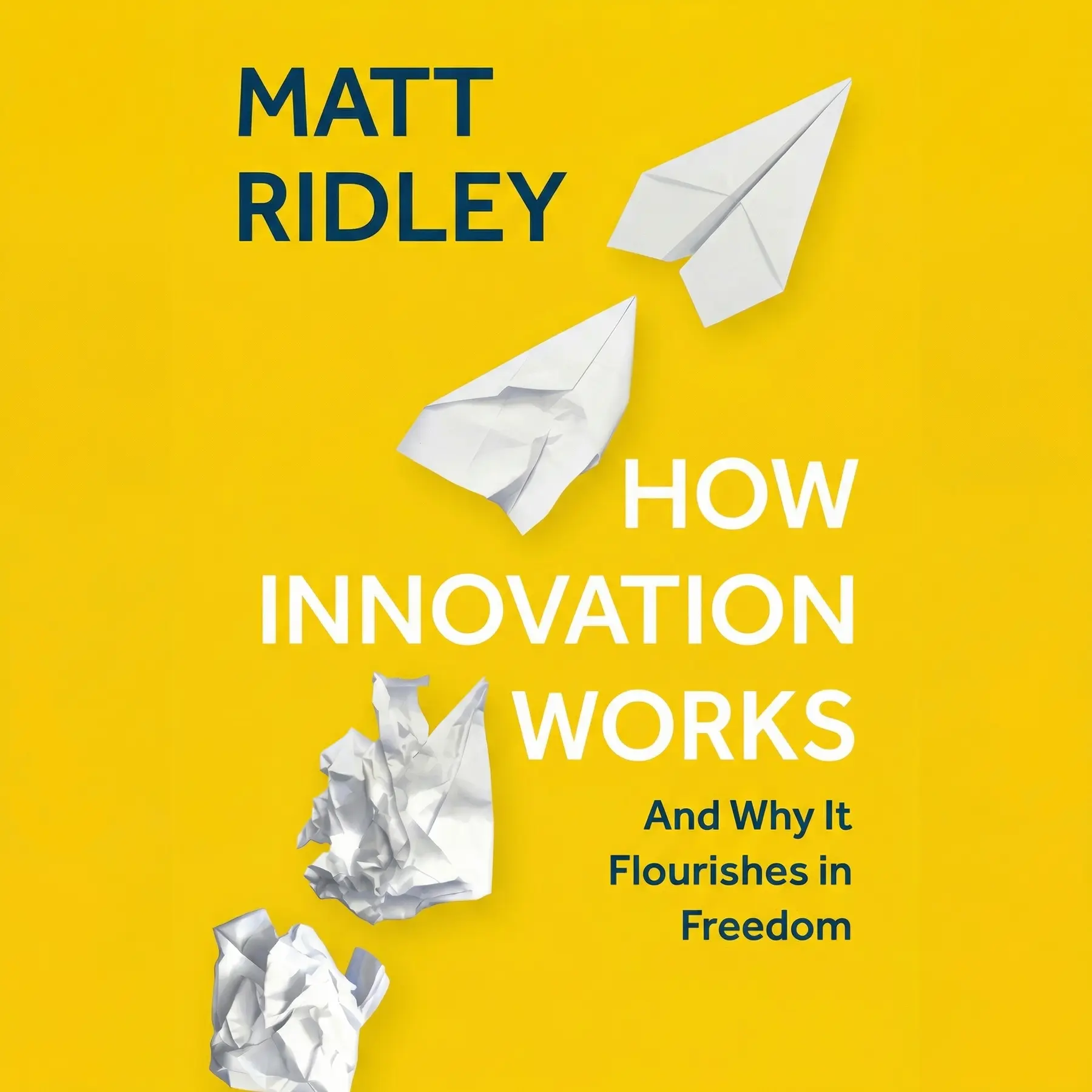
How Innovation Works: And Why It Flourishes in Freedom
By Matt Ridley
Matt Ridley shows that new ideas come from slow, shared trial and error, not lone geniuses. He explains why they thrive where people mix freely and stall where incumbents and rigid rules block them.
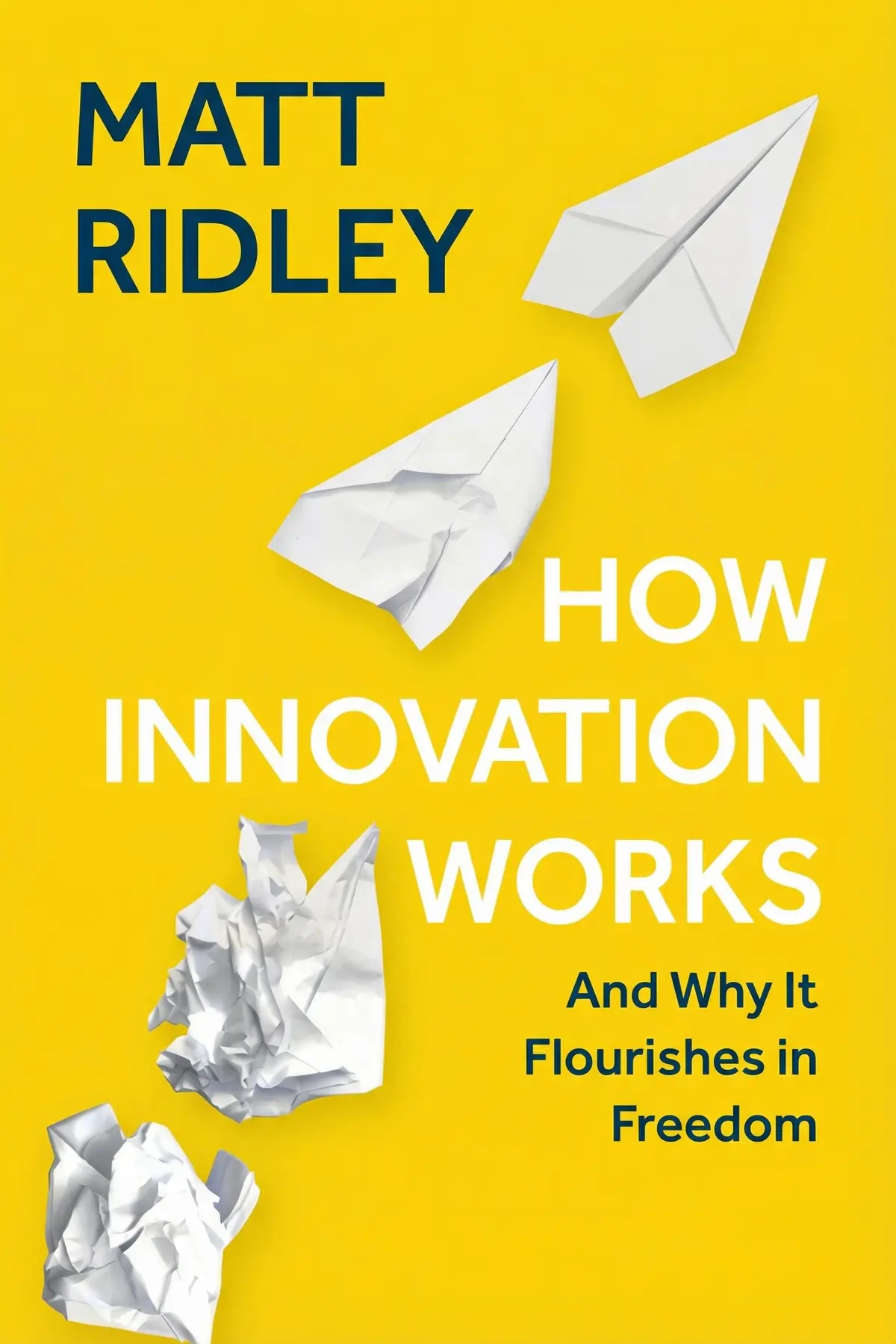
Table of Content
1. Introduction
1 min 02 sec
Most people picture innovation as a lone genius and a sudden flash, so everyone else is left waiting for inspiration. In How Innovation Works, Matt Ridley, a longtime writer for The Times, shows that this picture is wrong. Around 1700, three different men built working steam engines, and nobody can say for sure who came first. Ridley argues that innovation is a slow, messy, shared process of trial and error. It thrives where people and ideas mix freely, and it stalls when governments, powerful companies and strict laws shut that exchange down.
His evidence runs from smallpox pus to frying pans, and from a crashed airship to banned margarine. Follow it and you will see why the light bulb had more than 20 rival inventors and why a new idea’s loudest enemies are often its competitors. You will also see how to arrange your own work so that useful ideas can find you.
2. Credit the crowd behind every famous invention
1 min 17 sec
History books give one name to each great machine. Yet the engine that started the Industrial Revolution was built three times over, by three different men, and nobody can settle who deserves the credit.
3. Expect breakthroughs to arrive in small steps
1 min 36 sec
The car took about a century to beat the horse, and it passed through an artillery officer, a grocery salesman and a three-wheeled toy for the rich along the way. The pace of that relay is the lesson.
4. When a bold experiment is worth the risk
1 min 43 sec
Europeans once protected themselves from a deadly disease by doing something that sounds like a way to catch it. Years later, an angry city learned the same lesson about its drinking water.
5. An idea can change the world without machines
1 min 34 sec
Two of the most useful innovations in European history involved no gears, wires or engines. One came from the Andes and was feared as a cause of disease. The other you used today without noticing.
6. Put different minds where they can collide
1 min 51 sec
A gas that failed at its one job ended up in kitchens, raincoats and the first atomic bombs. A disease researcher helped police solve a murder. Both stories follow the same pattern, and that pattern can be planned for.
7. Great ideas often grow from the bottom up
1 min 44 sec
Britain’s government once ordered two airships at the same time, one from its own lab and one from a private company. One flew to Canada and back. The other never got past France.
8. Prepare for a fight over anything truly new
1 min 51 sec
A cheap, harmless spread was once banned across most of the United States after a campaign that included faked research. The tactics used against it still show up whenever something new threatens someone’s business.
9. Spot where innovation is thriving and stalling today
1 min 33 sec
A passenger jet today flies at about the same speed as one from 1958. Ridley reads that fact as a warning about Western economies, and he points to where the new energy has gone instead.
10. Conclusion
1 min 10 sec
What Ridley’s stories add up to is innovation as a public, shared activity. Many people take part, over long stretches of time. A smallpox scraping, a refrigerant that failed and ended up in kitchens, and a digital camera that Kodak shelved each moved forward only when ideas could travel and new people could test and improve them. Wherever ideas were locked away, by a dairy lobby, a slow state project or a long copyright, progress stalled.
Stop waiting to be the lone genius, and find out who is already working near your problem. Treat your first version as a step that the next version will improve. Bring people with different skills together and share your odd accidents, because one team’s failure can become another team’s non-stick pan. And when a new idea draws loud objections, ask who stands to lose before you accept the warning.
Ridley’s subtitle states his claim plainly: innovation flourishes in freedom. More than 20 rivals came before Edison’s light bulb, and the next useful idea in your field will have its own crowd behind it.
About this book
What is this book about?
Most people still picture innovation as the work of a lone genius struck by a sudden idea. Matt Ridley argues that this picture is almost entirely wrong. In his account, innovation is slow, messy, collective and bottom-up. Many people improve on each other's work through trial and error, and often a lucky accident sets the whole thing going. Ridley builds his case from history. Around 1700, three men built working steam engines. Immunity to smallpox began with rubbing pus into a cut. A failed refrigerant ended up coating non-stick pans. A government airship crashed while its privately built rival flew to Canada and back. He also shows how new ideas get fought: margarine was banned in two-thirds of American states, and copyright terms keep getting longer. Readers come away with a clear model of where new ideas come from and what kills them. The practical lessons apply to teams, companies and countries alike: mix people with different skills, treat early versions as steps, protect odd ideas from being shut down by people higher up, and expect established players to resist anything that threatens them.
Book Information
Who it's for
Founders and product makers
Founders and product builders who want to understand how rough ideas become things people actually use.
Team leads protecting ideas
Team leads trying to keep odd ideas alive inside a large organization.
Curious about invention history
Curious readers who enjoy history told through steam engines, smallpox, airships and margarine.
About the Author
Matt Ridley
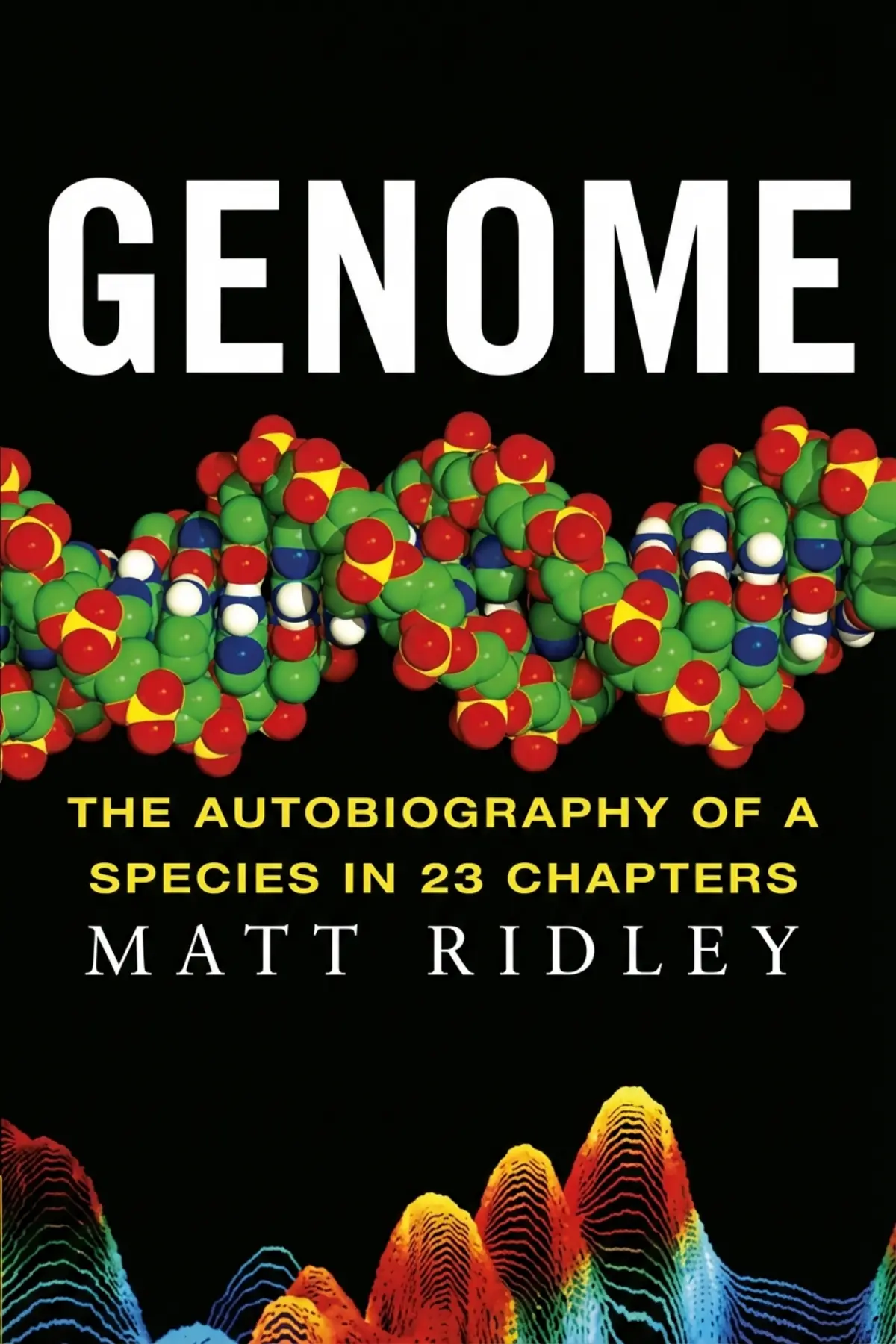
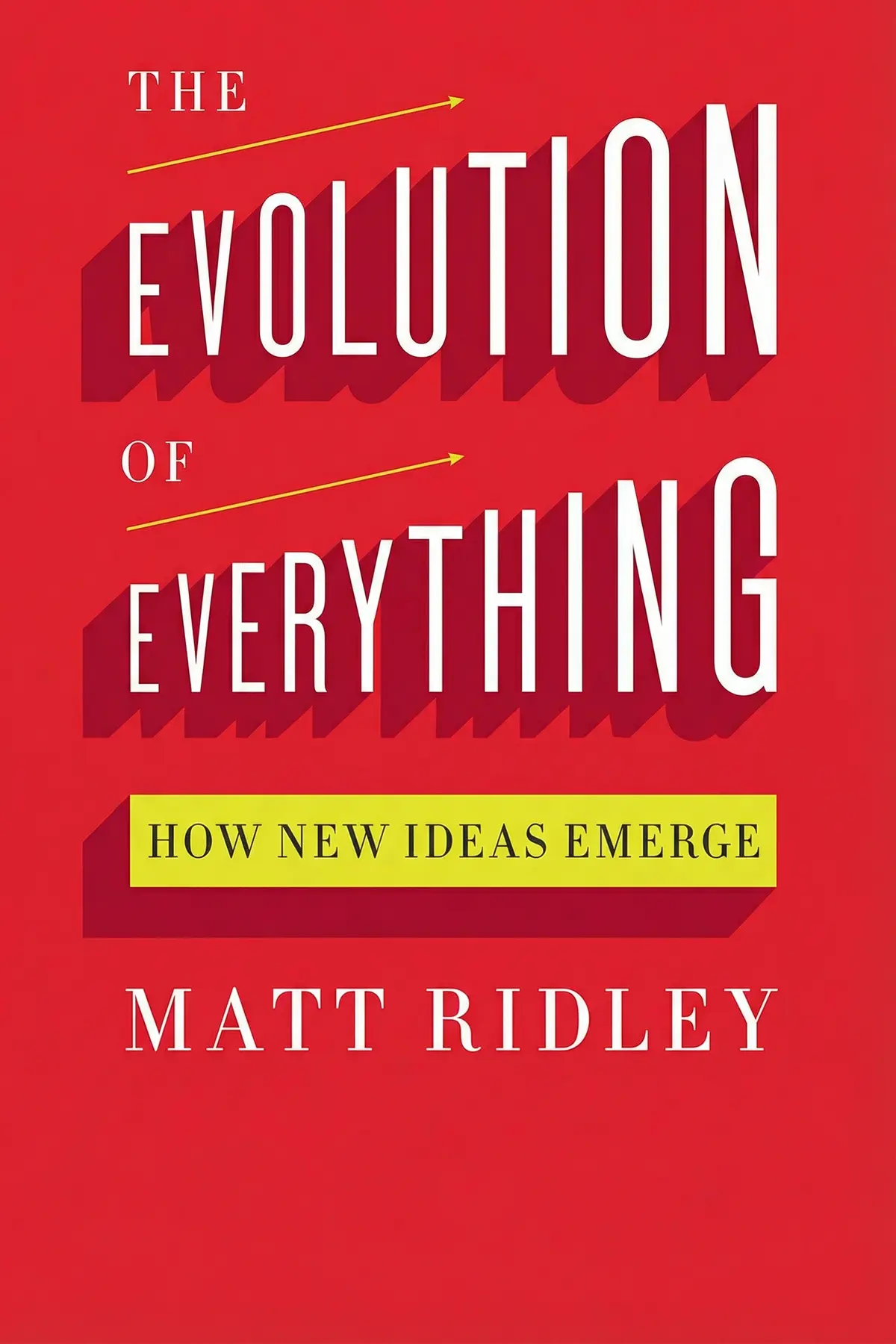
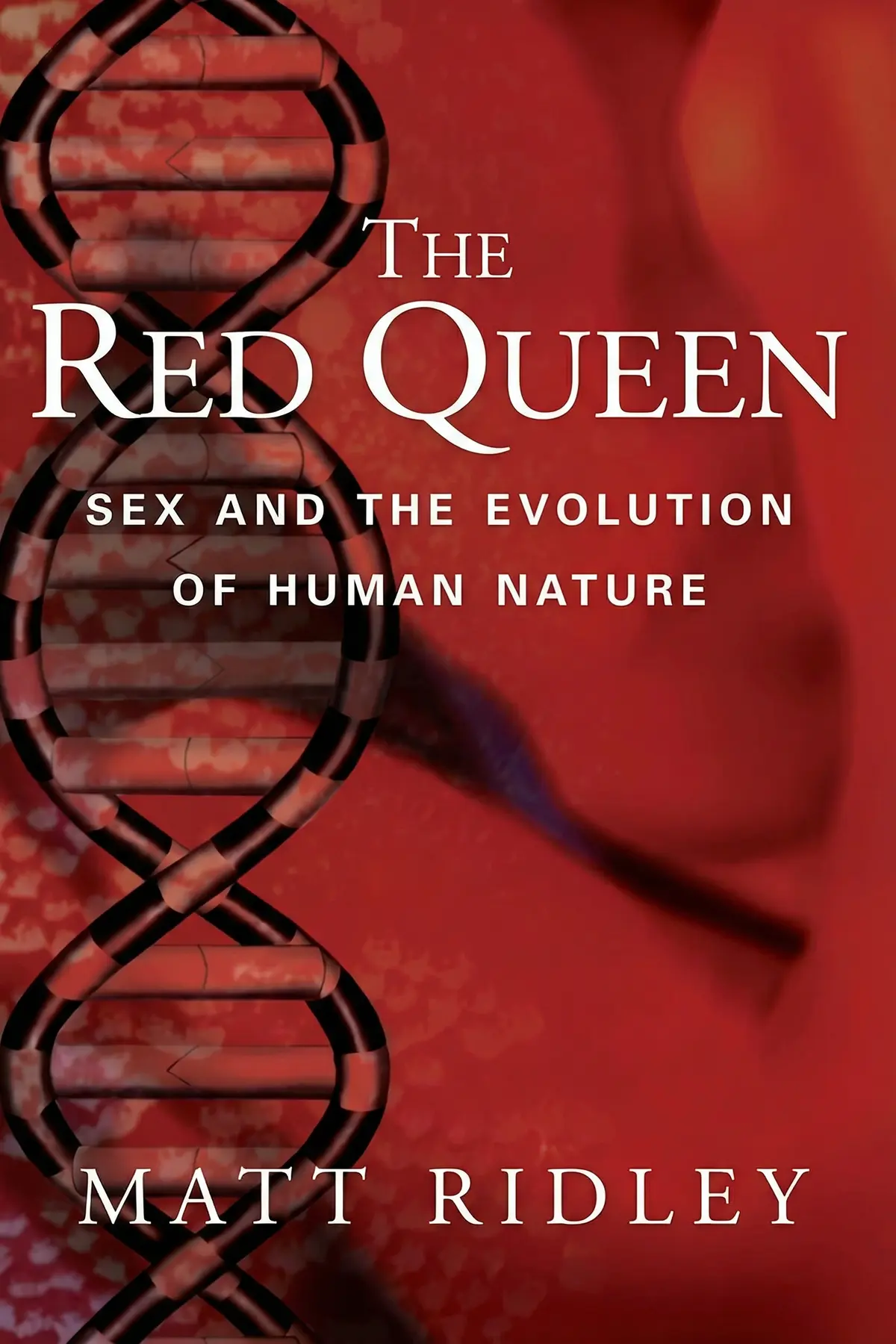
Matt Ridley was born in Northumberland, England, in 1958 and has written regularly for The Times. From 2004 to 2007 he chaired the bank Northern Rock. He inherited the title of 5th Viscount Ridley in 2012, and from 2013 until he retired in December 2021 he sat in the House of Lords as a Conservative hereditary peer. His other books include The Red Queen and Genome, which was shortlisted for the Los Angeles Times Book Prize.
Ratings & Reviews
Ratings at a glance
What people think
Listeners describe the work as exceptionally accessible and skillfully crafted, utilizing a captivating narrative style to investigate every aspect of innovation. The content offers a crisp, evidence-led look at history through a thorough breakdown of various historical developments, and listeners value its practical, logical outlook. They consider it an enlightening and thoroughly researched guide, with one listener noting it covers the gamut of technology.
Top reviews
Oksana
Matt Ridley has a knack for making complex economic theories feel like dinner table conversation. His concept of 'ideas having sex' is more than just a catchy phrase; it is a fundamental shift in how we view progress. He systematically debunks the 'lone genius' myth by tracing the messy, collaborative history of the steam engine and modern vaccines. I loved the way he describes innovation as a bottom-up process driven by trade and exchange rather than top-down mandates from the elite. The writing is incredibly accessible, avoiding the dense jargon you usually find in tech history. It’s a refreshing, fact-based look at why some societies thrive while others stagnate under the weight of their own bureaucracy. Truly an eye-opener for anyone interested in why the world looks the way it does today.
Show moreHenry
Ever wonder why certain breakthroughs happen in clusters across different continents simultaneously without the inventors ever meeting? This book provides the most satisfying answer I’ve found yet by treating innovation as an evolutionary process rather than a series of 'Eureka' moments. Ridley’s prose is sharp and fast-moving, covering a massive technological gamut from ancient farming techniques to modern gene editing. I especially enjoyed the section on how regulation in Europe is stifling the next generation of digital giants. It’s a provocative read that challenges the way we fund science and protect ideas. Not every chapter hit the mark, but the overall message is powerful and incredibly relevant for our current age. I couldn't put it down once I started the section on computers.
Show morePlernpiriya
Innovation is often treated as a magical spark from a lone genius, but Ridley effectively dismantles that myth with surgical precision. He shows that progress is contagious and collective, thriving only when people are free to trade and exchange their 'recombinant' ideas. This book is a massive achievement in storytelling, covering everything from the telegraph to the sharing economy with equal enthusiasm. I found his arguments about the 'innovation famine' in certain sectors to be a necessary wake-up call for modern policymakers. The tone is optimistic and full of hope, which is exactly what we need right now. It’s easily one of the most thought-provoking books on my shelf. I highly recommend it to anyone who feels stuck in a pessimistic worldview.
Show moreMia
Finally, a book that acknowledges how most world-changing tech comes from tinkerers in garages rather than professors in ivory towers. I’ve been looking for a comprehensive history of innovation that doesn't just focus on the 'great men,' and Ridley delivered exactly that. From corrugated iron to the search engine, he demonstrates how innovation is a messy, unpredictable process of combination and recombination. The book is an eye-opener regarding how often we stand in our own way with restrictive rules and redundant licensing. It’s highly readable, well-documented, and provides a much-needed common sense perspective on human advancement. If you care about the future of technology, or just want to understand the past better, you need to read this.
Show moreJoshua
Picked this up expecting a dry history of the industrial revolution, but I was pleasantly surprised by the lively, storytelling pacing. Ridley walks through everything from the invention of the flush toilet to the complexities of nuclear power with a very common-sense lens. It’s fascinating to see how many 'simultaneous' inventions occur because the cultural atmosphere was just right for them. My only gripe is that the book occasionally feels like a series of loosely connected anecdotes rather than a cohesive argument. The chapter on coffeehouses felt particularly out of place, even if it was a fun read in isolation. Still, the breadth of the technology covered is impressive and kept me turning pages. It is a solid, informative read for any history buff.
Show moreVipawan
After hearing so much buzz about Ridley’s take on the 'bottom-up' nature of progress, I finally dove into this hefty volume. It’s a fascinating, information-rich journey that really highlights how much we owe to practical tinkerers rather than academic theorists. The way he compares technological evolution to biological evolution is masterful and makes a lot of sense when you look at how computers actually developed. I found his cautionary tale about nuclear power particularly sobering, especially regarding how safety-induced cost inflation can kill a promising industry. It’s a readable, well-written plea for more freedom to experiment and fail. Even if you don't agree with his politics, the historical data is hard to ignore. A great addition to any library.
Show moreAnawin
The chapter on the evolution of the flush toilet was unironically one of the most fascinating things I’ve read all year. Ridley has a gift for taking mundane objects and revealing the centuries of trial and error required to make them work. I appreciate the fact-based approach and the way he highlights the importance of 'perspiration' over 'inspiration.' It’s a bit long in some places, and he definitely has an axe to grind regarding government regulation, but the stories are top-notch. For anyone who likes knowing how things work, this is a solid choice. It’s informative without being pretentious, and it manages to cover a vast amount of ground without feeling like a textbook. Definitely worth the time for the stories alone.
Show moreNong
While I appreciate the exhaustive research into how the steam engine evolved, I found the author’s persistent crusade against intellectual property a bit exhausting. Ridley makes a compelling case for incrementalism, but his disdain for patents feels overly simplistic for such a globalized, complex economy. He writes with a clear bias toward deregulation that might alienate readers looking for a more balanced scientific perspective. To be fair, his descriptions of 'tinkering' as the precursor to formal science are brilliant and well-documented. If you can look past the libertarian undertones, there is a wealth of historical knowledge here that is genuinely worth your time. Just be prepared for a very specific political flavor that permeates the latter half of the text.
Show moreSuda
Frankly, I enjoyed the first half of the book much more than the second. The historical deep dives into steam engines and lightbulbs were excellent, but the later chapters devolved into a bit of a political manifesto. Ridley’s take on intellectual property rights felt a bit rushed and one-sided, failing to address the very real risks of a world without patent protection. I gotta say, he writes well, but the transition from historian to polemicist was a bit jarring for my taste. That said, the 'ideas having sex' framework is a genuinely useful tool for understanding cultural evolution. It’s a 3-star read for the uneven execution, despite the high-quality research. It is a good book that could have been great with a bit more balance.
Show moreArthit
To be fair, the historical anecdotes are charming, yet the book feels like it's stuck in a very conservative, old-school scientific echo chamber. I went into this hoping for groundbreaking insights into the future, but Ridley seems more interested in defending the 'old guard' of the scientific establishment. The ideas about incremental progress and 'floating ideas' aren't particularly new; I’ve seen much of this covered more effectively by people like Neil Shubin years ago. It’s a standard history of innovation that lacks the progressive spark I expected from a book with this title. If you’ve already read a lot of pop-science, you probably won't find much here that blows your mind. It’s a bit too safe and repetitive for my liking.
Show moreQuestions about this book
What is the main idea of How Innovation Works by Matt Ridley?
Ridley argues that innovation is not the sudden work of lone geniuses. It is a slow, messy, collective process of trial and error. Chance discoveries get picked up, tested in new settings and improved step by step by many people. It thrives where people with different skills and backgrounds mix and swap ideas freely. It slows down when governments, established industries or overly strict laws block that exchange.
Who invented the steam engine according to Matt Ridley?
Ridley says no single person did. Around 1700, Denis Papin, Thomas Savery and Thomas Newcomen each built a working atmospheric steam engine, and it is still unclear who was first. Papin and Savery refined their ideas through letters and papers exchanged with other inventors. Newcomen, whose engine worked best, relied on earlier advances in blacksmithing. Ridley adds that more than 20 people patented light bulbs before Edison.
Why does Ridley say innovation always meets resistance?
Ordinary people fear change, and established industries fear losing their position. Margarine is his main example. The dairy industry ran campaigns against it and faked studies about its dangers, and two-thirds of American states had outlawed it by the 1940s. Ridley also points to safety scares around genetically modified crops such as golden rice, and to copyright terms in the United States that grew from 14 years to the author’s life plus 70.
How can I apply How Innovation Works in my job?
Find out who else is working near your problem instead of trying to solve it alone. Treat early versions as steps to improve. Mix people with different skills and share your accidents widely, because a discovery that failed at one job, like the gas that became non-stick coating, may suit another. If you lead a team, protect unusual ideas from senior skeptics, as Kodak failed to do with its digital camera.
Readers also enjoyed



AI 2041: Ten Visions for Our Future
Kai-Fu Lee

A Splendid Exchange: How Trade Shaped the World
William J. Bernstein


A Spy Among Friends: Philby and the Great Betrayal
Ben Macintyre




AUDIO SUMMARY AVAILABLE
Listen to How Innovation Works in 15 minutes
Get the key ideas from How Innovation Works by Matt Ridley, plus 5,000+ more nonfiction titles.
- 5,000+ titles
- Listen as much as you want
- 7-day free trial
- Cancel anytime









