

A Room of One’s Own
Virginia Woolf
 English
A journalist's argument that the headscarf is only the visible part of a wider system controlling Arab women's bodies, and that breaking it takes women speaking out and outsiders refusing to look away.
1 min 02 sec
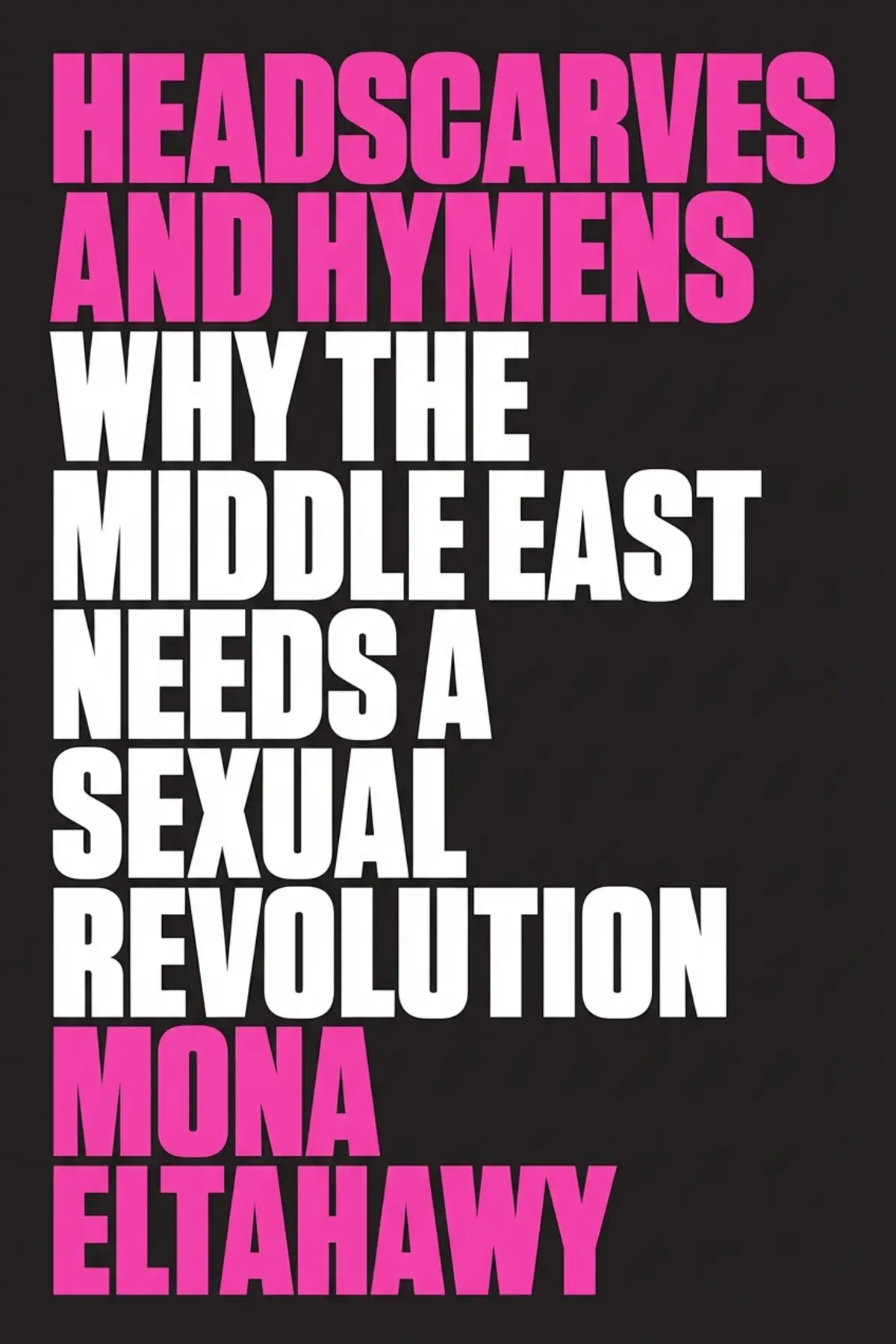
Many people outside the Arab world know the headscarf debate and little else. They argue about a piece of cloth and miss what happens to women’s bodies. In Headscarves and Hymens, Egyptian-born journalist Mona Eltahawy argues that the veil is only the visible edge of a much larger problem. Across the Arabic-speaking Middle East and North Africa, she says, women live inside a system built to control them, from the street to the courtroom to the bedroom.
In her view, that system rests on conservative readings of religion, on custom and on silence. Arab women stay quiet to avoid shaming their families, and Western liberals stay quiet to avoid seeming disrespectful. Eltahawy believes only women speaking up, with outsiders standing beside them, can break it. Her case brings hard facts, a simple test for telling scripture from habit, and the stories of activists who are already changing laws, one online video at a time.
1 min 53 sec
A court ruling about good intentions, a wedding night in Yemen and a global ranking with no Arab country near the top. Eltahawy uses them to show why the headscarf is the wrong place to start.
1 min 39 sec
Arab women who speak out risk their families’ honor, and Western observers who speak out risk looking rude. Eltahawy argues that these two very different hesitations end up serving the same men.
1 min 42 sec
Eltahawy put on a headscarf at 16 for reasons she still understands. Taking it off nine years later was much harder, and that difference reveals who really gets to choose.
1 min 52 sec
Families cut their daughters to protect a membrane they believe proves virginity, and they call it tradition. One detail from Egypt shows why the religious defense of the practice falls apart.
1 min 44 sec
Nearly every woman in Egypt has been harassed in public, according to one survey. What happens when she goes to the police, or goes home, is the part of the story outsiders rarely hear.
1 min 40 sec
Saudi rulers insisted women were not ready for change. Then one activist started a campaign online, and another filmed herself behind the wheel, and the claim became much harder to defend.
1 min 50 sec
The Arab Spring promised freedom for everyone, yet women in the crowds faced assault from rulers and fellow protesters alike. Eltahawy draws a hard lesson about what real change requires.
1 min 09 sec
Eltahawy asks readers to stop treating each injustice as a separate custom to be debated on its own terms. The headscarf, the guarded hymen, the cutting ceremony, the virginity test and the three-year sentence for killing a wife belong, in her account, to one system. That system survives because people on every side keep their voices down. Her subtitle names what she thinks it needs: a sexual revolution, one that reaches into homes and bodies as well as parliaments and palaces.
The book supports a few concrete habits. When a harmful practice is defended as faith, check whether scripture actually says so. Egypt, where Muslim and Christian girls alike are cut, shows how often it does not. When you feel the pull to stay polite and stay out, ask whom your silence serves. And when Arab women speak up, as Wajeha al-Huwaider and Manal al-Sharif did, share and amplify what they say, because campaigns like theirs have already changed rules.
An eight-year-old girl in Yemen never had a voice. The women who filmed themselves at the wheel used theirs, and Eltahawy asks everyone else to use theirs too.
Outside the Arab world, talk about women's rights in the region often starts and ends with the headscarf. Is it oppression, faith or cultural identity? Mona Eltahawy argues that this debate misses most of the picture. In her account, the veil is one part of a broad system for controlling women. That system covers child marriage, the policing of virginity, genital cutting, harassment on the street, abuse by police and violence at home that the courts barely punish. Eltahawy writes as an Egyptian-born journalist who wore a headscarf for nine years and was assaulted by security forces after a women's rights protest in Egypt. She names what keeps the system in place: ultra-conservative readings of Islam, customs defended as religion, and silence from two directions. Arab women stay quiet to protect their families, and Western liberals stay quiet to look respectful. Her book also follows the women already pushing back, from Huda Sha'arawi in 1923 to Saudi activists whose online campaigns opened Olympic places to women and challenged the driving ban. Readers get the facts behind the argument, a way to separate custom from scripture, and a clear sense of why she believes political revolution means little without a sexual one.
Readers who know the headscarf debate and want the fuller picture of Arab women's rights.
Journalists, students and aid workers covering the Middle East and North Africa.
Western allies unsure whether speaking up about another culture is respectful or intrusive.
Mona Eltahawy is a journalist and social commentator born in Port Said, Egypt, in 1967 and based in New York City. Her essays and op-eds have appeared in The Washington Post, The New York Times and The Guardian, and she has been a guest analyst on US radio and television. Her work covers Egypt and the Islamic world, including patriarchy and women's rights. Headscarves and Hymens was her first book. She later wrote The Seven Necessary Sins for Women and Girls, founded the newsletter Feminist Giant and helped lead the Mosque Me Too movement.
Listeners find the book accessible and enlightening, particularly valuing how it addresses the position of women within Middle Eastern cultures. While the prose style draws varied responses, many consider it well-written. The narrative is both stirring and intellectually stimulating; one listener mentions its ability to reveal Egyptian politics, while another points out that it is a perfect tool for personal reflection on attitudes towards women.
This book is a visceral punch to the gut that demands your full attention from the first page. Eltahawy doesn't hold back when describing her experiences during the Arab Spring, including the horrific sexual assault she suffered in Cairo. It’s a raw, angry, and necessary manifesto that challenges the toxic mixture of religion and culture used to keep women suppressed. Her argument that the Middle East hates women is bold, but she backs it up with devastating evidence ranging from street harassment to state-sanctioned violence. I was particularly struck by her refusal to cater to Western sensibilities or apologize for her 'radical' views. While the tone is undeniably aggressive, it feels entirely justified given the systemic issues she highlights. Reading about the prevalence of FGM and the lack of legal protection for domestic abuse victims was heartbreaking. It’s a wake-up call for anyone who thinks ‘modesty’ culture is simply a choice without consequences. This should be required reading for anyone interested in global human rights.
Show moreWow. I’m honestly stunned by how little I actually knew about the daily realities for women across North Africa and the Middle East. One of the most shocking parts of the book was Eltahawy’s account of being groped while performing the Hajj in Mecca. It completely shatters the myth that a woman’s clothing or presence in a holy space offers any protection from misogyny. Her prose is sharp and uncompromising, often using profanity as a tool to reclaim power from a society that demands women be quiet and 'nice.' While I occasionally felt the narrative jumped around too much, the emotional weight of her stories kept me pinned to the page. The statistics she provides about sexual harassment in Egypt—nearly 99% of women—are frankly terrifying. It’s an uncomfortable read that forces you to confront the ‘elephants in the room’ regarding religious interpretation and state control. If you want to understand why a sexual revolution is being called for, start here. This book is a loud, necessary scream for justice.
Show moreAs a Western feminist, I found Eltahawy’s critique of cultural relativism absolutely essential for anyone navigating modern discourse on gender. She argues quite vociferously that we do no favors to Muslim women by staying silent about oppression just to avoid being called names. The book is filled with verifiable incidents of violence that make it impossible to look away. I was particularly moved by the stories of Saudi women fighting for the right to drive and the right to exist without a male guardian’s permission. Eltahawy’s language is often crude, but as she says, she believes in the power of profanity to transgress the red lines of the patriarchy. This isn't a book meant to make you feel comfortable or 'enlightened' in a passive way; it's a call to action. While the focus remains largely on Egypt, the broader patterns she identifies across the Arab world are deeply concerning. It left me with a profound sense of sorrow for the women trapped in these systems. Truly an eye-opening account.
Show moreNot what I expected, but exactly what I needed to read to understand the current climate of Middle Eastern politics. The details of Eltahawy’s own injuries—two broken arms and a detention by security forces—serve as a chilling reminder of the physical stakes involved in her activism. She writes with a burning passion that makes it impossible to remain neutral on topics like child marriage or the 'purity' obsession. I was especially struck by the fact that many of these issues, like FGM, are not actually supported by the Quran yet are treated as religious mandates. It’s a devastating account of how the state and the street conspire to control the female body. The writing is punchy and direct, though it occasionally feels a bit like a manifesto rather than a nuanced analysis. Personally, I found her takedown of the Saudi regime’s influence on the rest of the Arab world to be the strongest part of the book. It’s a hard-hitting read that will likely make you angry, but that anger is exactly what fuels the change she’s looking for.
Show moreAfter hearing Eltahawy on a podcast, I knew this would be a challenging read, but I wasn't prepared for how deeply it would affect me. The truth is, many of us in the West are guilty of a kind of 'cultural relativism' that ignores the suffering of women in the name of respecting tradition. Eltahawy tears that notion apart, showing how guardianship laws in places like Saudi Arabia effectively treat adult women as perpetual minors. I found the section on the ‘purity culture’ particularly enlightening, as it explains how the burden of honor is placed entirely on the female body. Some readers might find her writing style a bit unrefined or overly polemical, yet that rawness makes the message more urgent. To be fair, the book could have used a bit more footnoting for some of the broader claims, but the personal anecdotes are undeniable. It left me reflecting on my own assumptions about the hijab and the niqab for days. This isn't just about politics; it's a plea for basic bodily autonomy.
Show moreFinally got around to reading this, and I’m still reeling from the statistics regarding sexual harassment in Egypt and Yemen. The author makes a compelling, if polarizing, case that political revolutions are meaningless if they don't include a social and sexual revolution for women. It was gut-wrenching to read about the 'virginity tests' and the legal loopholes that allow men to beat their wives with 'good intentions.' Eltahawy’s perspective as someone who has lived in both Egypt and Saudi Arabia gives her a unique authority that is hard to dismiss. Her transition from wearing the hijab to becoming a secular critic of the veil is a fascinating personal journey that adds a lot of depth to the book. I appreciated how she didn't just target religious extremists but also called out the state for its role in maintaining the status quo. It’s a fast-paced, readable book, though the relentless nature of the tragedies described makes it a heavy emotional lift. Every page feels like a battle cry for freedom.
Show morePicked this up for a book club and the discussions it sparked were some of our most heated yet. Eltahawy’s central thesis—that Arab societies hate women—is a massive pill to swallow, but the evidence she presents is hard to refute. We spent a long time talking about her choice to stop wearing the hijab and her subsequent support for veil bans in Europe. It’s rare to find a writer who is so willing to be unpopular with both the right and the left. Some members of my group found her tone too aggressive, but I think that’s exactly the point of her ‘radical’ approach. The book does a great job of connecting the dots between individual acts of harassment and the larger political structures that profit from them. My only real critique is that she sometimes ignores the progress being made by Islamic feminists who want to find solutions within their faith. Regardless, it is a thought-provoking tool for personal reflection. You cannot walk away from this book without re-evaluating your own attitudes.
Show moreThe chapter on Saudi Arabia was particularly illuminating, detailing the absurd lengths the patriarchy goes to to control women’s bodies and movements. From clerics claiming that driving ruins ovaries to the lack of shelters for abused wives, the picture Eltahawy paints is bleak. I’ve read a lot about the Arab Spring, but this book highlights the 'gender-based attacks' that are often left out of the mainstream history books. She is right to point out that even when tyrants are overthrown, the underlying misogyny often remains untouched. The book is very readable and informative, acting as a perfect tool for those who want to understand the intersection of gender and politics. While I felt the writing was a bit simplified in parts, the message remains real and urgent. It’s a devastating account of repression that also serves as a testament to the resilience of the women fighting back. Frankly, it’s about time someone spoke this truth so loudly. This is a must-read for anyone who cares about equality.
Show moreTo be fair, the subject matter is incredibly important, but the execution felt a bit scattershot at times. Eltahawy is clearly passionate, and her personal story of being beaten by security forces in 2011 is nothing short of heroic. However, the writing style felt a bit 'dumbed-down' in certain chapters, making it feel more like a collection of blog posts than a cohesive study. I also struggled with how she lumps various cultures and countries together under a single umbrella of 'hate.' It’s a very strident complaint, and while much of that anger is earned, it sometimes drowns out the nuance of the situation. I would have appreciated more focus on the grassroots movements within these countries that are trying to work inside a spiritual framework. Still, her points about the left-wing’s silence on FGM and child marriage were biting and very much needed. It’s an informative book that certainly sparked a lot of internal debate for me, even if I didn't agree with every radical conclusion she reached.
Show moreLook, I appreciate the bravery it takes to speak out, but her radical secularism feels like it alienates the very people she wants to help. As a reader interested in the Islamic alternative to feminism, I found the title and tone to be unnecessarily provocative and often quite disrespectful toward the faith. Eltahawy seems to believe that religion is inherently the enemy, ignoring the rich tradition of female rights found in the Quran. While the descriptions of FGM are horrifying, I don't believe the answer is a total abandonment of our values in favor of Western liberalism. Her language is often unpleasant and crude, which I found more distracting than empowering. To be frankly honest, the book felt like a one-sided lecture that didn't allow for any middle ground between 'secular modernity' and 'anachronistic norms.' It’s an important perspective, but it shouldn't be assumed that she has every Muslim woman's best interest at heart. I’m glad I read it for context, but it left me feeling more frustrated than inspired.
Show moreMona Eltahawy argues that the veil is only one part of a wider system that controls Arab women’s bodies. That system includes child marriage, virginity policing, genital cutting, harassment and domestic violence. In her view it rests on ultra-conservative readings of Islam, on custom and on silence from both Arab women and Western liberals. She calls for a sexual revolution led by women speaking out, with outsiders standing in solidarity.
No. She stresses that it is a cultural practice. In Egypt, both Muslim and Christian girls are cut, yet neither the Quran nor the Bible mentions it, and the Quran and Hadith include stories about the importance of women’s pleasure. She notes that both the World Health Organization and the United Nations class the practice as a human rights violation.
Eltahawy argues that many Western liberals stay silent about Arab women’s rights out of respect for other cultures. She calls this cultural relativism, a double standard that becomes an excuse to avoid the fight for equality. In a 2012 Foreign Policy article she accused Westerners of tacitly supporting the most conservative parts of Arab societies while ignoring women’s second-class status.
Eltahawy traces Arab feminism back to Huda Sha’arawi’s 1923 movement in Egypt. She describes Wajeha al-Huwaider’s 2008 online campaign against the Saudi ban on women’s sports, which helped put two women on the Saudi Olympic team by 2012. She also tells of Manal al-Sharif, jailed for nine days in 2011 for driving, whose video inspired 12 more women to post their own.
The book suggests a few habits. Judge women’s rights by real outcomes such as child marriage and penalties for violence. When a harmful custom is defended as religion, check whether scripture actually supports it. Ask whether your own silence protects a culture or its abusers. Support women’s online campaigns, and judge any political change by what it does for women’s safety and rights.
Virginia Woolf

Tracy Rosenthal

Jessica Valenti


Johny Pitts


bell hooks


Fay Bound Alberti
AUDIO SUMMARY AVAILABLE
Get the key ideas from Headscarves and Hymens by Mona Eltahawy, plus 5,000+ more nonfiction titles.









