

13 min 56 sec
Available in: English
 ไทย
EnglishไทยHalf the Sky: Turning Oppression into Opportunity for Women Worldwide
Shows why sex slavery, violence against women and deaths in childbirth persist worldwide, and which small, local measures, such as school uniforms, iodized salt and backing strong local women, actually improve women's lives.
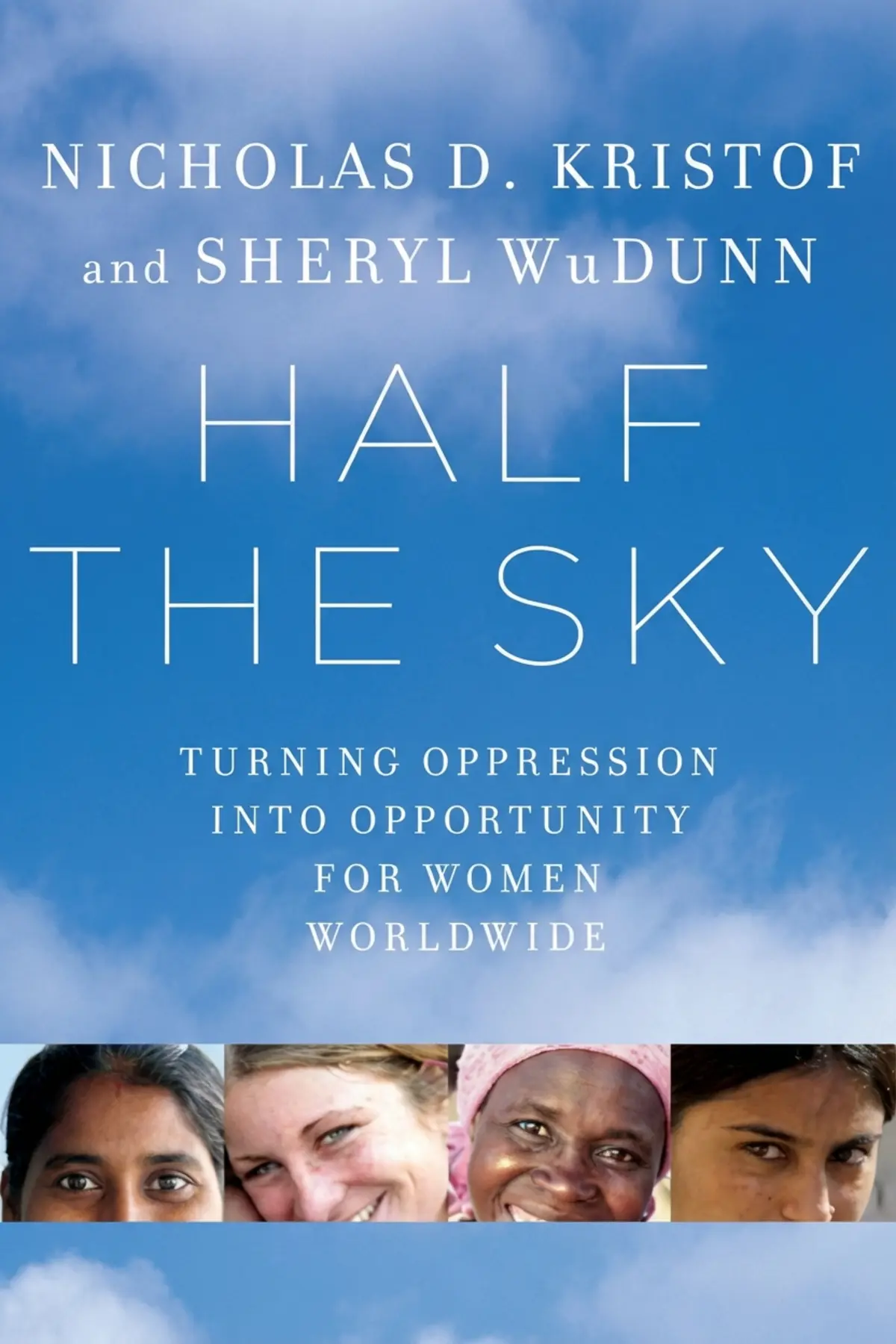
Table of Content
1. Introduction
1 min 04 sec
News of women suffering far away can leave you angry and unsure what to do with that anger. In Half the Sky, Pulitzer Prize-winning journalists Nicholas D. Kristof and Sheryl WuDunn begin with a fact that sharpens the problem: trafficking in human beings is now the third largest international crime business, behind only drugs and weapons, and women are sold and shipped across borders like slaves to be abused by men.
Their argument is that this cruelty, like violence at home, deaths in childbirth and girls kept out of school, lasts because many societies treat certain women as worth less than other people. The remedies that work, they argue, are often cheap and local: a school uniform, iodized salt, a strong woman leading her own community. Follow their reporting from Cambodian brothels to an Ethiopian village and a Brazilian television audience, and you will know which kinds of help change a woman’s life, and which ones backfire.
2. Recognize the belief that keeps sex slavery running
1 min 53 sec
Border guards who stop pirated DVDs wave trafficked girls through. The reason given is a belief that prostitution is inevitable and spares middle-class girls, and it echoes the thinking that once let people get away with enslaving Africans.
3. Freeing a woman is only the first step
2 min 00 sec
A Cambodian woman was rescued from her brothel more than once, and each time she walked back in. Her story shows where anti-trafficking efforts most often fail, long after the raid makes the news.
4. Learn how outside help can leave women poorer
2 min 02 sec
A UN project gave women in one part of Nigeria a higher-yielding type of cassava, and at first they began earning more from it. In the end they had less than before, because of a local custom the planners did not know about.
5. A six-dollar uniform can protect a mother
1 min 53 sec
Women die in childbirth every day in numbers that would fill several airliners, and the press barely notices. Some of the most effective protection has nothing to do with doctors or hospitals.
6. Bridge the faith divide that shapes women's health
1 min 56 sec
An argument between American liberals and conservatives ends up deciding whether women live or die thousands of miles away. Meanwhile, Islamic feminists are making a case from their own history that critics rarely expect.
7. Keep girls in school with salt and sanitary pads
1 min 55 sec
Building more schools sounds like the obvious way to educate girls. The authors point to two everyday items, neither of them books, that may do more to keep a girl learning.
8. Conclusion
1 min 13 sec
Half the Sky is a long argument against shrugging. Each horror the authors report, from a locked brothel room to a young woman curled in a hut for two years, rests on the same quiet assumption that some women count for less. Change that assumption and the problems start to look solvable, often for very little money: a $6 uniform, a bag of iodized salt, a pack of pads. The authors go further, suggesting that women freed from these limits could go on to solve problems the rest of us cannot yet name.
The book supports a few concrete habits. When a project for women catches your eye, whether in a large city or a small village in Sudan, give or volunteer, even briefly, since small amounts count. Favor efforts led by women from the community itself, and ask who will control the money once a project succeeds, so the Nigerian cassava story is not repeated. And handle dramatic numbers with care, because the authors warn that exaggeration has already cost the cause its credibility.
The most useful help is often the smallest, as long as it treats a woman as fully human.
About this book
What is this book about?
Across the world, women are trafficked into brothels, beaten by their own families, and die giving birth from causes that could be prevented. Journalists Nicholas D. Kristof and Sheryl WuDunn argue that sex slavery persists because certain women are seen as discounted humans, worth less than other people. The authors draw on stories from Cambodia, India, Afghanistan, the Congo, Nigeria, Ethiopia and Brazil. They show why rescuing a woman from a brothel is easier than keeping her free, why foreign aid can leave women poorer, and how religion shapes everything from family planning policy to honor killings. Their answer is practical. Education and local leadership change attitudes, and some of the most effective tools cost very little: a $6 school uniform, iodized salt, sanitary pads. Readers get a clear picture of where help does good and where it backfires, along with rules for anyone who wants to give money or time.
Book Information
Who it's for
Wondering what helps women
Readers troubled by global injustice against women who want to know which kinds of help work.
Choosing a women's charity
Donors and volunteers choosing between charities for women and girls.
Students after vivid examples
Students of development, health or human rights looking for vivid cases from the field.
About the Author
Nicholas D. Kristof
Nicholas D. Kristof has written an op-ed column for The New York Times since 2001 and has traveled to 160 countries. He has won two Pulitzer Prizes, one for columns from Darfur and one shared with his wife, Sheryl WuDunn, for covering the Tiananmen Square protests. WuDunn was a Times foreign correspondent in Beijing and Tokyo, speaks Chinese and Japanese, and became a senior banker who advises fast-growing firms in developing markets.
Ratings & Reviews
Ratings at a glance
What people think
Listeners consider this work an essential read, praising its superb writing and thoroughly researched data. They characterize it as a revelatory journey that sheds light on the challenges faced by women globally, with a specific focus on developing nations. The narrative contains agonizing accounts balanced by hopeful conclusions that soften the emotional weight, and listeners value the way it weaves together diverse stories from across the globe. They find the material deeply moving, mentioning that it motivates them to take a more proactive role in aiding fellow human beings.
Top reviews
Nong
This book is a gut punch that every person living in a developed nation needs to experience. Kristof and WuDunn don’t just give you a dry list of statistics about global poverty; they provide names, faces, and stories that haunt you long after you close the cover. By focusing on individual narratives—like women surviving sex trafficking or overcoming obstetric fistulas—the authors make the 'moral challenge' of our century feel deeply personal. I found the section on micro-finance particularly inspiring because it offers a tangible solution rather than just doom and gloom. It’s a rare work that can move you to tears while simultaneously providing a roadmap for how to actually help. While the subject matter is undeniably harrowing, the emphasis on resilience and the power of education for girls left me feeling hopeful. This isn't just a book you read; it's a call to action that changes how you view your own place in the world.
Show moreSureerat
Finally got around to reading this after seeing it on so many 'must-read' lists, and it totally lived up to the hype. The way it weaves together the horrors of slavery and rape with success stories of female entrepreneurs is masterful. It avoids being purely depressing by showing exactly where our donation dollars go and which grassroots organizations are actually making a difference on the ground. I particularly loved the photographs included in the book; seeing the faces of these brave women made their struggles and triumphs feel so much more immediate. Some of the chapters, especially the ones on honor killings and genital mutilation, are incredibly difficult to get through, but they are necessary. We cannot fix what we refuse to see. This book pulls back the curtain on global injustice and demands that we pay attention. It is truly an inspirational guidebook for humanity.
Show moreWillow
Wow. Just... wow. I’ve never read anything that made me feel so small and so motivated at the same time. The authors describe the struggle for gender equality as the 'paramount moral challenge' of our century, comparing it to the fight against slavery in the 19th century. After reading these accounts of child sex trafficking and maternal neglect, it’s hard to disagree. What I appreciated most was that they didn't just leave me feeling guilty; they provided a list of vetted charities like CAMFED and Tostan where people can actually get involved. The stories of women rising from the ashes of their circumstances to lead their communities are nothing short of miraculous. It’s an emotional rollercoaster that everyone should ride. My perspective on global poverty has been completely transformed. It’s a must-read for anyone who cares about human rights and wants to see a more equitable world for the next generation.
Show moreLeila
Every so often, a book comes along that effectively reboots your moral compass, and for me, this was it. The authors are journalists, so the prose is sharp and fast-paced, keeping you engaged even when the topics are devastating. I learned so much about the economic impact of investing in women—how educating a girl can lift an entire village out of poverty. It’s brilliant, well-documented, and incredibly moving. I found the chapter on the 'missing girls' in Asia due to infanticide and neglect to be particularly chilling. It’s a wake-up call to the fact that we are losing a massive portion of human potential simply because of gender. The blend of heart-wrenching anecdotes and positive endings helps temper the sadness and keeps you reading. If you want to understand the world as it actually is—and how it could be better—you need to read this book immediately.
Show moreWipada
Picked this up for a book club and was surprised by how much it stuck with me. It’s not just a collection of sad stories; it’s an evidence-based argument for why the empowerment of women is the key to global stability and economic growth. The stories of women like Meena, who escaped a brothel and then helped others do the same, are better than any fiction. I appreciated the practical advice at the end of the book, which turned my 'what can I even do?' feeling into 'here’s how I can help.' The authors highlight that $10 can provide a girl with school supplies, which makes the huge problem of global education feel manageable. It’s a well-written, informative, and deeply emotional journey. We often live in a bubble in the West, and this book is a necessary burst to that bubble. Truly a life-changing read.
Show moreNora
In my experience, books on global poverty can be too dry or too academic, but Kristof and WuDunn avoid that trap entirely. They use the power of storytelling to make you care about women thousands of miles away as if they were your own neighbors. The chapters on fistula were especially informative, as it’s a condition I had never even heard of, yet it affects millions. Seeing the photos of the women mentioned made the experience even more impactful. Some critics might point to the authors' Western perspective as a flaw, but I think they are intentionally writing for a Western audience to shake them out of their apathy. It worked on me. The book manages to be both a tragic account of human rights abuses and a hopeful testament to human resilience. I’ve been recommending this to everyone I know because the world needs more people who are aware of these issues.
Show moreKanokporn
Ever wonder why gender equality is often sidelined in international policy? This book argues convincingly that it is the central humanitarian issue of our time. The writing style is very journalistic, which makes the medicine go down easier, though some might find the 'spoon-feeding' of anecdotes a bit manipulative. I appreciated the specific focus on maternal mortality and the simple, cost-effective solutions proposed, like salt iodization and better rural health clinics. However, I did notice a bit of a paternalistic tone at times, where the Western authors seem to position themselves as the necessary saviors for the 'developing world.' Despite that slight discomfort with the framing, the core information is vital. The stories of women like those in the Congo who have survived unthinkable trauma are incredibly powerful. It’s an eye-opening read that serves as an excellent primer for anyone who wants to understand the intersection of poverty and misogyny globally.
Show moreRome
Look, the subject matter here is undeniably heavy, dealing with everything from sex trafficking to genital mutilation. It isn't an easy read by any stretch of the imagination. However, Kristof and WuDunn do a solid job of balancing the 'if it bleeds, it leads' journalism with genuine solutions. I liked the focus on micro-loans and how something as simple as a television in a rural village can actually change social norms regarding women's roles. My only real gripe is that they sometimes gloss over the complexity of the local cultures, making everything seem like a simple problem that a bit of Western cash can fix. That said, the authors’ passion is evident on every page. They clearly care about these women, and their ability to make these distant problems feel relevant to a U.S. audience is impressive. It’s a powerful, eye-opening experience that definitely inspired me to be more active in global causes.
Show moreWachira
As someone who follows international development, I found myself deeply torn during the entire reading experience. On one hand, the authors deserve immense credit for bringing mainstream attention to issues like fistulas and the importance of female education. These are topics that rarely get the coverage they deserve in the U.S. media. On the other hand, the 'Western gaze' here is impossible to ignore. The authors often portray victims in a way that feels 'othering,' focusing on their beauty or youth to garner sympathy, which felt a bit exploitative to me. I also struggled with the lack of discussion regarding how neoliberal policies and historical colonialism contributed to these conditions. It's a very 'American-centric' view of how to fix the world. To be fair, if this is the first book someone reads on global women’s rights, it’s a good starting point, but I’d recommend following it up with more nuanced perspectives from local activists.
Show moreTaw
The section discussing maternal mortality and sex work left me with a deeply uncomfortable, almost icky feeling regarding the authors' tone. While I acknowledge the importance of the subject matter, the execution felt steeped in ethnocentrism and paternalism. Kristof and WuDunn seem to treat the women they interview as objects of pity rather than full human beings with agency. I noticed a frustrating pattern where Western men were referred to by their last names while the women in the 'Third World' were almost always just first names. It felt like a 'white savior' narrative where the solution is always more Western intervention and less about dismantling the systems that cause this suffering. Frankly, the statistics were often vague or poorly cited, and the cheerleading for sweatshops as a 'virtuous' solution for women was hard to swallow. I’d suggest looking for books by female authors from these regions instead for a more authentic and less patronizing perspective.
Show moreQuestions about this book
What is the main idea of Half the Sky?
Kristof and WuDunn argue that sex trafficking, violence against women, deaths in childbirth and the lack of girls’ education persist because many societies see certain women as discounted humans. They show that the most effective responses are often cheap and local, such as school uniforms, iodized salt and support for strong local women, and that outsiders who ignore local customs can make things worse.
What do Kristof and WuDunn say about prostitution and sex slavery?
They separate prostitution, which they describe as mostly voluntary though often driven by poverty, from sex slavery, where women are locked up, forced to work long hours unpaid and broken through humiliation. They favor crackdowns on brothels plus job training and drug treatment for survivors over legalizing and regulating the trade, and they stress that keeping rescued women from returning is the hardest part.
Why do the authors say foreign aid can hurt women?
Help that ignores local customs can backfire. In one part of Nigeria, a UN project gave women a high-yield cassava. Women traditionally managed staple crops and men managed cash crops, so once the cassava made money, the men took it over and spent the profits on beer. The women were left with less income than before the project began.
How can I apply the ideas in Half the Sky?
The authors urge readers to give money or volunteer time for projects tackling gender inequality, noting that small amounts help. Favor local efforts led by women in the community, check who controls the money once a project succeeds, and be wary of exaggerated claims. Look for cheap barriers to girls’ schooling, such as missing sanitary pads, that a small fix can remove.
Who should read Half the Sky?
It suits readers who feel moved by injustice against women but are unsure how to help, donors weighing which charities to support, and students of development or human rights. Its stories, from a Cambodian brothel to an Ethiopian woman’s two years with an untreated fistula, make the case concrete, and its four rules for activists give clear guidance on what to do.
Readers also enjoyed


Afropean: Notes From Black Europe
Johny Pitts


All About Love: New Visions
bell hooks


A Biography of Loneliness: The History of an Emotion
Fay Bound Alberti

A Force for Good: The Dalai Lama's Vision for Our World
Daniel Goleman


A Room of One’s Own
Virginia Woolf
AUDIO SUMMARY AVAILABLE
Listen to Half the Sky in 15 minutes
Get the key ideas from Half the Sky by Nicholas D. Kristof, plus 5,000+ more nonfiction titles.
- 5,000+ titles
- Listen as much as you want
- 7-day free trial
- Cancel anytime









