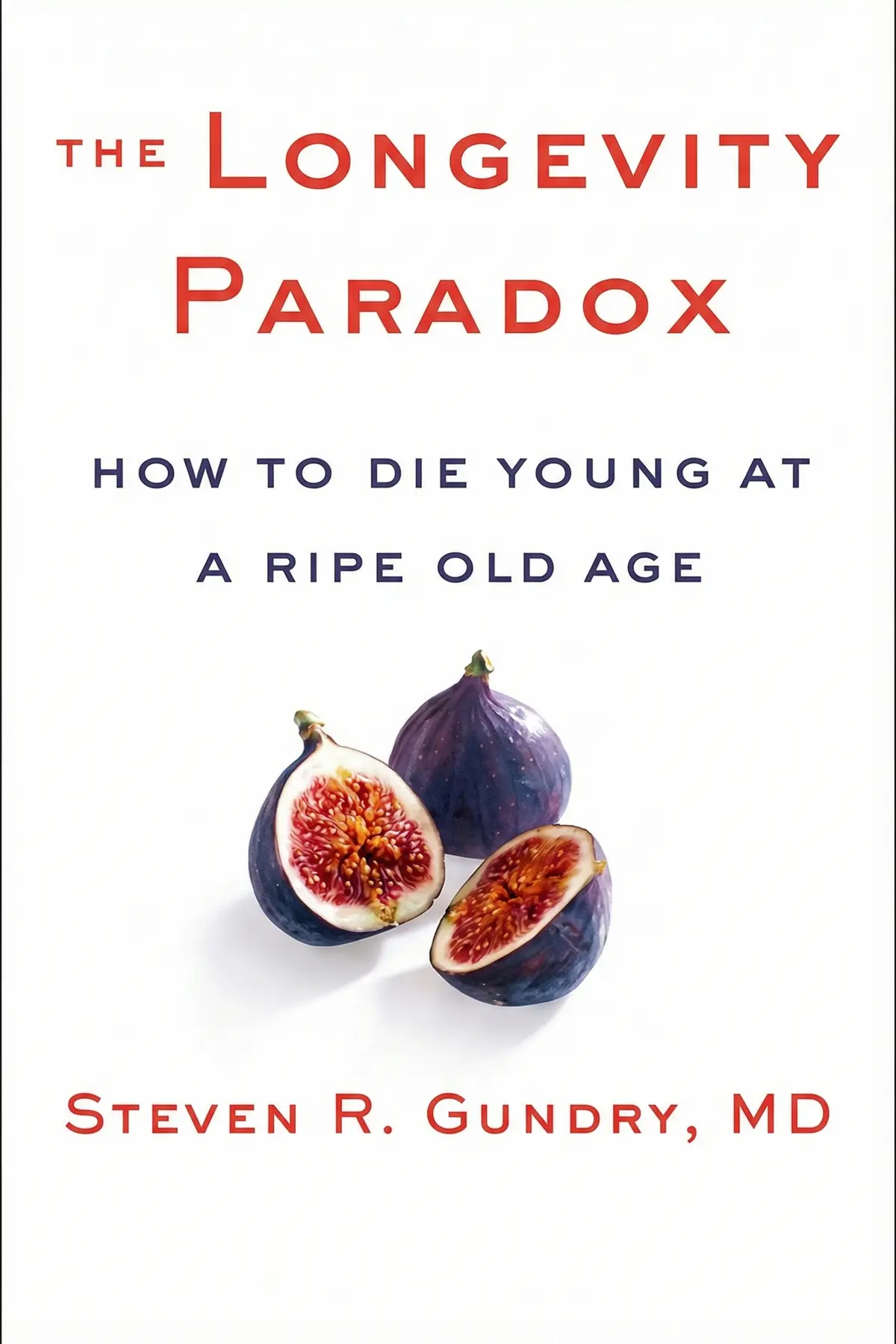
The Longevity Paradox: How to Die Young at a Ripe Old Age
Steven R. Gundry
 English
A former heart surgeon argues that trillions of gut microbes shape immunity, hormones, hunger and mood. He explains what damages them and lays out an eating plan meant to repair the gut wall and calm inflammation.
1 min 10 sec
If you eat carefully and still feel tired, hungry or low, Steven Gundry has an unsettling explanation: you may be neglecting the tenants who run much of your body. In Gut Check, the former heart surgeon argues that the microbes of your gut, mouth and skin together hold more than three million genes, against roughly 23,000 in your own genome, and that they help steer your immunity, hormones and mood. He starts from Hippocrates’ old claim that all disease begins in the gut, and says he spent 25 years working out why it holds.
His case runs like this. When modern food, drugs and chemicals starve and damage these microbes, the gut wall leaks, inflammation spreads, and chronic illness follows. Treat the microbes well, he says, and much of that illness can ease.
What follows covers how a leaky gut may sit behind heart disease, why cravings and low moods can begin below the neck, which foods Gundry wants on your plate and off it, and where his critics push back.
1 min 50 sec
You probably think of your body as yours alone. Gundry counts the other residents, compares their genes with ours, and describes a bargain with them that most of us break every day without knowing it.
1 min 56 sec
A heart surgeon who spent his career treating clogged arteries now says the usual suspect is only a bystander. His argument involves a tennis court, a confused alien and a wall thinner than you would expect.
1 min 56 sec
Some of the damage to your gut comes from choices you never made, including what was given to the animals on your plate. Gundry traces a chain from farm and pharmacy to chronic disease.
2 min 03 sec
A craving an hour after dinner feels like weak willpower. Gundry suggests it may be a message sent by someone else entirely, written in a chemical language that also reaches your mood.
2 min 01 sec
Cheese-loving France has fairly little heart disease, and beans may not be the health food you were told. Gundry’s food rules surprise, and some of them have drawn sharp objections from scientists.
1 min 47 sec
Gundry says he once carried 70 extra pounds despite hard training. The plan he built afterward fits into three rules, though readers warn that parts of the book also work as a sales catalogue.
1 min 10 sec
Gut Check turns the body inside out. In Gundry’s account, much of your health depends on a community of guests, and illness starts when they go hungry, get hit by antibiotics or chemicals, and stop guarding the wall that keeps the gut’s contents in place. In his telling, a breach in that thin lining is linked to clogged arteries, low moods and a shorter life, while cravings come from gut microbes left starving. It is a bold claim, and parts of it, above all the case against lectins, are disputed by scientists and dietitians. The habits at its center are easier to test.
Feed your microbes before you feed your cravings, with fiber, polyphenol-rich plants and spices, yogurt and other fermented foods, and a splash of vinegar. Think about what a course of antibiotics, or meat from animals raised on them, may be doing to the community inside you. And when hunger returns too soon after a meal, treat it as information about what that meal lacked.
Hippocrates said disease begins in the gut. Gundry’s wager is that healing can begin there too, one meal at a time.
Many people eat what they believe is a healthy diet and still struggle with weight, cravings, low moods or chronic illness. Steven Gundry, who once chaired cardiothoracic surgery at Loma Linda University, thinks the cause often lies in the gut. He builds on Hippocrates' old claim that all disease begins there and argues that new research on the microbiome supports it. In his account, we share our bodies with trillions of microbes that carry far more genes than we do. They train the immune system, guard the gut wall and send chemical signals that reach the heart and the brain. Antibiotics, fiber-stripped processed food and chemicals such as plastics and pesticides starve and kill them. The gut wall then leaks and inflammation spreads, which Gundry links to heart disease, autoimmunity, diabetes, cancer and brain disorders. The second half of the book turns this into the Gut Check program: three rules for a diverse, well-fed microbiome, plus food lists and recipes. Readers also get Gundry's contested views on lectins and fats; outside the book, scientists and some reviewers have disputed these claims, so the advice deserves a careful look.
People with ongoing fatigue, cravings or chronic health worries who want to understand the gut's role.
Readers already following Gundry's Plant Paradox ideas who want the microbiome science and recipes behind them.
Health-curious professionals who want both his argument and its critics in one listen.
Steven R. Gundry is an American physician who trained and worked as a heart surgeon. He was Professor and Chairman of Cardiothoracic Surgery at Loma Linda University Medical Center, where he and his colleague Leonard Bailey helped pioneer heart transplants for babies and children. He later opened a restorative medicine clinic in Santa Barbara and Palm Springs and began writing about diet in books including The Plant Paradox and The Longevity Paradox. Scientists and dietitians have disputed his claims about lectins.
Listeners find the book enlightening and informative, noting the thorough scientific research integrated throughout. The prose is clear and straightforward, making it simple to digest, though some find it difficult to track. Listeners report beneficial health results, with one mentioning it aided in losing menopause weight, and they value the author’s professional knowledge. Opinions on the book's value are varied; some consider it a worthwhile investment while others find it expensive.
As someone struggling with stubborn menopause weight, I was desperate for a fresh perspective on metabolic health. This book was a total game-changer for me. Gundry explains the complex relationship between our gut wall and our hormones in a way that is incredibly easy to understand. I especially appreciated the 'Gut Check Eating Cycle' and the specific lists of foods to embrace or avoid. Within just a few weeks of following the program, my energy levels spiked and the brain fog finally lifted. To be fair, some of the claims are bold, but the results speak for themselves. The recipes included in the back are actually delicious and don't feel like deprivation. It’s well-written and simplified for the average person who doesn't have a PhD in microbiology. Worth every penny!
Show moreEver wonder why you feel sluggish despite eating a supposedly 'healthy' diet? This book explains exactly why those whole grains and 'nightshade' vegetables might be the culprits behind your inflammation. Dr. Gundry breaks down the 'Plant Paradox' philosophy with updated research that focuses specifically on the gut-brain connection. I found the chapters on 'Leaky Brain' and the impact of antibiotics on infants to be incredibly sobering and educational. This isn't just another diet book; it's a manual for how to protect your internal ecosystem from the toxins of modern life. The scientific explanations are detailed yet simplified enough for a layperson to follow without getting lost in the weeds. I’ve already recommended it to several friends who are dealing with chronic issues. If you’re looking to transform your health, start here.
Show moreNot what I expected at all, but in the best way possible. This book goes far beyond just weight loss and explores the profound link between our gut health and our emotional well-being. I was captivated by the idea that our 'gut buddies' have their own intelligence and can actually communicate with our mitochondria. The 'Mito Club' analogy made the process of ATP production so much clearer to me than any high school biology class ever did. I’ve started the 'Gut Check Eating Cycle' and already feel a significant shift in my mood and mental clarity. While the author does plug his own products, I didn't find it overly distracting because the science behind his recommendations felt so solid. This is an educational, insightful, and ultimately empowering read for anyone ready to take control of their longevity. Five stars!
Show moreTruth is, Gundry has a way of making complex microbiology feel accessible to the average person. I was fascinated by the concept of 'microbial endocrinology' and how our bacteria might be manipulating our cravings. The science is presented through a series of colorful metaphors, like the 'Mito Club,' which made some of the denser chapters much more digestible. While I agree with other reviewers that the self-promotion of his own products is a bit much, the core message about microbiome diversity is vital. I’ve already started incorporating more fermented foods into my diet and practicing the intermittent fasting intervals he recommends. It’s not a perfect book—some of the historical comparisons are a bit skewed—but the educational value regarding gut health is undeniable. A very insightful read for anyone curious about their 'gut buddies.'
Show moreWow, I never realized how much my 'gut buddies' were actually running the show inside my body. This book is a deep dive into the 'holobiome' and how a leaky gut can lead to everything from depression to autoimmune issues. I found the sections on how single-celled organisms can hijack mammalian behavior to be absolutely mind-blowing. Gundry’s writing style is very simplistic and conversational, which I appreciated given how technical the subject matter could have been. I do think the book is a bit expensive for what it is, and the constant reminders that 'I said it first' get a little tiring after a while. However, the 'Plant Paradox 2.0' updates are helpful for anyone who followed his previous work. It’s a solid 4-star read that offers a provocative look at how we should be eating for long-term health.
Show moreFrankly, the reviews for this book are all over the place, but I found it quite valuable. Yes, the author has a very specific tone and he loves his analogies, but the underlying message about the microbiome is crucial. I particularly liked the focus on 'postbiotics' and how they function as the messengers of our health. The recipe section is a great bonus, offering practical ways to implement the lectin-free lifestyle without feeling like you're eating cardboard. My only real gripe is the repetitive nature of some chapters; he tends to circle back to the same points about lectins multiple times. Still, the insight into how our gut bacteria influence our moods was worth the price of admission alone. It’s a well-written, simplistic guide that serves as a great entry point for those new to gut health science.
Show moreLook, I have mixed feelings about this one. On one hand, the information regarding how glyphosate and GMOs damage our gut lining is something everyone needs to hear. On the other hand, the delivery feels a bit like a late-night infomercial. Gundry is clearly very knowledgeable, but the way he bashes other experts while promoting his own line of 'Gundry spaghetti' makes me a bit skeptical. The book is easy to read and I finished it in a weekend, but I found myself fact-checking a lot of the more outrageous claims about nicotine and ginger. There’s definitely some good advice here, particularly the emphasis on fermented foods and intermittent fasting. Is it a cure-all for cancer like he implies? Probably not. But as a general guide to paying more attention to your microbiome, it’s a decent resource.
Show moreAfter hearing so much about the microbiome, I expected a balanced look at modern science rather than a full-scale assault on it. Gundry seems to believe that our ancestors lived in a disease-free paradise, ignoring the fact that modern medicine is why we aren't dying at thirty. He spends pages bashing the Blue Zones research but then selectively quotes from it when it supports his own narrative about lectins. It felt incredibly dishonest and confusing. I also couldn't get past the 'Mito Club' analogies; they were so over-the-top that I felt like I was reading a children’s book rather than a medical text. There are a few nuggets of good advice about avoiding pesticides, but they are buried under mountains of pseudoscience and product placements. I much preferred 'Outlive' for a more grounded perspective.
Show morePicked this up because I wanted to understand the science behind my constant brain fog. Unfortunately, I found the book to be a weird mix of insightful research and utterly wacky claims. For instance, he suggests that drinking red wine and champagne daily is fine, yet warns against the 'hidden dangers' of beans and oatmeal. The contradiction regarding smoking was particularly jarring; even if he isn't 'endorsing' it, the way he frames it feels irresponsible. The 'Gut Check Food Plan' section was also surprisingly thin on context, leaving me with more questions than answers. To be fair, the discussion on the 'oral biome' and its link to heart health was interesting, but it wasn't enough to save the book. It feels like he’s trying to sell a lifestyle that is both too restrictive and oddly permissive in the wrong areas.
Show moreFinally got around to reading Dr. Gundry's latest, and it's essentially a 300-page infomercial for his supplements. It's frustrating when a physician uses his platform to fear-monger about healthy foods like ginger or whole grains while conveniently plugging 'Gundry-approved' pasta. I found his stance on smoking to be borderline dangerous, regardless of the 'protective effects' he tries to explain away. The writing is littered with way too many exclamation marks and weirdly aggressive attacks on modern medicine that saved my life. While the initial talk about the microbiome was educational, it quickly devolved into a sales pitch that lacked any real nuance or objectivity. If you want actual evidence-based nutrition, look elsewhere. This felt more like a Wild West drug salesman routine than a legitimate health guide.
Show moreGundry argues that Hippocrates was right that disease begins in the gut. Trillions of microbes shape immunity, hormones, hunger and mood. When antibiotics, processed food and chemicals starve or kill them, the gut wall leaks and inflammation spreads, which he links to heart disease, autoimmunity, diabetes, cancer and brain disorders. His hopeful counterpart is that disease can also be healed through the gut if people treat their microbes well.
He calls cholesterol a bystander, a spackling compound the body uses to patch damage caused by inflammation, and he traces that inflammation to a leaky gut. He compares blaming cholesterol to an alien deciding that ambulances cause car crashes because they appear at every accident. He also cites low-dose colchicine giving a further 30 percent reduction in patients already on maximum statins. These are his interpretations of the evidence.
In Gundry’s model, prebiotics are the food, found in soluble fiber and polyphenol-rich plants. Probiotics are the bacteria that eat them, supplied by yogurt and fermented foods. As they eat, they make postbiotics, such as butyrate or the acetate in vinegar, which Gundry calls the microbiome’s language for directing mitochondria, mood, brain and heart cells. Butyrate also fuels the cells lining the colon.
Gundry’s program has three rules: keep the microbiome diverse, feed good bacteria with prebiotics, probiotics and postbiotics, and remove foods that kill gut buddies or let harmful species overgrow. The book’s final third gives a food list and recipes meant to restore the gut lining and calm irritation across the body. One reader suggests skipping to Chapter 12 for the practical guidance alone.
Parts of it are. Scientists and dietitians have rejected Gundry’s lectin claims as pseudoscience. Readers point out inconsistencies, such as criticizing the blue zones research while using it as evidence, and note that the book promotes his own branded products. On Goodreads it averages 3.50 from 1,313 ratings, and one reviewer called it dangerous. Kirkus gave a guarded verdict, while Publishers Weekly described it as combining science with dietary advice.
AUDIO SUMMARY AVAILABLE
Get the key ideas from Gut Check by Steven R. Gundry, plus 5,000+ more nonfiction titles.