

Modern Romance
Aziz Ansari
 English
Explains why living alone has become so common and what it can give people at every age: confidence, control and dignity. It also shows who risks isolation and what support helps solo living work.
1 min 01 sec
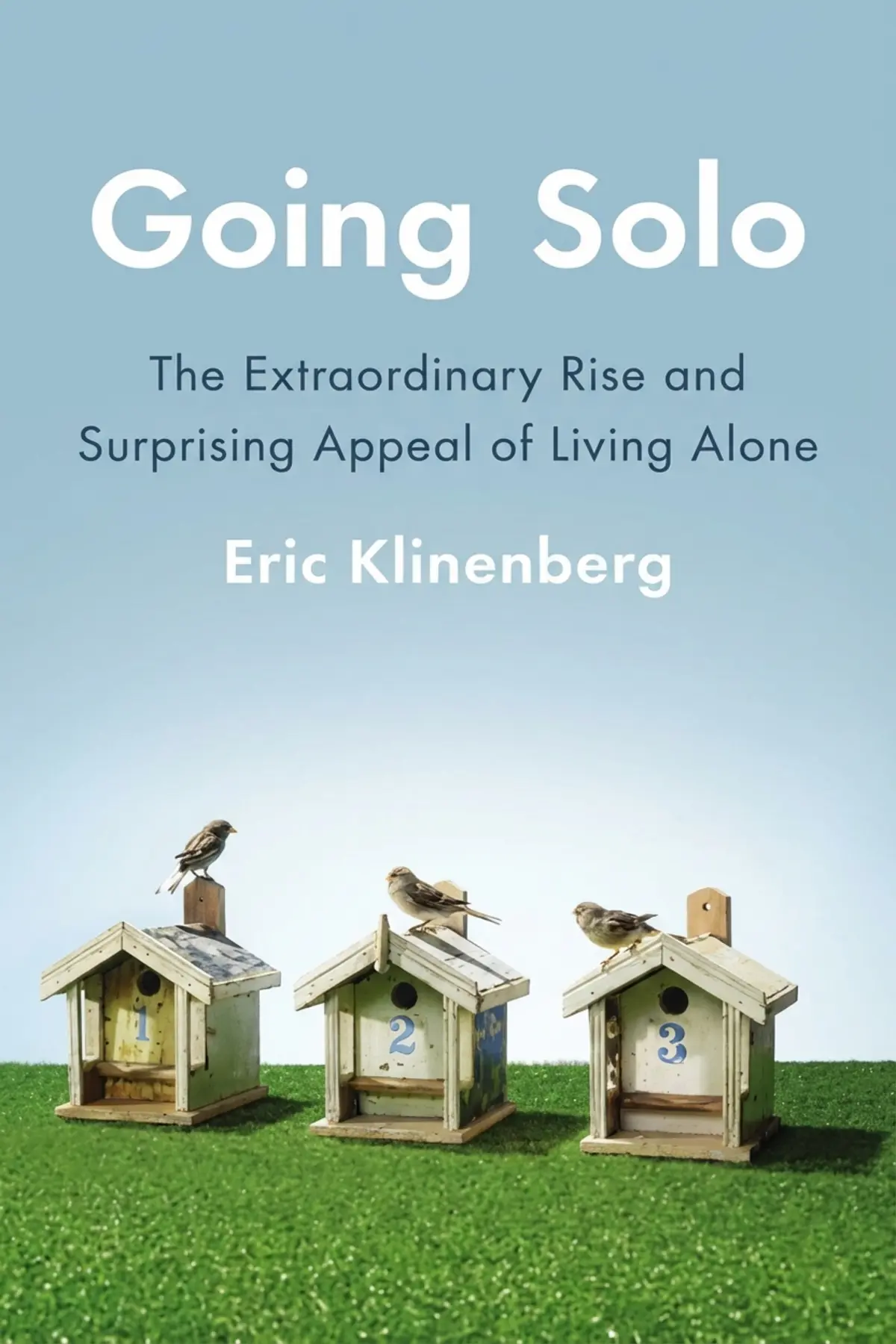
Living alone is often treated as a phase to escape or a sign that something went wrong. In Going Solo, sociologist Eric Klinenberg argues the opposite: going solo has become one of the most common ways people live, and for many it is a choice that brings confidence, control and dignity. About half of all Americans are now single, he notes, a shift few people in the early twentieth century would have predicted.
His case is that solo living is a normal, often rewarding stage of modern life. The real risk is isolation, and better communities and public services can reduce it. The argument moves from the forces behind the rise, through the bohemian streets of Greenwich Village, to the benefits people of every age report, the men who fall through the cracks, and the Swedish model of support. What you gain is a clearer way to judge your own time alone, and the lives of the people around you who live that way.
2 min 01 sec
In the 1950s, a woman with her own career or her own money was unusual, and divorce was rare. Two changes since then made living alone possible for millions, and neither had much to do with romance.
2 min 09 sec
A century ago, individualists fled small towns where neighbors judged them and nobody shared their interests. The New York neighborhood they built still explains why young professionals rent small apartments on their own.
2 min 13 sec
Many people assume a divorced neighbor or a widowed grandmother living alone must be miserable. Klinenberg found something different, and it changes how you might read your own empty apartment.
2 min 21 sec
Two people can live alone in identical apartments and have completely different lives. One habit learned in childhood often decides which of them ends up with someone to call in a crisis.
2 min 01 sec
In one country, parents put newborns on a waiting list for their first apartment, and forty-year-olds share homes with the very old. The contrast with American care homes is hard to ignore.
1 min 24 sec
Going Solo asks readers to separate two ideas that are usually fused: being alone and being lonely. Klinenberg shows that the first has become ordinary, driven by women’s earning power, by connected homes and by cities that let people be private and social at once. The second is the real danger, and it falls hardest on those without a network, like the men in a rundown SRO who are too ashamed to call home.
That distinction changes what you watch for. A friend newly divorced and living alone may be relieved rather than sad, and an aging mother who refuses to move in with you may be guarding her sense of purpose. The worry worth having is whether they have someone to call.
If you live alone, keep your space and pair it with a habit that puts you among people, the way Greenwich Village paired small apartments with Washington Square Park. If you have a say in a building, a workplace or a vote, back the shared rooms, decent care homes and mixed-age housing that Klinenberg argues let solo living work.
The Village pioneers left small towns to find a place where living alone did not mean living apart. Klinenberg’s argument is that governments should invest in services that help people live alone well, as Sweden already does.
Living alone used to be treated as a sad outcome, the fate of the spinster or the lonely bachelor. Today about half of Americans are single, and many live alone by choice. Sociologist Eric Klinenberg sets out to explain how that happened and why it is often good news. He traces the rise to women's entry into paid work, to home technology that keeps people connected, and to cities that let individualists live privately while staying near others. Starting with Greenwich Village, the first neighborhood where most residents lived alone, he follows solo living into the lives of young professionals, divorced adults and widows who prefer their independence. Klinenberg also looks at who struggles. Men who live alone are more likely to become isolated, especially in cheap single-room buildings, and older people face poor care homes and assisted living that only the wealthy can afford. Readers come away with a sharper way to judge solitude, their own or a relative's, and with a picture of what better support looks like, drawn from Sweden's welfare system and mixed-age housing.
People living alone, by choice or after a breakup, who want to see it as a stage with real benefits.
Adult children weighing care options for a widowed parent who insists on independence.
Planners, building managers and community leaders who want to reduce isolation among solo residents.
Eric Klinenberg is an American sociologist who studies cities, culture and media. He holds the Helen Gould Shepard chair in Social Science at New York University and directs its Institute for Public Knowledge. His first book, Heat Wave, about a disaster in Chicago, won six scholarly and literary prizes. He also wrote Fighting for Air and Palaces for the People, co-wrote Modern Romance with Aziz Ansari, and has written for The New Yorker, The New York Times Magazine, Time and The Guardian.
Aziz Ansari

Listeners find the work exceptionally engaging and easy to read, noting its deep research and perceptive data points. They characterize it as a sociological landmark that looks past raw numbers to explore diverse societal topics, while one listener points out that it offers a fair portrayal of an important social trend. Listeners value the prose quality and consider the perspective fascinating, with one listener highlighting the reasonable price.
Klinenberg has crafted what I would consider a modern sociological classic. He takes a trend we all see—the rise of the 'singleton'—and peels back the layers to show the economic and cultural forces at play. Not gonna lie, I expected a dry academic text, but this was remarkably readable and even entertaining at times. The way he explores the paradox of people living alone while staying hyper-connected through digital media is particularly relevant today. It's not just about being single; it's about the autonomy that modern wealth allows us to purchase. The book provides a much-needed defense of solitude without ignoring the very real risks of social withdrawal. If you want to understand why our neighborhoods look the way they do now, you need to read this. It goes way beyond statistics to address the heart of our social issues.
Show moreWow, this book really changed my perspective on what it means to live by yourself. I’ve always viewed living alone as a temporary phase or a sign of social failure, but Klinenberg shows it’s a legitimate and often thriving way of life. The research is incredibly thorough, drawing on hundreds of interviews to create a rich tapestry of the 'singleton' experience. I found the sections on how solo dwellers are often more socially active than those in nuclear families to be particularly enlightening. It’s a dense read but remains engaging throughout, and the price point is very reasonable for the amount of insight you get. This isn't just a book about demographics; it's a book about human connection and how we’re redefining it for a new era. A must-read for anyone curious about our changing world!
Show moreEver wonder how living alone affects our civic duty? Klinenberg provides a surprisingly balanced look at the 'singleton' lifestyle, challenging the myth that living solo leads to total isolation. He draws a fascinating line from his earlier research on the Chicago heat wave to this broader trend of independent living. To be fair, some sections on younger professionals felt a bit repetitive, but the analysis of how singletons are actually more likely to engage with their communities than nuclear families was eye-opening. The research is thorough, and the writing style makes complex sociological concepts accessible to a general audience. It's a solid read for anyone trying to understand the shifting demographics of our modern cities and the desire for a room of one's own.
Show moreAfter hearing so much about the 'loneliness epidemic,' I picked this up to see if there was a deeper story. What I found was a nuanced argument that living alone isn't the same as being lonely. Klinenberg’s research into the 'cult of the individual' and how it shapes our housing needs is brilliant. I particularly enjoyed the sections comparing American urban planning to the more collective models found in Scandinavia. The truth is, our cities aren't built for the way we live now, and this book makes a compelling case for radical changes in housing policy. My only real criticism is that it can be very America-centric, and I wish there was more focus on how these trends play out in other parts of the world. Still, it’s an insightful and necessary piece of social commentary that remains highly readable.
Show moreFinally got around to reading this, and I’m glad I did. Klinenberg manages to make sociology feel like a conversation rather than a lecture. The chapter on 'Latchkey Kids' and how growing up with our own rooms prepared us for solo living was a real 'aha' moment for me. The book is very readable and moves at a good pace, balancing hard data with human stories. I appreciated that he didn't try to moralize the trend or claim that singletons are destroying the fabric of society. Instead, he shows how people are adapting to a world where they can afford to prioritize their own space. It’s a balanced and thoughtful exploration of what independence looks like in the 21st century. Highly recommended for anyone interested in modern social dynamics, and it's quite affordable for the value it provides.
Show moreAs someone who has lived alone for a decade, I found this book to be a bit of a mixed bag. On one hand, the author perfectly captures the freedom and the capacity for independence that drives younger people to seek their own space. On the other hand, the chapters on the elderly were profoundly depressing and offered very little hope or practical advice. It felt like two different books stitched together—one about the exciting urban singleton and another about the terrifying isolation of aging alone. Klinenberg is a talented writer, and his research is clearly extensive, but the tone shift is jarring. I appreciated the stats on Swedish social structures, yet I left the book feeling more anxious about my future than I did when I started. It is a bit too America-centric for my taste.
Show moreThe premise of 'Going Solo' is fascinating, but the author often struggles to distinguish between being 'single' and 'living alone.' These are two different lifestyle choices, yet they are frequently conflated in the early chapters. Personally, I found the section on the elderly much more compelling than the parts about twenty-somethings in New York. The discussion on how we fear losing independence as we age was poignant and well-researched. However, the writing style can be a bit flowery, especially when introducing interview subjects with descriptions that read like bad fiction. It’s a decent overview of a major social shift, but it lacks the precision I was hoping for in a serious sociological study. It’s worth a read for the statistics alone, though you might find yourself disagreeing with some of the broader generalizations regarding gender.
Show moreI really wanted to like this book more than I did, but it felt like a collection of stories rather than a rigorous study. Klinenberg spends so much time describing the physical appearance of his interviewees—like their hair color or smiles—that the actual data gets buried. Frankly, the 'revelation' that people are living alone more often isn't exactly news in 2024. While the statistics about Sweden were interesting, the rest of the book felt like it was stating the obvious over and over. It reads more like a long-form magazine article stretched into a book. If you're looking for hard-hitting policy solutions for the loneliness epidemic, you won't find much here besides a few nods to Nordic housing models. It is a somewhat dull, anecdotally laden telling of an important trend.
Show moreThis book takes hundreds of pages to arrive at conclusions that most people already intuitively understand. Look, we know that people value their independence and that living alone is more common in wealthy nations. Do we really need an entire volume to tell us that? The anecdotal evidence feels like filler, and the constant descriptions of the interviewees' outfits and features are incredibly distracting. I found myself skimming large sections because the substance just wasn't there. It’s an interesting topic, but the execution is lackluster and overly academic without providing the 'hard-hitting' insights promised by the jacket blurb. Time has largely passed this work by, especially with the way the world has changed since its initial publication in 2012.
Show moreHonestly, the most memorable part of this book was learning that 46% of Swedes live alone. The author repeats that figure so often it starts to feel like the only concrete piece of data in the whole text. The rest of the book relies way too heavily on anecdotes that don't always feel representative of the larger population. I found the tone to be a bit condescending at times, as if the reader couldn't possibly grasp the concept of individualism without several chapters of fluff. For a book that claims to be revelatory, it offers very little that you couldn't find in a weekend newspaper supplement. It’s a dated look at a complex issue that deserves a more rigorous and less anecdotal treatment. Shared social experiences of various individuals do not make for a compelling book in my opinion.
Show moreKlinenberg argues that living alone has become a common and often rewarding way to live, not a tragedy. About half of Americans are now single, a rise he links to women’s growing financial independence, connected home technology and city culture. Solo living can bring confidence, control and dignity. The real danger is isolation, so he argues that governments ought to fund social services that let people live comfortably on their own.
Klinenberg points first to women entering paid work: between 1950 and 2000, working women in America rose from 18 million to 66 million, giving them money and more control over their lives, including whether to marry or divorce. Home technology also matters, since the internet and social media keep people connected at home. Cities, starting with Greenwich Village, built a culture where individualists could live alone near like-minded people.
Men, in Klinenberg’s account. Women are usually encouraged from childhood to build supportive relationships and are more likely to join classes and workshops, so they often have someone to call when they need help. Men are more often raised to bond through competition, and many see only a few friends occasionally. Isolation is sharpest among men in cheap single room occupancy buildings, where shame keeps many from reaching out.
Many elderly women, Klinenberg finds, prefer to live alone instead of remarrying or moving in with their children, and that independence gives them purpose that can lengthen their lives. He criticizes many US for-profit nursing homes for poor staffing and isolation, and argues assisted living should be open to everyone, not just the wealthy. He holds up Sweden’s welfare system and mixed-age cooperative housing as models.
Treat time alone as a chance to build confidence and shape your life around what makes you happy, while deliberately keeping a network of friends and family. Pair private space with public places to meet people, as Greenwich Village residents did with Washington Square Park. When judging care options for an older relative, look for the mix of independence and company that assisted living and Sweden’s shared housing offer.



Johny Pitts


bell hooks

Fay Bound Alberti

Daniel Goleman


Virginia Woolf
AUDIO SUMMARY AVAILABLE
Get the key ideas from Going Solo by Eric Klinenberg, plus 5,000+ more nonfiction titles.









