
13 min 28 sec
Available in: English
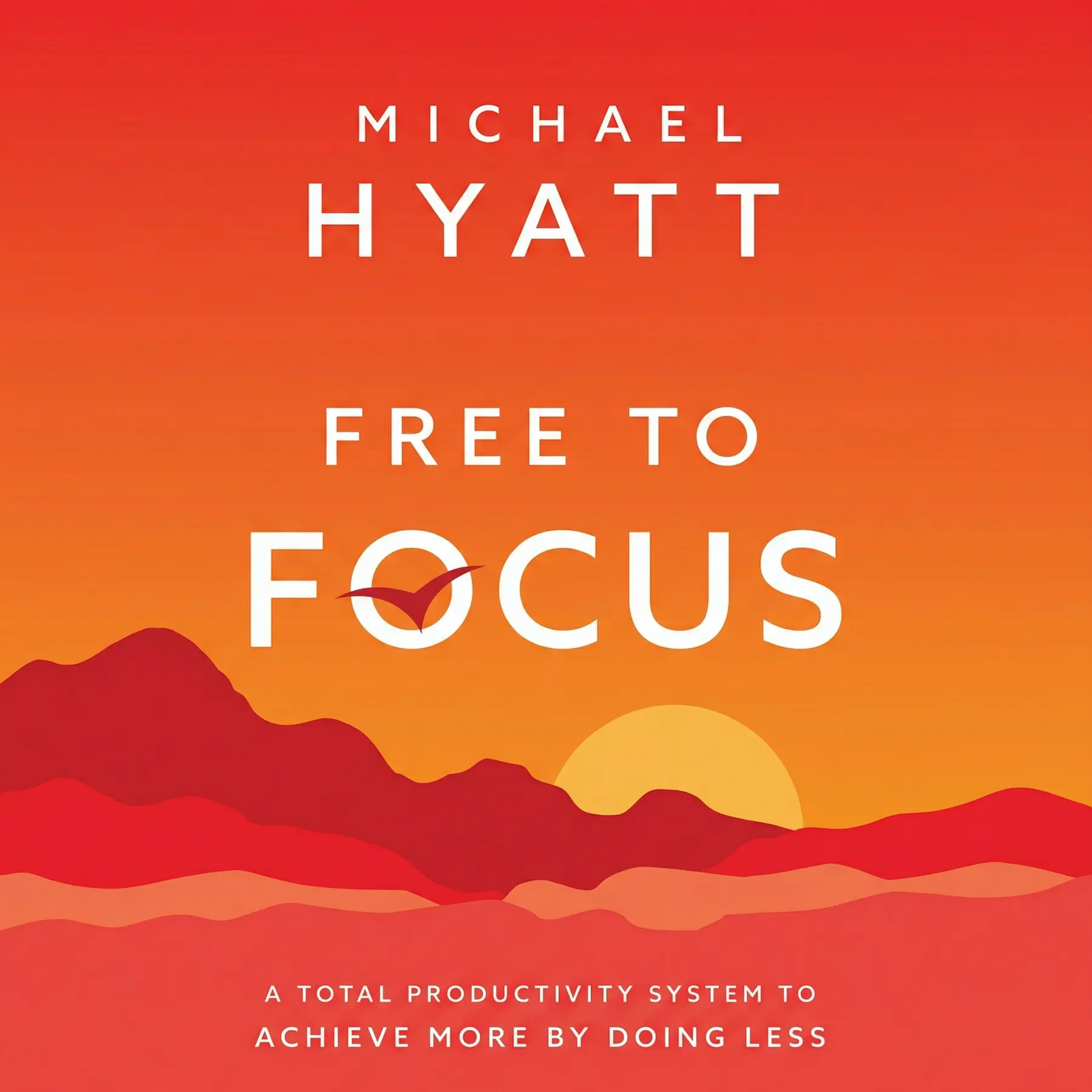
Free to Focus: A Total Productivity System to Achieve More by Doing Less
A system for getting more of the right work done in fewer hours. You cut tasks that don't fit you, protect sleep and play, plan around three daily priorities and defend your attention from constant interruption.
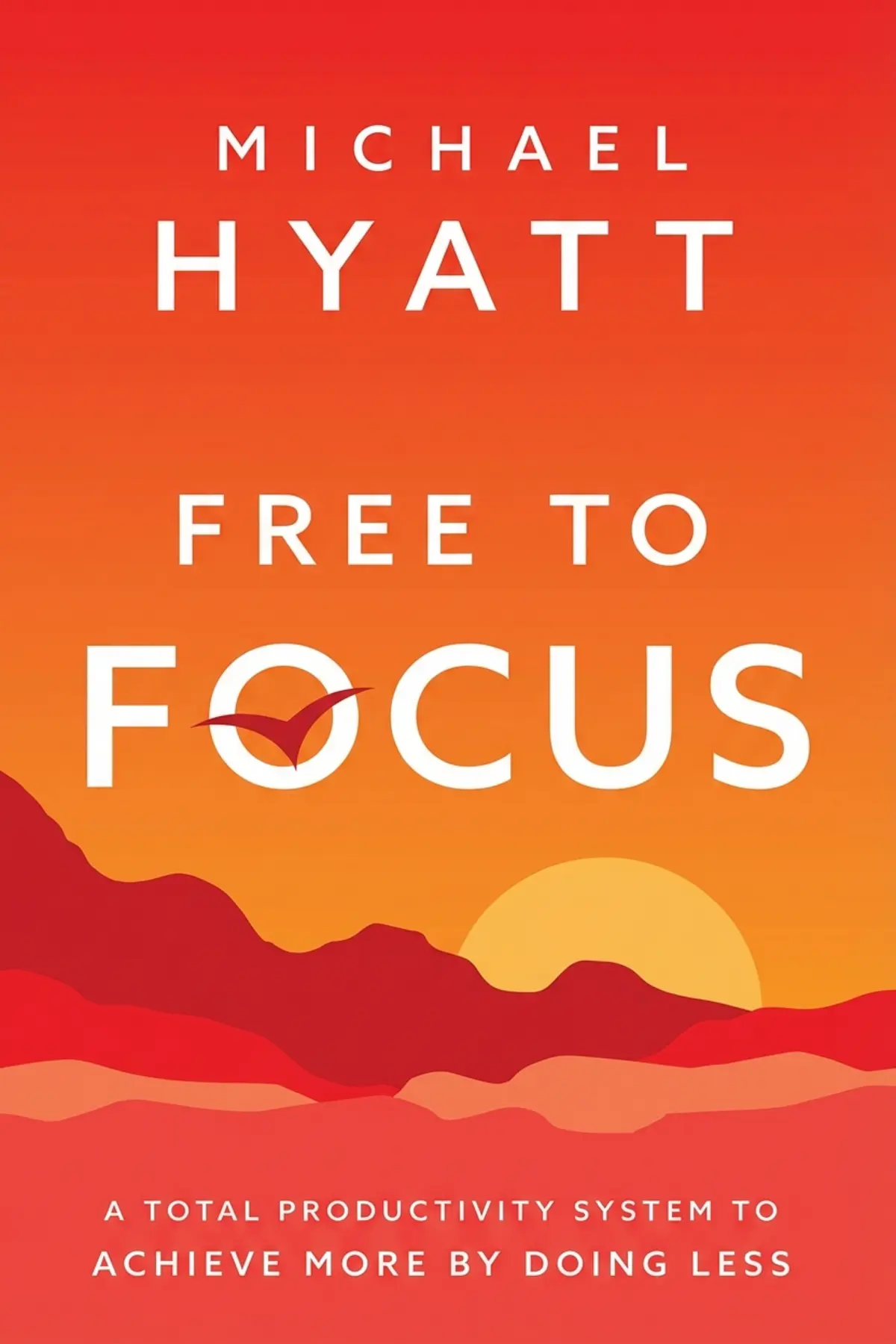
Table of Content
1. Introduction
1 min 01 sec
If your days feel like bailing water out of a leaking boat, working faster will not save you. In Free to Focus, author and former Thomas Nelson chief executive Michael Hyatt argues that each minute you save by speeding up gets swallowed by new work. The race for efficiency just fills the boat faster. His alternative is to stop aiming for more and aim for freedom: the freedom to concentrate on work that matters, and the freedom to do nothing at all once it is done.
The throughline is simple. Productivity is doing more of the right things, not more things. Hyatt builds that idea into a working system. Protect your rest, prune the tasks that don’t fit you and say no on purpose. Then plan each day around a few priorities and defend your attention against a world built to grab it. Each step is small enough to try this week, and together they turn a crowded calendar into one you actually run.
2. Stop chasing speed and aim for freedom
2 min 00 sec
Life hacks promise spare minutes and overtime promises to clear the backlog. Hyatt shows why both leave you further behind, and what a better goal for your working week looks like.
3. Rest that makes your work sharper
1 min 52 sec
When work piles up, sleep and friends are usually the first things to go. It feels responsible, but Hyatt argues that the cut costs you more focus than it ever saves.
4. Cut the tasks that drain your best hours
1 min 55 sec
Some tasks bore you, some you do badly, and some you love but shouldn’t be doing at all. A simple two-part score shows which work deserves your time and which should leave your desk.
5. Know that every yes hides a no
1 min 48 sec
Agreeing to an early breakfast meeting seems harmless and generous. Hyatt shows what it quietly cancels, and gives you a truthful line for turning down requests without guilt.
6. A day built around three priorities
2 min 00 sec
Walking into work without a plan feels flexible but usually means a day of reacting. Hyatt’s answer works at three scales, from the first minutes of the morning to the shape of a whole week.
7. Win back your attention from constant distraction
1 min 46 sec
A quick look at a social feed feels like it costs a few seconds. Research cited by Hyatt puts the real price far higher, and his fixes need very little willpower.
8. Conclusion
1 min 06 sec
Free to Focus starts with a leaky boat, and Hyatt’s point is that the boat never needed a faster bucket. It needed fewer holes. Overtime, life hacks and longer lists all treat time as if it could stretch. In fact it is fixed at 168 hours a week, and your energy runs down every afternoon. Once you accept those limits, work stops being about fitting more in. It becomes a matter of choosing what earns a place, and then protecting that choice from tiredness, requests and the endless pull of the screen.
The first moves are modest. Score one week of tasks by passion and proficiency, and move the low scorers to a not-to-do list or to someone better suited. Before you leave work, write tomorrow’s big three. Put an appointment with yourself on the calendar for sleep, family or play, and keep it the way you would keep a client meeting.
What Hyatt offers in return is two kinds of freedom: hours of real concentration, and evenings when doing nothing is the most productive thing you can do.
About this book
What is this book about?
Most productivity advice promises to help you fit more into the day. Michael Hyatt argues that this is the wrong goal. Every minute saved by working faster gets filled with new work. Past about 55 hours a week, the research he cites suggests, extra hours make people less productive. The real target, in his view, is freedom: time to concentrate on the work that matters, and time to do nothing at all. Free to Focus turns that idea into a practical system. Hyatt shows how to treat sleep, relationships and play as tools that keep you sharp, and how to score every task by passion and proficiency so you can cut or delegate the rest. He explains why each yes hides a no, and he offers simple rituals, a daily big three and an ideal week to give your time a clear direction. The book closes with the distraction economy, the stream of messages, feeds and notifications competing for your attention, and gives concrete ways to fight back. These include checking email twice a day, using focus apps and clearing a cluttered desk. Readers get a calmer, more deliberate way to run a crowded week.
Book Information
Who it's for
Busy professionals falling behind
Professionals working long hours who feel busy all day yet fall behind on what matters.
Managers and the self-employed
Managers and self-employed people who need a clear way to decide what to delegate or drop.
Email crowding out life
Anyone giving up sleep, family time or hobbies to keep up with a crowded inbox.
About the Author
Michael Hyatt
Michael Hyatt is an American author, podcaster, blogger and speaker, and the founder of Full Focus, formerly called Michael Hyatt and Co. He spent much of his career in publishing, where he served as chairman and CEO of Thomas Nelson. His books include Platform, Living Forward, Your Best Year Ever and Free to Focus, and several have appeared on the New York Times, Wall Street Journal and USA Today bestseller lists.
Ratings & Reviews
Ratings at a glance
What people think
Listeners find this productivity guide exceptionally educational, offering practical tips and a sequential method that is simple to implement. They value the emphasis on increasing output while reducing workload, and one listener mentions its effectiveness in helping them set priorities. The work earns praise for its encouraging material, with listeners characterizing it as both motivating and heartening. They prize the strategy for managing time, as one review points out that it assists in safeguarding one's schedule and vitality.
Top reviews
Jom
Finally got around to Michael Hyatt’s latest, and it’s arguably his most refined work on productivity yet. Unlike other books that just tell you to "hustle harder," this one actually gives you a blueprint to do less while somehow making more impact. I particularly appreciated the "Freedom Compass" tool which helps you identify where your true proficiency and passion intersect. Truth is, I’ve spent years doing tasks that drain me, but this system provides a practical way to offload the busy work. It’s not just about managing a calendar; it’s about reclaiming your mental energy for the things that actually move the needle in your career and home life.
Show moreHang
After hearing so much hype about the Hyatt system, I decided to dive in, and it didn't disappoint. What sets this apart from other time-management titles is the focus on rejuvenation and rest as a prerequisite for high performance. You aren't just getting tips on how to clear your inbox; you’re getting a philosophy on how to live a more intentional life. Frankly, the chapter on "Rest" changed my perspective on weekends entirely. It’s empowering to realize that saying 'no' to good opportunities is often the only way to say 'yes' to the great ones. Highly recommended for the burnt-out professional.
Show moreRoo
The core concept of "Free to Focus" is that productivity isn't about doing more, it's about doing the right things. I’ve been following Hyatt’s blog for a while, and this book takes all those disparate ideas and weaves them into a cohesive, high-level strategy. It’s helped me prioritize my "Big 3" daily goals, which has significantly reduced my stress levels by the end of the work day. In my experience, most business books are 300 pages of fluff, but every chapter here feels intentional and packed with value. It’s a must-read if you want to get home for dinner on time.
Show moreRuangrat
Hyatt has a knack for making complex organizational strategies feel incredibly simple and doable. I loved the emphasis on "Total Focus" and how to achieve it through proper morning and evening rituals. It’s not just a book you read and put on a shelf; it’s a workbook you use to redesign your entire schedule. Personally, the advice on automating recurring tasks saved me at least three hours this week alone. It’s inspiring to think that we don't have to be slaves to our calendars if we’re willing to put in the work to set up better systems.
Show moreWipawan
If you’re drowning in emails and feel like you’re failing at everything, please pick this up. The step-by-step system for narrowing down your focus to your "Desire Zone" is incredibly liberating. I used to think being busy was a badge of honor, but this book taught me that it’s actually a sign of poor management. The advice is highly instructive and, more importantly, it's actually possible to follow. I’m already seeing a major shift in my energy levels and my ability to complete projects ahead of schedule. Truly a masterclass in modern time management.
Show moreNarut
This book is basically a structured manual for anyone who feels like they’re running on a treadmill but going nowhere. I found the sections on the "Desire Zone" incredibly insightful, though I’ll admit some of the advice on delegation feels a bit geared toward those who already have a team under them. Still, the step-by-step methodology for auditing your weekly tasks is worth the price of admission alone. It’s a very encouraging read that pushes you to stop being a "drifter" and start being a "leader" of your own time. The tone is quite professional and polished, which I appreciated.
Show moreChaiwat
Ever wonder why your to-do list seems to grow even when you're working ten-hour days? Hyatt explains the "productivity paradox" with clarity and offers a very actionable system to break the cycle. I’ve read a lot of Newport and Covey, and while some of these ideas aren't revolutionary, the way they are synthesized here makes them much easier to implement immediately. I did feel the book leaned a little heavily into promoting his own planner products at times, which can be a bit distracting. However, the overarching strategy of "Eliminate, Automate, Delegate" is a solid framework for anyone looking to scale their impact without losing their mind.
Show moreJackson
As someone who struggles with chronic distractions, the section on "The Activation Wave" was a total game-changer for me. Hyatt breaks down how to set up your environment to minimize interruptions, which is something I’ve always failed at doing consistently. The writing is very conversational and easy to follow, making it a quick read despite the depth of the material. I’m not gonna lie, some of the corporate jargon is a bit much, but the actual principles for protecting your time are gold. It's a motivating guide that actually gives you permission to do less.
Show moreLeo
Not what I expected given the glowing reviews I’ve seen everywhere. Look, the first half of the book is quite strong, especially the parts about assessing your current workflow and identifying what actually matters. But as it went on, it felt like a curated summary of better books I’ve already read, like "Essentialism" or "The One Thing." It’s a fine introduction if you’re new to the genre, but seasoned productivity nerds might find it a bit repetitive. Plus, the constant mentions of the Full Focus Planner felt more like a long-form sales pitch than an objective teaching tool.
Show moreSurasit
Wow, talk about a tone-deaf approach to the modern workplace. While there are a handful of decent tips regarding goal setting and sleep hygiene, most of the "freedom" Hyatt describes seems to rely on having a personal assistant or a massive staff to dump your "drudgery" tasks onto. To be fair, if you’re a C-suite executive, this might work, but for the average worker, it’s just not realistic. It felt less like a productivity guide and more like a manifesto on how to feel self-important by making others do your grunt work. I was looking for efficiency hacks, not a lesson on elitism.
Show moreQuestions about this book
What is the main idea of Free to Focus?
Michael Hyatt argues that productivity means doing more of the right things, not cramming in more tasks. Working faster just fills saved time with new work, and the studies he cites show that people working over 55 hours a week get less done. He replaces productivity with two kinds of freedom: the freedom to focus on deep work and the freedom to rest and do nothing.
What is the passion and proficiency filter in Free to Focus?
Hyatt scores each task on passion, meaning how motivated you feel, and proficiency, meaning how skilled you are and how much the task adds. Tasks low on both should go first. Tasks you do well but dislike, or love but do poorly, can be delegated or outsourced, like a budget handed to an accountant. Time is best spent where both scores are high.
How does Michael Hyatt suggest planning your day and week?
He recommends morning and workday startup rituals that give you clarity with little willpower. Each day is built around a big three, three tasks that must get done, and anything more is a bonus. Over that sits an ideal week designed on a blank planner, for example appointments grouped on Monday, client work on Friday and set times for rest like yoga or hiking.
How can I deal with distractions according to Free to Focus?
Hyatt cites a University of California study that found an interrupted worker needs about 23 minutes to get back to the original task. His fixes are to check email only twice a day, use do not disturb during deep work, try focus apps that block chosen sites, and clear clutter from your desk and digital files, since a 2011 Princeton study linked clutter to weaker information processing.
Who should read Free to Focus?
It suits professionals who work long hours yet feel they never catch up, managers deciding what to delegate, and self-employed people who handle everything themselves. It also speaks to anyone who keeps giving up sleep, family time or play for work, since Hyatt treats rest as a requirement for focus rather than a reward for finishing.
Featured in
Readers also enjoyed



AUDIO SUMMARY AVAILABLE
Listen to Free to Focus in 15 minutes
Get the key ideas from Free to Focus by Michael Hyatt, plus 5,000+ more nonfiction titles.
- 5,000+ titles
- Listen as much as you want
- 7-day free trial
- Cancel anytime









