
14 min 15 sec
Available in: English
Your Best Year Ever: A 5-Step Plan for Achieving Your Most Important Goals
Shows how to plan a year that actually changes your life: score ten areas, clear limiting beliefs and old failures, set goals that stretch without breaking you, then sustain them with daily habits, clear reasons and allies.
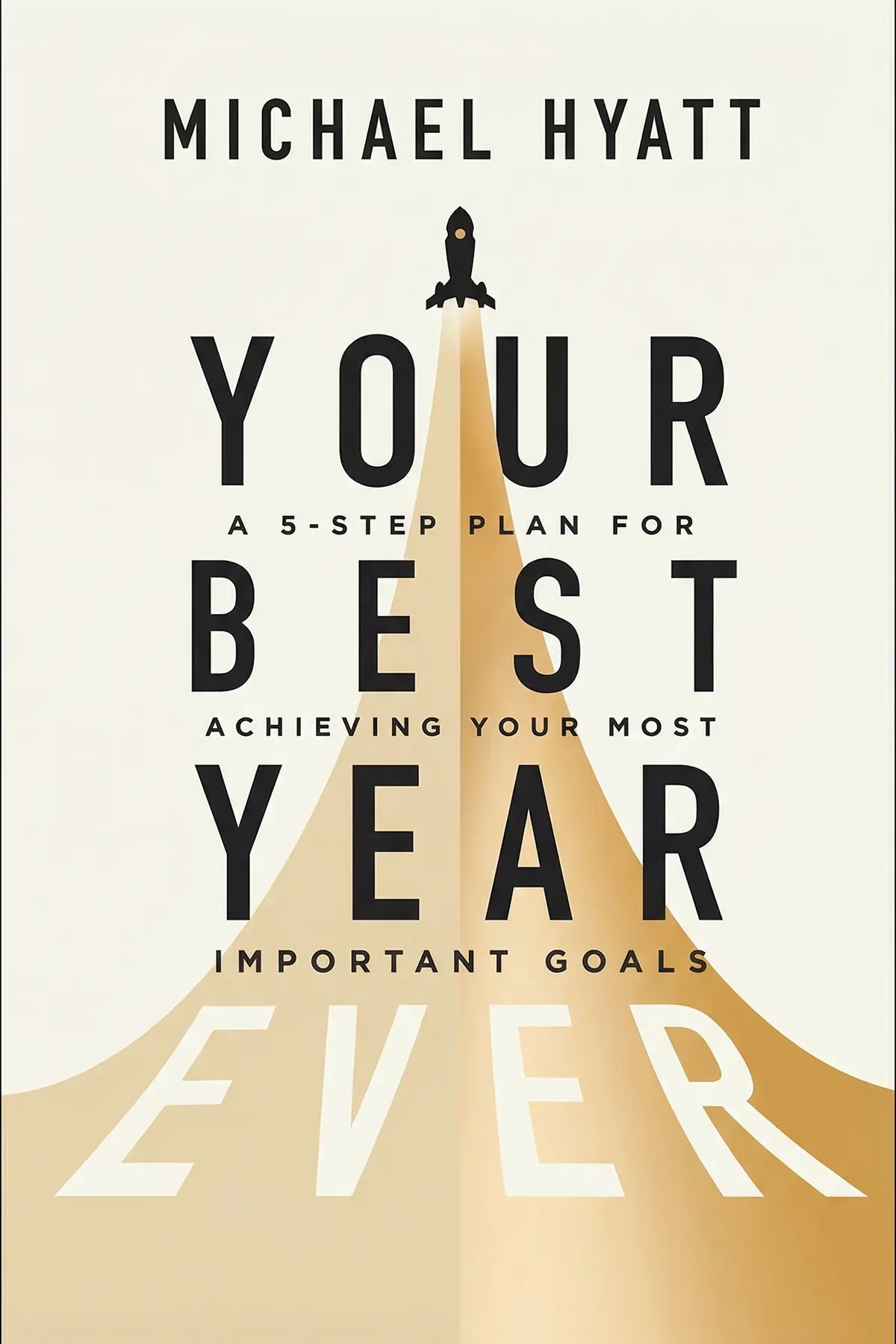
Table of Content
1. Introduction
56 sec
Most New Year’s resolutions are gone by February, either because they start to feel impossible or because they simply slip from memory. In Your Best Year Ever, author and former publishing chief executive Michael Hyatt argues that wishes need a plan behind them, beginning with an honest score of your life across ten connected areas.
His case is that a year changes when you clear away old beliefs and failures, choose goals that stretch you without breaking you, and protect the effort with daily routines, a written reason and the right people. He builds it from his own setbacks and from history: a pilot, a record-setting runner, a civil rights march and a carmaker that nearly ruined itself chasing a number.
What follows is a working plan for the next twelve months: which goals to chase, how hard to push and how to keep going once the early excitement fades.
2. Score your life in ten areas first
1 min 40 sec
Wanting a better year is easy. Knowing which part of your life most needs attention is harder, and the weak spot holding your career back may sit somewhere you would never think to look.
3. Break the limits that only exist in your head
1 min 48 sec
Pilots once believed certain speeds were impossible to fly, and athletes thought the same of a sub-four-minute mile. Then two men proved them wrong, and what happened next says a lot about the barriers you carry around.
4. Turn your worst failure into a better plan
1 min 39 sec
Teenagers make resolutions far more often than people over sixty. Hyatt reads that gap as a warning, and his own lost year of work shows a different way to treat a painful setback.
5. Aim for the discomfort zone and stop there
1 min 47 sec
A goal can fail by being too small or too grand, and the grand kind can do real damage. One famous carmaker learned that lesson with a single number pinned to every employee.
6. Make small daily tasks something you crave
1 min 43 sec
The popular rule says a habit forms in three weeks. Researchers in London found a very different number, and Hyatt explains how to stay with a task long enough to start wanting it.
7. Use a written list of reasons to beat temptation
1 min 43 sec
The hardest moment for any goal is the small one, standing at the fridge late at night. A study of musicians suggests the reasons that hold up best are the ones that change who you are.
8. Find the people who will pull you forward
1 min 43 sec
Hyatt spent a couple of years stuck at the same fitness level, and the fix came from an option many people never consider for their own lives. A psychologist explains why company changes the odds.
9. Conclusion
1 min 16 sec
Hyatt’s method treats a year as a project to design, well before the first night of January. The resolutions that fade by February usually lack the parts he adds: an honest picture of where you stand, a goal sized to stretch you, a daily rhythm that becomes its own reward, a reason you can read when the craving hits and people who notice when you slip. Yeager and Bannister show that many limits are only beliefs. General Motors shows that some targets are fantasies. Most of the skill lies in telling the two apart.
The practical start is small. Score the ten areas tonight and choose a goal for your weakest one that makes you slightly uncomfortable but not reckless. Break it into a daily portion, keep a streak, and give it at least 66 days before you judge it. Hyatt also recommends opening each morning with a few minutes of thanks: for your health, for the people who care about you, for something as basic as clean water. Gratitude, in his view, keeps you hopeful and shows you the small wins already behind you.
A best year, on this account, is built one honest score and one twenty-minute morning at a time.
About this book
What is this book about?
Each January brings fresh resolutions, and by February most of them have faded, either because they felt out of reach or because nobody remembered them. Michael Hyatt argues that the problem is not wanting too little. It is the missing plan between the wish and the result. His approach starts with an honest audit of ten connected areas of life, from health and finances to friendships and hobbies, scored from zero to ten. From there he tackles the obstacles inside the head: false assumptions about what is possible and past failures read as predictions. He then shows how to size a goal so it stretches you without tipping into fantasy, using the story of a carmaker that nearly ruined itself chasing a market share target. The second half is about staying power. Hyatt explains how to break large goals into small daily tasks until they become habits, how to write down and reread the reasons that matter to you, and how groups, mentors and coaches raise your odds of success. Readers get a practical structure for the next twelve months, built on history, research and the author's own setbacks.
Book Information
Who it's for
Resolutions gone by February
People whose New Year's resolutions are usually gone by February and who want a plan that lasts.
Choosing what to fix
Professionals and students juggling work, health, money and family who need to see which area to fix first.
Held back by failure
Anyone held back by an old failure or a belief that their goal is out of reach.
About the Author
Michael Hyatt
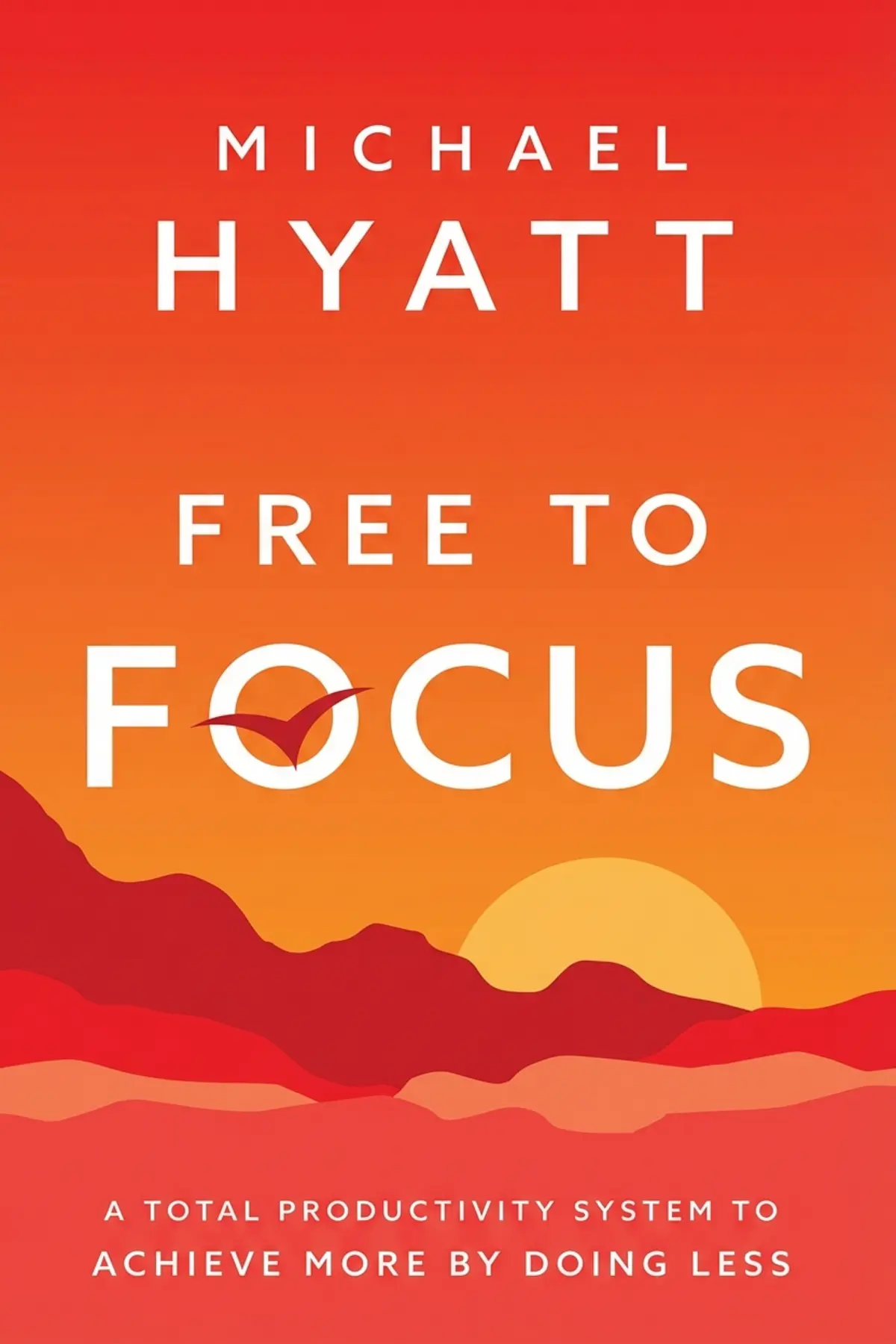
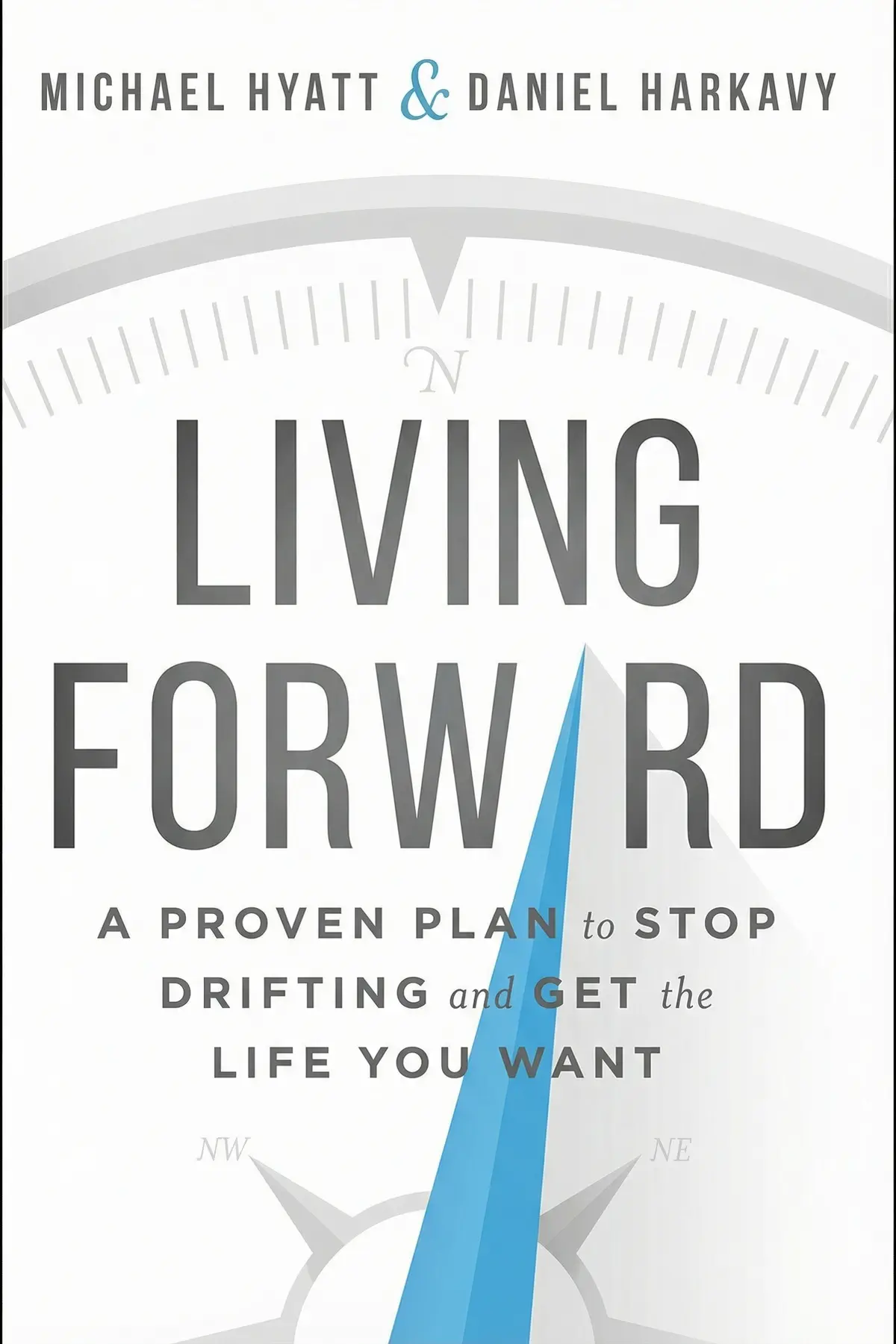
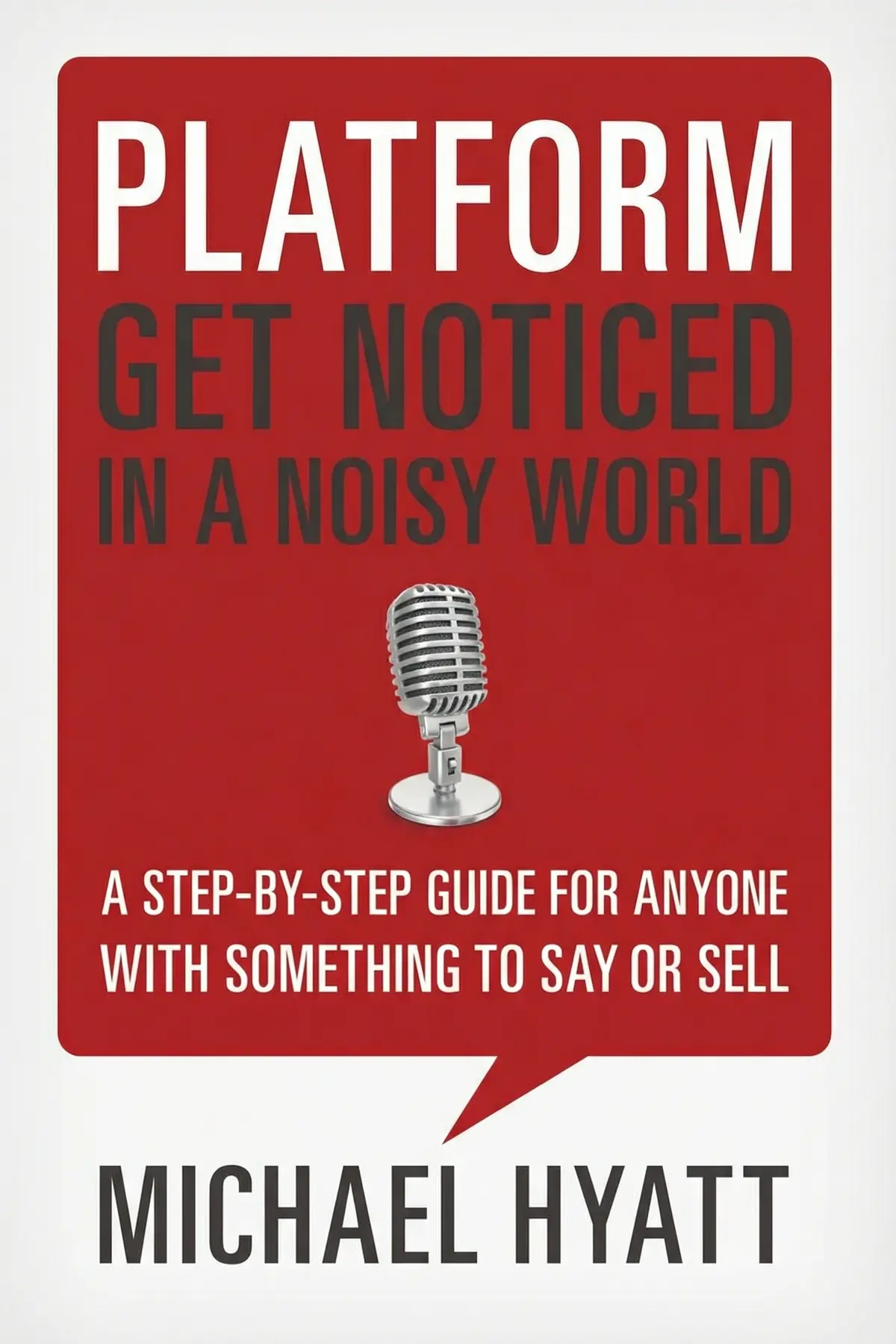
Michael Hyatt is an American author, podcaster, blogger and speaker, and the founder of Full Focus, the company previously called Michael Hyatt & Co. Much of his career was spent in publishing, where he led Thomas Nelson as chairman and CEO. His books include Platform, Living Forward and Free to Focus, and several have appeared on bestseller lists at the New York Times, Wall Street Journal and USA Today. He has been married for over 40 years and has five daughters and ten grandchildren.
Ratings & Reviews
Ratings at a glance

What people think
Listeners find this title very accessible and value its excellent guidance on setting goals, with one listener noting it is especially fitting for the start of the year. It delivers a wealth of useful details and features clear, simple stages, making it an effective resource. They also prize the organized framework for the planning phase, the practical methodology, and the transformative results, with one listener specifically highlighting how it enabled them to design a roadmap for their best year ever.
Top reviews
Somsak
Finally got around to reading this in early January, and it’s exactly what I needed to jumpstart my year. Hyatt doesn't just tell you to dream big; he provides a literal blueprint for making those dreams actually happen. The SMARTER goal framework is a significant upgrade from the old SMART method because it adds the 'Exciting' and 'Risky' elements. I’ve spent years setting boring goals that I eventually ignored by February, but this feels different. The focus on identifying your 'why' creates a level of motivation that I haven't experienced before. Frankly, the step-by-step process is so clear that it removes the paralysis of choice that usually stops me. If you’re tired of the same old New Year’s resolutions that go nowhere, this book offers a structured path toward real achievement.
Show moreAstrid
Wow, I didn't realize how much I was holding myself back until I sat down with this book and a notebook. Michael Hyatt has a way of cutting through the fluff and getting straight to the mechanics of human achievement. The distinction between the 'discomfort zone' and the 'delusional zone' helped me realize that my goals were actually too safe. By following the five-step plan, I finally identified the 'why' behind my fitness goals, which has kept me going for three months straight now. The templates included are incredibly practical and easy to implement into any daily routine. Truth is, I’ve tried dozens of planners, but the logic behind the Full Focus system explained here actually makes sense. This isn't just a book you read once; it’s a manual for a better life.
Show moreNattapong
This is the ultimate roadmap for anyone who feels like their dreams have been on the back burner for too long. Hyatt’s 5-step plan is foolproof if you actually take the time to do the work and fill out the assessments. I loved the section on empowering beliefs because it forced me to confront the stories I was telling myself about my limitations. The book is loaded with practical information that you can use immediately, rather than just vague theories about success. Since I started using his SMARTER model, my productivity at work has skyrocketed because I’m focusing on what actually moves the needle. It's a life-changing impact for those willing to commit. For me, this was the perfect read to start the year with a sense of purpose and direction.
Show moreEmma
The chapter on limiting beliefs changed my entire perspective on what I can achieve in my vocational and personal life. I have read many books on this topic, but Hyatt’s ability to make the information actionable is what sets this apart. He takes the best research on goal attainment and turns it into a simple, five-step program that anyone can follow. I especially appreciated the templates and the examples from his Full Focus Planner, which made the concepts very concrete. Not gonna lie, I was worried it would be too similar to his blog, but there is plenty of new, valuable content here. This book provides the clarity and the courage needed to finally stop dreaming and start doing. It is, without a doubt, a fantastic resource for anyone serious about making significant changes this year.
Show moreKatya
The structure of this book is undeniably impressive, especially the way it transitions from mindset to practical application. Hyatt is a master at conceptualizing a plan, but I did feel some of the stories leaned a bit too heavily on individual grit. For instance, the example of the teacher working a second job for supplies is inspiring but ignores the broader issues of school funding. Despite that, the chapter on limiting beliefs was a major eye-opener for my own professional career. It’s hard to argue with the logic of writing things down to increase your success rate by forty-two percent. Personally, I found the section on 'completing the past' to be the most valuable part of the whole program. It's a solid, actionable guide that avoids being overly sugary while still pushing you to succeed.
Show moreArthit
As someone who usually quits their resolutions by mid-February, I found this approach refreshingly different and highly sustainable. Hyatt doesn't just focus on the 'what,' but dives deep into the psychology of why we fail and how to pivot. The concept of 'SMARTER' goals—specifically the 'Risky' part—challenged me to stop playing it so small in my business. I appreciated the case studies from real people who have gone through his courses because they felt relatable and grounded in reality. Some sections felt a little bit like a marketing pitch for his specific planner, but the core principles are sound regardless of what tool you use. In my experience, the 'Find Your Why' chapter is worth the price of the book alone for the clarity it provides. This is a very helpful resource for anyone feeling stuck in a cycle of stagnation.
Show morePia
After hearing Michael Hyatt on several podcasts, I decided to see if the book lived up to its reputation for being life-changing. The process he outlines for achieving your goals is incredibly clear and executable, which is rare in this genre. I particularly liked the focus on 'completing the past' before trying to design a new future because we often carry old baggage. The SMARTER acronym is easy to remember, although the 'Time-Keyed' part feels a bit like semantics compared to 'Time-Bound.' Regardless, the actionable steps at the end of each chapter kept me engaged and moving forward. It’s a great structure for anyone who feels overwhelmed by the planning process. Gotta say, the emphasis on writing things down really does make a difference in how I view my daily tasks.
Show moreMaria
Truth is, I was skeptical of yet another productivity book promising 'your best year,' but Hyatt actually delivers a solid framework. He avoids the usual sugar-coated nonsense and acknowledges that struggles are a natural part of the journey toward success. The chapter on finding your motivation was particularly poignant because it helped me connect my daily habits to my long-term vision. While I found the assessment a bit simplistic, the overall advice on designing your future is top-notch. It’s an easy read, but don't let the simplicity fool you; there is a lot of wisdom in these pages. I’ve already recommended it to several colleagues who are struggling with work-life balance. It’s a highly readable guide that provides a much-needed structure for personal growth.
Show moreYanin
To be fair, much of the advice here feels like a polished version of what you’ve heard in other productivity circles. The assessment at the beginning is helpful for some, but it felt a bit narrow and didn't quite account for diverse life situations or family structures like those of orphans or single adults. While the SMARTER framework is decent, I sometimes wonder if we really need more acronyms to get work done. The book is very well-written and Hyatt’s tone is encouraging, but it lacks a bit of the depth I was hoping for regarding systemic obstacles. It’s a fine resource for those who are brand new to goal setting or need a fresh planner-based system. Look, it’s a quick read with some good takeaways, but it might feel a little repetitive if you’ve already read a lot of self-help.
Show moreThanakorn
Not what I expected based on the hype surrounding this author. While the book is certainly readable and has some decent tips, it felt remarkably like a corporate training manual disguised as life advice. The constant references to his other products and the general tone of 'if you just work harder, you'll win' felt a bit out of touch with real-world struggles. It simplifies complex life problems into neat little templates that don't always translate to the messiness of actual existence. To be honest, I was looking for more scientific depth and less anecdotal evidence from his own 'tribe' of followers. If you want a very basic, high-level overview of goal setting, this might work, but it lacks the nuance I prefer. It just didn't click for me at all.
Show moreQuestions about this book
What is the main idea of Your Best Year Ever?
Michael Hyatt argues that resolutions fail because intention is not followed by planning and action. He suggests scoring ten areas of life from zero to ten, questioning false beliefs and past failures, and setting goals in a discomfort zone that stretches you without becoming delusional. Those goals are then sustained through small daily tasks, a written list of reasons and a supportive network of groups, mentors or coaches.
What are the ten life areas in Your Best Year Ever?
The areas Hyatt names are mental and physical health, spirituality, intellectual life, a spouse or partner, parenting, friendships, work, hobbies and personal finances. He asks readers to rate each from zero to ten to find the weakest areas and to track progress over time. Because the areas affect one another, improving one, such as a calmer home life, can lift another, such as concentration at work.
What is the discomfort zone in goal setting?
The discomfort zone is Hyatt’s name for a goal that is within your abilities but still requires real effort. Too easy and motivation drops; too ambitious and you may never begin, or you slip into what he calls the delusional zone. His example of the latter is General Motors, whose 2002 push for 29 percent of the American market nearly bankrupted the company.
How long does it take to form a habit according to Michael Hyatt?
Hyatt questions the popular figure of 21 days. Some simple tasks take hold within a few days, while complex ones can take more than 200. He cites researchers at University College London who found an average of 66 days. To get there, he suggests small daily portions, modest rewards such as noticing progress, and games like tracking a streak on a calendar.
How can I apply Your Best Year Ever this week?
Score yourself in the ten life areas and pick the weakest. Set a goal for it that feels slightly uncomfortable, then split it into a short daily task and track your streak. Write down your strongest reasons and keep the list where temptation strikes. Finally, find one ally, whether a group, a mentor or a coach, and start each morning with a few minutes of gratitude.
Featured in
Readers also enjoyed

59 Seconds: Change Your Life in Under a Minute
Richard Wiseman





A Guide to the Good Life: The Ancient Art of Stoic Joy
William B. Irvine


A High-Performing Mind: Strengthen Your Mind and Live Your Best Life
Andrew D. Thompson


Abundance: The Inner Path to Wealth
Deepak Chopra
AUDIO SUMMARY AVAILABLE
Listen to Your Best Year Ever in 15 minutes
Get the key ideas from Your Best Year Ever by Michael Hyatt, plus 5,000+ more nonfiction titles.
- 5,000+ titles
- Listen as much as you want
- 7-day free trial
- Cancel anytime









