
14 min 46 sec
Available in: English
Food Fix: How to Save Our Health, Our Economy, Our Communities, and Our Planet – One Bite at a Time
By Mark Hyman
Physician Mark Hyman traces chronic disease, soaring health costs, hunger and climate damage back to one industrial food system. He shows how eaters, lawmakers and farmers can repair it with better plates, smarter laws and regenerative farming.
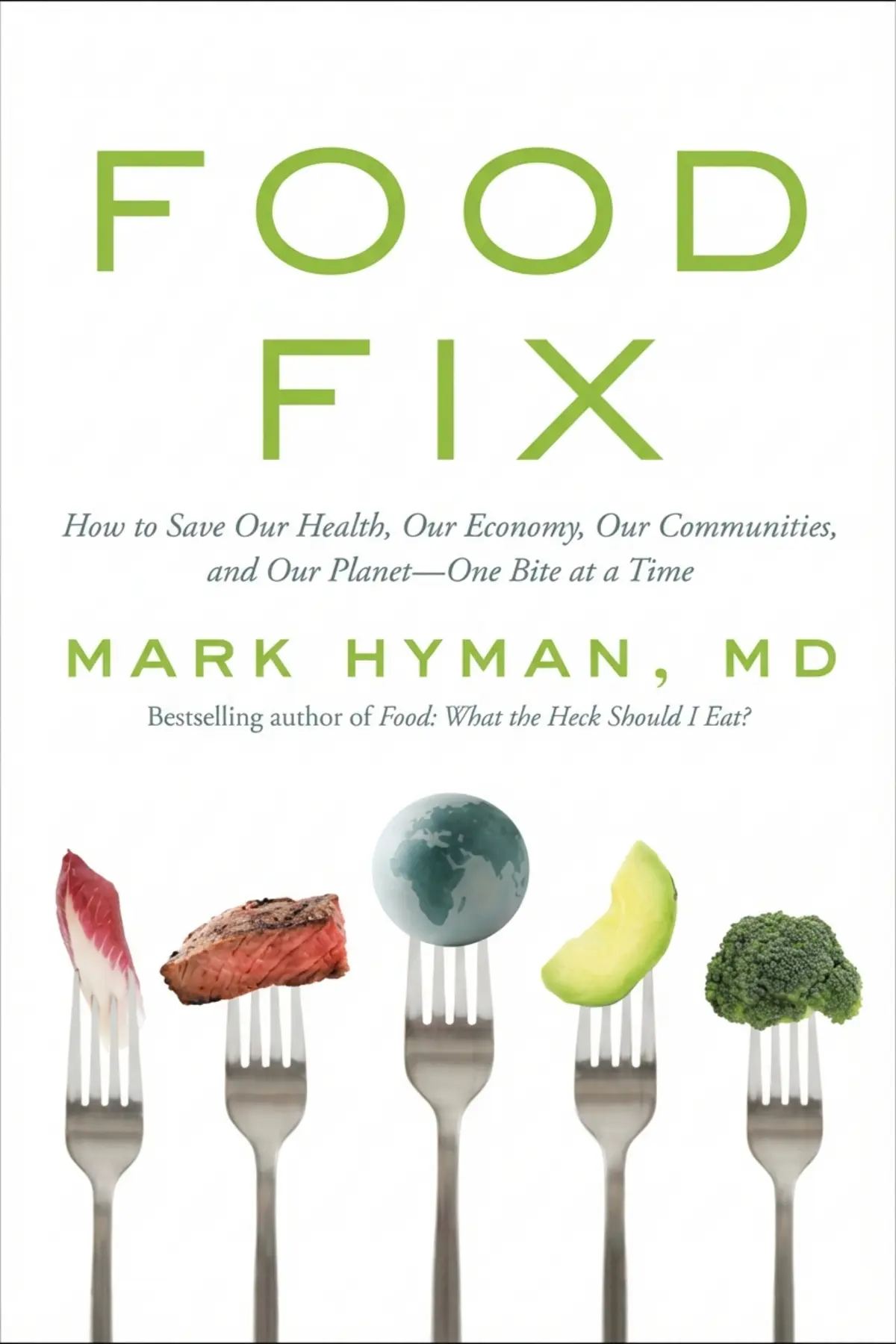
Table of Content
1. Introduction
59 sec
Most people treat their health, their bills and the climate as three separate worries. In Food Fix, physician Mark Hyman argues that they are one problem, and it sits on your plate. A diet built on ultra-processed food, he says, now causes more death, disability and suffering than anything else. The farming behind it, he adds, harms the climate more than every fossil fuel company combined.
The hopeful side follows directly. If food sits at the center of so many crises, then changing how we eat, how governments regulate and how farmers work can ease many of them at once. Hyman follows that thread from hospital bills and poisoned lakes to a Chilean senator and a Guatemalan farmer who raises chickens under hazelnut trees. What you get is a clear guide to filling your own plate, and a sharper sense of which public fights are worth backing.
2. Many global crises share one root you can change
1 min 54 sec
Famine, cancer, melting ice and dying bees look like four unrelated headlines. Hyman sees a single cause behind all of them, and it is something you deal with several times a day.
3. Put a real price on a bad diet
1 min 51 sec
A cheap meal can carry a hidden invoice that arrives years later. Hyman adds up what one country pays for its diet, and then asks what the same money could have built instead.
4. Spot the farm damage behind a cheap snack
1 min 44 sec
Under every field lies a living world most shoppers never think about. Hyman follows what intensive farming does to it, from a city’s tap water to an ocean zone the size of a US state.
5. Learn from the farming revolution that backfired
1 min 45 sec
A mid-century plan to end hunger with new seeds and chemicals did feed millions. Yet hunger persists, and the farmers it promised to lift up tell a far darker story.
6. Build a plate that helps body and planet
1 min 45 sec
Hyman agrees with most dieticians about meat, and then he adds a twist: some meat may help heal the land. His rules for fish and dairy are just as specific.
7. Beat food lobbyists with smart laws
1 min 52 sec
A doctor turned senator took on powerful food corporations and, in the end, got his bill passed. The children affected started changing their parents’ shopping, and the measured effect surprised everyone.
8. Farming that heals the land and still pays
1 min 53 sec
Chickens wandering under hazelnut trees may look like a hobby farm. In fact it is a working business that needs no pesticides, saves on feed and earns income from more than eggs.
9. Conclusion
1 min 03 sec
Hyman’s catalogue of damage is grim, but it ends on hope. Because one food system sits beneath disease, debt, hunger and a warming planet, every repair to it pays off several times. A Chilean warning label protects a child and also cuts demand for the farming that strips soil. A chicken under a hazelnut tree is dinner, pest control and fertilizer at once.
The same logic works in a kitchen. Let vegetables cover more than half your plate and give meat a supporting role, ideally from animals that grazed. Trade tuna and swordfish for mackerel, anchovies or wild salmon. And find growers near you who sell fresh organic produce, then buy from them often, since each purchase tells the market which kind of farming to keep.
The ingredients on a packet of chips look innocent enough: corn syrup, wheat starch, soybean. Hyman asks you to read that list as a map of fields, rivers and hospital wards, and then to choose a different map.
About this book
What is this book about?
Heart disease, rising medical bills, child malnutrition, dead zones in the ocean and a warming climate usually get treated as separate problems. Mark Hyman, a physician who founded the Center for Functional Medicine at the Cleveland Clinic, argues that they share one root: an industrial food system built on ultra-processed products and intensive farming. He backs the case with striking numbers, from more than $1 trillion a year in direct US spending on chronic disease to a warning that the world may have only 60 harvests left. He also looks again at the Green Revolution, which reduced hunger in many places but still leaves 800 million people hungry and has pushed many farmers into debt. The second half turns to repair. Hyman sets out a plate that is good for the body and the planet, including which fish to choose and why some grazed meat can help. He shows how Chile's labeling law and American soda taxes beat food lobbyists. He also describes regenerative farming methods and a Guatemalan farmer's chicken farm in a hazelnut forest. Readers finish with a clear way to eat, shop and support change.
Book Information
Who it's for
Concerned about chronic illness
People living with a chronic condition, or worried about one, who want to see how diet connects to it.
Climate-conscious shoppers
Climate-minded shoppers unsure about meat, which fish to buy or where their food money does the most good.
Professionals seeking proven change
Public health, policy and farming professionals looking for examples of change that worked.
About the Author
Mark Hyman
Mark Hyman, born in 1959, is an American physician and bestselling author. He founded The UltraWellness Center, where he is medical director, and also founded the Center for Functional Medicine at the Cleveland Clinic. His books on nutrition and longevity include Food Fix, The Pegan Diet and Young Forever. He hosts The Dr. Hyman Show, a podcast on human health. He has written a column for the Huffington Post and appeared regularly on Katie Couric's talk show.

Ratings & Reviews
Ratings at a glance
What people think
Listeners find this title to be essential reading that is both highly educational and well-composed, featuring material that is simple to grasp. They value the emphasis on personal well-being and ecological concerns, with one listener labeling the work a "Bible for your health and our planet." It offers concrete guidance and proposes a viable strategy for transforming our food system.
Top reviews
Wichai
Wow. This is basically a blueprint for the future of our species. Dr. Hyman manages to connect the dots between what’s on our dinner plates and the massive systemic crises we’re seeing in the economy and the environment. It isn't just about what you put on your plate, though that’s where the personal change starts; it’s about understanding the deep corruption within Big Ag and how our policies are essentially subsidizing our own sickness. I found the section on the link between nutrition and mental health—specifically the studies on prison populations—to be absolutely mind-blowing. If we can reduce violence simply by improving the quality of food, why aren't we doing this everywhere? This book is a 'Bible' for anyone who wants to understand the sustainable path forward for our food system. It’s sobering, sure, but it provides actionable steps that actually give me hope.
Show moreNarut
Food Fix is the wake-up call our society desperately needs. It is rare to find a book that handles the complexity of global economics and soil health with such clarity. Hyman doesn't just complain about the problem; he offers a clear, sustainable plan for how we can save our health and the planet one bite at a time. I was particularly struck by the discussion on regenerative agriculture and why we need to move away from pesticide-soaked monocrops. It’s high time we realized that our chronic disease epidemic is being driven by corporate greed. The book is easy to understand despite the heavy subject matter, and I’ve already started changing where I shop based on his recommendations. We have to stop waiting for the government to fix this and start making the right choices at the grocery store ourselves.
Show moreFrida
As someone who has struggled with chronic health issues for years, this felt like a lifeline. I’ve always known that food matters, but I never realized the extent to which the entire system is rigged against the average consumer. Dr. Hyman explains the science of nutrition in a way that is incredibly accessible, but he also pulls back the curtain on the 'junk science' used by Big Food to promote their products. The connection he makes between soil health and human health is something I hadn't considered before, and it completely changed my perspective on buying organic. It’s a sobering read, especially when you realize how much suffering is caused by our current policies. This is an essential read for anyone who cares about their family’s future. Truly a 'Bible' for health.
Show moreSofia
The chapter on regenerative agriculture alone makes the entire purchase price worth it. We are living in a time where our topsoil is disappearing and our food is becoming less nutrient-dense, and Hyman explains exactly why this is happening. What I loved most about this book is that he doesn't just stay in one 'camp' like Paleo or Vegan; he uses actual science and studies to show what humans really need to thrive. He provides a roadmap for fixing our broken system that involves farmers, politicians, and everyday citizens. It’s rare to find a book that is this informative while remaining genuinely hopeful. I feel armed with the facts now to make better decisions for my community. Highly recommend to anyone who wants to see real change in the world.
Show moreManika
Look, we all know the food system is messed up, but Hyman actually connects the dots between health, the environment, and social justice in a way that is easy to grasp. I listened to the audiobook, and while it was a bit repetitive in the middle, the overall message is powerful. He highlights the treatment of farm workers and the need for environmental justice, which is a perspective often missing from health books. The book is full of actionable steps that don't feel overwhelming. We can’t just wait for a bureaucrat to tell us what to eat; we have to take back our health starting now. It’s a very important and equally sobering look at the world, but I finished it feeling inspired rather than depressed. Definitely a must-read for the modern era.
Show moreWaree
After hearing Dr. Hyman on a podcast, I felt compelled to grab this book, and I’m glad I did. It is an extremely informative and well-written indictment of the current state of nutrition in America. That said, be prepared for a dense read; at times, it really feels like you’re working through a textbook. He goes into a very deep dive regarding the collusion between government agencies and food lobbyists, which explains why our food labels are essentially lying to us. While the statistics can be overwhelming, the message is vital. I did find some of the 'food fix' sections a bit repetitive, as if he was trying to hit a word count by restating the same warnings about sugar and processed junk. However, the sustainable plan he outlines is something every household should consider. It’s a must-read, even if you have to skim the repetitive parts.
Show moreCharles
Picking this up was the best decision I’ve made for my family's health this year. It's a very detailed indictment of the sugar and junk food industries, and it really opens your eyes to the corruption between Big Ag and the government. I appreciated the specific callouts for schools to start teaching gardening and cooking again—we have a whole generation that doesn't know where their food comes from! My only gripe is that he mentions Bloomberg as a hero for his food policies, which feels a bit tone-deaf considering that administration's history with social justice issues. Still, the core message about fixing our dysfunctional food system is one that needs to be shouted from the rooftops. It’s a great, detailed guide for anyone looking to make a difference.
Show moreJai
Finally got around to finishing this, and I have some mixed feelings. On one hand, the research into how food companies manipulate the public is eye-opening and filled with genuine 'WTF' moments. On the other hand, if you’ve read Hyman’s previous books, there isn't a whole lot of new information here. It feels a bit like he’s rebranding the same core message under a new, more political title. The repetition got to be quite annoying after the first hundred pages, and I’m not a fan of the fear tactics he uses to drive his points home. I think his heart is in the right place, and the focus on social justice in the food system is important, but the delivery is just okay. It’s a good book for a newcomer to the subject, but a bit redundant for long-time followers of functional medicine.
Show moreRungrat
Ever wonder why a medical doctor spends so much time pushing a partisan political agenda? To be fair, I agree that the food industry is a mess, but Hyman loses all credibility the moment he starts citing Dr. Oz as a reliable source. As a medical professional myself, seeing a claim that a patient got off insulin in just three days of diet change is a massive red flag. Type 2 diabetes can be reversed, but making it sound like a three-day miracle is dangerous and unrealistic. The tone felt extremely aggressive and, frankly, quite arrogant at times. It felt more like he was trying to build a political action organization than provide sound medical advice. If you want real science on using food as medicine, you are much better off looking at the work of Dr. William Li. This one was a major disappointment for me.
Show morePatchara
I honestly wanted to love this, but the leaps in logic were too much to ignore. The author makes these massive, sweeping conclusions based on very weak or outdated facts. For example, blaming the rise of diabetes in India solely on American fast food while ignoring the cultural shifts in activity levels and the sugar content in traditional diets is just reductive. Furthermore, some of his policy proposals, like the widespread soda tax, come across as incredibly classist. He doesn't seem to understand the reality of living on food stamps where organic produce isn't even an option. It’s easy to tell people to buy grass-fed beef when you have a high income, but for the poor, these 'fixes' are just punitive. There are some good ideas here regarding school gardens, but they get lost in a sea of speculative conclusions and partisan bickering.
Show moreQuestions about this book
What is the main idea of Food Fix by Mark Hyman?
Hyman argues that the gravest problems we face, including chronic disease, rising health costs, inequality, hunger and climate change, all trace back to the industrial food system. Ultra-processed food damages our health, and the intensive farming that produces it ruins soil, pollutes water and kills pollinators. Because food is the shared root, he says, changes by eaters, governments and farmers can ease many of these crises at once.
What does Mark Hyman recommend eating in Food Fix?
He recommends plenty of vegetables and whole foods from sustainable farms, with vegetables covering more than half the plate and meat as a side dish. Meat from animals grazed alongside organic vegetable growing can be part of the solution. He favors anchovies, mackerel and wild salmon over tuna, swordfish and halibut, and advises mostly avoiding dairy, choosing grass-fed, organic, sheep or goat products if you do eat it.
Does Food Fix say people should stop eating meat?
No. Hyman says cutting down is generally good advice, but he rejects the simple idea that less meat alone saves the planet. When grazing animals are combined with organic vegetable farming, their manure enriches the soil and makes fertilizer unnecessary. Meat raised this way can support a sustainable farming system, he argues, as long as it remains a small part of your diet.
What examples of successful food policy does Food Fix give?
Hyman highlights Chile’s Food Labeling and Advertising Law, led by senator and doctor Guido Girardi. It required warning logos on unhealthy products, banned cartoon characters in junk food marketing, limited TV ads and removed junk food from schools, and it proved four times more effective than earlier measures. He also cites soda taxes in Oakland, San Francisco and Philadelphia, whose revenue built schools and recreation centers.
How can I apply the ideas in Food Fix?
Start with your plate: more vegetables, less meat and better fish choices, since each purchase signals to food companies what to produce. Buy fresh organic produce from local growers when you can. Support policies that protect children from junk food marketing and that show visible results, as Chile’s labeling law and soda taxes did. And judge farms by Main Street Project’s test: viable ecologically, economically and socially.
Readers also enjoyed






AUDIO SUMMARY AVAILABLE
Listen to Food Fix in 15 minutes
Get the key ideas from Food Fix by Mark Hyman, plus 5,000+ more nonfiction titles.
- 5,000+ titles
- Listen as much as you want
- 7-day free trial
- Cancel anytime









