

14 min 42 sec
Available in: English
Fast Forward: How Women Can Achieve Power and Purpose
Shows why women are the biggest growth force of this century, what still holds them back from boardrooms to rural villages, and which tools turn one woman's progress into gains for whole communities.
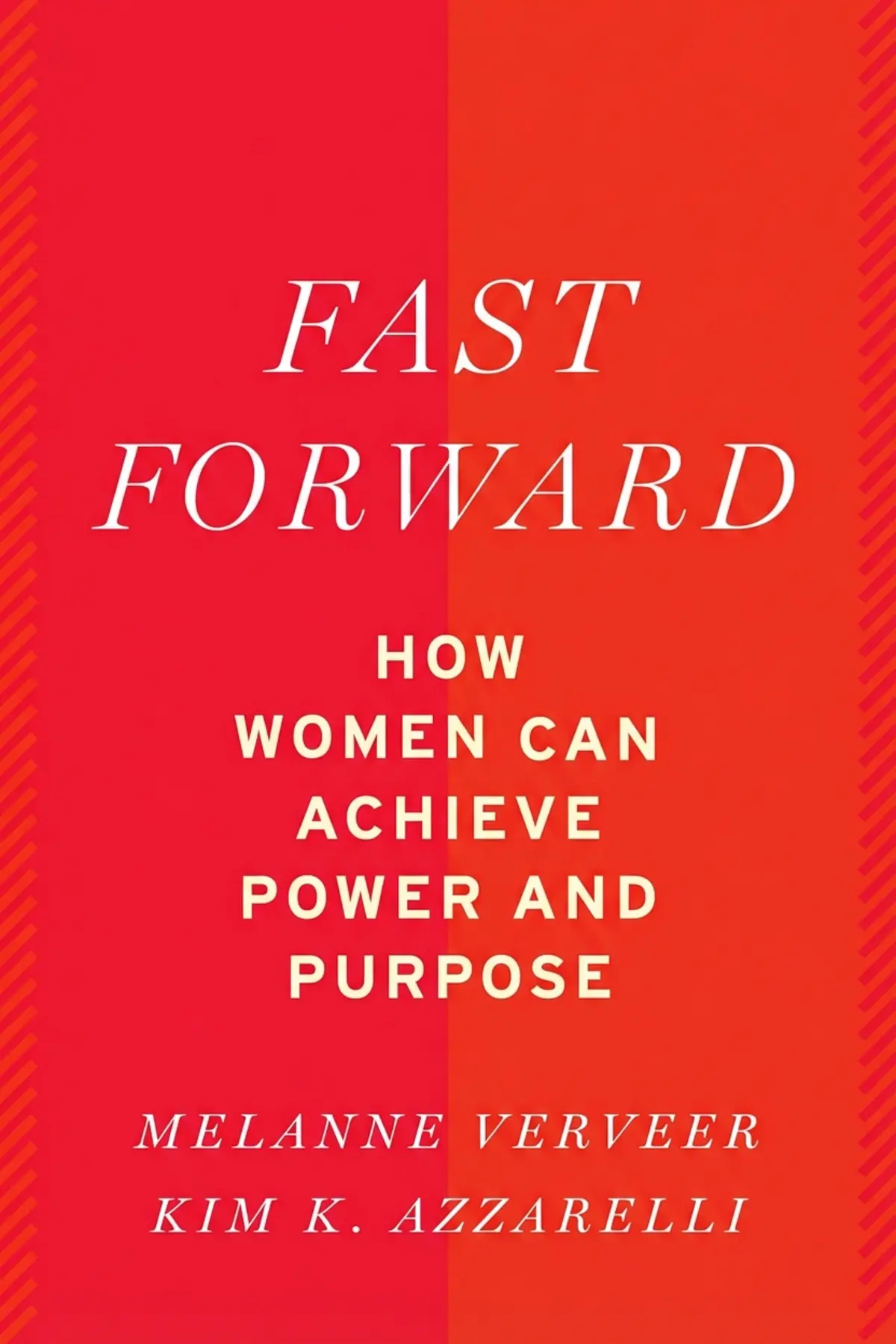
Table of Content
1. Introduction
1 min 09 sec
Women hold more economic and political power than at any point in the last century, yet much of that potential still sits idle. In Fast Forward, Melanne Verveer, the first US ambassador-at-large for global women’s issues, and lawyer and executive Kim K. Azzarelli point to a striking contrast. Fortune 500 companies with three or more women on their boards earn about 50 percent more on equity, while women in the United States receive only 4.4 percent of business loans.
Their case is that women are the great untapped force of this century, and that every barrier removed, from violence to a missing loan, pays off far beyond one person. Power given to one woman tends to spread to her family, her community and the women who come after her.
The ideas move from the scale of that opportunity to the obstacles in its way, and then to the tools that clear them: capital, purpose, allies, education, technology and media. For anyone building a career, a team or a business, the result is a clearer map of where effort and money do the most good.
2. Spot where the century's biggest growth will come from
1 min 40 sec
A group of people as large as China’s population is waiting at the door of the global economy. The authors argue that who lets them in, and how fast, will shape business and politics for decades.
3. Understand the violence still holding half the world back
1 min 50 sec
Talent cannot reach any economy from someone who is not safe. The authors show how widespread the danger really is, including in countries that think of themselves as finished with the problem.
4. Women at the top make companies more profitable
1 min 40 sec
Most companies leave a measurable advantage on the table, and the authors put a number on it. They also argue the most useful women in a firm may not be sitting in the executive suite at all.
5. Small loans that lift whole communities
2 min 15 sec
A loan of twenty-seven dollars sounds too small to change anything. The authors show why money and training placed in a poor woman’s hands rarely stay there, and how one rise sets off many more.
6. Close the funding gap that stalls women founders
1 min 34 sec
Many people assume banks in wealthy countries treat every applicant the same. One lending figure from the United States says otherwise, and the fix the authors describe is coming from women themselves.
7. Find your purpose first, then find your allies
1 min 47 sec
A senior banking executive walked away from a plane crash and changed the direction of her working life. What she did next shows why a clear goal is the fastest way to gather the people who can help.
8. Education, code and stories that change a girl's odds
1 min 38 sec
A girl in a remote village faces early marriage and little schooling. The authors name three keys that can rewrite that future, and one of them nearly cost a young campaigner her life.
9. Conclusion
1 min 09 sec
Fast Forward is, in the end, an argument about returns. Every barrier the authors describe, from a forced marriage in Niger to a refused loan in the United States, is also a lost business, a lost idea or a lost leader. And every barrier removed pays back more than once, because a woman with power tends to pass it on, to her children, her employees and the next woman in line.
That gives readers some things to act on. If you lead a company, count the women in your top jobs and in the middle roles closest to customers, and ask whose ideas travel upward. If you invest or give, favor efforts like a $27 loan or a coding class, whose benefits keep spreading after the first person. And if you are holding back a plan of your own, the authors’ closing advice is blunt: trust your strengths and try, since trying is the only way to learn whether it can work.
Pam Seagle needed a plane crash to see what she wanted to do. The book’s hope is that most women will need nothing so drastic, only the room, the money and the allies to begin.
About this book
What is this book about?
Women hold more economic and political power than at any time in the last hundred years, yet in most countries they still face violence, closed doors at the top and banks that will not lend to them. Melanne Verveer and Kim K. Azzarelli argue that this waste is also the century's greatest opportunity. The authors bring together figures on women-owned businesses, company profits and lending gaps with stories from Afghanistan to Brazil, Kenya and Bank of America. They show what happens when women gain power: companies with women at the top earn more, small loans can lift whole communities, and female leaders open doors for other women. They call this the multiplier effect. Readers get a clear picture of where women stand worldwide and a practical sense of what actually helps: access to capital, a sense of purpose, strong networks, and the three keys the authors name for ending inequality, which are education, technology and media. The book closes with a simple call to action. Women should trust their own strengths and skills, and be willing to try, because they may be capable of more than they realize.
Book Information
Who it's for
Women founders and professionals
Women building careers or businesses who want to see where the real barriers and openings are.
HR leaders and managers
Managers and HR leaders asking why so few women reach senior roles and what it costs their company.
Choosing causes for women
Donors, investors and volunteers deciding which causes for women give the widest return.
About the Author
Melanne Verveer
Melanne Verveer was the first US ambassador-at-large for global women's issues, serving from 2009 to 2013. She co-founded Vital Voices Global Partnership with Hillary Clinton, was Chief of Staff to the First Lady and now leads Georgetown University's Institute for Women, Peace and Security. Kim K. Azzarelli practiced corporate law at Latham and Watkins, held senior roles at Avon, Goldman Sachs and Newsweek Daily Beast, and chairs the Avon Global Center for Women and Justice at Cornell Law School. Together they co-founded Seneca Women.
Ratings & Reviews
Ratings at a glance

What people think
Listeners find the book motivating and uplifting, and one listener points out the inclusion of specific tasks for gaining power. Additionally, the work provides a fresh outlook on life, with one listener highlighting how well it combines theory with real-world practice.
Top reviews
Pakpoom
Wow, what a powerful reminder that women aren't just a demographic; we are the most significant engine for global growth. This book is a phenomenal deep dive into how power and purpose can ignite real change across the world. I was deeply moved by the stories of women who have taken enormous strides in closing the gender gap under difficult circumstances. It affirms that when we lift each other up, the ripple effects are felt by families and entire communities. The core message that human rights are women's rights resonates on every page. This is one of the best books I have read regarding the actual mechanics of social prosperity. It makes me proud to be a woman and more determined to reach my full potential. Truly an inspiring story for anyone who believes that success is a combination of personal achievement and meaning.
Show moreTang
After hearing about Melanne Verveer’s work for years, I was thrilled to see such a comprehensive guide to why empowering women helps everyone. The book beautifully explains that when women rise to the top, they lift their entire communities with them. I was especially struck by the data on how education for girls creates ripple effects that reduce violence and promote livelihoods. It’s an empowering read that provides both the theory and the practice needed for real change. Success is shown as a combination of impact and fulfillment, which really resonated with me. Even though it is a bit dense with numbers, those stats are exactly what makes the argument so unshakeable. This book is a message of hope and a call to action that we cannot ignore. It truly illustrates that our moment is now.
Show moreCameron
Picked this up looking for a fresh perspective on female economic power, and the authors certainly delivered on that front. I love how the book combines theory and practice by offering specific exercises for gaining power while backing everything up with hard stats. It really makes you think about joining organizations that help women move forward. The focus on finding your own niche rather than conforming to an old-school corporate culture was particularly empowering for me. Look, it’s not always a fast-paced read because it is so dense with information, but the inspiring anecdotes kept me going. Seeing how an increase in women leadership boosts profitability by such high percentages is the kind of evidence we need. It’s a powerful tool for any woman with ambitious professional goals who wants more than just fluff.
Show moreWachira
The chapter on technology and STEM was particularly eye-opening for me in terms of how we can bridge the gender gap. Fast Forward provides a unique perspective on life by showing that women are critical agents of change at both micro and macro levels. I liked that the authors didn't just focus on the US but looked at successes and failures in other countries as well. It’s fascinating to see how mobile technology can empower women in the developing world so effectively. My only minor complaint is that the writing can be a bit formal and stiff at times. Still, the message of hope and the call to action are very clear. It is a must-read for anyone interested in how we can fast forward the world toward true equality. The combination of global policy and individual stories is quite effective.
Show moreParichat
In my experience, most leadership books for women stay at the surface level, but Fast Forward digs into the actual mechanics of influence and economic impact. This isn't another 'funny' book about professional life; it’s a serious look at how we can achieve more. I particularly liked the specific exercises for gaining power and the emphasis on connecting with a cause larger than oneself. It highlights how women in leadership can benefit those lower on the rungs, which is a crucial point. While the tone is undeniably research-oriented, the stories of trailblazing women add a necessary layer of inspiration. It really made me think about my own professional goals and how I can use my power to lift others. It's a very well-researched and insightful guide for the modern professional.
Show moreJib
Ever wonder why progress for women in the workplace feels so glacial despite all the global conversation? Verveer and Azzarelli provide a very informative, data-backed answer that focuses on economic vitality rather than just personal motivation. The book is a far cry from the usual 'feel-good' career guides, opting instead for a serious look at how women's participation drives the world economy. To be fair, some of the events cited feel a bit outdated now, which occasionally pulled me out of the experience. It is a really good reading if you want to understand the macro-level issues, but it can be tough to engage with during the drier chapters. I appreciated the stories of trailblazing women, yet the tone remained a bit too detached. It’s a solid resource, just don’t expect a fun summer read.
Show moreNarong
As someone who follows gender issues closely, I appreciated the sheer volume of data collected here, but it’s definitely not a light read. The authors did a great job of showing how empowering women is key to global security, though the academic tone might turn off some readers. Truth is, the book is quite wonky and leans heavily on dry numbers to make its points. While it’s hard to argue with such well-researched facts, it makes the chapters feel a bit long. I enjoyed the sections on mentoring and workplace flexibility the most. It provides a necessary perspective on why women's workforce participation is a necessity for the GDP. However, I found myself wishing for more of a personal message to balance out the case studies. It is a valuable piece of work, even if it isn't compulsively readable.
Show moreSienna
Finally got around to this one, and while I found the core message vital, some of the specific examples feel a bit dated now. The book is a really good reading for those who want down-to-earth facts and hard data. However, it’s not exactly a 'page-turner' in the traditional sense. It points out the huge differences that still exist in law and politics between men and women, which is sobering. I think the authors succeeded in showing that women are an untapped potential, but the delivery is a bit repetitive. Gotta say, I appreciated the focus on purpose-driven practices. It's a solid 3-star read that offers a lot of information in a relatively short package. Just be prepared for the 'thesis paper' vibe.
Show moreChatchai
To be frank, this felt more like reading a government report than an inspiring manifesto for women in leadership. The authors clearly know their stuff, but the writing style is incredibly dry and research-oriented, making it a struggle to finish. I was hoping for something as electrifying as Sandberg’s Lean In, yet this stayed firmly in the realm of academic analysis. While the data regarding GDP growth and Fortune 500 profitability is impressive, the delivery is just too wonky for a casual reader. If you enjoy digging through numbers and case studies that read like a thesis paper, you might find value here. Personally, I found it boring and lacked the personal coaching vibe I was looking for. It is a well-researched book, but it simply didn't come together for me as a cohesive narrative.
Show moreValentina
Not what I expected given the title and the hype surrounding the authors' credentials. I was seeking more of a coaching or personal growth message to help my own career, but this felt very removed and clinical. The book is written like a case study, which might be great for a classroom, but it didn't keep me engaged at all. I found it quite boring and eventually had to DNF about halfway through. It is great that they included so many facts about gender issues in education and politics, but the presentation is just too dry. It lacks the 'spark' that makes other leadership books so memorable. If you want a personal guide, look elsewhere. This is strictly for those who want a research-heavy look at the macro-economic landscape.
Show moreQuestions about this book
What is the main idea of Fast Forward by Melanne Verveer and Kim K. Azzarelli?
The authors argue that women are the biggest untapped force for economic and social growth this century, with about a billion women ready to enter the global economy. Yet violence, glass ceilings and a lack of credit still hold them back, even in Western countries. Because empowering one woman tends to empower many others, removing these barriers benefits companies, families and whole societies.
What is the multiplier effect in Fast Forward?
The multiplier effect is the authors’ name for the chain reaction that follows when one woman gains power. Female leaders tend to help other women reach education and financial security, creating more leaders in turn. A woman in a poor area who earns more usually invests it in her children’s schooling and health. Project Nurture, for example, helped some women farmers raise their income by over 140 percent.
Why do the authors say companies should hire more women leaders?
They cite studies showing that Fortune 500 companies with strong women in senior roles are 18 to 69 percent more profitable than rivals in the same industry, and that firms with three or more women directors earn a 50 percent higher return on equity. They also stress middle management, where new projects start and where women can bring female customers’ needs to the people at the top.
What are the three keys to ending gender inequality in Fast Forward?
The authors name education, technology and media. Education teaches girls their rights, as Malala Yousafzai’s campaign in Pakistan shows. Technology lets women learn and join the global economy, the aim of programs like Girls Who Code. Media can inspire women by telling their stories, which is why actors such as Meryl Streep and Angelina Jolie push for more books, plays and films about women.
How can I apply the ideas in Fast Forward?
Start with a clear purpose and build a network around it, as Pam Seagle did when she gathered allies at Bank of America for a mentoring program. Leaders can check how many women hold top and middle roles. Investors can look at where their capital goes, given that women receive only 4.4 percent of US business loans. And the authors urge women simply to trust their skills and try.
Readers also enjoyed


Afropean: Notes From Black Europe
Johny Pitts


All About Love: New Visions
bell hooks


A Biography of Loneliness: The History of an Emotion
Fay Bound Alberti

A Force for Good: The Dalai Lama's Vision for Our World
Daniel Goleman


A Room of One’s Own
Virginia Woolf
AUDIO SUMMARY AVAILABLE
Listen to Fast Forward in 15 minutes
Get the key ideas from Fast Forward by Melanne Verveer, plus 5,000+ more nonfiction titles.
- 5,000+ titles
- Listen as much as you want
- 7-day free trial
- Cancel anytime









