

15 min 28 sec
Available in: English
Do Breathe: Calm Your Mind. Find Focus. Get Stuff Done.
Shows stressed, overloaded professionals how to calm the body with slower breathing, cut information overload, swap bad habits, train attention and reach flow, using simple basics instead of more apps and willpower.
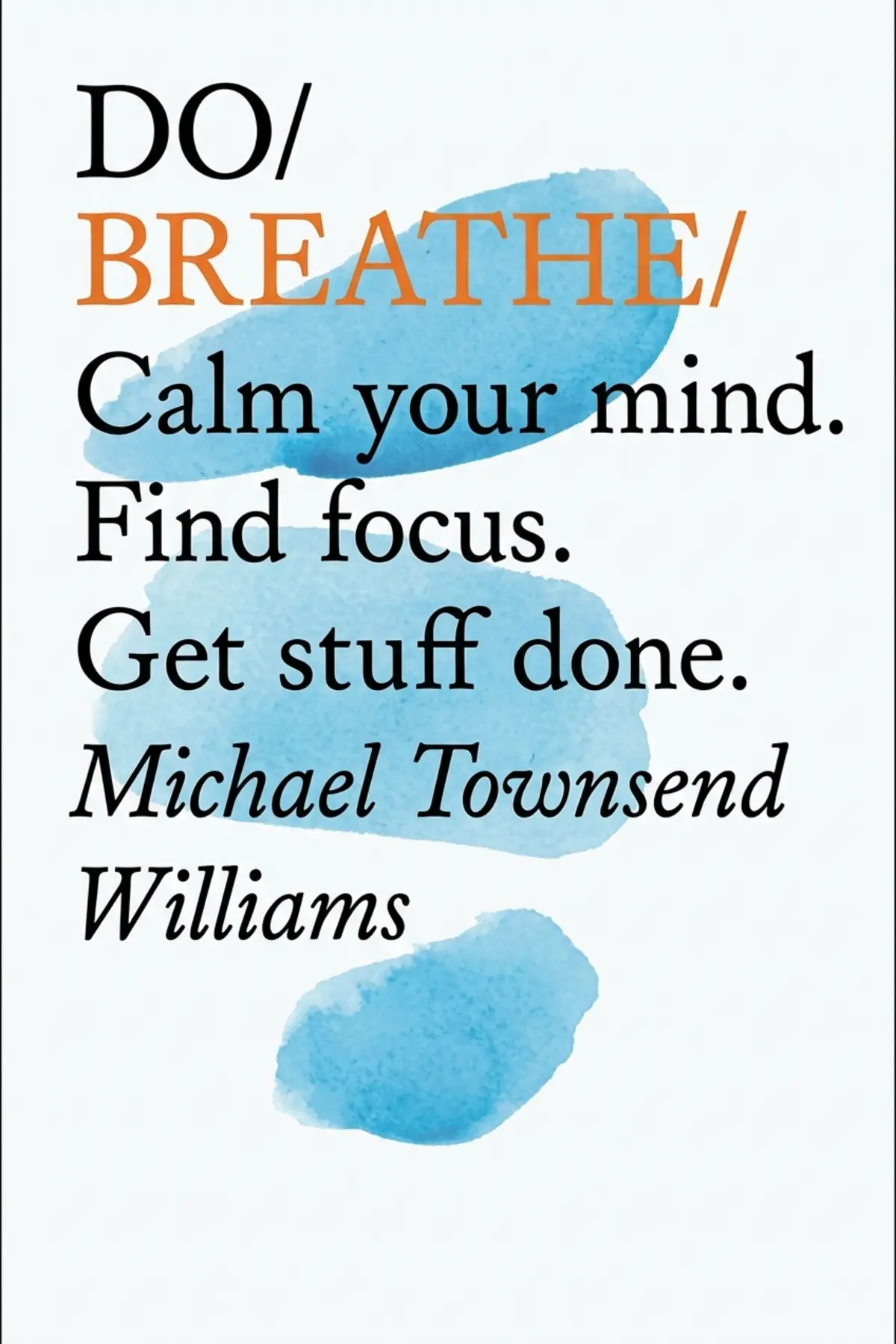
Table of Content
1. Introduction
59 sec
If your days feel crowded and your mind feels frayed, Michael Townsend Williams suggests a modest place to begin: make each exhale longer than each inhale. In Do Breathe, the advertising professional turned yoga and mindfulness coach argues that slow breathing does more than reflect calm. It can create it, and in his account one minute of long, slow breaths can clear the stress hormone cortisol from the blood.
Calm, focus and getting things done, Williams contends, all come from going back to basics: the breath, the body, fewer inputs, better habits and attention to the present. Each idea that follows is a simple, repeatable step from scattered to steady. Along the way there is a better way to write a to-do list, a reason to respect the afternoon slump, and a two-stage route into the absorbed state psychologists call flow.
2. Slow your breath to switch off stress
1 min 37 sec
A missed train and a bad headline trigger the same chemical response in your body. Williams describes a simple way to reverse it in about a minute, and the best teacher for it is a baby.
3. Fuel clear thinking with sleep, naps and food
1 min 37 sec
Many professionals fight the afternoon slump with espresso and sugar. Williams thinks the slump may be telling you something, and he points to three famous figures who handled it in a way most offices still frown on.
4. Cut the inputs that crowd your mind
1 min 35 sec
Productivity apps promise order, yet a crowded phone can be the very thing slowing you down. A one-word to-do item that sat untouched for months shows how much a single verb can change.
5. Swap a bad habit by keeping its reward
1 min 40 sec
Steve Jobs wore the same outfit daily for a reason that has little to do with fashion. That reason explains why your worst morning habit is so stubborn, and where to cut into it.
6. Listen to your distractions and sharpen your focus
1 min 42 sec
Companies spend millions to capture your attention, yet good focus is not the fierce concentration most people picture. Sometimes the urge to drift away from a task is a message worth hearing before you push on.
7. Turn ordinary tasks into calm practice
1 min 39 sec
A poet’s short line holds the whole case for living in the present. Williams turns it into a practice simple enough to start with a single piece of fruit.
8. Face fear by expecting less
1 min 41 sec
Bold people feel the same fear as everyone else. A psychologist’s idea about mindsets and a First Lady’s daily rule suggest that aiming lower at the start can take you much further.
9. Reach flow through struggle and then release
1 min 42 sec
The absorbed state where hours disappear seems to arrive by luck. Williams argues it follows a pattern with two stages, and the first one is exactly the moment when most people give up.
10. Conclusion
1 min 16 sec
What links these ideas is how little equipment they need. Williams moved from advertising into yoga and mindfulness coaching, and his book answers the busy professional who keeps adding apps, caffeine and willpower to an already full life. His response is to subtract. The breath comes first because it is always with you and works within a minute. Sleep, food and real rest give the mind fuel. Fewer inputs and clearer lists remove friction, and good habits take decisions off your plate. That frees attention for the present moment, for the task that scares you and for the struggle that leads to flow.
The moves worth trying are small. When stress rises, breathe through your nose into your belly and let each exhale run longer than the inhale. Rewrite tomorrow’s to-do list so every item begins with a verb. And before a tense meeting, try the stance Williams recommends: feet slightly wider than your hips, hands on your hips, a few deep breaths into the belly. Your posture, he says, shapes both how others see you and how you feel.
The basics were never too simple to matter. Everything in Do Breathe starts with one long breath out.
About this book
What is this book about?
Busy days pile up stressors: alerts, inboxes, deadlines, worries about money. The usual answer is another productivity app or another coffee. Michael Townsend Williams, who left advertising to become a yoga and mindfulness coach, argues for the opposite. Calm and productive work come from getting back to basics, beginning with the breath. Williams shows how long, slow breathing through the nose can switch the body out of stress, then widens the frame. He covers sleep, naps, brain food and real rest. He shows how to streamline inboxes and notifications, how to write to-do items that start with a verb, and how to break bad habits by changing their cues and rewards. He then turns to attention itself, drawing on the pomodoro technique, meditation research, mindfulness, Carol Dweck's growth mindset and Mihaly Csikszentmihalyi's idea of flow. Readers get a short set of practices they can try the same day: a breathing pattern for stressful moments, a cleaner information diet, a method for swapping one habit, and a two-stage route from struggle into flow.
Book Information
Who it's for
Stressed, scattered office workers
Office workers buried in alerts, inboxes and to-do lists who feel stressed and scattered.
Wanting calm before meetings
People who want a quick, physical way to calm down before a meeting or a hard conversation.
Professionals fighting stubborn habits
Professionals trying to break a stubborn habit or find deep focus without adding another app.
About the Author
Michael Townsend Williams
Michael Townsend Williams left a career in advertising for yoga and mindfulness coaching, and his work aims to join being and doing. He coaches individuals, teams and organizations in an approach he calls Mindful Productivity, or Welldoing. He also created the Breathe Sync app, which syncs breathing with the heartbeat to reduce stress and help focus. Do Breathe is his first book.
Ratings & Reviews
Ratings at a glance
What people think
Listeners find that *Do Breathe* serves as a down-to-earth and easy-to-follow guide for getting started with mindfulness and lowering stress. Although some differ in their views regarding the level of detail or how the different productivity themes link together, listeners value the concrete tips on applying breathing techniques to handle anxiety and improve concentration. Furthermore, the work is commended for being easy to read and focusing on fundamental principles to restore mental clarity amidst a hectic lifestyle. They also highlight how well the specific practices work, with one listener mentioning that the advice to practice "long exhales" was especially effective for soothing the nervous system.
Top reviews
Watcharee
Wow. This tiny book packs a serious punch if you actually take the time to practice what Williams is preaching. Dealing with daily anxiety often feels like drowning, but focusing on the basics of breath has given me a literal lifeline. I loved the quote about how 'busy' is just a way of appearing to work while actually just filling up time. It really made me re-examine my own habits and how I use my phone as a distraction. The advice to do one thing every day that scares you helped me shift from a fixed mindset to a growth mindset. It’s not just about breathing; it’s about reclaiming your focus and living in the 'now' instead of worrying about tomorrow. Essential reading for the modern age.
Show moreHugo
Finally got around to reading this after a friend recommended it for my burnout symptoms. It’s amazing how we forget the most fundamental thing we do every single second: breathe. The author’s transition from a high-stress advertising career to a yoga instructor gives him a unique perspective that feels relatable. I particularly liked the bit about how 'forever is composed of nows' and the importance of prayer or meditation to stay grounded. It’s a very visual book with a layout that makes it easy to digest in small chunks. I keep it on my nightstand now as a reminder to slow down whenever my thoughts start racing. Simple, effective, and beautifully written.
Show morePawinee
As someone who struggles with a racing heart and constant 'busy-ness,' this book was a breath of fresh air. It reminded me that the strategies we need to manage life’s stressors don’t have to be complicated or expensive. The suggestion to use a verb for every task on a to-do list was a small but incredibly effective productivity hack. Williams has a way of making mindfulness feel like something anyone can do, regardless of their schedule or background. I’ve started focusing more on the process rather than the outcome to avoid that 'fixed mindset' trap. It’s a gentle, persuasive read that emphasizes the importance of physical energy as the source of everything else. I highly recommend it to anyone feeling overwhelmed by the modern world.
Show moreJin
After hearing so much about mindfulness, I finally picked this up to see if it could help with my persistent work stress. Truth is, the simplicity of the 'long exhale' technique was a total game-changer for my afternoon slumps. By making the breath out just a bit longer than the inhale, you can actually feel your heart rate settle. It isn't a long book, which is a blessing when your brain is already fried. Some might find it a bit too basic, but for me, it was exactly the reset I needed. I appreciated the sections on 'supernaps' and 'brainfood' as practical ways to sustain energy without relying on a fifth cup of coffee. Definitely a solid little manual for anyone feeling overwhelmed by a frantic schedule.
Show moreCee
Ever wonder why you feel so drained at the end of a desk job? Michael Townsend Williams suggests it’s because we’ve lost touch with our most basic functions. I’ve started implementing the 'power pose' before meetings as he suggested, and surprisingly, it does boost my confidence levels. The book is divided into three logical parts, starting with the breath and moving toward healthier productivity habits. It's an accessible introduction to stress reduction that doesn't feel overly mystical or 'woo-woo.' My only gripe is that some chapters feel a bit rushed, especially the ones on flow states. Still, the actionable tips on minimizing mobile notifications and simplifying your life are worth the price of admission.
Show moreSuthee
The chapter on 'the flow state' alone made this a worthwhile purchase for my creative process. Williams explains how seeking struggle and then releasing it is the key to reaching that ultimate state of focus. I’ve been trying to apply this by working in pomodoros and actually being mindful of my transitions between tasks. It’s interesting how he ties physical health—like sleeping well and eating brainfood—to mental clarity. The writing style is very encouraging and lacks the condescending tone you sometimes find in self-help literature. While it touches on a lot of different themes, the central focus remains on returning to the basics to find fulfillment. A great gift for a friend who is always 'on the go' but never seems to get anywhere.
Show moreLogan
This book is a slow drip of useful reminders that most of us probably already know but frequently forget to do. Frankly, the content is quite light and you can finish the whole thing in under an hour if you're a fast reader. The core message is that breathing exercises will calm your mind and body, which is true, but it gets repeated quite a bit. I did enjoy the anecdotes and the personal tone of the writing. However, I was hoping for more specific routines instead of just general advice on de-stressing. It serves as a decent entry-level guide to mindfulness. Just don't expect a comprehensive masterclass on the subject.
Show moreHarper
Personally, I found this to be a bit of a mixed bag. On one hand, the breathing techniques for anxiety are scientifically grounded and very easy to follow. On the other hand, the book tries to cover too many topics—like email management and habit breaking—without enough detail on any of them. It felt a bit like a greatest hits of productivity advice rather than an original work. To be fair, the presentation is beautiful and the 'long exhales' tip for the parasympathetic nervous system is something I use every day now. If you are a beginner to mindfulness, this is a 5-star book. If you’ve read any of the big names in the field, it might feel a bit redundant.
Show moreAmelia
Look, I appreciate the sentiment behind this book, but it felt a lot like a collection of Pinterest quotes. Most of the 'actionable advice' involves things you could find with a quick Google search for 'how to relax.' The section on to-do lists felt particularly out of place in a book that is marketed as a guide to breathing. I think the author tries to do too much in such a small number of pages. The lack of a strong connection between the chapters made the reading experience feel disjointed. I didn't hate it, but I didn't find it particularly insightful either. It’s fine for a quick airplane read, but don't expect it to change your life.
Show moreBoy
Not what I expected given the title. I went in looking for a deep dive into respiratory science or complex meditation techniques, but this felt more like a scattered collection of productivity blog posts. To be fair, the author writes well, but the connection between the breathing exercises and the advice on to-do lists felt tenuous at best. One minute you're learning about the vagus nerve, and the next you're being told to use verbs in your calendar entries. It lacks a cohesive thread that binds the different sections together into a unified philosophy. If you've already read books by productivity gurus, you probably won't find anything groundbreaking here. It’s an easy read, sure, but I wanted more depth.
Show moreQuestions about this book
What is Do Breathe by Michael Townsend Williams about?
Williams argues that calm and productivity come from going back to basics. He starts with breathing, showing how slow breaths through the nose with a long exhale can ease stress. He then covers sleep and food, streamlining information, breaking bad habits, training focus, mindfulness, facing fear and reaching flow. The aim is to calm the mind, find focus and get things done without piling on more apps and systems.
What breathing technique does Do Breathe recommend?
Williams suggests breathing the way babies do. Breathe in and out through the nose, let each breath fill your belly and diaphragm, and make the exhale longer than the inhale. He explains that nose hairs filter the air and that a long exhale activates the parasympathetic nervous system, which supports rest and digestion. He claims a minute of long, slow breathing can clear cortisol from the bloodstream.
How does Do Breathe suggest writing a better to-do list?
Williams advises giving every task a verb, so tax becomes file tax, and adding context such as where the task will happen. If no verb fits, the task needs clarifying first. Break stuck tasks down to the step that is really blocking them: if the forms are missing, the item becomes emailing your accountant about the forms. Clear tasks reduce the mental friction of starting.
How do you break a bad habit according to Do Breathe?
Williams uses the habit loop of cue, routine and reward. You can change the cue, for example keeping a book by the bed if boredom makes you check your phone each morning. Or you can work back from the reward: if an afternoon chocolate bar is really about taking a break and chatting with colleagues, a walk around the office can give the same reward.
Who should read Do Breathe?
It suits busy professionals who feel stressed, overloaded with information and short of focus, and who want simple practices rather than complex systems. The book offers quick tools, such as a breathing pattern, a 25-minute pomodoro timer and a confident stance before a meeting, alongside bigger ideas like growth mindset and flow for people ready to take on harder challenges.
Featured in
Readers also enjoyed

168 Hours: You Have More Time Than You Think
Laura Vanderkam





A New Earth: Awakening to Your Life’s Purpose
Eckhart Tolle


Aflame: Learning from Silence
Pico Iyer
AUDIO SUMMARY AVAILABLE
Listen to Do Breathe in 15 minutes
Get the key ideas from Do Breathe by Michael Townsend Williams, plus 5,000+ more nonfiction titles.
- 5,000+ titles
- Listen as much as you want
- 7-day free trial
- Cancel anytime









