

A Liberated Mind: How to Pivot Toward What Matters
Steven C. Hayes
 English
 ไทย
Shows how cults, sales schemes, fitness studios and online gurus use special words to win loyalty and silence doubt, and how to recognize that language before it starts deciding things for you.
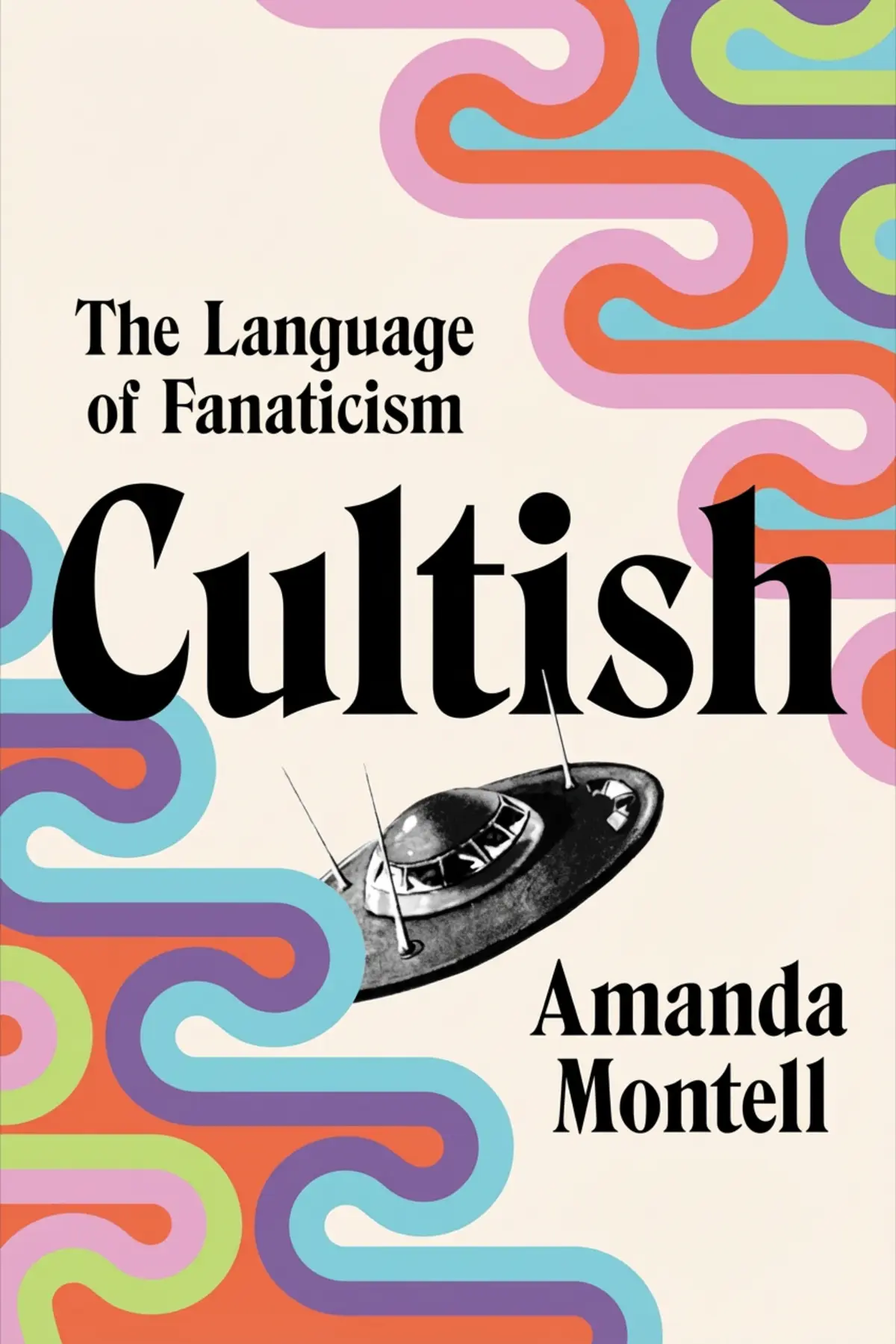
1 min 03 sec
The slogans at your gym, the jargon in a sales pitch and the catchphrases of an online guru can all steer what you believe before you notice them working. In Cultish, linguist Amanda Montell argues that the power of a cult lives less in robes or remote compounds than in language: special words that make members feel chosen and make doubt feel like betrayal.
She traces the same verbal tools through a Kundalini yoga group from the 1970s, the Peoples Temple, Scientology, multi-level marketing, boutique fitness classes and Instagram. Her throughline is simple. The words that give a group its warmth are the same words that can be turned into control, and hearing them clearly is the defense.
Her cases move from the deadly to the everyday. They give the listener an ear for loaded language, a few honest questions to ask of any group they join, and a way to stay open without being captured.
2 min 13 sec
A teenager in a yoga movement and a woman who found a new life at her gym describe strangely similar feelings. One story ends in abuse and threats. The other raises a harder question about where devotion turns into something else.
1 min 58 sec
A common office joke about blind loyalty began with one of the darkest days of the twentieth century. The man behind it relied on talk more than force, and his verbal habits still circulate in movements today.
1 min 56 sec
It begins with a free personality test and the glow of famous names. What follows is a private dictionary, a ranked path upward and a reason to stay that grows heavier with every step a member takes.
1 min 57 sec
The offer is independence, flexible hours and a title that sounds like success. One woman who said yes found her friendships thinning and her exit blocked by the same upbeat words that first drew her in.
1 min 45 sec
Affirmations, music and a beloved instructor can make an hour of exercise feel like a weekly ritual. Montell grants that these classes can build community and self-esteem, yet she also names the signs that a class has started asking for more than sweat.
1 min 35 sec
A spiritual teacher with beautiful posts and a devoted following kept teaching after a retreat ended in a death. His story is a warning, yet Montell refuses the easy conclusion that every enthusiastic community should be avoided.
1 min 15 sec
Montell’s cases run from a poisoned drink in 1978 to a sales pitch in a friend’s message, and the distance between them is shorter than it looks. Every group she describes answers the same human need to belong. Words are how that answer is delivered: an insider term, a new name, a cheerful slogan. When someone is driven by ideals and open to new ideas, that pull can be very hard to resist.
The stakes go beyond any single group. Montell warns that cultish language can spread prejudice, exclusion and even violence through a society. That is why she asks readers to examine how they talk and think about these groups, so the conversation leads toward understanding and empathy.
The habits follow from her cases. When a phrase ends a discussion, ask what it stopped you from saying. Before joining anything with levels or fees, find out what leaving would cost and where the money goes. And choose your own level of belief, so a group stays something you belong to and never something that owns you.
A new word is often the first gift a group offers. Know what it asks in return.
From Jonestown to a friend's sales pitch, groups that win intense loyalty tend to share one tool: language. Linguist Amanda Montell argues that cultish influence works through words rather than mystery. Insider jargon makes members feel chosen. New names mark surrender. Slogans shut down questions before they form. Montell follows that vocabulary through very different settings. She looks at a 1970s yoga group and the Peoples Temple, at Scientology's endless path toward going clear, and at multi-level marketing pitches aimed at mothers. She also visits boutique fitness classes and an Instagram guru whose retreat ended in tragedy. In each, the words that create belonging can also be turned into a trap. Readers get a working ear for loaded language and a few plain questions to ask of any group: what a phrase stops you from saying, what leaving would cost and where the money goes. Montell stops short of blanket suspicion. She makes the case for staying open while keeping your judgment.
People drawn to tight-knit gyms, wellness groups or online spiritual teachers who want to enjoy them without losing their judgment.
Anyone being pitched a work-from-home sales opportunity by a friend.
Managers and team leads who want to hear when shared slogans start shutting down honest questions.
Amanda Montell is an American author and linguist, born and raised in Baltimore, with a linguistics degree from New York University. Cultish, named by NPR as one of the best books of 2021, is one of her three nonfiction books, alongside Wordslut and The Age of Magical Overthinking. She created and hosts the podcast Sounds Like A Cult, which won Best Emerging Podcast at the 2023 iHeart Radio Podcast Awards. Her writing has appeared in The New York Times, Harper's Bazaar and Marie Claire.
Listeners find this an intriguing listen, noting its deep research and accessible explanations regarding cult dynamics. The narrative voice is both captivating and brief, and listeners value the stimulating perspectives shared, including one listener who pointed out how it assists in spotting linguistic patterns typical of cults. They also commend the way the subject is handled, with one review emphasizing its thorough overview of cult-like conduct.
Wow, I will never look at a workout class or a corporate 'mission statement' the same way again after finishing this. Montell has a gift for taking dense psychological concepts and making them feel relevant to our current, hyper-connected world. The book is incredibly engaging and hits that sweet spot between being educational and being a genuine page-turner. I particularly appreciated the discussion on 'loaded language' and how it creates an us-vs-them mentality in even the most mundane settings. While she does share a lot of her own perspective, it helps ground the research in reality. It’s a comprehensive and accessible summary of why we all crave community, even when it’s toxic.
Show moreFinally got around to reading this and it lived up to the hype as a truly fascinating deep dive. Montell manages to be both empathetic to those who fall for these groups and sharp in her critique of the leaders who exploit them. The research feels thorough, but the language is easy-to-understand and never feels like a dry textbook. I loved the breakdown of how 'insider' jargon creates a sense of belonging that is hard to leave behind. It’s a very smart, contemporary look at why we believe what we believe. If you’ve ever been fascinated by the 'why' behind cults, this is the book for you. It stays with you long after the final page.
Show moreFrankly, everyone needs to read the chapter on MLMs before they sign up for another 'opportunity.' This book is an essential tool for identifying the red flags of manipulative groups in the digital age. Montell’s approach is refreshing because she doesn't treat cult members as stupid; she shows how language appeals to very human needs for connection and purpose. The book is concise, engagingly written, and incredibly relevant to our current political climate. It helped me put words to feelings I've had about certain online communities for years. Truly one of the most thought-provoking non-fiction books I've read in a long time. Highly recommend to any curious reader.
Show moreFascinating look at the verbal gymnastics used by groups ranging from the horrific Jonestown to the seemingly harmless SoulCycle. Montell makes the complex field of linguistics incredibly easy to understand, even for someone who isn't a 'scholar.' I loved how she identified specific language patterns that make people feel included or excluded. The writing is snappy and fast-paced, though she does inject a lot of her personal life into the narrative, which might not be for everyone. Still, the breakdown of how 'thought-terminating clichés' work in modern politics and fitness culture was a total lightbulb moment for me. It’s a well-researched guide to the jargon we hear every day.
Show moreEver wonder why smart, successful people end up in things like NXIVM or paying way too much for a Peloton subscription? Montell argues it’s not brainwashing in the traditional sense, but rather the subtle power of 'Cultish' language. I found the sections on Multi-Level Marketing especially biting and accurate, specifically the way she deconstructs 'boss babe' jargon. It’s well-researched but written in a way that feels like you’re chatting with a smart friend at a bar. Some of the history on Heaven's Gate felt a bit glossed over, but the focus here is really on the verbal tricks that bypass our critical thinking. Definitely a thought-provoking read that will make you double-check your own social groups.
Show morePicked this up on a whim because the cover was everywhere, and I’m glad I did. The way Montell connects the dots between religious fanaticism and modern-day influencers is brilliant. She really highlights the pattern of how certain phrases are used to shut down dissent. It’s fascinating to see how the same techniques used by Jim Jones are being repurposed by #girlbosses on Instagram to sell leggings and supplements. The book is very readable and the tone is witty, though I can see why some might find the LA-centric focus a bit much. Overall, it's a solid read that offers a lot of 'aha!' moments about the world around us and the groups we join.
Show moreThe way Montell deconstructs 'loaded language' is genuinely eye-opening, especially the part about thought-terminating clichés. We use these phrases every day without realizing how they halt our ability to think critically. I appreciated that she didn't just stick to the famous, tragic cults like Jonestown, but also looked at 'cultish' behavior in spaces we consider normal. The section on 3HO and the wellness industry was particularly disturbing. My only gripe is that the author is a bit too present in the text sometimes. I wanted more about the victims and the language, and a little less about her childhood, but her writing style is so muscular and confident that I stayed hooked.
Show moreTo be fair, the title is a bit misleading if you are coming for a hard linguistics text. It’s much more about the social psychology of cults than the actual technical structure of language. I enjoyed the chapters on Scientology and MLMs, but I felt like the author stretched the definition of a 'cult' a bit thin when she started talking about Starbucks or Crossfit. Not everything that has a specific vocabulary is a dangerous cult. The writing is very conversational, which makes for a quick read, but I wish there was more data and fewer stories about people she met at parties. It is a decent introduction to the topic but lacks the depth I was hoping for.
Show moreAs someone who loves deep-dive linguistics, I found this a bit surface-level in terms of actual science. It’s a fun, quick read, but it feels more like a long-form magazine article than a definitive book on the subject. The author relies heavily on personal anecdotes and interviews with her friends, which makes the narrative feel a bit insular at times. Look, the insights into MLMs and SoulCycle are great, but the connection to actual linguistic theory felt tenuous at times. It’s a good conversation starter, and the 'semantic stop signs' concept is useful, but I wanted something meatier. It’s definitely more about 'cult stories' than it is about 'language scholarship.'
Show moreThis was a huge disappointment because the subtitle promises a deep dive into linguistics that never actually arrives. Instead of a scholarly analysis of language, the author gives us a disorganized collection of personal anecdotes about her friends in LA and her family history. The constant signposting—'more on that in a bit'—is incredibly annoying and reeks of poor editing. To be honest, calling yourself a 'language scholar' with such thin credentials feels arrogant when the book is mostly surface-level observations about things everyone already knows. If you want a serious study of how cults function, look elsewhere, because this is just another trendy non-fiction book that values style over substance.
Show moreMontell argues that cultish influence works mainly through language. Insider jargon, new names, euphemisms and slogans she calls thought-terminating clichés make members feel special and set apart, while discouraging doubt. She follows these tools from a deadly group like the Peoples Temple and a controlling one like Scientology to everyday settings such as multi-level marketing, boutique fitness and Instagram gurus, showing that words which build belonging can also be used for control.
It is Montell’s term for a short phrase that carries strong emotion and is designed to end discussion before critical thinking begins. She gives the QAnon slogan Trust the Plan as a recent example. Such phrases do not argue a point; they close it. Her practical response is to notice when a phrase leaves no room to reply and to ask what question it has just shut down.
Not exactly. Montell treats cultishness as a matter of degree. CrossFit, intenSati and SoulCycle share some features with cults, including special vocabulary, devotion and instructors with near-spiritual status, and they offer real community and self-esteem. She suggests judging a class by how much commitment it demands, how the instructor behaves and what quitting costs, and she considers member-led programs safer than those centered on one charismatic leader.
Montell explains that multi-level marketing companies operate legally but sit close to illegal pyramid schemes. A legitimate company should put selling products ahead of recruiting new sellers, and that line is often ignored. Ask where the money really comes from. The story of Becca Manners shows the warning signs: relentless pressure to sell and recruit, strained relationships, growing isolation and the belief that quitting means giving up on your dreams.
Steven C. Hayes


Deborah Gruenfeld


Anthony Pratkanis




Richard Wiseman

AUDIO SUMMARY AVAILABLE
Get the key ideas from Cultish by Amanda Montell, plus 5,000+ more nonfiction titles.









