Change Anything: The New Science of Personal Success
Kerry Patterson
 English
 ไทย
Shows why reasonable people end up shouting when the stakes rise, and gives plain tools for staying calm, keeping others safe enough to speak, and turning a tense talk into a clear decision.
57 sec
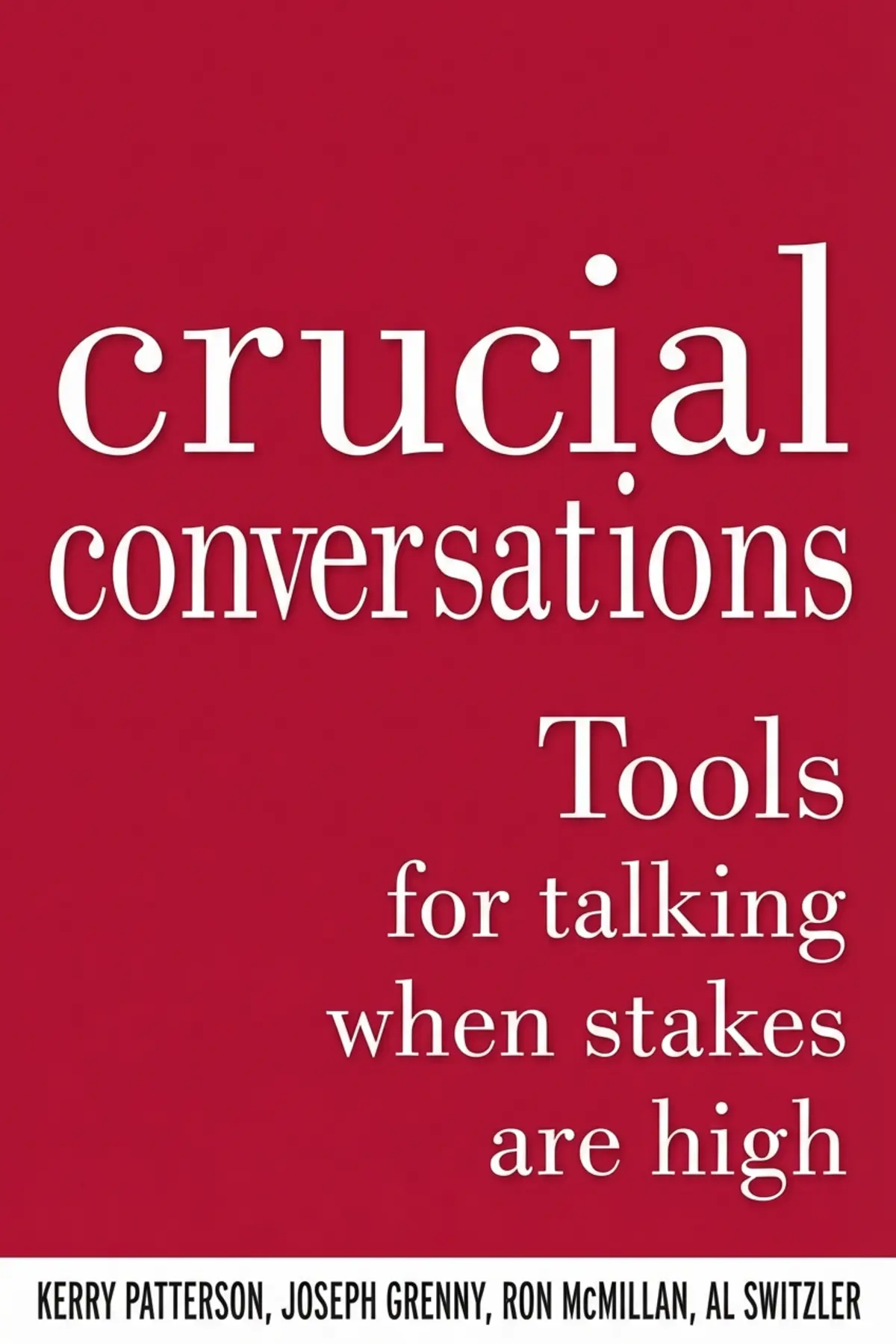
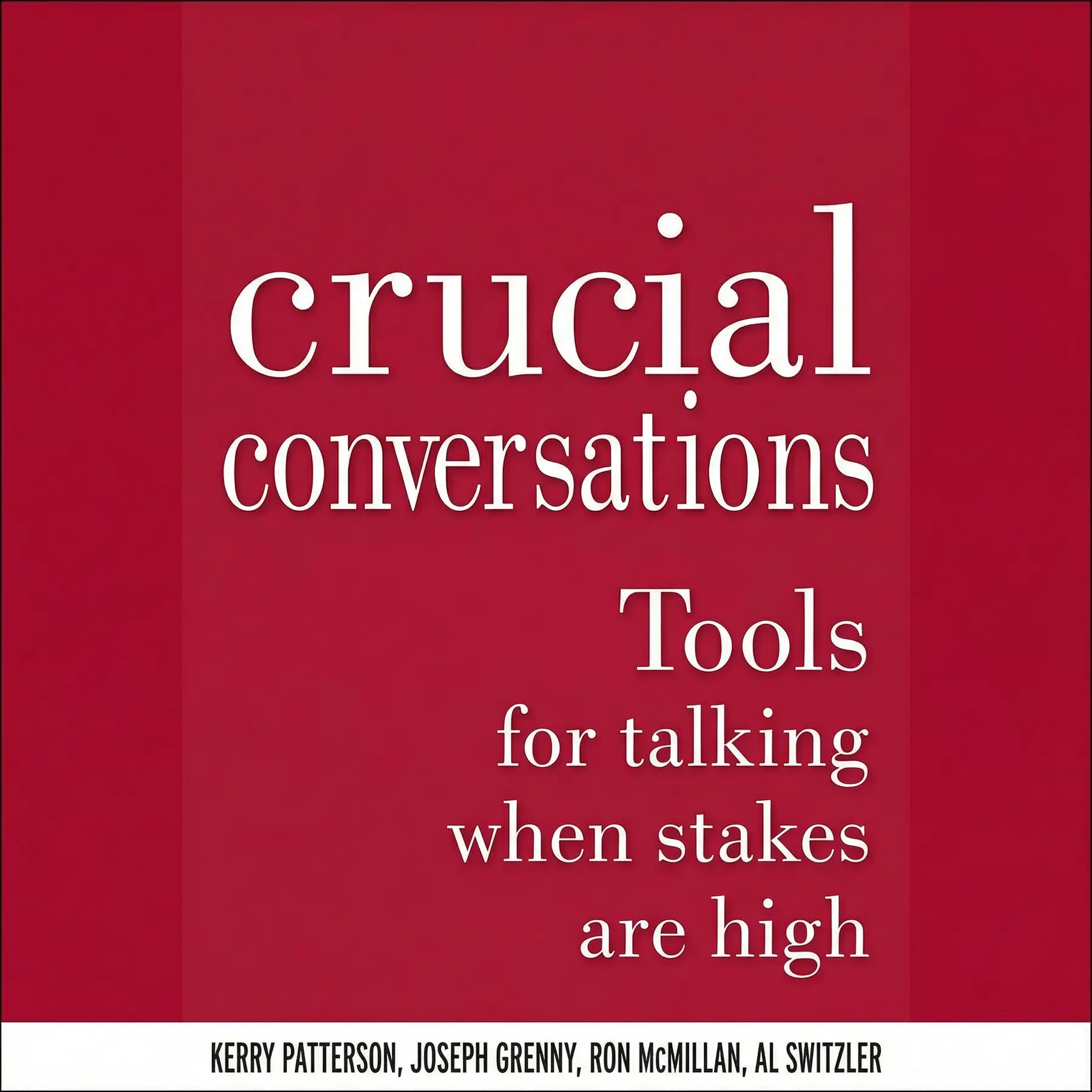
When a talk about money, a promotion or a relationship turns hot, most people either go silent or start shouting, and both make the outcome worse. In Crucial Conversations, Kerry Patterson, Joseph Grenny, Ron McMillan and Al Switzler trace much of that reaction to the body, which treats a tense discussion like physical danger. They also argue it can be managed with skills anyone can learn.
The idea running through their book is this: the best decisions come when everyone feels safe enough to say what they know, and keeping that safety starts with your own temper. From there the authors build a practical sequence.
Ahead are two questions that cool you down before you reply, the warning signs that someone feels attacked, a way to criticize a person without wounding them, and a plain method for making sure a hard-won agreement actually gets carried out.
1 min 30 sec
Two reasonable people who want the same result can still end up yelling at each other. The cause is older than any argument, and knowing it changes how you read your own racing pulse.
1 min 24 sec
A room full of trained professionals watched a serious mistake happen and said nothing. Their silence reveals a habit most of us share, and why it quietly costs teams their best decisions.
1 min 27 sec
When someone tears into your idea, the urge to hit back feels unstoppable. A pause of a few seconds, filled with the right questions, can turn that urge into something far more useful.
1 min 36 sec
A friendly compliment can suddenly sound like an insult, and a harmless chat can blow up for no clear reason. Two kinds of behavior tell you exactly when that turning point has arrived.
1 min 32 sec
You need to raise a problem with someone, or ask your family for something they do not want. Two conditions decide whether they hear you out or start fighting back.
1 min 23 sec
A colleague stays behind in a meeting with your boss after you step out, and you feel a flash of suspicion. The authors show how often that flash is built on a story, not on what happened.
1 min 26 sec
Every attempt to talk ends with an angry accusation and a slammed door. A parent’s standoff with a teenager shows which words lower the walls, and which instinct keeps them up.
1 min 26 sec
A team of engineers spent years building exactly what their boss asked for, and the result was a disaster. Their story shows the step most good conversations skip at the very end.
1 min 11 sec
The surgeon’s team had the information that would have saved a healthy foot. What they lacked was the safety to say it. That gap, between what people know and what they dare to voice, is the real subject of the book, and the authors’ tools are all ways of closing it. Your own adrenaline widens it, and two questions about what you want and what you fear begin to narrow it. Sarcasm and constant interruption warn that it is opening. Respect, a shared purpose and an honest check of the facts close it again. When people finally speak, a clear decision with named owners makes sure their words lead somewhere.
The daily practice is small. When you feel the heat rise, pause and ask whether your reading of the other person is right before you react. When you must criticize, put honest praise beside it so the person can listen instead of defending. And when a talk ends, leave knowing who does what by when.
The next time a room goes silent while someone makes an obvious mistake, remember the operating room, and be the one who speaks.
Most people know the moment: a sensible discussion about money, work or a relationship suddenly turns hot, and both sides either go quiet or start shouting. Kerry Patterson, Joseph Grenny, Ron McMillan and Al Switzler argue that this is largely a bodily reaction to high stakes and strong emotion. They also argue that it can be handled with skills anyone can learn. Their central idea is that good decisions depend on people sharing what they know, and people only share when they feel safe. The authors show how to calm yourself with two simple questions, how to read the signs of silence and violence that mean someone feels attacked, and how to rebuild safety through mutual respect and a common purpose. They also cover separating facts from the story you tell about them, and drawing out a defensive person by asking and paraphrasing. The book ends where many conversations fail: the decision itself. Readers learn how to choose between consensus, a vote or one person's call, and why every agreement needs a named owner and a deadline, illustrated by Howard Hughes and a steam car that worked a little too well.
Managers who dread giving feedback and watch meetings slide into silence or interruptions.
Professionals who freeze or flare up when a colleague, client or boss challenges them.
Partners and parents whose important talks at home keep turning into arguments.
Kerry Patterson, Joseph Grenny, Ron McMillan and Al Switzler are leaders of VitalSmarts, a company offering corporate training and leadership development, and together they have taught millions of people worldwide. Grenny has spent thirty years researching human behavior at work and was a protégé of Albert Bandura. Patterson taught at Brigham Young University's Marriott School of Management and did doctoral work at Stanford. McMillan, a keynote speaker on communication and change, has seen his work translated into 28 languages.
Listeners find this book an accessible guide that offers actionable techniques for improving communication skills, especially within work and private life. Furthermore, it is packed with hands-on tips that improve high-stakes discussions, and listeners value the profound, reflective insights provided. The standard of information also earns praise, with one listener highlighting the inclusion of anecdotes and cases to illustrate key ideas.
Crucial Conversations is a masterclass in navigating the tricky waters of interpersonal conflict without losing your cool. I appreciated how the authors didn’t just give vague advice but provided concrete frameworks like 'STATE my path' to guide your wording. The focus on establishing safety before diving into the heavy stuff really resonated with my current family dynamics. While some of the corporate anecdotes feel a bit dated, the psychological underpinnings of why we react defensively are spot on. It’s a fast read, though you’ll likely want to go back and highlight specific sections for later reference. In my experience, applying even one of these tactics can shift the entire energy of a room. This is the kind of book you keep on your shelf and revisit whenever you know a difficult talk is looming on the horizon.
Show moreEver wonder why certain discussions always end in a shouting match despite your best intentions? This book explains the mechanics of those failures and, more importantly, provides the tools to prevent them from happening again. I loved the deep dive into 'Mutual Purpose' and how to rebuild safety when a conversation starts to turn south. It’s not just for the office; I’ve found these techniques incredibly useful for navigating disagreements with my spouse and kids. The stories and examples used to demonstrate the concepts made the theory much easier to visualize in real life. Frankly, the thought-provoking content about checking your own motives before speaking has already saved me from several major arguments. It is an easy read that manages to be both practical and emotionally intelligent. Truly a staple for anyone looking to improve their soft skills.
Show moreThe chapter on 'starting with the heart' was a total game-changer for me and changed how I view every disagreement. Crucial Conversations provides a brilliant framework for identifying when a talk is turning 'crucial' and how to pull it back from the brink. Most of us just react instinctively, but this book gives you the pause button needed to choose a more productive path. The stories and examples are relatable, even if some of the dialogue feels a bit scripted and perfect for the sake of the lesson. Personally, I think this should be mandatory reading for anyone in a leadership position or anyone who works in a team environment. It’s full of very practical advice that enhances strategic dialogue and builds actual trust. It’s rare to find a self-improvement book that provides such immediate value after just a few chapters.
Show moreFinally got around to finishing this, and I can see why it’s a staple in HR circles across the globe. It offers a clear, step-by-step process for handling those 'make or break' moments in our lives where a few wrong words can ruin a relationship. I especially liked the focus on 'mutual respect' and how to maintain it even when you fundamentally disagree with the other person. The writing is accessible and the chapters are short enough to digest during a morning commute. It’s an insightful book that breaks down all the guiding points to a productive conversation even when emotions are high. Even if you think you’re a good communicator, this will make you realize how many 'fool's choices' you make on a daily basis. It's a deep, thought-provoking read that I’ll definitely be recommending to my entire team.
Show moreAfter hearing my manager rave about this for months, I finally dived in and found it surprisingly actionable for a business book. The authors break down those terrifying moments when stakes are high and opinions differ, offering a roadmap to keep things productive. Truth is, I used to be the person who either exploded or went totally silent when I felt threatened in a meeting. This book helped me recognize the 'fool's choice' of thinking I had to be either honest or kind, rather than both. My only gripe is that it can feel a bit repetitive, hammering the same points home through multiple chapters. Still, the quality of the information is high, and the emphasis on strategic dialogue is something every professional should study. It’s definitely improved how I approach my one-on-ones.
Show moreTo be fair, the core principles here are rock solid and could probably change the world if everyone actually followed them. However, the writing style itself is a bit of a jumbled mess that bounces between too many authors and forced examples. I found the 'motel charge' story particularly unrealistic, as if complex human emotions could always be solved by one clever conversation. While the mnemonics are intended to be helpful, there are so many of them that they start to blur together after a while. I caught myself skimming through the parts that felt like a sales pitch for their expensive corporate seminars. If you can get past the fluff and the marketing, there is a very useful 50-page essay buried inside this 250-page book. It's helpful, just a bit repetitive at times.
Show morePicked this up during a particularly rocky transition at my firm where emotions were running high and communication had completely broken down. The authors provide a very specific set of conversational tools that go beyond simple 'active listening' fluff. I particularly appreciated the section on 'starting with the heart,' which forces you to examine your own role in a conflict. While the tone is a bit 'corporate-speak' at times, the underlying strategy for handling high-stakes dialogue is undeniably effective. I did find the structure a bit repetitive, but maybe that’s necessary to make these habits stick in your brain during a crisis. It's a solid 4-star read for anyone who wants to become a more effective communicator in their professional life. Just be prepared for a lot of acronyms and some slightly dated workplace scenarios.
Show moreNot what I expected from a standard business text, as it actually gets into the nitty-gritty of human psychology and emotional triggers. The authors do a great job illustrating how our brains often hijack our logic when we feel threatened, leading to 'silence or violence.' I found the advice on how to 'contrast' to fix misunderstandings to be the most useful takeaway for my day-to-day interactions. Gotta say, the book is a bit longer than it needs to be, and it sometimes feels like a watered-down textbook. However, the quality of the information is undeniable, and the summary tables at the end are excellent for quick reference. It has encouraged me to think more deeply about how I express myself when I’m feeling frustrated. Definitely worth the time if you're looking to level up your interpersonal relationships.
Show morePersonally, I found the concepts in this book to be useful, but the presentation left a lot to be desired. The authors seem to have a 'Suck it up, Buttercup' attitude toward emotional responses that felt a bit dismissive at times. While I understand the goal is to remain objective, humans aren't robots, and some of the advice feels a bit mechanical. Also, the constant self-promotion of their website and seminars was a major distraction from the actual content. That being said, the 'Safe' concept and the 'ABCs' of dialogue are genuinely helpful tools for someone who has never studied communication before. It’s a decent introductory guide to soft skills, but it doesn’t quite live up to the hype of being a life-changing masterpiece. I’d recommend it with reservations, mainly as a starting point rather than a definitive authority.
Show moreLook, I really wanted to like this book, but the delivery felt like a late-night infomercial for the authors' training company. Every other page seemed to mention a 'super-exclusive' link that turned out to be a giant lead-capture form for their corporate consulting services. The advice is basically common sense—don't be a jerk, listen more, and be clear about what you want. Do we really need 200 pages to tell adults to act like civilized humans? Some of the workplace harassment examples were also incredibly tone-deaf and seemed to downplay serious issues by suggesting a simple chat fixes everything. It's a 'skip' for me, especially when better books like 'Thanks for the Feedback' exist without the constant upselling. Unless you're forced to read this by HR, you're better off finding a summary online and saving your money.
Show moreThe authors argue that high-stakes, emotional conversations go wrong because adrenaline crowds out clear thinking and people stop feeling safe. The best decisions come when everyone shares what they know, and people only do that when they feel respected and believe the talk serves a shared purpose. The book offers tools for calming yourself, restoring safety, checking your interpretations, drawing others out and ending with a clear plan.
The authors suggest pausing to ask two questions before replying. What do I really want from this conversation, including what I need the other person to hear? And what do I want to avoid, which is usually leaving with nothing? That short stop puts space between the comment and your response, helping you move from reflex back to reasoning so you can say what matters without shouting.
The authors describe two kinds of reaction. Silence is deliberately hiding a real opinion, with sarcasm as a classic example, such as mock praise for a shirt that is clearly too small. Violence is forcing an opinion onto others, such as constantly interrupting and cutting people off. Either signal means you should stop arguing the content and work on making the person feel safe again.
Use what the authors call contrasting: pair the criticism with sincere praise so the person knows you respect them. With an employee who arrives late, say his work quality pleases you and that being on time is the only problem. Also make sure the conversation serves a goal you both share, building a broader one if your immediate aims clash.










AUDIO SUMMARY AVAILABLE
Get the key ideas from Crucial Conversations by Kerry Patterson, plus 5,000+ more nonfiction titles.