
14 min 46 sec
Available in: English
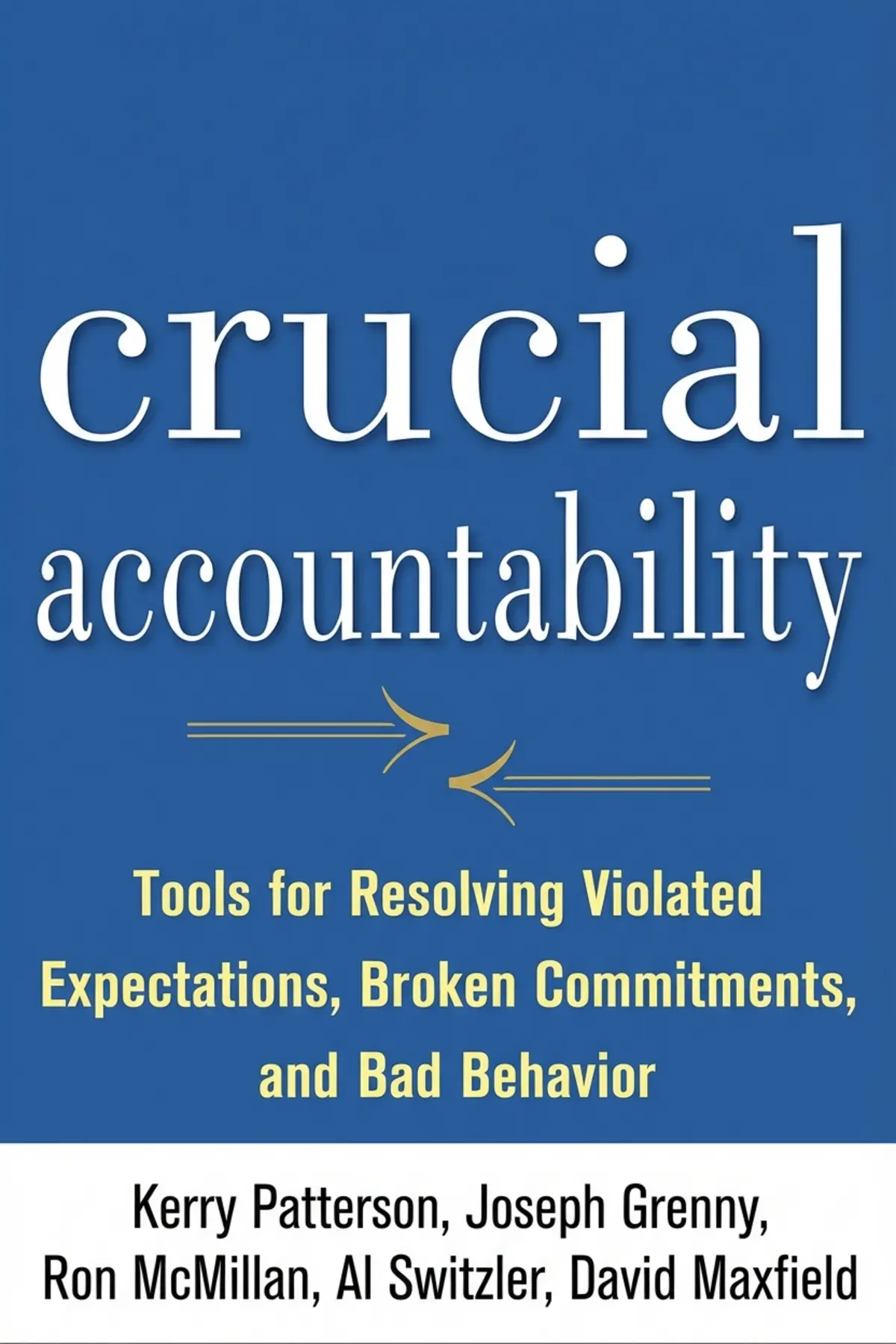
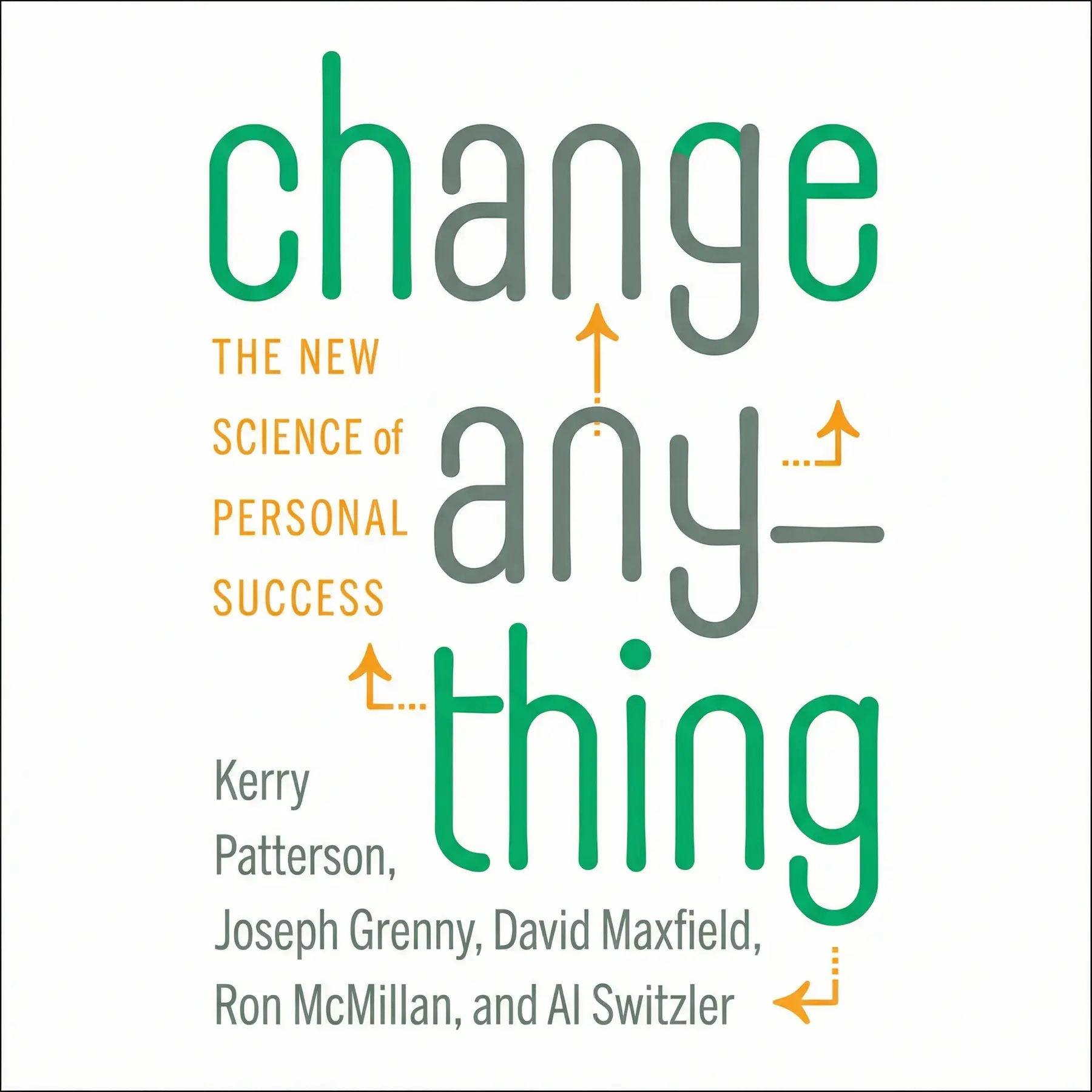
Change Anything: The New Science of Personal Success
Shows why repeated failures to change a habit are rarely a lack of willpower, and how to turn six everyday forces, from friends to rewards to your own kitchen, into allies for lasting change.
Table of Content
1. Introduction
1 min 06 sec
Most people who fail to change a habit blame themselves for being weak. In Change Anything, Kerry Patterson, Joseph Grenny, David Maxfield, Ron McMillan and Al Switzler argue that this diagnosis is usually wrong. The people who succeed are rarely stronger. They stop fighting alone against forces they cannot see.
The authors sort those forces into six sources of influence: what a task means to you, the skills you have, the norms of the people around you, the accountability you feel, the rewards on offer and the space you live in. Their case is simple. Willpower loses when all six push against it, and change becomes likely when you recruit them.
The stories run from a four-year-old in a Utah lab facing a marshmallow to a garbage picker in Rio de Janeiro, a consulting firm whose prize drove its stars away and a couple who cleared their debt without earning more. By the end, a failed resolution looks like a plan with missing parts, and you will know how to fill them in.
2. Stop blaming your willpower for every slip
1 min 51 sec
A four-year-old in a Utah lab managed something that many children in an earlier study could not. What changed was neither his character nor his age, and the difference reframes every resolution you have ever broken.
3. Make the task you dread worth wanting
1 min 50 sec
A man spends his days sorting through one of the largest dumps on Earth and goes home proud. His secret has nothing to do with the work itself, and it applies to saving money and finishing long projects.
4. Practice the skills your temptations exploit
1 min 43 sec
A craving for sweet coffee and a marriage drifting toward silence seem to have nothing in common. Both gave way to the same discovery: the person losing the battle had never been trained for that moment.
5. Turn your accomplices into coaches and fans
1 min 59 sec
Classic experiments showed people giving answers they knew were false just to match a group. The same pull is probably shaping your spending and eating right now, and the authors explain how to reverse its direction.
6. Set rewards that pull you the right way
1 min 38 sec
A consulting firm created a cash prize to celebrate its hardest-working travelers, and it worked exactly as designed. That was the problem. The story exposes how everyday rewards can push your habits in the wrong direction.
7. A home that makes good choices the default
1 min 39 sec
The size of your plates and the spot where your television sits decide more of your evening than you think. Small physical changes, the authors argue, can make the right choice the lazy one.
8. Build one plan that pulls every lever
1 min 48 sec
A woman passed over for promotion, a couple buried in debt and a smoker who had failed before all turned things around. None of them relied on one trick, and their plans offer a checklist for yours.
9. Conclusion
1 min 12 sec
Change Anything turns an uncomfortable fact into a hopeful one. Your behavior is shaped by forces you rarely notice: what a task means to you, the skills you have, the people beside you, the rewards on offer and the room you stand in. That sounds like bad news until you see that every one of those forces can be turned. The nurse, Lee, Justine and Patricia each changed what surrounded their choices, and their choices followed.
Setbacks will still come. The authors expect them and treat each slip as a reason to adjust the plan. Take one habit that has beaten you before and recall the last time it won. Ask which influence pushed hardest in that moment, then answer it directly: a meaning that makes the effort worth it, a skill you practice, a small sum at stake or one object moved across a room. And tell the people closest to you what you are attempting, because a friend who becomes a fan changes the odds twice.
Kyler did not leave that lab with two marshmallows because he was stronger than the other children. He left with them because someone taught him to turn around.
About this book
What is this book about?
Most people who fail to quit smoking, lose weight, get out of debt or win a promotion end up blaming themselves. They try harder, slip again and decide they are simply weak. The authors of Change Anything argue that this diagnosis is usually wrong. Behavior is shaped by forces most of us never examine, and willpower fighting all of them at once is bound to tire. Drawing on research such as the marshmallow experiments and the conformity studies of Solomon Asch, the authors sort these forces into six sources of influence. Two are personal: whether you can learn to value a task you dislike, and whether you have the skills to handle temptation. Two are social: the norms of the people around you and the accountability you feel toward them. Two are structural: the incentives that reward or punish your choices, and the physical environment that makes some actions easy and others hard. Readers get a practical way to diagnose why a past attempt failed and to build a plan that covers every source. Real stories show the method at work on careers, health, money, addiction and marriage.
Book Information
Who it's for
Struggling to break habits
People who have tried to quit smoking, lose weight or cut spending and keep blaming their willpower.
Stuck short of promotion
Professionals stuck on a promotion who want a structured plan to close the gaps.
Leads curious about influence
Team leads curious why rewards and peer pressure shape behavior more than good intentions.
About the Author
Kerry Patterson
Kerry Patterson, Joseph Grenny, David Maxfield, Ron McMillan and Al Switzler lead VitalSmarts, a training company Grenny founded, and together they have taught millions of people and worked with over 300 Fortune 500 companies. Grenny spent thirty years researching behavior at work and was a protégé of Albert Bandura. Maxfield and Patterson did doctoral work at Stanford, and Maxfield leads research at VitalSmarts. McMillan's work on organizational change has been translated into 28 languages. Their books, including Influencer, have more than six million copies in print.
Ratings & Reviews
Ratings at a glance
What people think
Listeners find this book provides actionable guidance for achieving genuine transformation, featuring compelling research and various case studies throughout. The material is accessible and serves as inspiration, with one listener mentioning that it completely transformed their life. They value the book's organization, with one review emphasizing how useful the framework is for implementing the six sources of influence.
Top reviews
Tum
Finally got around to finishing this, and the concept of turning a "bad day into good data" has completely shifted my mindset. Instead of drowning in guilt when I slip up on my fitness goals, I now approach my failures like a scientist examining a lab result. The authors break down change into six distinct sources of influence, which makes the whole process feel less like a test of willpower and more like a strategy game. Truth is, I used to think I just lacked discipline, but seeing how my environment and social circle were sabotage points changed everything. It’s practical, easy to digest, and the anecdotes about the marshmallow study really drive the points home. If you are tired of the same old self-help fluff, this provides a structured roadmap that actually works.
Show moreSomchai
This book genuinely changed the way I look at my daily environment and my struggle with quitting smoking. Instead of just trying to "be stronger," I followed the advice to build fences and manage the distance between me and my triggers. The concept of social motivation helped me realize that certain friends were actually making it harder for me to stay healthy without even realizing it. Not gonna lie, I was skeptical at first because the writing style is very casual, but the results speak for themselves. The authors show you how to align your personal, social, and physical worlds so that success becomes the path of least resistance. It's a very empowering read that moves beyond theory into real-world application.
Show morePiyanart
Look, we all know what we should be doing, but this book finally explains why we aren't doing it and how to fix that. The shift from being a victim of your habits to a non-judgmental self-scientist is probably the most useful mental tool I’ve acquired this year. It helps you stop the cycle of self-pity and starts the cycle of data collection and adjustment. I loved the emphasis on vicarious experience and finding real social ability through coaching or mentors. It’s written in a way that’s very accessible, and though it’s simple, the logic is incredibly sound. This isn’t just about losing weight; it’s a manual for redesigning your life from the ground up by manipulating your environment.
Show moreDiego
The framework presented in this book is undeniably powerful, especially the way it categorizes influence into personal, social, and structural levels. While the tone occasionally veers into that "corporate sales pitch" territory mentioned by others, the actual substance regarding "crucial moments" is gold. I realized that most of my bad habits happen in very specific windows of time, and by preparing for those, I've had much better success. The science feels a bit light in places—almost like marketing surveys—but the logical application of these principles is hard to argue with. I especially appreciated the focus on "structural ability," like changing your physical space to make the right choice the easiest one. It’s a solid 4-star read for anyone needing a systematic approach to habit formation.
Show moreDarius
Ever wonder why some people seem to change effortlessly while you're stuck in the same old ruts? This book argues that it’s not about your character; it’s about the six sources of influence that are constantly acting upon you. I’ve started implementing the "skill scan" idea to see where I’m actually lacking ability versus just lacking motivation. The distinction between "accomplices" and "friends" in the social section was a real eye-opener for my current career transition. My only gripe is that some of the sections felt a bit hasty and could have used more detailed instructions on implementation. Still, the idea of becoming a self-scientist is a great way to remove the emotional baggage from personal growth and focus on what works.
Show moreMaksim
The chapter on Structural Ability alone was worth the price of admission for me. It’s fascinating how much our physical surroundings dictate our choices, from the size of our plates to the apps on our home screens. While I agree with other reviewers that the tone is a bit corporate, the actual framework of the six sources of influence is a very tidy way to organize a life overhaul. I appreciate how they utilize the marshmallow study to talk about "the will skill" and deliberate practice. It’s a very practical guide that focuses on small changes and big results rather than asking for a complete personality transplant. I’d recommend it to anyone who feels like they’ve hit a wall with traditional self-help methods.
Show moreHannah
After hearing a lot about the Influencer model, I wanted to see how it applied to individual change, and this book didn't disappoint. It provides a very clear, actionable framework: identify your crucial moments, create vital behaviors, and then engage all six sources of influence. The idea of turning accomplices into friends was particularly relevant for my current goal of becoming more productive at work. Truth is, some of the science feels a bit dated—especially the weight control sections—but the behavioral psychology behind it is still very relevant. It’s a great companion piece for anyone who enjoyed The Power of Habit but wants a more prescriptive how-to guide for their own life experiments.
Show moreSamroeng
To be fair, this is a decent introductory text if you’ve never looked into the psychology of habit change before. It hits on some important truths, particularly how our culture over-emphasizes willpower while ignoring the massive impact our social networks have on our decisions. However, it does feel a bit like a long-form brochure for the authors' consulting business, which can be distracting. The advice is logical and very easy to follow, but it lacks the depth of something like The Brain That Changes Itself. I liked the practical tips on creating vital behaviors, yet I found myself wanting more rigorous data rather than just anecdotes about people losing weight or quitting smoking. It’s okay, but there are better books on the market if you want a deep dive.
Show moreSangduan
As someone who had to read this for a corporate leadership program, I found it a bit hit-or-miss. On the positive side, the anecdotes are engaging and make the concepts of structural motivation and personal ability very easy to understand. It’s certainly a faster read than something like Good to Great, but it doesn’t quite reach the level of Switch by the Heath brothers. The authors emphasize that you can change anything by identifying crucial moments, which is helpful, but the execution feels a bit like a "Greatest Hits" of existing social science. I didn't find the associated website particularly useful, but the core message about using the scientific method on yourself is a takeaway I will definitely keep for the future.
Show morePongpan
Not what I expected given the high praise, and frankly, it felt like a massive over-explanation of common sense. The authors spend a lot of time describing basic human behaviors as if they’ve discovered a brand new branch of science, but it’s mostly just the public health model rebranded. I found the "Change Anything Labs" references a bit gimmicky, and the casual tone felt like it was talking down to me at times. If you’ve read Brain Rules or Incognito, you’ll likely find this repetitive and somewhat simplistic in its delivery. It suggests that applying the scientific method to your life is a revolutionary act, but for many of us, that’s just called thinking things through. I struggled to stay engaged past the halfway mark.
Show moreQuestions about this book
What is the main idea of Change Anything?
The authors argue that most failed attempts to change come from relying on willpower alone. Six sources of influence shape behavior: whether you value a task, whether you have the skills for it, the social norms around you, the accountability you feel, the incentives you face and your physical environment. People who succeed turn these forces to their side instead of fighting all of them at once.
What are the six sources of influence in Change Anything?
Two are personal: learning to love what you hate, by tying a dreaded task to meaningful outcomes, and learning to do what you can’t, by building specific skills. Two are social: the norms set by the people around you and the accountability you feel toward them. Two are structural: the incentives that reward or punish choices, and the environment that makes some actions easier than others.
How does Change Anything suggest using friends to change a habit?
The authors say friends often act as accomplices, doing the same bad habit or making it easy. The fix is to talk honestly about your goal and ask them to become coaches who guide you or fans who cheer you on. Michael E. stuck to his weight goals through an online group that tracked his progress. If someone refuses to help, the authors suggest keeping some distance.
How can I change my environment to build better habits?
The book offers three tools. Fences block bad options, such as moving the television to another room so reading becomes easier. Distance keeps good options close and temptations far away, like leaving workout gear in view and storing junk food out of reach. Cues remind you of your goal when you are likely to forget, such as a checklist on your car dashboard.
Who should read Change Anything?
It suits anyone who has tried and failed to change a habit, whether in health, money, career, addiction or relationships. Its stories include a smoker who quit, a couple who cleared their debt and a woman who earned an overdue promotion. Managers will also find warnings about how rewards can backfire, as with a consulting firm’s prize that drove its winners to quit.
Featured in
Readers also enjoyed





A Guide to the Good Life: The Ancient Art of Stoic Joy
William B. Irvine


A High-Performing Mind: Strengthen Your Mind and Live Your Best Life
Andrew D. Thompson


Abundance: The Inner Path to Wealth
Deepak Chopra

AUDIO SUMMARY AVAILABLE
Listen to Change Anything in 15 minutes
Get the key ideas from Change Anything by Kerry Patterson, plus 5,000+ more nonfiction titles.
- 5,000+ titles
- Listen as much as you want
- 7-day free trial
- Cancel anytime









