
14 min 54 sec
Available in: English
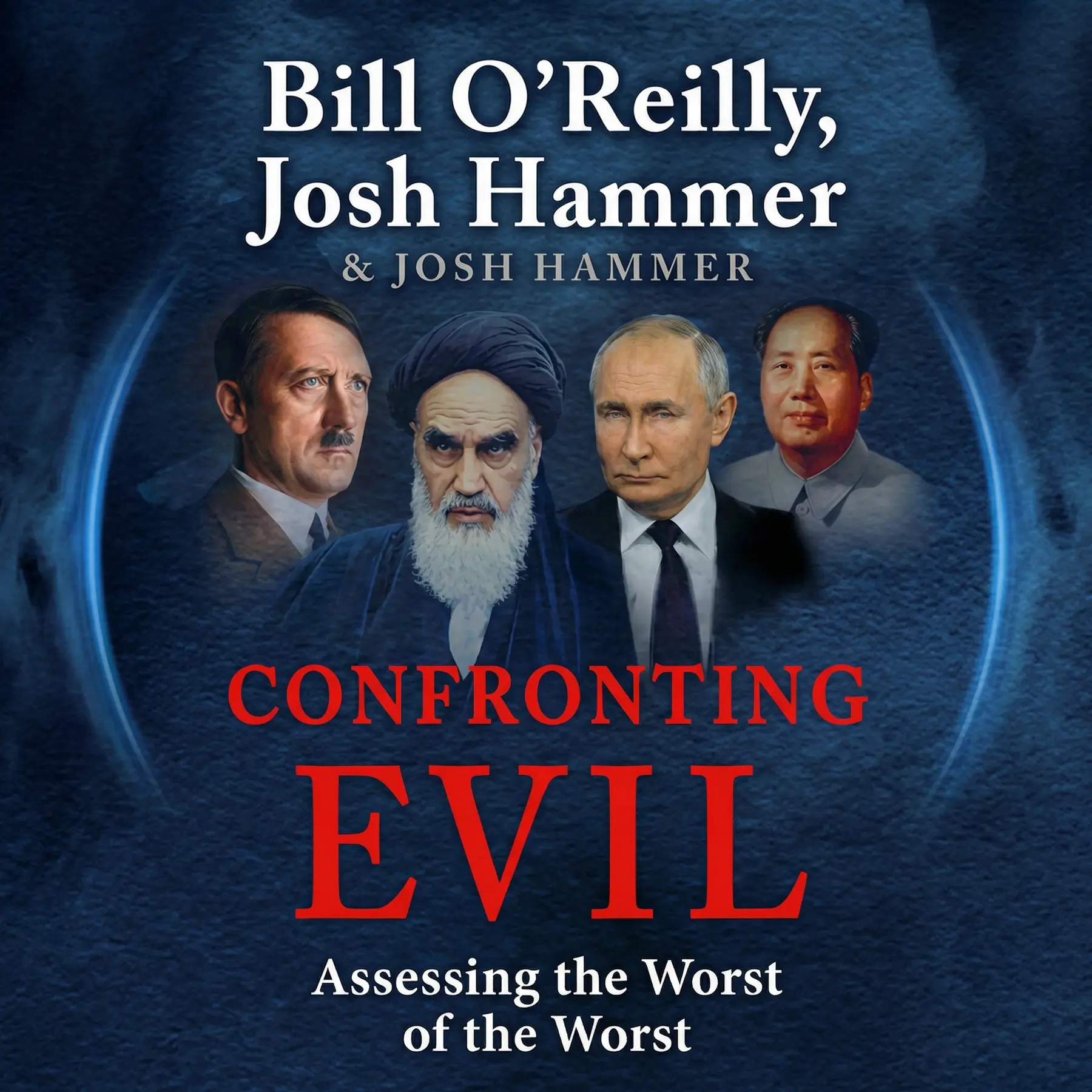
Confronting Evil: Assessing the Worst of the Worst
Offers a plain test for evil, harm done without remorse, and applies it to Caligula, Genghis Khan, slave traders, Nazi planners and El Chapo, showing how money, power and zealotry drive the worst of history.
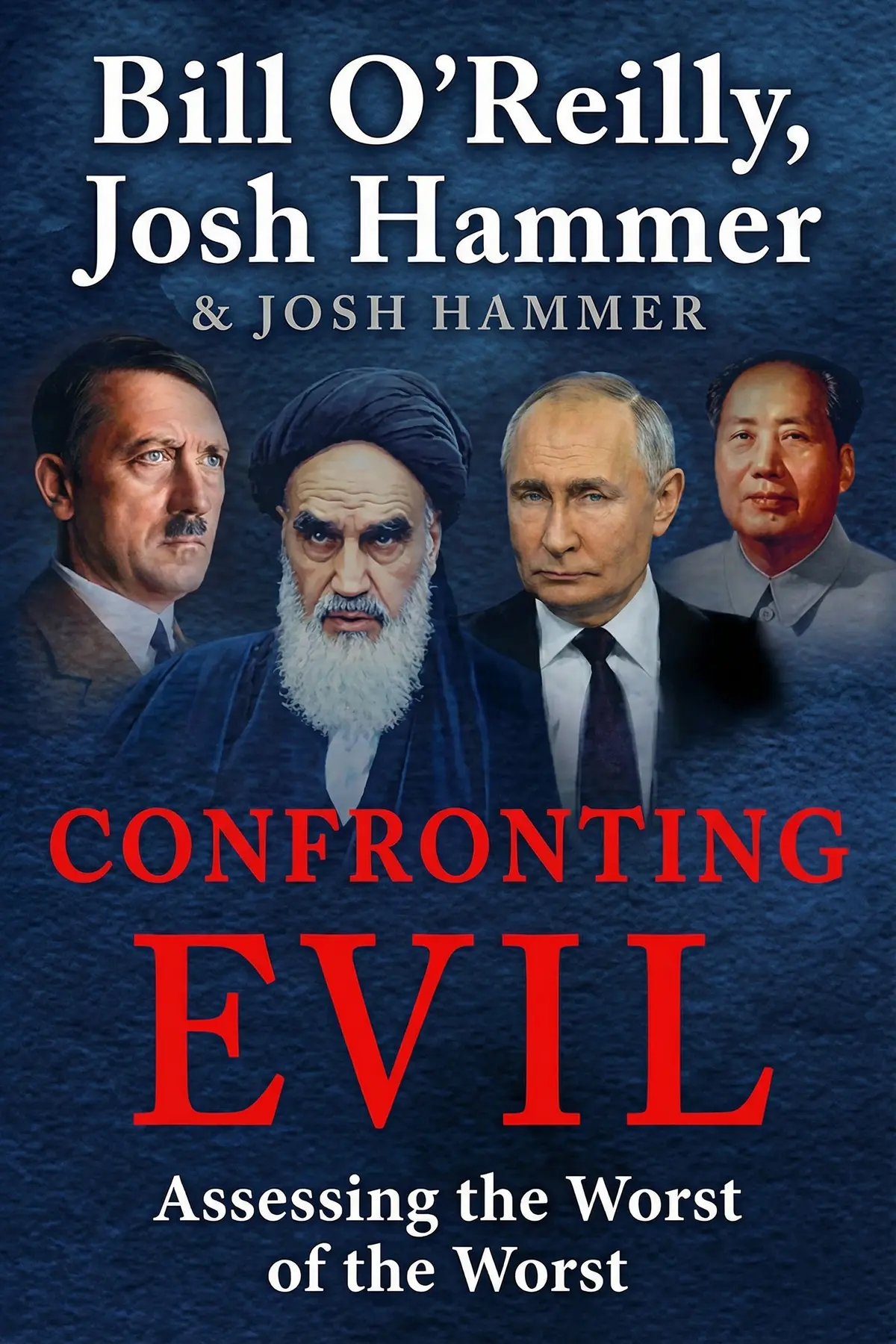
Table of Content
1. Introduction
1 min 01 sec
Most of us assume we would recognize evil on sight, yet history’s worst harms usually arrived with a respectable explanation attached. In Confronting Evil, broadcaster Bill O’Reilly and writer Josh Hammer refuse every such explanation. Their definition is blunt: evil is harming a human being without remorse, and behind it you will nearly always find one of three motives, money, power or zealotry.
The authors test that definition on a gallery of the worst. Their cases run from a Roman emperor and a Mongol conqueror to two American slave dealers, a table of Nazi officials and a Mexican drug lord. One pattern holds across all of them: the most dangerous evil rarely looks monstrous. It looks like a business plan, a meeting agenda or a ruler’s whim turned into law.
Follow the cases and you gain a simple lens for history and for the news. It looks past the excuse to the harm itself and to the motive underneath it.
2. A blunt test that cuts through every excuse
1 min 47 sec
An emperor, two dictators and a drug dealer each had a story about why their harm was justified. The authors propose a test so short it fits in one breath, and it makes those stories fall apart.
3. Spot the moment a leader stops pretending
2 min 12 sec
Plenty of Roman emperors were cruel, so what made Caligula different was not the cruelty. It was one decision about rules, and it shows how a powerful institution starts to rot from the top.
4. Terror can win an empire but cannot keep it
2 min 10 sec
One of the largest empires in history was built on a single repeated tactic. Look closely at what it built besides fear, and the answer explains how quickly it all disappeared.
5. Spot the worst harm hiding inside ordinary business
2 min 07 sec
Two slave traders who each built a fortune of $30 million, about $2 billion today, were neither madmen nor aristocrats. Their account books reveal how a profitable trade can turn human beings into line items without anyone raising their voice.
6. Listen for the polite words that hide killing
2 min 10 sec
Fifteen officials, a lakeside villa, caviar and a crackling fire. In ninety minutes they settled something unimaginable, and the vocabulary they chose shows exactly how such decisions get made by educated people.
7. Profit alone can be as deadly as ideology
2 min 01 sec
A small skull-and-crossbones stamp on a packet of heroin traced a line from a Detroit driveway to Sinaloa. Follow it, and a cheap laboratory drug explains why one cartel outgrew every rival.
8. Conclusion
1 min 26 sec
Across two thousand years, the faces change completely. There is an emperor seating a horse in the senate, horsemen at the gates of Merv, a slave trader’s ledger, a dining table in a lakeside villa with snow on the lawn and a car idling through a Detroit winter. The structure underneath barely changes. Someone is hurt, the person responsible feels nothing, and money, power or a cause explains why. Sometimes the evil is a spectacle. Just as often it is dull and calculated, a cost line or an item on an agenda.
That is why O’Reilly and Hammer argue that confronting evil starts with seeing it, especially when it looks ordinary. The book supports a few habits of attention. Strip the justification off any harm you hear about and look only at the act and at the remorse, or its absence. Name the motive. Treat code words and euphemisms as warnings, and treat rules that bend to one person’s mood as the first crack in an institution. Measure damage by its victims, whatever banner flies above it.
Rome’s political immune system still worked well enough for its guardians to assassinate Caligula in early 41 CE. Yet more rulers like him followed, Nero among them, and each wore down a little more of Rome’s values and institutions.
About this book
What is this book about?
People who do terrible harm almost always have a reason ready. An emperor says he is a god, a dictator says history is on his side, a dealer says he only sells what customers want. Bill O'Reilly and Josh Hammer set every one of those excuses aside and work from a short definition: evil is harming a human being without remorse. Behind it, they argue, there is nearly always one of three motives, money, power or zealotry. The authors test that definition on a gallery of history's worst. They visit Caligula's Rome, where law became one man's mood, and Genghis Khan's massacre at Merv. They follow two American slave dealers whose ledgers treated deaths as a cost of business, and the Nazi officials who planned the murder of Europe's Jews in a 90-minute meeting at Wannsee. Finally they turn to El Chapo's cartel and the fentanyl that reached a young woman in a Detroit car. Readers get a clear lens for history and the news. It looks past the excuse to the harm and the motive behind it, and it explains why the most dangerous evil so often looks completely ordinary.
Book Information
Who it's for
History fans
History readers who want the worst episodes of the past tied together by one clear idea.
Professionals wary of spin
Professionals uneasy with how polished language can hide harm at work or in politics.
Hoping to recognize evil
Students of ethics, leadership or current affairs looking for a plain test for recognizing evil.
About the Author
Bill O'Reilly
Bill O'Reilly, born in 1949, reported for CBS News and ABC News, anchored Inside Edition and hosted The O'Reilly Factor on Fox News, which led cable news ratings for sixteen years. He now hosts No Spin News and co-wrote the Killing series of history books. He studied history at Marist College and holds master's degrees from Boston University and Harvard's Kennedy School. Josh Hammer studied political theory at George Washington University and international politics at the University of Edinburgh, and he is a writer and producer whose work includes The O'Reilly Update.
Ratings & Reviews
Ratings at a glance
What people think
Listeners find this book to be a succinct and enjoyable listen that is deeply researched and packed with historical data, focusing especially on history's tyrants. The writing is skillfully done, and they appreciate how it encourages reflection, with one listener highlighting the excellent insight it gives into the nature of evil. Opinions on the storytelling are divided; one listener considers it a fascinating narrative, whereas another notes the inclusion of too many fictionalized dramatizations.
Top reviews
Lek
This book provides a chillingly clear look at the mechanics of human cruelty throughout the centuries. O’Reilly and Hammer don’t just list names; they dissect the motivations behind absolute monsters like Caligula and Genghis Khan. I appreciated the straightforward prose that avoids getting bogged down in overly academic jargon while still delivering heavy historical truths. The focus on how power, money, and zealotry drive people to commit atrocities is a framework that feels incredibly relevant today. While some might find the dramatized vignettes a bit much, I think they help illustrate the cold reality of these regimes. It’s a thought-provoking read that forces you to acknowledge that evil isn’t just a ghost story, but a recurring human pattern. This is easily one of the most compelling entries in his historical collection.
Show moreNattapong
Wow, this was a heavy but necessary journey through the darker chapters of our shared human history. The authors do an excellent job of categorizing evil into three distinct buckets: money, power, and ideological zealotry. I found the narrative regarding the Mongol Empire particularly harrowing because it highlights how fear can be wielded as a totalizing political tool. Frankly, the research feels very thorough, and the prose is tight enough to keep you turning pages even when the subject matter is grim. It’s a transformative read that challenges you to be a more vigilant citizen in the face of modern injustices. By looking at how these figures rose to power, we can better identify the warning signs in our own era. This is a must-read for anyone interested in the intersection of morality and history.
Show moreSomkid
The chapter on the American slave traders Isaac Franklin and John Armfield was absolutely gut-wrenching and brilliantly researched. It’s one thing to read about slavery in the abstract, but O’Reilly and Hammer make the evil feel personal by showing the calculated greed involved. I appreciate how the book defines evil as the deliberate infliction of harm without remorse because it simplifies a very complex topic into something we can actually confront. The narrative flows smoothly, and the collaboration between the two authors creates a balanced, authoritative tone throughout the work. It’s more than just a history lesson; it’s a moral call to action that asks us to refuse to look away from cruelty. I came away from this book feeling much more informed about the cycles of tyranny that plague our world. Highly recommended for fans of narrative non-fiction.
Show moreThawee
After hearing the hype about this being a departure from the 'Killing' series, I decided to give it a shot and wasn't disappointed. The research is top-notch, and you can tell that Hammer and O’Reilly spent a lot of time digging into the records of these tyrants. I was particularly struck by the analysis of the Ayatollah and the Iranian Revolution, which provided context I hadn't considered before. It’s a sobering reminder that evil isn't confined to the past but continues to morph into new forms in the 21st century. The writing style is direct and punchy, making it easy to digest even the most horrifying facts. This book succeeds in making you think deeply about your own responsibilities as a person of conscience. It’s a powerful, well-executed exploration of the darkest side of humanity.
Show moreJoe
Ever wonder what drives a person to cross the line from ambition to pure malice? This collaboration explores that exact question by looking at figures ranging from the infamous Stalin to the modern-day Mexican drug cartels. I found the section on Henry VIII particularly interesting, even if it seemed a bit out of place next to mass murderers like Mao. To be fair, the book leans into a very specific moral worldview, which might not sit well with every reader. The writing is snappy and keeps the pace moving, though I felt some of the historical nuances were sacrificed for the sake of brevity. If you enjoy the 'Killing' series, you will definitely find this style familiar and engaging. It’s a solid, concise summary for anyone who wants a quick historical overview of world despots.
Show moreWanida
Picked this up after seeing a few interviews, and it’s a very quick, punchy read about the world's most notorious leaders. The authors manage to pack a surprising amount of detail into these short chapters without making the book feel like a textbook. I especially liked the inclusion of more modern threats, like Putin and the cartels, which makes the history feel more immediate. To be fair, there are moments where the dramatized scenes feel a bit speculative, but they do make the history come alive for the average reader. My only real gripe is that it skips over some depth in favor of covering more subjects. It’s a great starting point if you want to understand the 'worst of the worst' throughout history. Just don't expect a deep dive into psychological theory or complex systemic failures.
Show morePrasarn
Bill O’Reilly has a knack for turning dense historical events into something that feels like a fast-moving thriller. This latest project takes that same energy and applies it to the most despicable figures to ever walk the earth. From the madness of Caligula to the bureaucratic horror of the Nazi regime, the book covers a vast amount of ground very quickly. I found the 'three motives' framework—money, power, and zealotry—to be a helpful way to organize my thoughts while reading. Some of the segments felt a little too short, especially the one on Mao, which I felt deserved a bit more space given his death toll. However, the overall message about moral vigilance is something that really resonated with me. It’s a solid addition to any history lover's shelf, even if it’s a bit simplified.
Show moreAlejandra
Finally got around to reading this latest collaboration and I found the focus on the Mexican drug cartels to be the most impactful section. We often think of evil as something that happened long ago in Rome or Germany, but it’s happening right now on our doorstep. The authors' argument that 'good people looking on' is what allows these horrors to persist is a convicting sentiment that stuck with me long after I closed the book. Personally, I would have liked to see a bit more nuance regarding the systems that enable these people, rather than just focusing on individual moral failure. That being said, the storytelling is top-tier and the historical anecdotes are fascinatingly grim. It’s an entertaining and educational read that serves as a grim encyclopedia of human depravity. Definitely worth a read for the historical insight alone.
Show moreArthit
As a history buff who has followed the 'Killing' series for years, I had high expectations for this one. The fact-heavy approach is definitely there, and it’s impressive how much ground they cover from ancient Rome to the present day. However, I noticed a shift toward political commentary that didn't always feel connected to the historical analysis. For instance, the discussion of the Biden administration's handling of the border felt like it belonged in a different book entirely. Look, the research on the early slave traders and the KKK was sobering and well-documented. But the concluding thoughts on religion and the decline of theological belief felt a bit reductive to me. It’s an okay read for the facts, but I could have done without the personal preaching at the end.
Show moreRose
Not gonna lie, I was disappointed with how this one turned out compared to his previous works. While the historical biographies are interesting enough, the book eventually devolves into a soapbox for the authors' specific political and religious biases. Claiming that a lack of religion is a primary driver of evil is a massive stretch that ignores the many atrocities committed in the name of faith. He also leaves out modern villains that seem like obvious choices, like notorious serial killers or child abusers, in favor of a more political list. The writing is fast-paced, but it feels like a collection of Wikipedia entries stitched together with cringey commentary. I think I’ll stick to the more objective history books next time. It’s just too partisan to be taken seriously as a scholarly look at human behavior.
Show moreQuestions about this book
What is the main idea of Confronting Evil?
Bill O’Reilly and Josh Hammer define evil simply as harming a human being without remorse. They argue that behind such harm there is nearly always one of three motives: money, power or zealotry. They apply the definition to figures ranging from Caligula and Genghis Khan to slave traders, Nazi planners and El Chapo, and conclude that the first step in confronting evil is recognizing it, even when it looks ordinary.
Which historical figures does Confronting Evil cover?
The book examines the Roman emperor Caligula, the Mongol conqueror Genghis Khan and his massacre at Merv, and the American slave dealers Isaac Franklin and John Armfield. It also covers the Nazi officials at the Wannsee Conference, including Reinhard Heydrich and Adolf Eichmann, and Joaquín Guzmán, known as El Chapo, whose Sinaloa Cartel became the largest criminal organization in the world by the early 2010s.
Why do the authors say evil often looks ordinary?
Their clearest example is the slave-trading firm of Franklin and Armfield, which traded more than 100,000 people and recorded deaths in ledgers as a business cost. The authors see nothing mad or monstrous in these men, only practical businessmen who resembled those around them. The Wannsee meeting makes the same point: educated officials planned mass murder over caviar and cognac in about 90 minutes.
How can I apply the ideas in Confronting Evil?
Use the book’s test whenever someone offers a justification for harm. Set the excuse aside and ask who is hurt and whether anyone shows remorse, then name the motive: money, power or zealotry. Treat euphemisms and code words as warning signs, as at Wannsee, and watch for rules that change with one leader’s mood, as in Caligula’s Rome.
Readers also enjoyed


A History of Iran: Empire of the Mind
Michael Axworthy

A History of the World in 6 Glasses
Tom Standage

A Long Way Gone: Memoirs of a Boy Soldier
Ishmael Beah




A Splendid Exchange: How Trade Shaped the World
William J. Bernstein

A Spy Among Friends: Philby and the Great Betrayal
Ben Macintyre

AUDIO SUMMARY AVAILABLE
Listen to Confronting Evil in 15 minutes
Get the key ideas from Confronting Evil by Bill O'Reilly, plus 5,000+ more nonfiction titles.
- 5,000+ titles
- Listen as much as you want
- 7-day free trial
- Cancel anytime









