

1929: Inside the Greatest Crash in Wall Street History--and How It
Andrew Ross Sorkin
 English
 ไทย
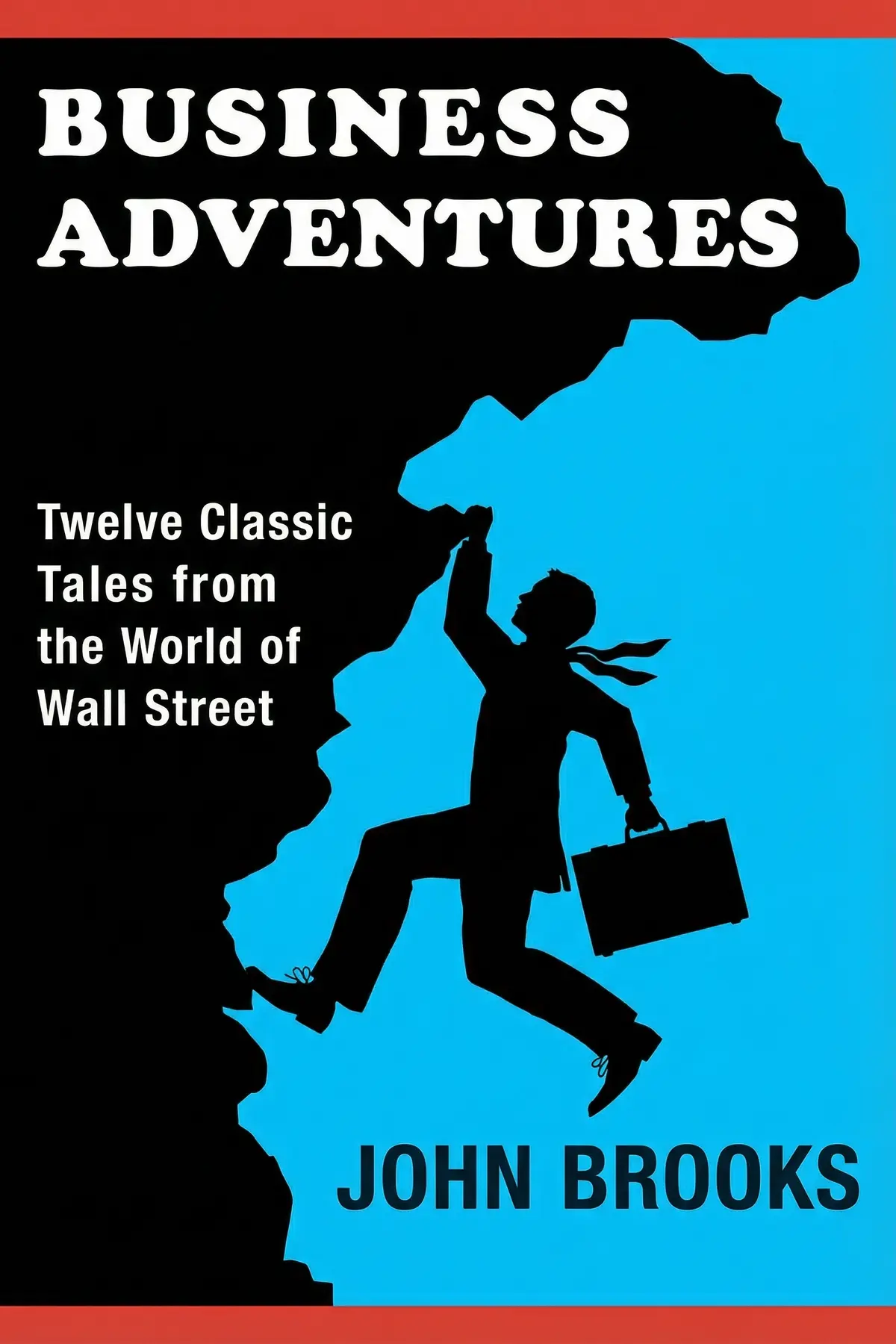
Twelve true business stories, most from the 1950s and 1960s, show how mood, pride and evasion drive markets and companies, and how a few people who pushed back created lasting rules on insider trading and employee rights.
1 min 00 sec
Many of the rules that protect investors and employees today were never planned. They were won one case at a time, after something went badly wrong. Most date from the 1950s and 1960s, yet the people in them are familiar, from traders who panic to managers hiding behind vague orders.
Brooks’s thread is that markets and companies run on mood, pride and evasion, and that the turning points came when someone refused the usual excuse. Along the way you meet a car that flopped, a grocery chain nearly destroyed by a stock fight, a copier company whose fortunes rose and fell fast, and a brokerage rescued in a week of national shock. You learn to tell a panic from real news, to hear what a convenient alibi is hiding, and to see why you may take a job with your employer’s rival. These twelve stories still explain how money and power behave today.
1 min 36 sec
One morning in 1962, billions in stock value vanished, and three days later it was all back. The cause was neither a scandal nor bad earnings, and it says something unsettling about every investor, including you.
1 min 47 sec
Ford spent a fortune researching what young families wanted and still built a car people mocked. Xerox expected little and earned half a billion. Both stories carry a warning for anyone launching a product or riding a hit.
1 min 33 sec
The eccentric owner of the first self-service supermarket chain bought nearly every share of his own company to punish Wall Street. The price more than tripled, the speculators were trapped, and then the rules of the game shifted under him.
1 min 36 sec
Executives bought shares in secret while their company publicly played down a major mineral discovery. Such behavior had never been properly policed, until one regulator decided to act and a court drew a line that still holds.
1 min 33 sec
Some General Electric managers went to prison for price fixing while their bosses walked free. The explanation came down to a facial expression, and it reveals how leaders can give orders they never have to own.
1 min 45 sec
Shareholders own America’s biggest companies, yet most annual meetings are staged so they barely speak. One investor suggested a famous chairman see a psychiatrist, and the same imbalance helps explain why the tax code keeps favoring the rich.
1 min 29 sec
A space suit engineer accepted an offer from his employer’s main competitor during the race to the moon, and his old company sued to stop him. The verdict decided something about your own career.
1 min 44 sec
In the week President Kennedy was shot, a Wall Street firm faced collapse over oil that never existed. The next year, the world’s central bankers fought to save the British pound. Only one of those rescues held.
1 min 11 sec
An ugly car, a winking executive and a grocer ruined by his own shares have one thing in common: people. Brooks shows a market lurching because its prices ran 45 minutes late, a company staking $250 million on a mood that had already moved, and a price-fixing scheme protected by a wink. He also shows people who refused to play along, from regulators finally enforcing insider rules to a judge who would not punish an engineer in advance. Much of what now feels like settled financial law began as one of those refusals.
The habits that follow are small. When prices fall fast, ask whether the news changed or only the mood. When a leader blames a communication problem, ask who was expected to guess the real meaning and who paid for guessing wrong. And if you own shares, vote them, since a passive owner is what management counts on.
Markets will keep fluctuating, as Morgan warned. The rules around them change only when someone decides the usual excuse will no longer do.
Business news can look like random noise: crashes that come from nowhere, products that flop, executives who escape blame. John Brooks, who covered finance for The New Yorker for many years, found patterns in that noise and told them through twelve true stories, most from the 1950s and 1960s. His cases range from a three-day market panic in 1962 and the costly failure of the Ford Edsel to a mining company whose insiders bought shares while denying a discovery, and a General Electric price-fixing scheme run by winks. There is also the owner of Piggly Wiggly, who tried to corner his own stock to beat speculators and ended up bankrupt, a scientist who won the right to join a rival, and an alliance of central bankers that could not save the British pound. Across the stories, Brooks shows markets driven by mood, companies undone by pride and leaders who hide behind vague orders. Readers get a clearer eye for panics, hype and excuses, and a sense of where today's protections came from.
Investors who want to understand why markets swing on fear and how insider rules came to be.
Founders and managers looking for real cases of launches, fights and excuses that went wrong.
Employees and shareholders curious about the rights they hold and how rarely they use them.
John Brooks (1920 to 1993) was an American writer who spent many years at The New Yorker, where he was on staff and concentrated on finance. He wrote ten nonfiction books on business and money, several of them praised for how they examined Wall Street and corporate life. Business Adventures stands among his lasting classics, with Once in Golconda and The Go-Go Years. He also published three novels and reviewed books for the New York Times Book Review and Harper's Magazine.

Listeners find this work to be essential for those in the investment world, featuring beautifully narrated accounts that deliver invaluable pieces of business wisdom. The quality of the prose is superb, with one listener praising it as a remarkably well-written assembly of historical chronicles, and listeners value how applicable the lessons remain to the modern corporate world. Even though the core themes are viewed as enduring, some listeners feel the material is slightly behind the times.
Ever wonder why Bill Gates considers this his all-time favorite? It’s not because the technology is current, but because the psychology behind the Xerox explosion or the Ford Edsel disaster remains identical today. Brooks has a way of turning a board meeting into a Shakespearean drama. To be fair, some sections on the 1960s tax code are a bit dense, yet the "golden nuggets" of insight you extract are worth the effort. The writing is incredibly well-crafted, far surpassing the dry, bulleted lists found in modern business manuals. It feels like getting a private tour of Wall Street's most pivotal moments from a master storyteller. Even if you aren't an investor, the human element here is universal and deeply compelling.
Show moreThe chapter on the Pound Sterling is arguably the most pulse-pounding piece of financial writing I've encountered. I wasn't expecting to be on the edge of my seat reading about international currency devaluation, but Brooks makes the stakes feel incredibly high. This book isn't your typical "five steps to success" fluff; it’s a series of deep, philosophical explorations of how money moves and how people break. I especially loved the Xerox story, which serves as a poignant reminder of how idealism and risk-taking can birth a giant. In my experience, these historical case studies provide a better education than any modern textbook could. The prose is sophisticated and requires your full attention, but the reward is a much deeper understanding of the global financial machine. A total gem.
Show moreThis book is a masterclass in narrative non-fiction that proves business history is just human nature writ large. Each of the twelve tales is unique, ranging from the incredible rise of Xerox to the dramatic rescue of a failing brokerage firm during the JFK assassination. Brooks doesn't lecture; he simply observes, allowing the reader to draw their own conclusions about morality and risk. The chapter on the federal income tax remains shockingly relevant, especially his points about the complexity of the code favoring the wealthy. It’s rare to find a business book that is this well-written, with sentences that you want to read twice just for the rhythm. Even the dated parts provide a fascinating omniscient perspective on how we got to where we are today. This is essential reading for anyone serious about the world of finance.
Show moreAfter hearing so much hype about these classic New Yorker essays, I finally dove in. Brooks is a master storyteller who manages to make the most arcane financial details feel like a thriller. The drama surrounding Piggly Wiggly and the attempt to corner the market was particularly riveting, highlighting the eternal battle between bulls and bears. To be fair, the book is dated, especially when discussing the "cutting edge" technology of Xerox. However, the core lessons about leadership, communication, and human fallibility are as relevant in the age of the internet as they were in 1966. Some chapters are definitely stronger than others, and the section on the federal income tax is quite a mountain to climb. Still, the eloquence of the writing makes it a joy for anyone who appreciates long-form journalism.
Show morePicked this up expecting a dry textbook and was pleasantly surprised by Brooks' sharp, observant wit. He captures the absurdities of the 1960s corporate world, like the chaotic AT&T stockholder meetings, with such clarity that you feel like you're in the room. Frankly, the book is a bit of a time capsule, but that’s part of the charm. It’s refreshing to read business analysis that doesn't rely on buzzwords or simplified graphs. The way he breaks down the GE price-fixing scandal shows that corporate greed hasn't changed a bit in fifty years. My only complaint is that a few chapters, like the one on the income tax, feel a bit like a slog compared to the more narrative-driven pieces. Overall, it's a beautifully written collection that proves the best business stories are really just about people.
Show moreNot what I expected from a book published in the sixties. I thought it would be a bore, but the story of the Piggly Wiggly founder trying to take on the Wall Street establishment was genuinely entertaining. Brooks has a gift for making the complex mechanics of "cornering a market" accessible to a layperson. While some sections, like the international coordination of banks, felt a bit dry, the character studies throughout are top-notch. It’s interesting to see how the SEC's early battles with Texas Gulf set the stage for modern insider trading laws. My take is that this is more about the "adventure" of business than the "how-to," which makes it much more readable than your average bestseller. A few chapters didn't resonate, but the majority are gold.
Show moreFinally got around to this 'resurrected' classic and it absolutely lives up to the reputation. The twelve vignettes offer a panoramic view of mid-century American commerce, from the labs of Xerox to the floor of the Stock Exchange. Personally, I found the Goodrich vs. Latex case about trade secrets to be one of the most thought-provoking parts of the whole collection. It raises questions about employee loyalty and intellectual property that we are still debating in Silicon Valley today. The writing is definitely more formal than what we’re used to now, but it’s never dull if you appreciate fine craftsmanship. There are minor criticisms to be made about the length of the Edsel and Sterling chapters, but they are small gripes compared to the overall quality. It's a must-read for any serious investor.
Show moreAs someone who spends most of their day analyzing market trends, I found the chapter on the 1962 flash crash fascinating but technically obsolete. Truth is, while the panic feels familiar, the mechanics of delayed ticker tapes don't translate well to our high-frequency trading world. Brooks is undoubtedly a talented writer with a sharp eye for detail, yet the pacing can be glacial at times. The case of Texas Gulf and the insider trading scandal was interesting, though it’s hard not to think about how differently that would play out on Twitter today. I appreciated the deep dive into the Goodrich trade secrets case, as it highlights the recurring tension between employee rights and corporate security. It’s a solid collection of vignettes, but perhaps more of a history lesson than a practical business guide.
Show moreLook, I get that Warren Buffett loves this book, but let's be real about the prose style here. The essays were written nearly sixty years ago for The New Yorker, and boy, does it show. I found the much-lauded Edsel piece exceptionally arduous to get through, feeling like it dragged on for fifty pages more than necessary. While the themes of market fluctuations and corporate ego are indeed timeless, the specific examples feel trapped in amber. Personally, I struggled to stay engaged when the author spent so much time on the minutiae of 1960s international currency coordination. It’s certainly an important historical document, but as a "must-read" for modern entrepreneurs, I think it misses the mark. You might find a few interesting parallels to the Great Recession, but the investment in time just isn't worth the payoff for me.
Show moreFrankly, this was a slog. I know this is the "holy grail" for billionaires, but I found the writing style far too stilted and academic for my taste. The Ford Edsel chapter is famous for a reason, I suppose, but it could have been half as long and twice as effective. I struggled to find the "timeless" value that everyone keeps raving about when so many of the legal and technical hurdles described are now ancient history. Not gonna lie, I checked how many pages were left more than once during the chapter on the defense of the pound. If you love deep, dense historical essays, you might enjoy this, but if you’re looking for snappy business insights, look elsewhere. It feels very much like a product of its time—smart, but incredibly slow-moving.
Show moreIt collects twelve true stories from American business and finance, mostly from the 1950s and 1960s. Brooks covers a three-day market panic, the failed Ford Edsel, an insider trading case at Texas Gulf Sulphur, price fixing at General Electric, a stock corner at Piggly Wiggly and a failed defense of the British pound. Together they show markets moved by mood and pride, and rules created when someone challenged the usual excuses.
On May 28, 1962, after six months of falling prices, heavy trading left hand-updated prices about 45 minutes behind. Investors assumed real prices were lower and sold, which drove prices down and erased $20 billion in value. A shared belief that the Dow Jones Index could not drop below 500 points then set off a buying rush, and the market recovered within three days. Brooks uses it to show that markets run on mood.
Brooks gives three reasons. Ford planned the car in 1955 for a booming mid-priced market, but by the 1958 launch buyers wanted small, cheap cars. Ford also advertised that it had spent $250 million on the project, so people expected something groundbreaking and saw an ordinary car. Finally, heavy psychological research came at the expense of engineering, leaving faults such as unreliable brakes and jumpy acceleration.
In the Texas Gulf Sulphur case, the Securities and Exchange Commission charged a company whose insiders bought shares before announcing a mineral find, and the court ruled the public must get a reasonable chance to react before insiders trade. In 1962 engineer Donald Wohlgemuth was sued for joining a rival space suit maker; the judge ruled he could not be punished in advance, setting a precedent for workers’ freedom to change employers.
It suits investors who want to understand panics and insider rules, founders and managers who can learn from launches and excuses that went wrong, and employees or shareholders curious about the rights they hold. The stories are told as cases with real names and numbers, from Piggly Wiggly’s climb from $39 to $124 a share to the $7.5 million the New York Stock Exchange pledged to save a brokerage.
Andrew Ross Sorkin

Ha-Joon Chang
Niall Kishtainy


William J. Bernstein




Yanis Varoufakis
AUDIO SUMMARY AVAILABLE
Get the key ideas from Business Adventures by John Brooks, plus 5,000+ more nonfiction titles.









