

14 min 20 sec
Available in: English
 ไทย
EnglishไทยBlack Edge: Inside Information, Dirty Money, and the Quest to Bring Down the Most Wanted Man on Wall Street
Shows how hedge fund billionaire Steve Cohen's firm hunted illegal inside information, how federal agents worked their way up toward him, and why traders went to prison while he stayed free.
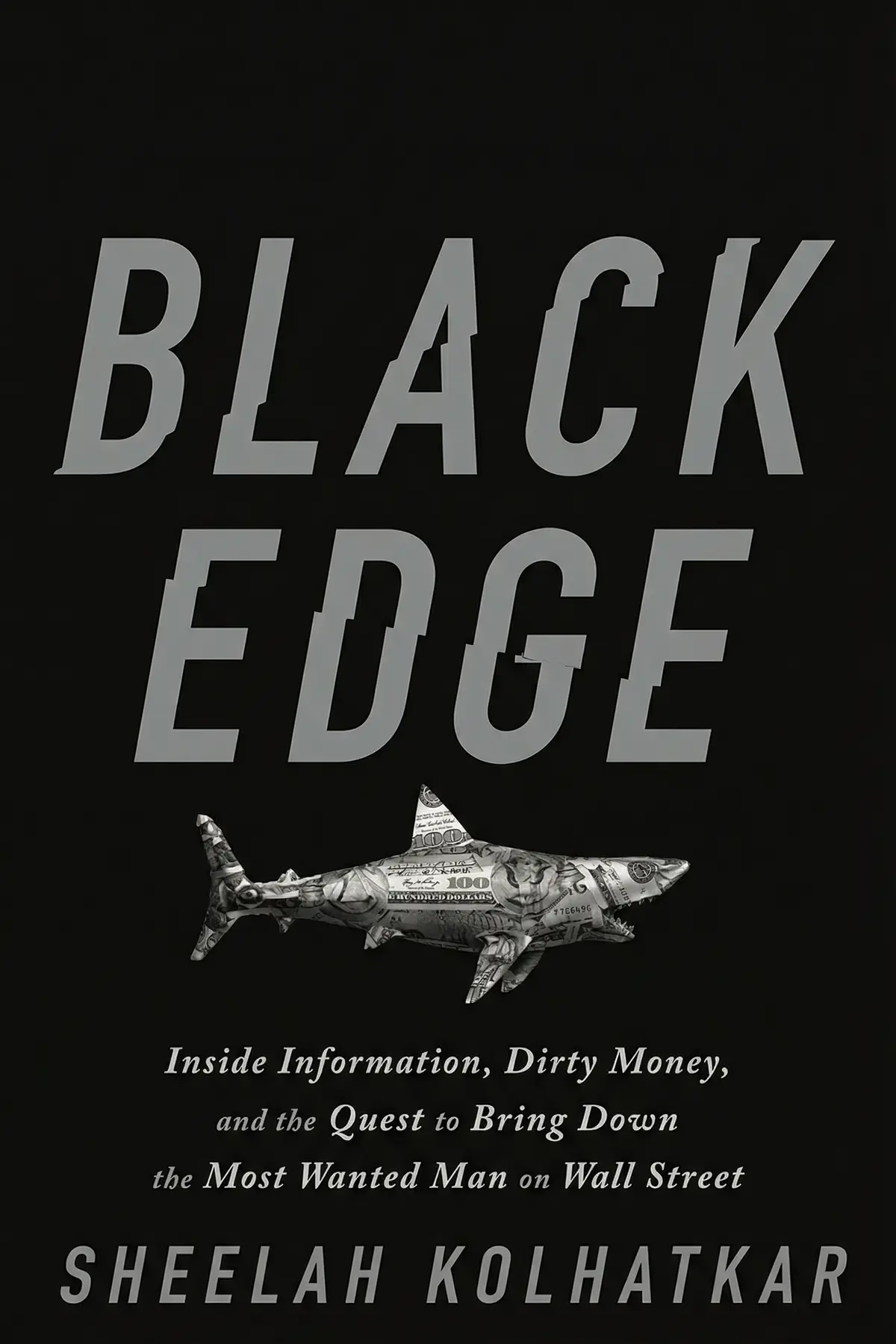
Table of Content
1. Introduction
1 min 05 sec
Most of us take a winning streak on Wall Street at face value: the trader who is always right must simply be better. In Black Edge, New Yorker staff writer Sheelah Kolhatkar shows how one of the most celebrated streaks may have been bought instead. Steve Cohen built a hedge fund worth billions, and his firm, SAC Capital Advisors, made a habit of hunting for black edge, the term for illegal inside information about how companies are doing.
Federal agents spent years trying to prove it. They convicted traders, extracted record fines and sent one man to prison for nine years. Cohen himself was never found guilty, and he kept getting richer. The throughline is uncomfortable: when a firm builds inside information into its culture and keeps its boss at a careful distance from it, the people below take the fall. Follow the case and you will see how that distance was built, how investigators tried to close it, and what a too-perfect record can signal.
2. Read a star trader's early record for warning signs
1 min 49 sec
A gifted young trader made a fortune before he turned thirty, and regulators noticed one trade in particular. The case went nowhere, yet it hinted at a habit that would follow him for decades.
3. See how a fund turned connections into profit
1 min 53 sec
When easy trading profits dried up, one fast-growing fund changed whom it hired. The new job requirement sounded like expertise. What the firm really wanted from its recruits was something else entirely.
4. Recognize rumors and expert calls used as weapons
1 min 59 sec
Employees at one insurer got whispered phone calls in the middle of the night. Meanwhile, paid expert consultations, where executives were not supposed to share inside information, were still producing valuable hints. Both point to the same appetite.
5. Follow the $276 million Alzheimer's trade step by step
2 min 03 sec
A respected doctor had signed a promise to keep a drug trial secret. A persuasive trader called him again and again. Eight days before the results went public, one phone call changed everything.
6. Learn how investigators climb from junior staff to the boss
2 min 10 sec
Agents chasing one Wall Street titan kept hearing a bigger name. Their plan was to climb from junior analysts to the boss, but a simple scoring habit and a newspaper article nearly stopped them.
7. Understand the reasons the man at the top walked free
2 min 07 sec
One email seemed to tie the billionaire to a profitable tip. His lawyers had an answer that was hard to disprove, and a trader facing prison had every reason to talk, yet never did.
8. Conclusion
1 min 14 sec
Black Edge reads like a crime story with the final scene missing. The workings of the scheme came out: hiring built on connections, expert calls used for hints, a drug trial turned into a $276 million trade. People paid for it. Gilman confessed, Martoma was sentenced, and SAC paid fines that set records. The one person whose fortune grew throughout stayed out of reach, shielded by a scoring system, emails he may never have read and a trader’s unexplained silence.
That is Kolhatkar’s sharpest point. A justice system can punish wrongdoing and still leave the person who profited most untouched, if that person has arranged never to be the one holding the evidence.
The book leaves a few habits worth keeping. Treat a record that never seems to miss as something to investigate. Listen to how a firm hires, because the people it seeks reveal what it really sells. And when someone at the top says they never saw the memo, ask who designed the system that kept it from them.
Martoma’s sentence was nine years. Cohen’s earnings that same year came to $2.5 billion.
About this book
What is this book about?
For years Steve Cohen looked like the luckiest investor on Wall Street, always betting on the right company at the right moment. Sheelah Kolhatkar, a New Yorker staff writer who once worked as a hedge fund analyst, argues that the luck was largely manufactured. Cohen's firm, SAC Capital Advisors, built a culture around black edge: illegal inside information about how companies were really doing. Kolhatkar follows the story from Cohen's first brush with regulators in 1985, through SAC's explosive growth and its hiring for connections, to a single Alzheimer's drug trial that earned the firm about $276 million. She then tracks the FBI and the SEC as they spent years climbing from junior analysts toward the man at the top. Readers get a clear account of how insider trading worked inside a major hedge fund, how investigators tried to prove it, and why record fines and a nine-year prison sentence for one trader still left Cohen untouched and richer than before.
Book Information
Who it's for
Curious about insider trading
Investors and finance professionals who want to see how insider trading worked inside a major hedge fund.
Headed for Wall Street
Young professionals heading into Wall Street who want to recognize a culture before joining it.
True crime and business
Readers of true crime and business journalism curious why the richest suspect walked away.
About the Author
Sheelah Kolhatkar
Sheelah Kolhatkar is a staff writer at The New Yorker, covering Wall Street, Silicon Valley and politics. Before becoming a journalist she worked as an analyst at two New York hedge funds, which gives her an insider's view of the industry she investigates. Her work has also appeared in The Atlantic, The New York Times, Bloomberg Businessweek and New York Magazine, and she has discussed business and economics on CNBC, NPR and PBS NewsHour. She lives in New York City.
Ratings & Reviews
Ratings at a glance
What people think
Listeners find this account both well-crafted and absorbing, highlighting the superb investigative reporting that conveys the true atmosphere of the hedge fund industry. Furthermore, the narrative moves at a brisk pace with a smooth flow, ensuring it is time well spent for those in the investment field. The work is also praised for its high-caliber research, as one listener points out the way it effectively synthesizes data from numerous origins.
Top reviews
Maria
Sheelah Kolhatkar has crafted a masterpiece of financial reportage that pulls no punches when describing the rise of SAC Capital. It moves with the urgency of a high-stakes thriller despite being a meticulously researched work of non-fiction. The way she details Steven Cohen’s 'reptilian cool' during market volatility makes him feel like a character out of a movie, yet the consequences of his actions are all too real. I was especially gripped by the narrative surrounding the 'black edge' and how it corrupted the entire trading process. While the financial lingo is dense at times, the human story of greed and the SEC's desperate hunt for a smoking gun keeps you turning pages. This is investigative journalism at its finest, synthesizing a mountain of sources into a cohesive and chilling account of Wall Street's inner workings.
Show moreNaomi
Wow, this book left a genuinely bitter taste in my mouth, but in the best way possible for a true crime reader. It is almost incomprehensible to see the contrast between Cohen’s $140 million art collection and the actual 'work' he was doing to amass that wealth. Kolhatkar’s prose is sharp and evocative, particularly when describing the culture of fear and bullying that Cohen used to extract information from his analysts. The chapter on Mathew Martoma’s refusal to flip was particularly haunting. You start to realize that in this world, loyalty is just another commodity bought and sold. I finished this feeling angry at the deregulation mentioned in the final chapters, but grateful to the author for exposing such blatant corruption. It is a fast-paced, eye-opening expose that everyone should read before they trust a hedge fund.
Show morePaisley
Finally got around to reading this, and it reads more like a high-stakes heist novel than a non-fiction account of Wall Street corruption. The pacing is relentless. Kolhatkar has an incredible knack for making complex financial schemes understandable without being patronizing to the reader. I was fascinated by the details of the Elan trade and how such a massive amount of money could hinge on a single doctor's leaked report. It’s a damning indictment of the 'everyone does it' mentality that persists in elite-level finance. The book successfully bridges the gap between a biography and a legal thriller, showing exactly how difficult it is for the government to take down a billionaire. If you want to understand why the 2008 era felt so broken, start here. This is a brilliant piece of investigative work.
Show moreNang
To understand the current state of wealth inequality in America, you simply have to read this account of the hedge fund industry and its total disregard for the law. Sheelah Kolhatkar provides an incredible service by documenting the decade-long pursuit of Steven Cohen with such clarity and poise. The magnitude of the wealth described here—where a man buys a house for $14 million and a single painting for ten times that—is staggering when compared to the average person's life. The investigative depth is stunning, especially regarding how the 'black edge' corrupted medical professionals and corporate insiders. This isn't just a book about stocks; it’s a book about the soul of our economy. It’s fast-paced, terrifyingly relevant, and serves as a vital reminder of why we need strong financial regulation. A truly excellent and eye-opening piece of journalism.
Show moreTen
Ever wonder how a man can pay a billion-dollar fine and still walk away with ten billion more in his pocket? This book provides a sobering, detailed answer to that question through its focus on the FBI's pursuit of Steven Cohen. The story is well-written and flows beautifully, though it can be incredibly frustrating to read about how the 'big fish' consistently evade justice while their subordinates take the fall. Personally, I found the sections on the technicalities of insider trading to be the most enlightening, as they expose the thin line between clever research and outright crime. My only minor gripe is that the middle sections on legal maneuvers felt slightly stretched. Still, for anyone interested in how the modern financial system is rigged to favor the elite, this is essential reading.
Show moreLaor
As someone who follows the markets closely, I thought I knew the SAC Capital story, yet this book provided layers of context I hadn't even considered. The research quality is top-notch, pulling together information from court transcripts and interviews to create a vivid picture of the hedge fund world. Kolhatkar explains the 'black edge' concept—using nonpublic information to gain a guaranteed advantage—with such clarity that you see why it’s so addictive for traders. To be honest, the level of arrogance on display is staggering. My only complaint is the lack of a direct interview with Cohen himself, which makes him feel like a distant ghost in his own story. Regardless, the book captures the spirit of an era where greed was not just good, but mandatory for survival. It's a worthwhile investment for any serious investor.
Show moreMilk
The most striking thing about Kolhatkar's work is the depiction of the hierarchy within SAC and how the underlings were essentially designed to be human shields. Watching Mathew Martoma—a man who had already cheated his way into Harvard—get used as a scapegoat while Cohen remained insulated was infuriating. The author does a great job highlighting the contrast between the limited resources of the government and the bottomless legal budget of a hedge fund mogul. There are a few moments where the level of detail regarding specific stock price movements felt a bit excessive, but it adds to the authenticity of the forensic approach. It’s a cynical, well-written look at the 'black edge' that drives the industry. It left me wondering how many other firms are operating exactly the same way today without getting caught.
Show moreDylan
Picked this up on a recommendation after watching 'Billions' and it definitely fills in the real-life gaps that the show glosses over. Not gonna lie, the ending made me want to go look at masters degrees in financial analysis just to understand how these guys sleep at night. The book is engaging and well-written, specifically the parts that detail Preet Bharara's quest to bring down the most wanted man on Wall Street. It’s a bit depressing to realize that even after a billion-dollar fine, the main players are still living in luxury and opening new funds. The story flows beautifully, though I did find myself skimming through some of the heavy legalistic debates in the final third. Overall, it’s a fascinating look at the culture of greed and how the quest for an 'edge' can destroy everything in its path.
Show moreLena
The first half of this book is an absolute page-turner, but I found that it loses some steam once the lawyers and regulatory jargon take over the narrative. To be fair, Kolhatkar does an admirable job explaining the difference between 'white,' 'gray,' and 'black' edge, but my eyes definitely glazed over during some of the more forensic trading analysis. It felt more like a textbook on SEC limitations than a trading story toward the end. If you’ve watched 'Billions,' you already know the vibe, and this book confirms that the reality is just as cynical, if slightly less glamorous. It’s a solid, well-researched unofficial biography of Cohen, but it lacked the final emotional payoff since the bad guys never truly pay for what they did. An informative read, if a bit dry in spots.
Show moreSomsak
Look, I found the book interesting as a character study, but the lack of a real interview with Steve Cohen makes the whole thing feel a bit speculative in its psychological assessments. Frankly, the second part of the book regarding the SEC and FBI investigation felt underwhelming and lacked the entertainment value of the earlier chapters. It’s a very forensic study, which is great if you want a play-by-play of legal maneuvers, but less so if you want a gripping story. The takeaway that the elite are essentially untouchable is a cynical lesson we’ve all heard before. While the writing is competent and the research is clearly there, it didn't quite live up to the hype of being a suspenseful page-turner for me. It’s an okay deep dive, just don't expect a thrilling conclusion where justice prevails.
Show moreQuestions about this book
What is Black Edge by Sheelah Kolhatkar about?
It is an investigative account of Steve Cohen and his hedge fund, SAC Capital Advisors. Kolhatkar argues the firm built its success on black edge, illegal inside information about companies. She follows the FBI and the SEC as they investigated SAC for years, leading to record fines and a prison sentence for trader Mathew Martoma, while Cohen himself was never convicted.
What happened in the Alzheimer's drug trade in Black Edge?
SAC trader Mathew Martoma cultivated Dr. Sidney Gilman, who oversaw safety for the Elan and Wyeth drug bapineuzumab and was bound by confidentiality. Gilman showed him the disappointing final results before their July 2008 release. After Martoma called Cohen on July 20, SAC sold its large position and shorted the stocks, earning about $276 million when the shares fell.
Why was Steve Cohen never convicted?
Investigators could not prove he personally acted on inside information. Analysts scored trades from zero to ten, keeping him a step removed. When the SEC found a Dell tip emailed to him, his lawyers said he read only about ten percent of roughly 1,000 daily emails. Martoma, the trader who might have testified, never did. SAC instead paid fines, including $1.2 billion.
Who should read Black Edge?
It suits investors, finance students and anyone considering a Wall Street career who wants to understand how hedge fund culture can reward inside information. It also suits readers interested in how white-collar investigations work, since it shows the FBI climbing from junior analysts toward a boss, and how a newspaper story blew the cover of their investigation.
What lessons does Black Edge offer beyond finance?
The story suggests treating a flawless track record as something to examine, not admire. It shows that hiring criteria reveal what a firm truly values, as when SAC prized recruits with links to executives. And it shows how systems that keep a leader uninformed can also keep that leader safe, leaving people further down to bear the consequences.
Readers also enjoyed

Adults in The Room: My Battle With Europe’s Deep Establishment
Yanis Varoufakis


1929: Inside the Greatest Crash in Wall Street History--and How It
Andrew Ross Sorkin

23 Things They Don’t Tell You About Capitalism
Ha-Joon Chang

A Little History of Economics
Niall Kishtainy


A Splendid Exchange: How Trade Shaped the World
William J. Bernstein

AUDIO SUMMARY AVAILABLE
Listen to Black Edge in 15 minutes
Get the key ideas from Black Edge by Sheelah Kolhatkar, plus 5,000+ more nonfiction titles.
- 5,000+ titles
- Listen as much as you want
- 7-day free trial
- Cancel anytime









