

15 min 19 sec
Available in: English
Beethoven: A Life in Nine Pieces
Shows the real Beethoven behind the scowling-genius myth: a sociable, practical musician who relied on patrons, friends and new instruments. His most ambitious music often puzzled the audiences of his own time.
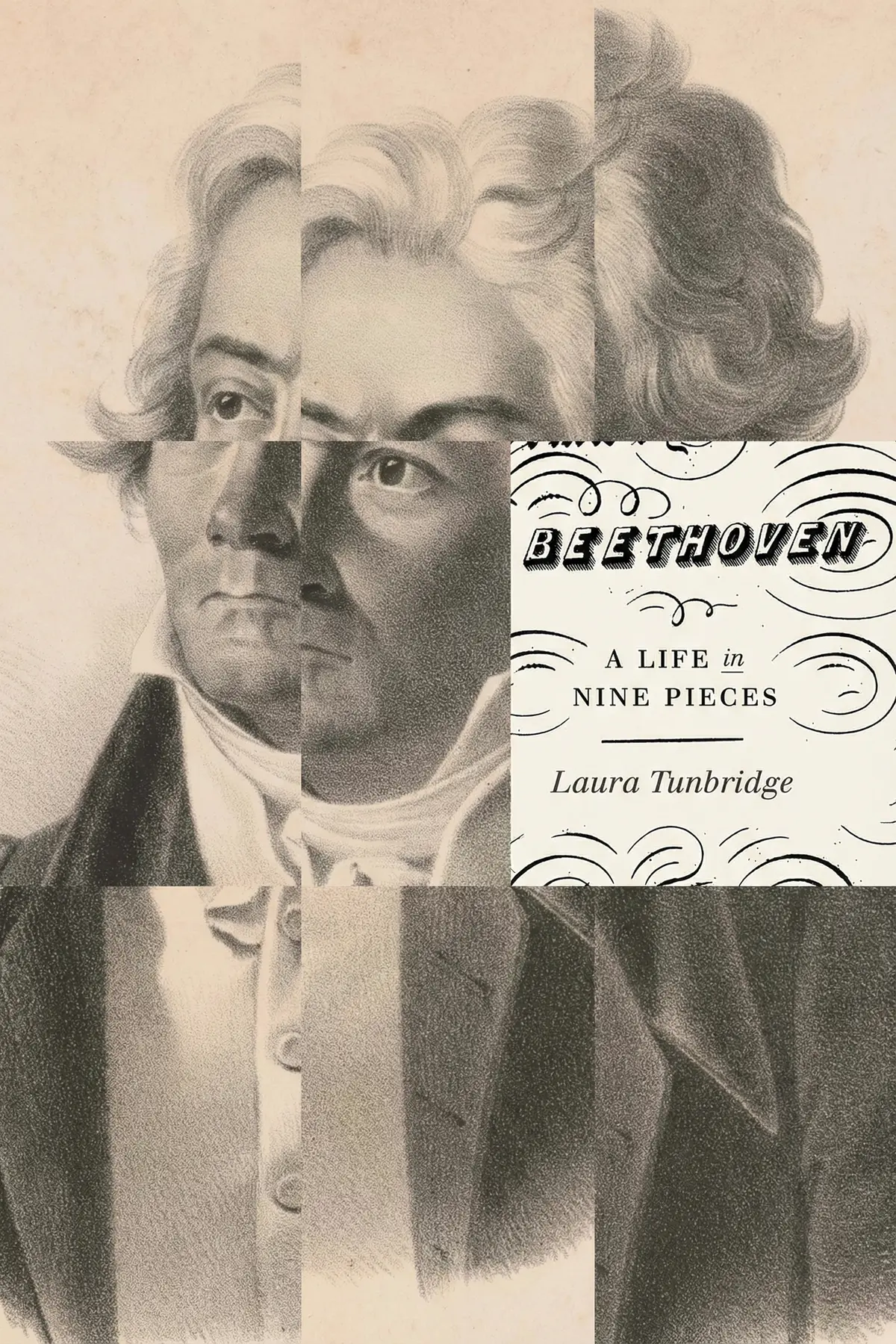
Table of Content
1. Introduction
58 sec
If you have ever done work the people around you did not yet understand, Beethoven’s life will feel familiar. In Beethoven: A Life in Nine Pieces, Oxford musicologist Laura Tunbridge shows that the composer whose Ninth Symphony almost anyone can hum was often underrated in his own day. Vienna preferred his gentle chamber music to his symphonies, and critics found his boldest works too long and too strange.
Tunbridge tells the life through nine works, and each one chips away at the legend of the lonely, scowling genius. Her Beethoven is sociable and practical, shaped by patrons, friends, performers and new instruments, and stubborn enough to keep writing music that split the room. Follow him from a court family in Bonn to a deathbed in Vienna and you see how an ambitious career is actually built, and what it takes to wait for an audience that has not arrived yet.
2. Find powerful backers before you need them
1 min 38 sec
A boy from a non-noble family, with a hard-drinking father and a confusing surname, ended up impressing Mozart and Haydn. The thing that carried him there was not only talent, and a war decided where he would stay.
3. Learn what made Beethoven's gentle septet his first hit
1 min 31 sec
At the biggest concert of his young career, Beethoven premiered his First Symphony. The audience applauded something else entirely, and the reasons say a lot about what people actually buy.
4. Write for the players who can stretch you
1 min 37 sec
The violin sonata named after Kreutzer was written for a different man, and Kreutzer never played it. Behind the mix-up sits a Beethoven who joked, teased and built his music around his friends.
5. Expect bold work to split its first audience
1 min 58 sec
A symphony dedicated to a hero, a dedication scratched out in anger, and a winter concert where the music crashed to a halt. Beethoven’s ambition kept outrunning the people who had to hear and play it.
6. Look past the scowl to the romantic
1 min 22 sec
Deafness is the standard explanation for Beethoven’s dark mood, and even Goethe believed it. A love song from 1812 and a very ordinary daily routine suggest a different man.
7. A crowd-pleaser can pay for risky work
1 min 47 sec
In his most celebrated year, Beethoven’s biggest hit was a patriotic piece many now find embarrassing. It bought him the freedom to finish an opera, just before his private life began to come apart.
8. Let better tools raise your ambitions
1 min 42 sec
A piano shipped from London could play notes no Viennese keyboard could reach. Beethoven used every one of them, and wrote music that ordinary instruments could not perform for years.
9. Keep your faith when the room says no
1 min 43 sec
Sick, grieving and shaken by a family crisis, Beethoven wrote a quartet its first audience could not follow. His reply to the bad news is one of the calmest bets in music history.
10. Conclusion
1 min 03 sec
Remove the scowling bust and the lonely genius, and Tunbridge’s Beethoven looks surprisingly familiar. He chased patrons, wrote for friends, bargained with publishers, worried about school fees and relied on part-time players with one rehearsal. His gentle septet beat his symphony on the night, and a patriotic crowd-pleaser outsold everything. Much of the music now called his greatest left its first listeners puzzled, bored or shivering in the cold.
That makes the story useful well beyond music. When your best work gets a mixed response, ask whether it is wrong or only early, as the Eroica and op. 130 turned out to be. Find the person near you who plays at a higher level and build something for them, the way the Kreutzer took shape around Bridgewater. Let the work that pays protect the work that risks.
Beethoven bet that his audience would catch up. It took decades, and it did.
About this book
What is this book about?
Almost everyone knows the Ode to Joy, and almost everyone pictures its composer as a lonely, frowning genius. Laura Tunbridge, a musicologist at Oxford, argues that this picture is mostly wrong. In his own day Beethoven was often not appreciated. Vienna's audiences preferred light chamber music to symphonies, critics called his boldest pieces too long and strange, and one of his biggest successes was a patriotic piece few people admire now. Tunbridge tells his life through nine works, from the crowd-pleasing Septet of 1800 to the late String Quartet, op. 130. Each one opens a window on his daily concerns: winning patrons, finding publishers, writing for gifted friends, reacting to Napoleon, trying out a new London piano and caring for a troubled nephew. The result is a compact, human portrait of a man who was social, prickly, often short of money and stubbornly ambitious. It is also a study of how a creative career is built, and of what it takes to keep making difficult work while the audience is still catching up.
Book Information
Who it's for
New to Beethoven's life
Music lovers who know the Ode to Joy but not the man behind it.
Creatives facing mixed reception
Creative professionals whose best work gets a mixed reception and who want to see how a master handled it.
Fans of short biographies
Readers of biography who prefer a short, myth-busting portrait built around specific works.
About the Author
Laura Tunbridge
Laura Tunbridge is Professor of Music at the University of Oxford and earlier taught at the University of Manchester. Her research covers nineteenth- and twentieth-century music, German Romanticism, Robert Schumann and Beethoven, and she has written three scholarly monographs, one of them on Schumann. She has appeared on BBC radio programs including Start the Week and In Our Time, and she regularly gives talks before concerts.
Ratings & Reviews
Ratings at a glance

What people think
Listeners observe that while perspectives on the text's technical depth vary, most enjoy the distinctive framework that examines Beethoven’s biography through nine specific works. Beyond the life story, they value the immersive historical and social setting, which depicts the composer as a practical businessman and "networker" rather than merely a reclusive genius. Mention is also made of the engaging information regarding how instruments evolved, with one listener finding the details on the piano’s shifting range to be particularly illuminating. Moreover, many feel the experience is bolstered by playing the musical pieces alongside the narration, which helps foster a "more profound understanding" of the legendary creator.
Top reviews
Samuel
After hearing several podcasts mention this book, I decided to give it a go, and I am so glad I did. Tunbridge brilliantly strips away the myth of the isolated, divine creator to reveal a man who was deeply dependent on his patrons and the shifting tastes of his time. The detail about how the changing range of the piano directly influenced the complexity of the Hammerklavier sonata was absolutely fascinating to me. I spent my evenings listening to the Missa Solemnis while reading her chapter on it, and the experience was truly transcendent. It is rare to find a musicology book that balances technical expertise with such vivid historical storytelling. This isn't just a book about music; it's a book about how art survives in a world of war, censorship, and health struggles.
Show morePot
The chapter on the Hammerklavier alone makes this book worth the price of admission. I had never considered how the literal construction of the instruments—the wood, the wire, the pedals—dictated what Beethoven was able to imagine and create. It’s a very tactile biography that makes the 1800s feel real and gritty rather than just a costume drama. Tunbridge writes with a clear authority, but she also has a knack for highlighting the small, human moments, like Beethoven’s ‘conviviality’ and his singing evenings. Not gonna lie, I was surprised to learn he was such a networker! This book successfully reframes his career as a series of calculated risks and professional relationships. It’s a must-read if you want to understand the actual reality of being a composer in the 19th century.
Show morePruet
Laura Tunbridge does a marvelous job of placing the reader directly into the drafty, unheated concert halls of old Vienna. You can almost feel the chaos of a premiere where the orchestra hasn't rehearsed enough and the audience is demanding encores in the middle of a symphony. This book is a wonderful antidote to the 'statue' version of Beethoven we see in museums. By focusing on nine specific pieces, the author allows for a depth of social context that a standard chronological biography would have to gloss over. I loved learning about his religious life through the lens of the Missa Solemnis. It’s a dense read, sure, but it rewards your patience with a much more nuanced understanding of how genius actually operates within the constraints of real life.
Show moreGung
Finally got around to reading Tunbridge's take on the master, and the nine-piece structure is genuinely clever. It’s a refreshing departure from the usual cradle-to-grave biography format, allowing for a deep dive into specific moments like the Septet's premiere. To be fair, some sections on musical theory felt a bit dense for a casual listener, but the focus on Beethoven as a businessman was eye-opening. Seeing him as a shrewd networker rather than just a brooding hermit in an attic made him feel much more human. I highly recommend playing the specific tracks while reading each chapter; it transforms the text into a multi-sensory experience that really sticks with you. It’s not a perfect overview, but it’s a brilliant companion for anyone who already loves the symphonies.
Show moreNutnicha
As someone who has always been intimidated by music theory, I found this surprisingly approachable in parts. The decision to ground each chapter in a single piece of music provides a much-needed anchor for the historical details. Look, we all know the image of the wild-haired genius, but Tunbridge shows us the Beethoven who had to worry about rent and annoying family legal battles over his nephew. I particularly enjoyed the section on Fidelio and the challenges of working under strict political censorship. My only real gripe is that the chapter titles can be a bit misleading, focusing more on the performance history than the 'theme' suggested. Still, it’s a solid, thoughtful read that provides a much more grounded perspective on a figure we usually treat as a god.
Show moreBee
Wow, what a fresh way to look at such an iconic figure! Instead of just listing dates, Tunbridge uses music as a lens to view the changing world around Beethoven. I didn't expect to be so interested in the business side of things, but seeing him navigate the world of music publishers was surprisingly compelling. In my experience, most biographies ignore the 'work' part of being an artist, but this book puts it front and center. It’s a bit technical in spots—the discussion of musical terms can be a lot—but the historical snapshots of Vienna make up for it. It really makes you want to go back and listen to everything with fresh ears, especially the lesser-known songs he wrote to make ends meet.
Show moreLaddawan
Picked this up on a whim after seeing it on a 'best of' list, and it’s a solid addition to any music lover's shelf. Tunbridge avoids the typical traps of hero-worship, instead presenting a pragmatic, often struggling artist who had to be as much of a businessman as a visionary. The structure is great because you can read a chapter and then spend an hour listening to the music, letting the history sink in. There are a few moments where the prose gets a little dry, particularly when discussing the minutiae of different piano manufacturers, but the overall picture is vivid. It’s a book that respects the reader's intelligence while still keeping the human story at the heart of the music. A very satisfying, if somewhat scholarly, journey through a legendary life.
Show moreOksana
The truth is, I struggled to stay engaged with this one despite my massive admiration for the subject. Tunbridge offers a well-researched look at the social and political landscape of 19th-century Vienna, but the narrative often gets bogged down in technical minutiae. One moment you're learning about the fascinating evolution of piano pedals, and the next, you're lost in a dry analysis of first-performance logistics. Personally, I was hoping for more of the man’s inner life and emotional turmoil, yet he often feels like a secondary character in his own biography. It’s more a collection of scholarly essays than a cohesive life story. If you’re looking for a romanticized tale of the 'tortured genius,' look elsewhere, because this book is much more interested in his ledger books and publishing deals.
Show moreOlivia
I found myself constantly switching between fascination and boredom while working through these chapters. Some of the essays, like the one on the Eroica and its political undercurrents, are absolutely gripping and provide fresh insights into the era. However, other sections feel like they are wandering through a maze of publishing history and contract negotiations that only a specialist would care about. To be fair, the research is impeccable and Tunbridge knows her stuff, but the rhythm of the book is very uneven. It’s neither a beginner's guide nor a definitive academic tome, landing in a strange middle ground that might frustrate both audiences. I liked the focus on the Septet as a 'historical curiosity,' though it did make me realize how much of his work we overlook today.
Show moreYulia
This wasn't exactly what I was looking for in a biography. Frankly, it felt more like a series of disconnected lectures than a flowing narrative of Beethoven’s life. The author assumes a high level of musical literacy, often diving into critiques that left me feeling like I was sitting in a grad-level seminar I hadn't prepared for. While the historical context regarding Napoleon and the Viennese aristocracy was decent, the emotional core was missing entirely. I never felt like I got to know Beethoven the person—just Beethoven the business entity and the composer of specific opuses. By the time I reached the final chapter on the late string quartets, I was just checking the page count. It might work for seasoned musicologists, but it felt cold and clinical to a general reader like me.
Show moreQuestions about this book
What is Beethoven: A Life in Nine Pieces about?
Laura Tunbridge tells Beethoven’s life through nine works, from the Septet of 1800 to the String Quartet, op. 130. Each piece reveals part of his daily life: patrons, publishers, friendships, politics, money and family. Her main argument is that he was not the isolated, brooding genius of popular imagination, and that much of his most ambitious music was not appreciated during his lifetime.
Was Beethoven famous and appreciated in his own lifetime?
Partly. He became Vienna’s leading composer, and in 1814 his music was played more than ever. But audiences preferred chamber music to symphonies, and his first big success was the gentle Septet, not his First Symphony. The Eroica divided listeners, a long 1808 concert fell apart, and op. 130 baffled its first audience. Appreciation of his late quartets took decades to spread.
Why is the Kreutzer Sonata named after Rodolphe Kreutzer?
Beethoven shaped the Violin Sonata no. 9, op. 47, around the virtuoso George Polgreen Bridgewater, who played it at its 1803 premiere. The two fell out before publication, so Beethoven dedicated it to the French violinist Rodolphe Kreutzer instead. Kreutzer disliked the piece, refused the dedication and never performed it, but the nickname stayed.
Did Beethoven's deafness make him a recluse?
Tunbridge argues it did not turn him wholly inward. Goethe blamed failing hearing for his difficult manner, and by around 1814 Beethoven could no longer play piano well. Yet he kept a sociable routine of walks, coffeehouses and newspapers, and in 1812 he wrote the love song An die Geliebte, the same year she dates his Immortal Beloved letter.
What can I learn from Beethoven's career?
His life suggests that strong work needs support: patrons who open doors, gifted collaborators who raise your ambition, and popular pieces that pay for risky ones, as Wellington’s Victory did for Fidelio. It also shows that a cold first reception is not a final verdict. When op. 130 failed, Beethoven simply said it would please them some day.
Readers also enjoyed

A Promised Land
Barack Obama


A River in Darkness: One Man’s Escape from North Korea
Masaji Ishikawa

A Spy Among Friends: Philby and the Great Betrayal
Ben Macintyre

A Room of One’s Own
Virginia Woolf



A Year in the Life of William Shakespeare: 1599
James Shapiro
AUDIO SUMMARY AVAILABLE
Listen to Beethoven in 15 minutes
Get the key ideas from Beethoven by Laura Tunbridge, plus 5,000+ more nonfiction titles.
- 5,000+ titles
- Listen as much as you want
- 7-day free trial
- Cancel anytime









