
15 min 19 sec
Available in: English
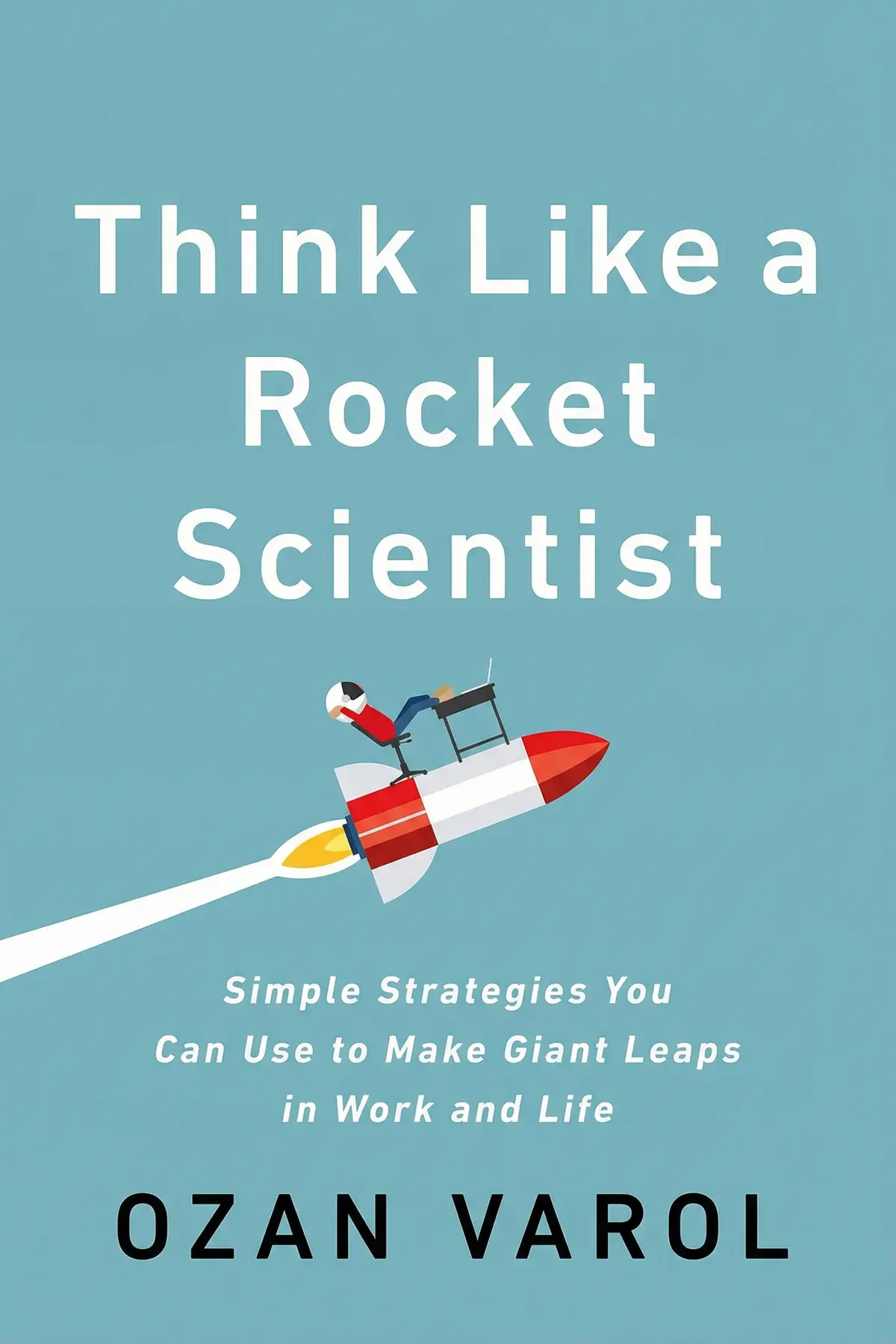
Awaken Your Genius: Escape Conformity, Ignite Creativity, and Become Extraordinary
By Ozan Varol
A guide to recovering the originality that schooling and expectations bury: shed an identity that no longer fits, rebuild from your own talents, protect fresh ideas and stop forcing a planned future.
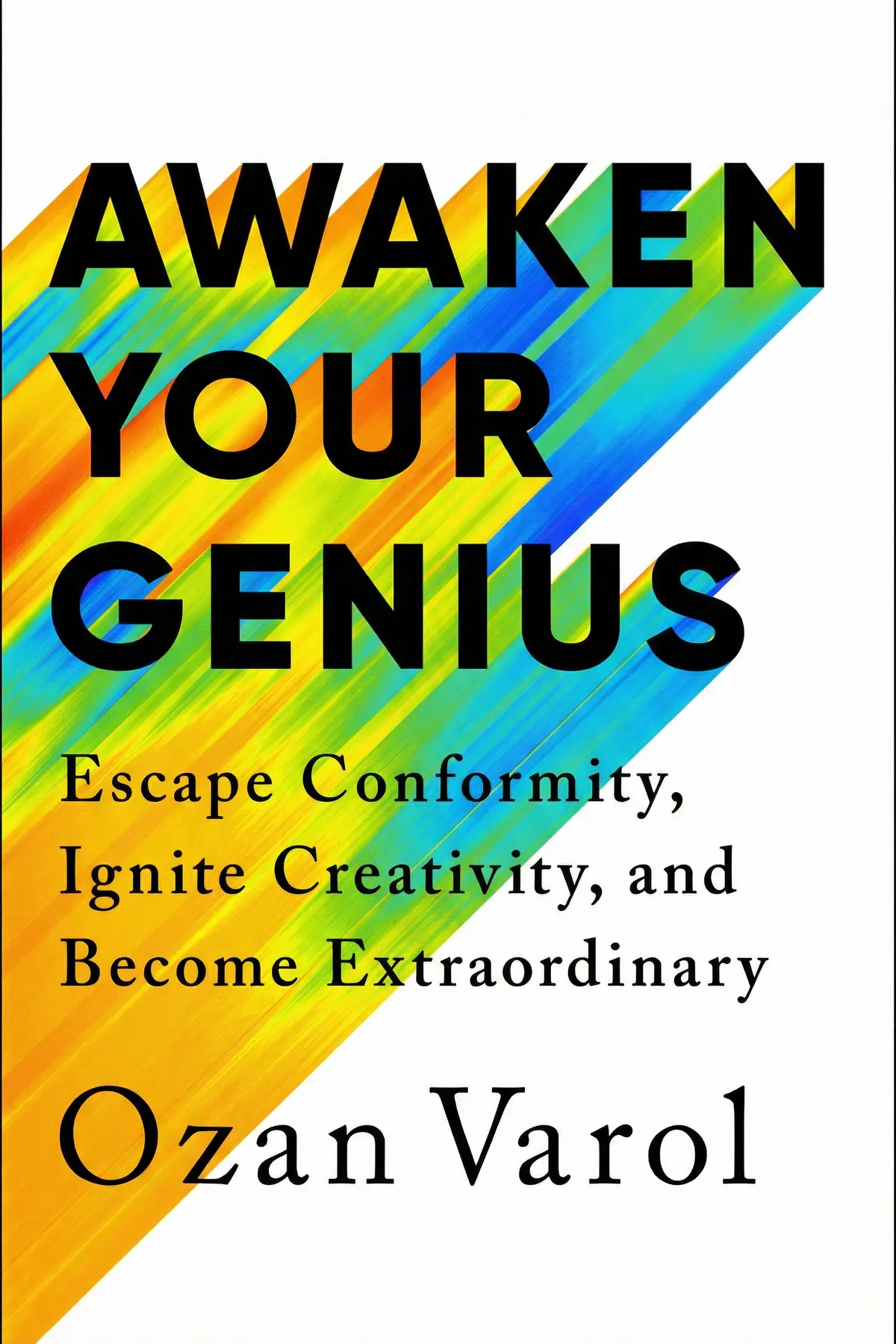
Table of Content
1. Introduction
1 min 07 sec
Somewhere between first grade and your first job, you probably stopped calling yourself creative, and Ozan Varol believes that loss can be reversed. In Awaken Your Genius, the law professor who once worked on operations for a Mars rover mission argues that every person is born a genius, a one-of-a-kind result of their family, history and surroundings, and that school, work and other people’s expectations slowly bury it.
Getting it back, Varol says, means letting parts of your old self die so a new one can form. His path runs from that ending to a rebirth built from your own talents, then to free thinking, a healthy doubt about the outside world, and a looser grip on the future you planned. Along the way come a choreographer whose doctor watched her dance, a failed dating site that became YouTube, and British moths that changed color within a few decades. What you gain is a way to separate the story you were handed from the one you actually want, plus a few small habits to start rewriting it.
2. Find the artist you were in first grade
2 min 06 sec
A Hallmark artist asked classrooms one simple question and watched the answer collapse within five years of school. What disappeared between six and eleven, and can an adult get it back?
3. Let go of an identity that no longer fits
2 min 08 sec
A girl written off as a problem pupil was saved by a doctor who simply left the room. Her story raises an uncomfortable question about the label you have spent years earning.
4. Build a new self from talents you already have
2 min 15 sec
YouTube began as something almost nobody wanted. The way its founders rescued it suggests a method for rebuilding a career, and a reason to stop counting the prizes you have not won.
5. Protect fresh ideas from search engines and critics
2 min 16 sec
The first thing most of us do with a new idea may be the thing most likely to smother it. A treadmill study, a sitcom writers’ room and a Brazilian can maker point to better habits.
6. See the half of the story heroes leave out
2 min 06 sec
A famous breakfast rule and a famous cabin in the woods both look different once you learn who was behind them. The same doubt can save you from copying a hero’s riskiest choice.
7. Stop planning a future nobody can predict
2 min 04 sec
Three short words can end most spirals of worry. And a moth that suddenly found its perfect camouflage working against it shows why clinging to one version of yourself is a risky bet.
8. Conclusion
1 min 17 sec
Varol’s book can sound like a celebration of talent, but its real subject is subtraction. The genius he describes is not something you acquire. It is what remains when you strip away the borrowed identity, the hunger for prizes, the flood of other people’s opinions, the edited heroes and the rigid plan. What is left is the six-year-old who raised a hand without thinking, now with an adult’s skills to combine.
That changes what effort looks like. Instead of a grand reinvention, you start by noticing. Keep an energy journal for a few weeks and watch which tasks leave you lighter and which leave you heavy. When an idea arrives, write it down before you search for it, then go for a walk. When a confident fact or a hero’s story pushes you toward a choice, ask where it came from and who is missing from the picture. And when worry starts to spiral, put Varol’s three words to it.
None of this requires quitting a job tomorrow. It requires admitting that the story you have been living is a story, and stories can be rewritten. The pale moths could not choose their color. You can choose which version of yourself to let go.
About this book
What is this book about?
Most adults can feel it: somewhere along the way they stopped asking who they are and started following a path that keeps getting narrower. Ozan Varol argues that this narrowing is learned, not natural. Each person is born a genius in the plain sense of being unrepeatable, and years of structured school, family hopes and social rules add layers that hide it. Varol lays out a route back in five stages. It starts with a death, letting go of the identity and habits that no longer serve you, and moves to a birth, rebuilding yourself from talents you may never have counted. Then comes a creative inner phase built on play, walks and private thinking, a return to the outside world with healthy skepticism toward facts and gurus, and finally transformation, which asks you to release your grip on a predicted future. The stories range from choreographer Gillian Lynne and the engineers behind YouTube to Thoreau's not-so-lonely cabin and the peppered moths of the Industrial Revolution. Readers get a clear way to question the script they inherited and practical habits, from an energy journal to one blunt question about worry, for writing a new one.
Book Information
Who it's for
Questioning a hard-won career
Professionals who sense they outgrew the career or identity they worked years to build.
Afraid to change careers
Career switchers held back by the fear of no longer being a lawyer, doctor or engineer.
Creatives waiting for approval
Creative people stuck waiting for awards, approval or a guru's permission.
About the Author
Ozan Varol
Ozan Varol was born in Istanbul and moved to the United States alone at 17 to study at Cornell University, where he worked on the operations team for the 2003 Mars Exploration Rovers mission. He later became a tenured law professor at Lewis and Clark Law School, coined the phrase democratic coup and wrote The Democratic Coup d'État. He is also the author of Think Like a Rocket Scientist, writes about contrarian thinking, and has given keynote talks at Microsoft, Salesforce and the US Department of State.
Ratings & Reviews
Ratings at a glance

What people think
Listeners find the book thought-provoking and captivating, with one listener observing how it transforms intricate concepts into easily digestible bits of reason. Additionally, the writing is approachable and straightforward, with one listener characterizing it as a manual for living an extraordinary life. They also praise the prose, with one review specifically highlighting its clarity, and describe it as a fun and fast-moving read.
Top reviews
Zoey
Ozan Varol has a gift for taking abstract, heady concepts and turning them into actionable wisdom. While some might find his rocket scientist background intimidating, the prose here is remarkably accessible and clear. He doesn’t just lecture; he provides a manual for an extraordinary life that feels grounded in reality rather than fluff. I particularly appreciated the way he organizes the chapters to flow from internal reflection to external action. Some of the one-liners are a bit punchy, but they serve as useful anchors for the broader arguments. It’s a fast-moving read that somehow manages to stick with you long after you close the cover.
Show moreLars
As a deep thinker who often feels paralyzed by the sheer volume of information available today, the chapter on "wisdom-punishing effects" was a total game-changer. Varol’s argument for intentional ignorance is something we don't hear often enough in our social media-addled culture. The math he does on social media usage versus reading books is a staggering wake-up call that hit home. Personally, I found this far more practical and engaging than his previous book on rocket science. It’s a dense but readable guide for anyone trying to navigate a career transition or personal plateau.
Show moreAmelia
To be fair, I went into this expecting another dry business book, but I was pleasantly surprised by how emotional and human the narrative actually is. Varol talks about "discovering your mission" in a way that feels attainable rather than just some abstract dream. The story about The Office writers using play to break through ruts was a fantastic inclusion that I've already started applying to my own creative work. It’s a rare book that manages to be both aspirational and deeply practical at the same time. This is definitely going on my list of titles to re-read annually for a perspective shift.
Show morePaiboon
This isn't your average self-help guide; it’s a meticulously organized distillation of what it means to live an original life. Varol excels at taking high-level concepts and making them feel obvious-not-obvious, which is a difficult balance to strike. I loved the section on life experiments and the specific questions he provides to measure success and failure. The writing is incredibly clear and moves at a clip that keeps you turning pages way past your bedtime. It’s an accessible, punchy, and ultimately very helpful guide for anyone feeling dazed by the modern world.
Show moreAey
Finally got around to finishing this, and I have to say, the "spectacularly you" framework really resonated with my current headspace. Varol asks a killer question about what feels like play to you but looks like work to others. That single prompt helped me re-evaluate my side projects in a way that felt genuinely productive. To be fair, a few sections felt a little recycled from the modern productivity canon, reminding me of Adam Grant or Malcolm Gladwell. However, the distillation and unique framing make it worth the price of admission. It’s a helpful kick in the pants for anyone feeling a bit stagnant.
Show moreElena
Ever wonder what your ideal Tuesday actually looks like? That’s just one of the piercing questions Varol uses to strip away the "shoulds" of modern life. Look, I’ve read a lot of these manuals for living, but this one stands out because of its clarity and pace. It’s written in a way that feels like a conversation with a very smart friend rather than a lecture from a pedestal. While some bits are a little "rah-rah," the actionable experiments he suggests—like defining success and failure for a trial—are incredibly useful. It’s a fun, engaging way to rethink your daily grind.
Show moreThitima
The chapter on detoxing from the "endless sea of overwhelm" alone makes this a worthwhile investment for your bookshelf. Varol uses his analytical brain to organize complex psychological hurdles into manageable, bite-sized steps. I gotta say, the metaphor of being a "beautiful butterfly" mentioned in some reviews didn't bother me; it felt like he was just trying to be earnest. My only gripe is that the writing style relies a bit too heavily on punchy, one-sentence paragraphs. It makes for a quick read, but occasionally I wanted him to go deeper into the nuance of the research.
Show moreAnucha
Picked this up during a period of professional stagnation, and it provided exactly the kind of unconventional thinking I was looking for. There’s something refreshing about a rocket scientist telling you to embrace play and ignore the "familiar waters" of your industry. Truth is, the book is a bit of a "wisdom plankton" filter, sucking up various ideas and organizing them into a coherent manual. I did find the constant one-liners a bit grating after a while, as if every sentence was trying to be a quote on a poster. But the core message about becoming "spectacularly you" is powerful enough to overlook the occasional stylistic fluff.
Show moreLiam
After hearing so much about Ozan’s "Think Like a Rocket Scientist," I was curious to see if this lived up to the reputation. This book is actually better in my opinion because it focuses on the internal genius rather than just external problem-solving. It’s a manual for living that doesn’t take itself too seriously, even when dealing with heavy topics like career transitions. Gotta say, the advice about social media usage was the kick in the pants I didn't know I needed. While it does lean into some popular psychology tropes, the way it’s all stitched together makes it feel fresh and actionable.
Show moreWei
Not what I expected at all, especially given the hype surrounding Varol's previous work. Frankly, it felt like a collection of boilerplate life-hacks stitched together with a heavy dose of the author's ego. Every few pages, there’s a bolded one-liner that sounds profound but ultimately says very little of substance. If you’ve read any major self-help titles from the last decade, you’ve already seen these ideas about "originality" and "play" before. It’s essentially a rehash of better books by Grant or Gladwell, dressed up in a "rocket scientist" aesthetic. I found the self-promotion a bit too distracting to find any real value.
Show moreQuestions about this book
What is the main idea of Awaken Your Genius by Ozan Varol?
Varol argues that everyone is born a genius, meaning a one-of-a-kind person, and that school, family and society bury that originality under learned expectations. Recovering it takes five stages: letting the old identity die, rebuilding from your own talents, a creative inner phase, a skeptical return to the outside world, and transformation, which means releasing your grip on a planned future.
What does Varol mean when he says you are not your identity?
He describes identity as a story you tell yourself. Playing in a band or owning a Mercedes are things in your life, not the whole of you, and defining yourself by one feature shrinks you. This matters when you want to change direction, like the biology student who realized while applying to medical school that medicine no longer excited him.
How can I apply Awaken Your Genius at work?
Keep an energy journal of what energizes and drains you. Write new ideas in a private document before searching online, and take a walk, since a Stanford study found walkers scored higher on a creativity test. When stuck, invent a product for a competitor, as The Office team wrote an episode of another show. Test advice against your own situation.
Why does Varol warn against following gurus and success stories?
Gurus show only what they want seen. Thoreau’s cabin at Walden Pond was just two miles from home, his mother brought pastries and he often dined at Emerson’s house. Success stories also show only survivors: many people left college for Silicon Valley without building a giant company, so Steve Jobs’s path is no reason to drop out.
Who should read Awaken Your Genius?
It suits people who feel their life has narrowed into a path others chose, especially those considering a career change, such as a lawyer thinking of teaching. It also helps creative people who measure themselves by awards, a habit Varol challenges with Jason Alexander’s eight Emmy nominations without a win and Isaac Asimov’s 262 books before a bestseller.
Readers also enjoyed



59 Seconds: Change Your Life in Under a Minute
Richard Wiseman






A Guide to the Good Life: The Ancient Art of Stoic Joy
William B. Irvine
AUDIO SUMMARY AVAILABLE
Listen to Awaken Your Genius in 15 minutes
Get the key ideas from Awaken Your Genius by Ozan Varol, plus 5,000+ more nonfiction titles.
- 5,000+ titles
- Listen as much as you want
- 7-day free trial
- Cancel anytime









