

13 min 40 sec
Available in: English
Art, Inc.: The Essential Guide for Building Your Career as an Artist
A practical guide to earning a living from art. It covers finding your own voice, running a business that fits your values, promoting and pricing your work, getting into galleries, landing illustration clients and staying balanced.
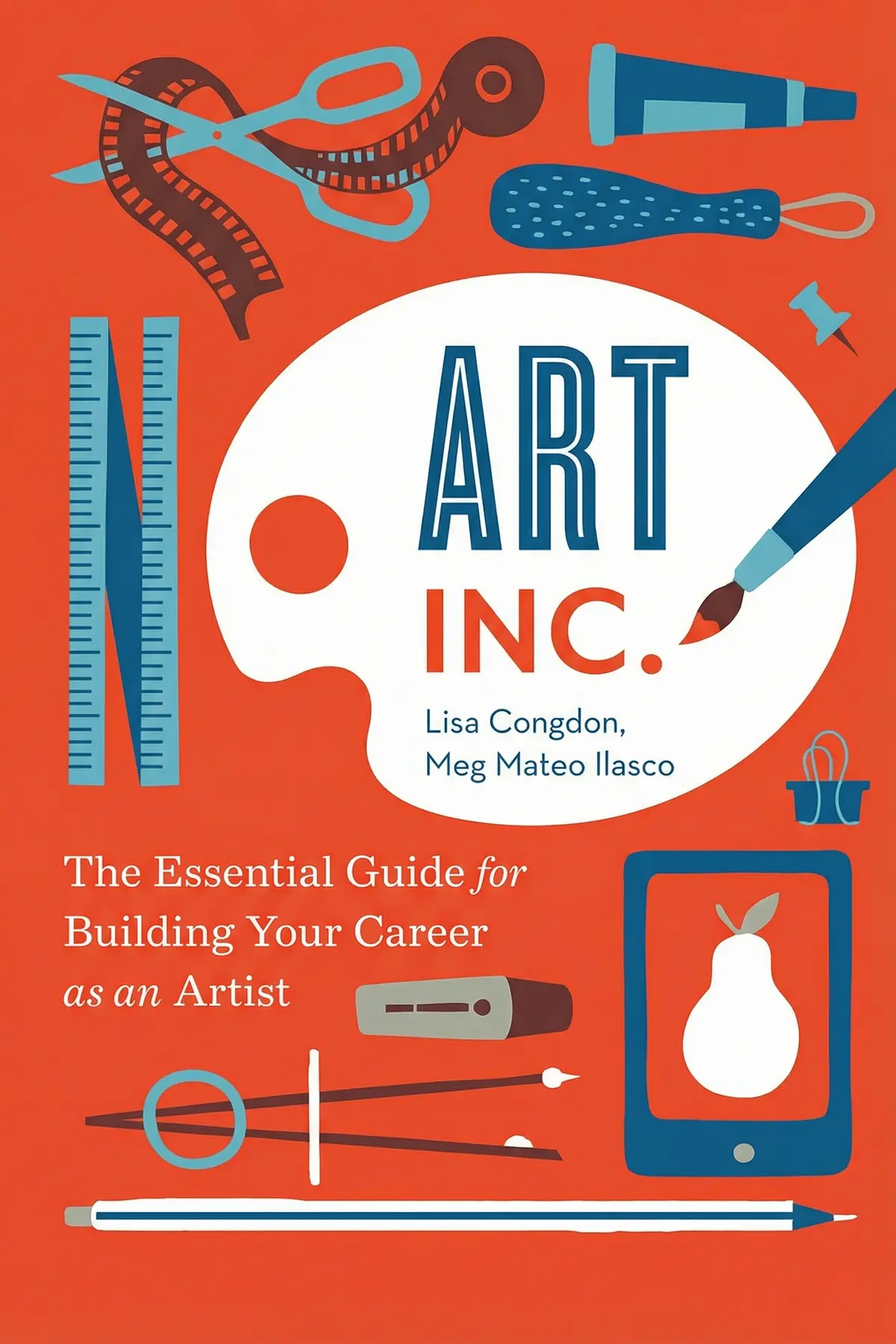
Table of Content
1. Introduction
1 min 04 sec
Plenty of artists make strong work and still have no idea how to get paid for it. In Art, Inc., illustrator Lisa Congdon and designer Meg Mateo Ilasco begin by getting rid of the oldest excuse for that gap: the belief that real artists must suffer and stay broke, the way Vincent van Gogh did. They call it a myth, and a harmful one.
Their argument is that a creative living depends on two skills working together. One is making work that is honestly yours. The other is running that work as a small business, with clear values, tidy paperwork, steady promotion and sensible prices. From there the authors walk through the practical roads open to an artist today: selling prints online, showing in galleries, taking illustration commissions and getting through the quiet months in between. What they offer is a working plan for turning a practice into an income without giving up the reasons you started making art.
2. Stop copying tortured geniuses and find your voice
1 min 46 sec
Generations of artists have been taught that suffering makes the work better, and that copying the masters is the way to learn. The authors argue that both habits hold you back, and they suggest something much simpler instead.
3. Build a business that matches your values
1 min 39 sec
Most artists would rather paint than fill in forms or write a bio. Yet the moment you want income from your work, a set of choices appears, and ignoring them can cost far more than time.
4. Promote your work as hard as you make it
1 min 28 sec
Talent seems like it should be enough, and many artists quietly hope the work will speak for itself. The authors argue that something else decides who succeeds, and they show where most artists lose hours chasing it.
5. Price and print for the buyer you want
1 min 36 sec
One painting can become a hundred sales, or a handful of very valuable ones. Which path is right depends on a decision many artists never make on purpose, and it shapes everything from paper to price.
6. Get on gallery walls, or build your own
1 min 42 sec
Sending your portfolio to every gallery in town feels productive but rarely works. The authors explain what galleries actually look for, and what to do when the replies take months or never come.
7. Keep the copyright when you illustrate for clients
1 min 44 sec
Landing a commercial illustration job feels like the finish line. Hidden in the contract, though, is a single question that decides whether your best images keep earning for you or slip out of your hands for good.
8. Make slow seasons and busy ones work for you
1 min 38 sec
Some months bring no work at all, and others bring far too much. Both feel like failure. The authors treat them as normal, and they show what to do in each one so neither drains you.
9. Conclusion
1 min 03 sec
What Art, Inc. finally offers is permission to stop treating money as the enemy of art. The suffering painter in the attic makes a romantic picture. The authors replace it with a plainer and more useful one: an artist with a supportive circle and a clear sense of what she values, a website people can find, a contract she has actually read and a calendar with room for friends. None of this weakens the work. It is what lets the work continue.
The advice is practical enough to start on today. Write down the values that will decide which clients you accept, then work out the true cost of each piece so your prices cover it. Package what you send with care, and when you license an image, keep the copyright. Above all, do not wait for a gallery’s answer before you show anything. Ask a local café or shop, or gather a few artist friends and find a room.
The starving artist was never part of the job description. It was only a story, and you are free to tell a different one.
About this book
What is this book about?
Many artists make strong work and still cannot pay their bills with it. Part of the trouble is an old romantic idea: that real artists struggle, suffer and stay poor until they finally make it. Lisa Congdon and Meg Mateo Ilasco reject that idea completely. In their view, an artist today needs creative skill and a head for business in equal measure. The book treats an art practice as a small enterprise built on the artist's own values. It explains how to find an authentic voice, deal with permits and taxes, build a website and a press kit, reproduce and price work for different markets, approach galleries that suit you, and win illustration commissions while keeping your copyright. It also covers the uneven rhythm of a creative career. The authors show how to use quiet periods for growth and teaching, how to stay organized when work piles up and when to say no. Readers come away with a concrete plan for making art their income without losing the reasons they started.
Book Information
Who it's for
Artists new to selling
Self-taught or newly trained artists who make good work but do not know how to sell it.
Illustrators seeking commercial clients
Illustrators who want commercial clients and need to understand briefs, agents and copyright.
Considering going full-time
Creatives thinking about turning a side practice into a full-time income.
About the Author
Lisa Congdon
Lisa Congdon is a self-taught artist and illustrator whose clients include MoMA, Harvard University, Martha Stewart Living and Chronicle Books. Her career only took off when she was nearly 40. She has written and illustrated several books and lives and works in Portland, Oregon. Meg Mateo Ilasco is a writer, designer and illustrator in the San Francisco Bay Area. She runs Mateo Ilasco, a stationery and housewares company, and wrote the bestselling business book Craft, Inc.
Ratings & Reviews
Ratings at a glance
What people think
Listeners find the book informative and useful, highlighting the inclusion of interviews with various artists and industry experts. The material is straightforward and offers encouraging advice, with one listener noting that it delivers specific guidance beyond general tips. Additionally, they value the entrepreneurial direction and cost-effectiveness, with one listener describing it as a primary business manual for creatives. However, opinions on readability are split, as some find the experience enjoyable while others find it difficult to follow.
Top reviews
Narong
This guide functions as a vital blueprint for any creative soul trying to navigate the murky waters of professional artistry. Congdon moves past the vague 'follow your dreams' rhetoric to provide concrete, actionable steps on marketing and managing a studio. Personally, I found the breakdown of different revenue streams to be the most enlightening section of the entire book. While some of the digital advice feels slightly anchored in the early 2010s, the core business principles remain incredibly solid for today’s market. It’s a comprehensive introduction that manages to be both encouraging and grounded in the harsh reality of the industry.
Show moreSelin
Finally got around to finishing this, and it’s easily the most practical resource on my shelf right now. The structure is incredibly easy to follow, making it simple to dip in and out when you need a specific boost of professional advice. I particularly loved how the authors integrated diverse voices through interviews with established arts professionals. Those real-world perspectives add a layer of authenticity that is often missing from standard entrepreneurship manuals. If you are serious about selling your work and building a sustainable career, this provides the specific guidance needed to stop guessing and start doing.
Show moreMattanee
Wow, I wish I had discovered this years ago when I first started trying to sell my paintings! It’s an incredibly comprehensive intro to the entire process, covering everything from the very beginning stages to eventually 'selling out' and scaling up. The advice is usable and concise, making it a go-to business guide that I keep returning to whenever I feel stuck. I really appreciated the focus on the psychological hurdles of being an artist, like the fear of failure or the struggle with self-promotion. This is a must-read for any creative looking to turn their passion into a legit paycheck.
Show morePot
As someone who is just starting to dip my toes into the world of professional illustration, this book felt like a warm welcome. Lisa Congdon’s writing style is accessible and clear, though I can see why some might find the layout a bit dense at times. It covers everything from setting up an online shop to the intricacies of gallery shows. To be fair, some of the resources listed in the back are now dead links, which is frustrating but expected for a book of this age. Regardless, the advice on how to say no to projects that don’t align with your goals was worth the price alone.
Show moreBunyarit
The interviews included in these pages are definitely the highlight, offering a rare glimpse into the daily grinds of successful creatives. I appreciated that the book doesn't just focus on the 'art' part, but leans heavily into the 'Inc.' aspect of the title. Truth is, many artists struggle with the business side, and this book bridges that gap without being overly dry or academic. Some sections felt a bit basic, especially if you’ve already been working in the industry for a few years. However, for a student or a recent grad, this is an absolute goldmine of professional wisdom and structural advice.
Show moreArnav
In my experience, books for creatives are often either too flowery or too technical, but this one strikes a decent middle ground. The chapter on organizing your art career and managing work-life balance provided several 'aha' moments for me. It’s a very visual book, which makes the reading experience pleasant even when the subject matter gets into the weeds of licensing and contracts. My only real gripe is that it leans very heavily toward the illustration world. If you’re a sculptor or a performance artist, you might find some of the tips less applicable to your specific niche.
Show moreMilk
Look, transitioning from a hobbyist to a professional is a terrifying leap, and this book acts as a steadying hand. I loved the specific details on how to prep traditional work for web display and the tips for growing an online presence. It’s very much a 'how-to' rather than a 'why-to,' which I found refreshing after reading so many philosophical art books. The tone is encouraging but never feels like it's sugarcoating the amount of work required. You won't find any magic bullets here, just good, honest strategies for building a brand from the ground up.
Show moreWit
Ever wonder if these creative business books are just a compilation of common sense? This one has some valuable nuggets, but it also feels a bit like a collection of platitudes at times. The interviews were interesting, though I wish they had dived deeper into specific logistics rather than asking everyone the same general questions. Frankly, if you’ve already been selling on Etsy or doing freelance work for a while, you probably know half of this already. It’s a great introductory text, but seasoned professionals might find it a little too elementary for their needs.
Show moreChan
After hearing several recommendations, I expected this to be a deep dive into the legalities and finances of art. Instead, it’s a broad overview that touches on many topics without getting too far into the nitty-gritty details. It’s certainly informative, but it feels like you’d need to hire several professionals to actually implement some of the more complex suggestions. The focus on illustration is quite heavy, which was a bit of a letdown as a fine artist. It’s a decent starting point, but you will definitely need other resources to fill in the gaps.
Show moreMoon
Not gonna lie, I found this book to be quite outdated and a bit misleading for the current art market. It reads more like a compilation of basic blog posts from a decade ago than a professional business guide for the modern era. To follow the advice given, you’d almost need to have a full staff to manage your social media and shipping from day one. Some of the information on gallery shows is useful, but the majority of the content felt superfluous and lacked depth. I was hoping for something that addressed the challenges of today’s digital landscape more effectively.
Show moreQuestions about this book
What is Art, Inc. about?
Art, Inc. is a practical guide to building a career as an artist. Lisa Congdon and Meg Mateo Ilasco reject the starving artist myth and argue that success comes from pairing authentic work with business skills. They cover finding your voice, handling permits and taxes, promoting your work online and in the press, reproducing and pricing art, approaching galleries, working as an illustrator and keeping balance through busy and quiet periods.
How do I get my art into a gallery, according to Art, Inc.?
The authors stress fit first, because every gallery has its own direction. Look up galleries online, or ask an art professor or people in your local art community, then approach the ones that fit your work and expect the replies to take months. If invited, bring at least two pieces, your CV and an artist statement. If no gallery says yes, show in a café, shop, restaurant or your own studio, or organize a group exhibition.
How should artists price their work?
Congdon and Ilasco say the price should at least cover your costs: printing, materials and your labor. How you make and reproduce the work also shapes the price. Limited runs on archival paper and ink suit high-end galleries and hold their value, while cheaper prints in larger numbers reach a wider public through shops such as Etsy, Big Cartel, Shopify or your own website.
Should illustrators give clients the copyright to their work?
No. Licensing consultant Betsy Cordes, quoted in the book, advises illustrators to keep the copyright when reviewing contracts. The client is only renting the work, for one defined purpose and one defined period of time, rather than owning it outright. The authors also suggest reading every brief carefully for the number of pieces, their sizes, the deadlines and who will own the final work.
Who should read Art, Inc.?
It suits working or aspiring artists who want to earn a living from their work, especially those unsure how to market themselves. Illustrators will find guidance on niches, trade shows such as Printsource and Surtex, agents and contracts. Gallery hopefuls get advice on choosing spaces and preparing a portfolio, and anyone overwhelmed by a creative career gets tips on organization, saying no and balance.
Featured in
Readers also enjoyed






AUDIO SUMMARY AVAILABLE
Listen to Art, Inc. in 15 minutes
Get the key ideas from Art, Inc. by Lisa Congdon, plus 5,000+ more nonfiction titles.
- 5,000+ titles
- Listen as much as you want
- 7-day free trial
- Cancel anytime









