

14 min 49 sec
Available in: English
Bad Friend: How Women Revolutionized Modern Friendship
A cultural history of how women's friendships moved from being declared impossible to being celebrated, feared and policed, and how those bonds kept women alive, informed, organized and healthier across the centuries.
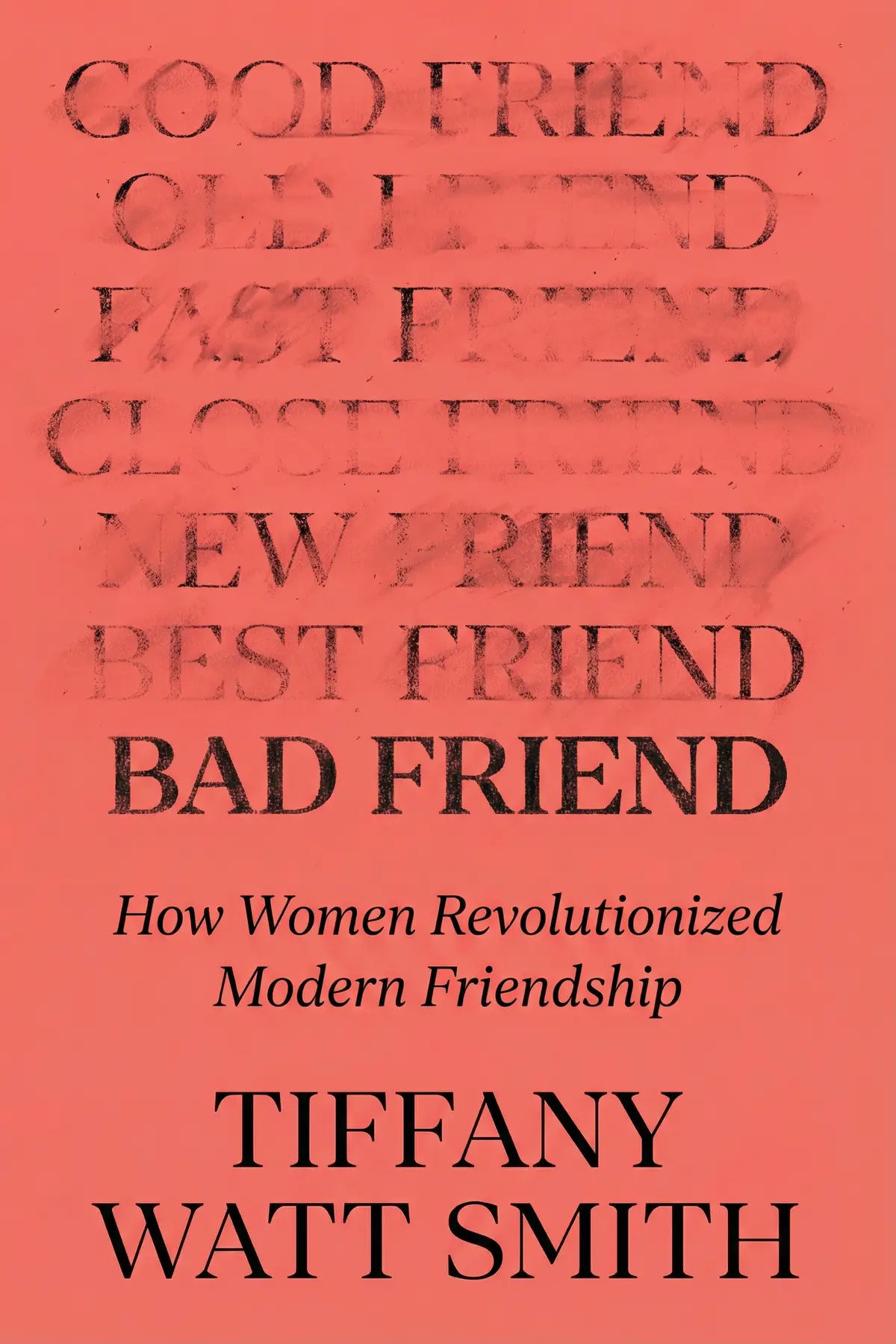
Table of Content
1. Introduction
1 min 05 sec
If friendship feels like the thing you fit in after work and family, Tiffany Watt Smith has a long history to show you. In Bad Friend, the cultural historian argues that women’s friendships have always done serious work, from keeping people alive in strange cities to powering campaigns for the vote, even while philosophers from Aristotle on insisted women could not truly be friends. Her story follows that bond as it was dismissed, then celebrated, then feared, then put to political use.
The throughline is that female friendship has always been both a private refuge and a public force, and that this double power is exactly why so many people tried to control it. The evidence ranges from two enslaved women’s lifelong letters to Victorian schoolgirl crushes, Chicago reformers, suffrage alliances, office whisper networks and a San Francisco health study. The reward is a sharper eye for your own circle: who supports you, who informs you, and what those ties do for your body.
2. See past the old claim women can't be friends
1 min 58 sec
Two of the most respected thinkers in Western history agreed that women lacked something essential for deep friendship. Meanwhile, a poet and her lifelong correspondent, and a writer and her closest friend, were leaving behind evidence of their own.
3. Discover how a cherished bond became a threat
2 min 07 sec
Victorian schools happily allowed girls to fall in love with each other, with flowers, poems and saved biscuits. Then, within a generation, the same devotion became a source of panic. What changed was not the girls.
4. Tell a risky friend from a lifeline
1 min 58 sec
Newspapers a century ago were full of girls ruined by the wrong companion, and research suggests friends really do shape us. Yet the same city streets hid a very different kind of friendship that the headlines ignored.
5. Treat workplace chatter as the network it is
2 min 05 sec
For three centuries, advice books told working women to keep their distance from colleagues. In the same decade, a famous guide told men the opposite. The gap between those two pieces of advice still shapes who hears what at work.
6. Turn private grievances into shared power
2 min 21 sec
The fight for the vote, the peace movement and the feminism of the 1960s all ran on something that critics mocked as tea parties. Watt Smith shows what those circles did, and where they broke down.
7. Small favors that keep a community alive
2 min 06 sec
Talk of a loneliness epidemic suggests that real community belongs to the past. A San Francisco health study, a study of an English city and a Dutch finding about changing friend groups tell a more hopeful story.
8. Conclusion
1 min 09 sec
Watt Smith’s history adds up to a strange record. The same bond was called impossible by philosophers, harmless by headmistresses, dangerous by sexologists, corrupting by newspapers and trivial by etiquette writers. Each label tried to keep women’s friendship small. Each time, the friendship turned out to be doing larger work: gathering subscribers for a poet’s book, sheltering a stateless activist, warning colleagues about men to avoid, keeping one neighborhood healthier than the next.
That record changes how ordinary friendship looks. The colleague who tells you what really happened in a meeting belongs to a long line of information sharing that was waved away as gossip. The friends who hear your complaint about work may be the first to show you it is a pattern. The neighbor who borrows a pan is part of a tradition older than any city.
Those ties deserve real time in a busy week, and they can be allowed to change without alarm, since renewal seems to be how friendship lasts. Wollstonecraft wore her friend’s hair on her finger for the rest of her life. That ring is better evidence than any philosopher’s verdict.
About this book
What is this book about?
For most of Western history, influential men insisted that women could not be true friends. Aristotle left them out of his highest form of friendship, and Montaigne judged their souls too weak for it. Tiffany Watt Smith sets out to show how wrong that verdict was, and why the people in power kept changing their minds about it. Working as a cultural historian, she follows women's friendships through letters between two formerly enslaved women, one of them a poet, Victorian schoolgirl crushes, crowded turn-of-the-century cities, suffrage alliances, 1930s office etiquette guides and medieval village wells. Again and again the same pattern appears. Female friendship is praised while it prepares women for marriage, then treated as a danger once it gives them strength, information or purpose of their own. Readers get a fresh way to see their own friendships: as survival networks, as channels of influence often dismissed as gossip, as the start of political change and as a measurable part of health. The book also offers reassurance that friendships which shift and renew over time are normal.
Book Information
Who it's for
Suspecting office friendships matter
Professionals who suspect office friendships and informal networks matter more than the org chart admits.
Curious about feminist history
Readers curious about feminist and social history told through real friendships rather than famous laws.
Worried about loneliness
Anyone worried about loneliness who wants a grounded, hopeful view of how friendship changes over a life.
About the Author
Tiffany Watt Smith
Tiffany Watt Smith is a cultural historian who specializes in the history of emotions. She wrote The Book of Human Emotions and Schadenfreude and gave a widely viewed TED talk on the subject. She worked as a theater director before her academic career. She holds an emerita readership in cultural history at Queen Mary University of London, where she ran the Centre for the History of Emotions. She was a BBC New Generation Thinker in 2014, won the Philip Leverhulme Prize in 2019 and became a Fellow of the Royal Historical Society in 2024.
Ratings & Reviews
Ratings at a glance
What people think
Listeners find this investigation into female friendships to be an evocative and affirming look at the "raw" reality of platonic relationships as opposed to the typical idealized image. While some listeners consider the book’s thematic framework to be disjointed or muddled, many value the distinctive mix of memoir and historical inquiry. They also appreciate the author’s perspective on why contemporary benchmarks for "best friends" can be impossible to meet, with one listener mentioning that seeing their own complex experiences reflected in history felt deeply comforting. Furthermore, the audiobook is well-received for its intelligent and intimate narration.
Top reviews
Thitiwan
Wow, this book hit me right where I live. As someone who has always struggled with the guilt of "fading out" on people, Tiffany Watt Smith provided a framework that finally made me feel less like a villain. The idea that friendship is a process of "negotiating our endlessly changing selves" is going to stick with me for a long time. Truth is, the messy structure didn't bother me because the writing itself is so evocative and thoughtful. I loved the blend of personal narrative and historical research, especially the sections on how lopsided friendships can unintentionally mirror broader social power dynamics. It’s not a perfect book, but it’s a necessary one for any woman who has ever felt "less than" in her social life.
Show moreMeen
Finally, someone said it: being a good friend is actually quite hard, and we should stop pretending it’s effortless. Smith dives into the "ugly" side of platonic bonds—the resentment, the boredom, and the awkwardness. It’s incredibly validating. I found the historical perspective on how women’s friendships were viewed in the past to be eye-opening, especially the blurred lines between friendship and romance. Look, the layout is definitely unconventional and maybe a bit messy, but I think that mirrors the subject matter. Friendship is messy. Life is messy. If you want a neat, bulleted list of tips, look elsewhere. If you want a thoughtful, intelligent exploration of human connection, this is it.
Show moreIsaiah
After hearing so much buzz about this on social media, I was ready for a deep dive into the "toxic friend" phenomenon. What I got was much more contemplative and historical than I anticipated. Smith’s voice is gentle, especially in the audiobook, and it feels like a long, smart conversation over coffee. She explores how our expectations for platonic stability have become almost unbearable in the modern age. Seeing these patterns reflected in history was deeply comforting to me. I do think the book strays a bit too far into niche topics like social contracts for living together, but the core message about imperfection and humility in friendship is something I really needed to hear.
Show moreKasemsan
The audiobook version of this is absolutely the way to go. Listening to Smith’s narration makes the more disjointed parts of the book feel like a natural, flowing stream of consciousness rather than a poorly organized text. She has this way of making "emotion history" feel incredibly relevant to my Friday night plans. I especially liked the exploration of "bids" for attention and why lopsided friendships feel so draining. It’s a very raw, honest look at the drama and angst we usually try to hide. While I agree with other reviewers that the organization is a bit of a "mish-mash," the intimacy of the prose makes up for the lack of a traditional structure.
Show moreArjun
Picked this up because I’ve been feeling like a failure in my own social circle lately. Smith does a great job of dismantling the myth that a "best friend" is some kind of platonic soulmate who never lets you down. Frankly, the historical context about how these ideals were marketed to women was the strongest part for me. However, the organization was a bit of a mess; it jumps from the author’s personal drama to 19th-century letters and then to modern AI companions without much of a bridge. I wanted more sociology and perhaps a little less of the author’s own memoir-style reflections. It’s a solid 3-star read that offers some validation, even if the execution feels a bit scattered at times.
Show moreNarut
Not what I expected at all, but I mean that in both a good and bad way. I was looking for a more "how-to" guide on navigating difficult friendships, but this is definitely more of a cultural history with heavy personal anecdotes. Smith successfully illustrates that the unattainable ideal of the "best friend" is just as much of a trap as the "handsome prince" was for previous generations. We're all out here resenting ourselves for being human. My main gripe is that the most practical advice—actually being honest and showing up—is buried right at the end. The middle sections felt a bit muddled, making it difficult to maintain interest during the more academic historical bits.
Show morePranee
Ever wonder why we treat friendship breakups as minor footnotes compared to romantic ones? This book tackles that head-on, validating the lingering grief and anger that comes when a close bond dissolves. I appreciated the look at "chosen families" and how different cultures have handled intimacy throughout history. However, I found the narrative threads to be a bit haphazard. One chapter focuses on teenage angst, then suddenly we’re talking about senior care roommates. It’s a lot of ground to cover, and while each individual part is interesting, they don't always feel like they belong in the same volume. It’s a 3-star read for me—great ideas, but the cohesion just wasn't there.
Show moreKrisada
Frankly, the structure of this book just didn't work for my brain. I struggled to get into a rhythm because the transition between the author's own life and historical case studies felt jarring. I was hoping for more of a psychological analysis of the "bad friend" archetype, but it felt more like a meandering meditation on the concept of connection. There are definitely gems here, specifically the part about how we use friends as "mirrors and journals" to record our own histories. That was beautiful. But for every profound quote, there was a long stretch about communes or AI that felt like filler. It’s an okay read, but I’m still searching for that definitive sociological study of female friendship.
Show moreWatcharin
Why does every contemporary non-fiction book feel the need to include a chapter on AI these days? This started with such a fascinating premise—analyzing why we feel like "bad" friends—but it quickly devolved into a disjointed collection of themes that didn't quite gel. One minute we are discussing communes and radical family structures, and the next we are back to the author’s personal guilt over a friendship breakup. The chronological-meets-thematic layout was genuinely confusing and made it hard to follow a clear argument. To be fair, there are some brilliant insights buried in here about the "impossible yardstick" we use to measure other women. I just wish an editor had tightened the structure significantly.
Show morePia
This book starts with a lot of promise but ultimately left me feeling a bit cold. I think the balance was off—too much memoir and not enough rigorous sociology. I wanted to understand the "why" behind modern friendship failures, but instead, I got a lot of stories about the author's own past. Some of the historical segments felt a bit cherry-picked to fit the theme of "bad" behavior rather than providing a balanced view. To be fair, her point about the "best friend" being a marketing ploy for the modern age is brilliant. I just wish the rest of the book had that same level of sharp, focused insight instead of drifting into topics like radical family structures.
Show moreQuestions about this book
What is Bad Friend by Tiffany Watt Smith about?
It is a cultural history of women’s friendship. Watt Smith shows that while thinkers like Aristotle and Montaigne claimed women could not be true friends, women formed deep bonds anyway. She traces how those friendships were celebrated in Victorian schools, feared by sexologists, policed at work and used to power suffrage and second-wave feminism. Her argument is that female friendship has always been both a private refuge and a public force.
Why does the book call women's office gossip a form of networking?
Watt Smith contrasts etiquette guides that warned working women against gossip, from Hannah Woolley in the 1670s to Elizabeth MacGibbon in 1936, with Dale Carnegie’s advice that men should make friends at work. She argues that influence flows through friendly confidences, and that what was dismissed as chatter often carried useful information. Her example is the whisper network, where women warned each other about men to avoid, later surfacing as MeToo testimonies.
Does Bad Friend say friendship affects health?
Yes. The book describes epidemiologist Lisa Berkman’s 1970s work in San Francisco, which found that residents of Chinatown, with its close support networks, were healthier and lived longer than people in the more isolated Tenderloin. Watt Smith also cites a 1990s Coventry study in which 42 percent of residents had supported a neighbor through emotional distress, as evidence that community has changed form rather than disappeared.
How can I apply the ideas in Bad Friend?
The book suggests a few habits. Notice which way your friends pull you, toward risk or toward shared support. Treat information shared among colleagues as real knowledge, not idle talk. Share private frustrations with trusted friends, as consciousness-raising groups did, to see whether they form a pattern. And do not panic when friendships change: Utrecht researchers found most people renew about 70 percent of their circle every seven years.
Featured in
Readers also enjoyed


Afropean: Notes From Black Europe
Johny Pitts


All About Love: New Visions
bell hooks


A Biography of Loneliness: The History of an Emotion
Fay Bound Alberti

A Force for Good: The Dalai Lama's Vision for Our World
Daniel Goleman


A Room of One’s Own
Virginia Woolf
AUDIO SUMMARY AVAILABLE
Listen to Bad Friend in 15 minutes
Get the key ideas from Bad Friend by Tiffany Watt Smith, plus 5,000+ more nonfiction titles.
- 5,000+ titles
- Listen as much as you want
- 7-day free trial
- Cancel anytime









