
13 min 52 sec
Available in: English
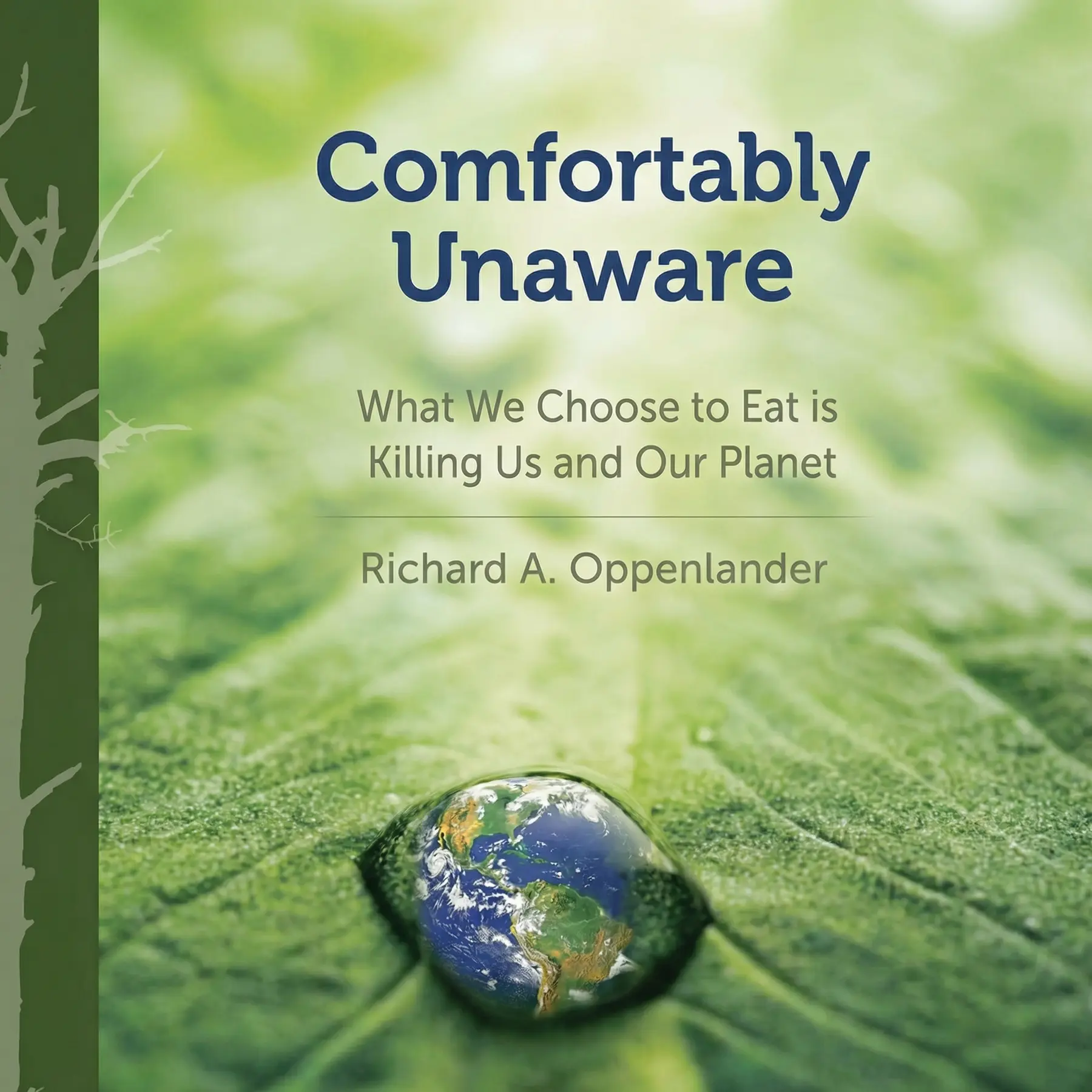
Comfortably Unaware: What We Choose to Eat is Killing Us and Our Planet
Shows how raising animals and catching fish for food drives global warming, rainforest loss, hunger, water shortage, ocean decline and pollution. It argues that changing what we eat matters as much as how we travel.
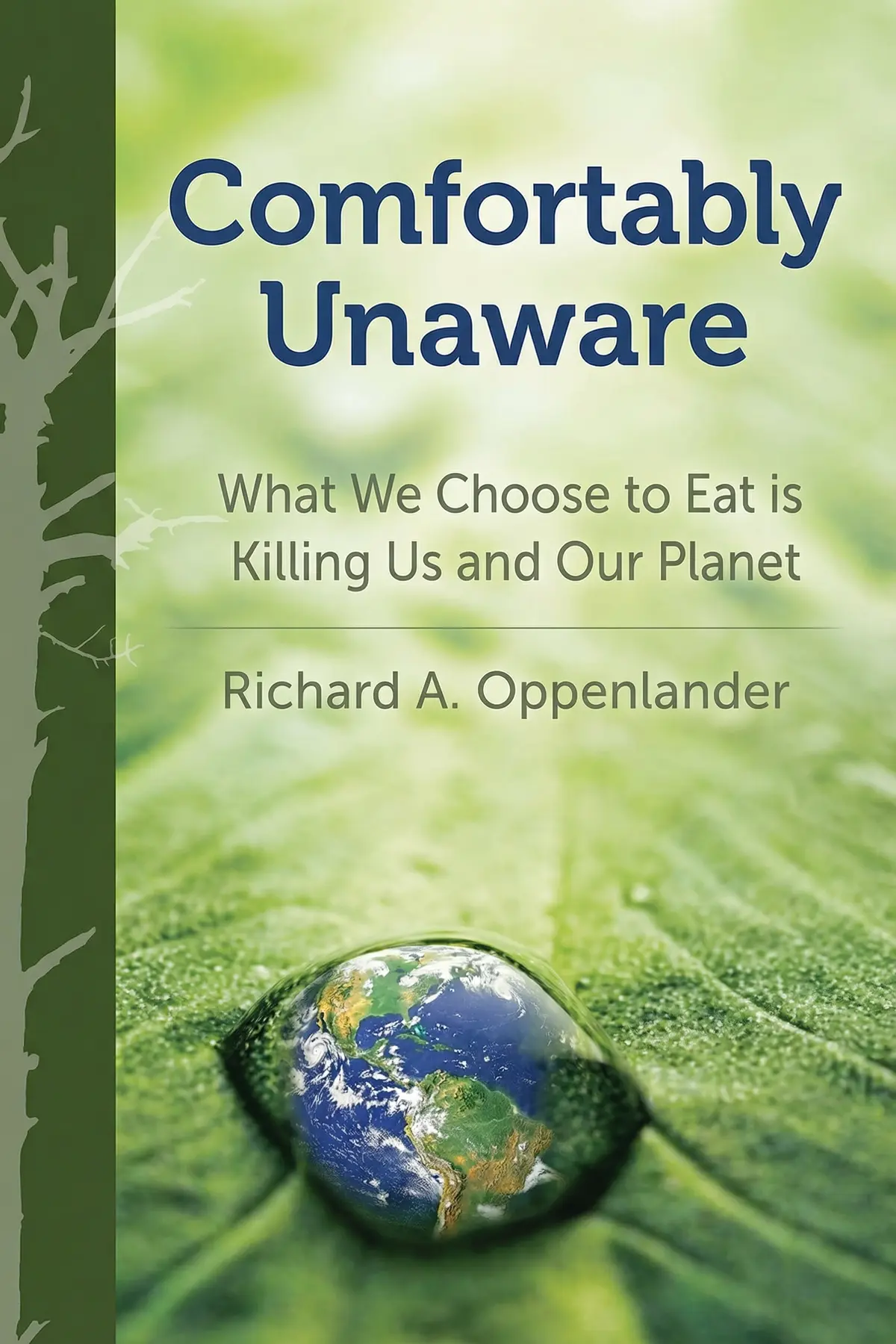
Table of Content
1. Introduction
1 min 04 sec
Plenty of people who care about the climate switch off lights, take shorter showers and ride the bus, then sit down to a meal that cancels much of that effort. In Comfortably Unaware, Dr. Richard A. Oppenlander argues that our food, especially meat, fish and dairy, is one of the biggest causes of harm to the planet. Farm animals alone, he reports, account for about 40 percent of the methane humans generate, and methane traps far more heat than carbon dioxide.
His case is simple and uncomfortable. Raising animals and catching fish for food warms the air, clears forests, takes grain from hungry people, drains fresh water, empties the oceans and pollutes all of it. That means what lands on the plate has a large effect on the health of the planet. Follow his figures and you will be able to explain to anyone why a hamburger belongs in the climate conversation, and which changes at the table count most.
2. Find the climate gases hiding in your dinner
2 min 03 sec
Saving electricity and taking public transport feel like real climate action, and they are. Oppenlander shows why they still leave the two most potent warming gases almost untouched, and where those gases actually come from.
3. Know what a cheeseburger costs the rainforest
1 min 58 sec
A fast-food order and a cancer ward seem to have nothing in common. Oppenlander draws a line between them that runs straight through the Amazon, and the numbers on that line are hard to forget.
4. Hunger makes sense once you follow the grain
1 min 53 sec
In 1986 the world watched Ethiopia go hungry. What most viewers never learned was what the country’s farms were growing at that very moment, and who ended up eating it.
5. Save more water by skipping beef than showers
1 min 57 sec
Shorter showers and dripping taps get most of the attention in water-saving advice. Oppenlander compares them with a single pound of food and finds a gap so wide it changes which habit is worth changing.
6. The real cost of a pound of shrimp
1 min 40 sec
Fish often looks like the lighter choice for anyone cutting back on meat. Oppenlander takes the listener to the ocean floor, where a single dragging net reshapes the math of every seafood order.
7. Trace the pollution behind every animal product
1 min 55 sec
Cars, ships and planes are the usual villains in any talk about dirty air. One comparison in Oppenlander’s figures puts something on the farm ahead of all of them, and the waste does not stop at the air.
8. Conclusion
1 min 22 sec
Oppenlander’s title names the condition he wants to end. Most people do care about the planet. They are simply comfortable, because the damage from their meals happens far away: in a cleared stretch of the Amazon, a field in Africa turning to desert, a trawled seamount or a salmon pen in British Columbia. His book ties those distant places back to a single plate. The choice that adds methane to the air also takes grain from hungry children, water from rivers and life from the seabed. As he sees it, the food system cannot last in its current form, and change has to start with what each person decides to eat.
The book supports a few concrete moves. Weigh your diet alongside your car and your heating when you think about your footprint, since by his numbers livestock outpace global transport. Replace some beef meals with vegetables, grains or soybeans, which need a small fraction of the water. Look at seafood with the same care, remembering the 20 pounds of discarded sea life behind each pound of shrimp. And when a headline reports famine or drought, ask where that region’s grain and water are going.
For Oppenlander, becoming aware is meant to feel uncomfortable. That discomfort is where a better meal begins.
About this book
What is this book about?
Many people who worry about the climate turn off lights, take the bus and use less water. Richard A. Oppenlander argues that they are tackling only part of the problem. The bigger part is what they eat, especially meat, fish and dairy. Oppenlander follows the cost of animal food across the planet. Livestock produce a large share of the methane and nitrous oxide that heat the atmosphere. Cattle ranching has wiped out most of the Amazon, along with plants used in cancer medicines. Grain that could feed hungry people goes to animals. A pound of meat uses thousands of gallons of fresh water. Industrial nets tear up the seabed, and farm and fish waste pollutes rivers, air and oceans. Readers get a clear chain of numbers linking a single meal to forests, famine, rivers and seas. They also get a practical way to judge their own footprint by looking at the plate as well as the car and the thermostat.
Book Information
Who it's for
Already saving energy
People who already save energy for the climate and want to know what their diet adds.
Meat and seafood eaters
Meat and seafood eaters weighing whether to cut back, and looking for the numbers behind the debate.
Students and campaigners
Students and advocates who need clear figures linking food to hunger, water and ocean loss.
About the Author
Richard A. Oppenlander
Dr. Richard A. Oppenlander has studied for decades how food choices affect the planet and people. He works as a consultant and keynote speaker on personal accountability for what we eat and on world hunger projects. He later wrote Food Choice and Sustainability, which won a Green Book Festival Award and an international book award for social change in 2014. He founded the non-profit Inspire Awareness Now, started an organic plant-based production company and runs an animal rescue sanctuary with his wife, Jill.
Ratings & Reviews
Ratings at a glance
What people think
Listeners find this work exceptionally enlightening and accessible, giving high marks to its extensive research and its examination of how animal-centric diets affect the environment. They value the clarity and caliber of the prose, and one listener observes that it serves as a more condensed version of The China Study. The book's gentle, empathetic tone is well-received, with one review noting its role as an epilogue to Cowspiracy. Regarding the health-focused content, listeners express conflicting perspectives, and some believe the chapter on nutrition is the book's least effective section.
Top reviews
Matteo
This book is a wake-up call for anyone who thinks their diet doesn't impact the world at large. Oppenlander dives deep into the statistics of global depletion, specifically how our demand for meat is gutting the rainforests and draining our aquifers. It’s a dense read, but the clarity regarding the 70 billion animals slaughtered annually is staggering. I appreciated the chapter on the 'grass-fed' myth, which many of us use as a crutch to avoid changing our habits. My only gripe is that the writing can feel a bit repetitive in the middle sections, but the urgency of the message justifies the reinforcement. If you care about the future of our oceans and land, you need to read this.
Show moreSienna
After watching Cowspiracy, I felt like I needed more data to back up the film's claims, and this book delivered exactly that. It reads like a detailed epilogue to the documentary, focusing heavily on the environmental devastation caused by animal agriculture. The research is broad, covering everything from biodiversity loss to water pollution. However, I have to agree with some other readers that the author’s tone can be a bit patronizing at times. He assumes the reader is 'comfortably unaware,' which might rub some people the wrong way if they’re already trying to make better choices. Still, the breakdown of how much water goes into a single burger—over 1,200 gallons!—is a fact I won't soon forget.
Show moreCameron
Ever wonder what the true cost of a $3.39 burger actually is? Oppenlander breaks it down in a way that is both terrifying and necessary. He doesn't just talk about carbon dioxide; he talks about the 55 square feet of rainforest lost for every pound of beef. This is the most unapologetic book on food responsibility I have ever encountered. Unlike other texts that try to find a middle ground with 'sustainable' meat, this book exposes those terms as marketing fluff used to ease our collective conscience. It’s a brutal, honest look at why a plant-based diet isn't just a personal health choice, but an environmental necessity. It changed how I look at my plate forever.
Show moreClaire
Finally got around to reading this and it’s essentially the missing piece to the climate change puzzle. While most environmental books focus on fossil fuels and plastic straws, Oppenlander identifies the real culprit: our global appetite for animal products. The chapters on the depletion of our oceans and the destruction of biodiversity are chilling. It’s a dense book, and it isn’t always 'fun' to read because it forces you to confront some very uncomfortable truths about your lifestyle. However, the research is so broadly supported that it’s hard to argue with his conclusions. If you want to understand the true impact of the livestock industry on our world, this is the definitive guide.
Show moreChan
Frankly, it’s about time we stopped ignoring the massive cow in the room. Oppenlander does a great job of connecting the dots between our dinner plates and global crises like desertification and species loss. I’ve read a lot on this topic, but I still found new information here, especially regarding the pharmaceutical chemicals that end up in our food chain through the animal industry. The book is easy to understand, even if you don't have a background in environmental science. It provides a much-needed perspective that goes beyond fossil fuels. To be fair, it’s not a literary masterpiece—the editing is a bit rough—but the facts are essential.
Show moreMax
Look, the science regarding global depletion and our food choices is undeniable. This book provides a fantastic, simplified version of the concepts found in The China Study but shifts the focus toward the planet rather than just personal health. I found the sections on the Ogallala aquifer and soil erosion particularly eye-opening. We are literally eating our future. My main criticism is that Oppenlander doesn't offer much of a roadmap for a global transition. He points the finger quite effectively, but he ignores the socioeconomic barriers that make plant-based eating difficult for lower-income families. It’s a bit of a privileged perspective, but the environmental data itself is top-notch and worth the read for the statistics alone.
Show moreGioia
To be fair, Oppenlander isn’t trying to win a Pulitzer for his prose, but he is trying to save the planet. His straightforward writing style makes it an easy read considering the overwhelming and often depressing subject matter. If you care about the future of our oceans or the loss of biodiversity, this is a must-read. Some of the nutrition chapters felt a bit weaker than the environmental ones, but the overall impact is undeniable. It’s dense, it’s unapologetic, and it’s necessary for anyone who wants to understand the link between their lunch and climate change.
Show moreSomrutai
The core message here is incredibly important, but the execution left me wanting more. I fully support the move toward plant-based diets for environmental reasons, but the author’s 'tough love' approach feels more like a lecture than a conversation. He repeats the same facts about the 70 billion land animals every few pages, which starts to lose its impact after the first three chapters. I also found the organization a bit chaotic; he jumps from global warming to fish farms without much of a cohesive thread. It’s definitely informative, and I learned a lot about the inefficiency of water management in animal vs. plant agriculture, but I wish it were written with better structural flow.
Show moreLadawan
While I agree with the author's stance on agribusiness subsidies, the delivery is flawed. Oppenlander makes some great points about how taxpayer money is propping up an industry that is destroying our water supply and soil health. However, he fails to acknowledge that similar issues exist in the plant-food business. It's not as simple as 'meat bad, plants good' when you consider the exploitative nature of global agriculture as a whole. I also found his constant guilt-tripping of the reader to be counterproductive. He acknowledges that people are 'unaware' because of information control, then proceeds to bash them for that very lack of knowledge. It’s a middle-of-the-road book for me: great research, but poor presentation.
Show moreMo
I'll be blunt: the tone in this book is almost unbearable. While the information regarding overfishing and rainforest destruction is clearly well-researched, Oppenlander presents it with a level of condescension that makes it hard to keep reading. He often treats the reader like an idiot for not knowing these niche statistics already. Also, for someone who criticizes medical doctors for giving nutrition advice without proper training, he sure gives a lot of it despite being a dentist himself. It feels hypocritical. The book is also desperately in need of a stronger editor; it’s incredibly repetitive and the footnotes are often vague, citing things like 'Wikipedia' or 'USDA' without specific page numbers. It’s an important topic, but the delivery is just too aggressive to be effective.
Show moreQuestions about this book
What is the main idea of Comfortably Unaware?
Richard A. Oppenlander argues that what we eat, especially meat, fish and dairy, is a major driver of environmental damage. Raising animals produces large shares of methane and nitrous oxide, clears rainforests, diverts grain from hungry people, uses huge amounts of fresh water and pollutes rivers and air. Industrial fishing and fish farms harm the oceans. Real environmental change, he says, has to include the food on our plates.
How much water does it take to produce meat according to Oppenlander?
By his figures, one pound of meat takes 5,000 gallons of water, while a pound of vegetables, fruit, soybeans or grain needs only 20 to 60 gallons. A pig drinks 21 gallons a day and a cow 30, against a few ounces for a person. He concludes that skipping one pound of beef saves more water than going a full year without showering.
Does Comfortably Unaware say fish is a better choice than meat?
No. Oppenlander argues that overfishing is widespread and poorly regulated. Heavy bottom trawling drags nets across the seabed and destroys habitats that can take centuries to recover. He cites a UN finding that 70 percent of fish species are depleted or overfished, and notes that each pound of shrimp kills over 20 pounds of other sea life. Fish farms add pollution, chemicals and disease.
How does meat connect to world hunger in the book?
Oppenlander says the world grows enough grain to end hunger, but much of it feeds livestock. The United States feeds 70 percent of its grain to animals. During Ethiopia’s 1986 food shortage, the country was still exporting grains like rapeseed and linseed to Europe as animal feed. Overgrazing also turns fertile land into desert, which he links to damage affecting some 500 million Africans.
How can I apply the ideas in Comfortably Unaware?
Start by counting diet alongside driving and heating when you judge your footprint, since Oppenlander reports that livestock produce more greenhouse gas emissions than global transport. Swap some beef meals for plant foods that need far less water and land. Treat seafood with care rather than as an easy substitute. When you read about famine or drought, ask where the region’s grain and water are going.
Readers also enjoyed
Beyond Words: What Animals Think and Feel
Carl Safina
Cod: A Biography of the Fish That Changed the World
Mark Kurlansky
Cradle to Cradle: Remaking the Way We Make Things
William McDonough
Drinking Water: A History
James Salzman
Earth for All: A Survival Guide for Humanity
Sandrine Dixson-Decleve
Eating Animals
Jonathan Safran Foer
AUDIO SUMMARY AVAILABLE
Listen to Comfortably Unaware in 15 minutes
Get the key ideas from Comfortably Unaware by Richard A. Oppenlander, plus 5,000+ more nonfiction titles.
- 5,000+ titles
- Listen as much as you want
- 7-day free trial
- Cancel anytime









