
14 min 06 sec
Available in: English
 ไทย
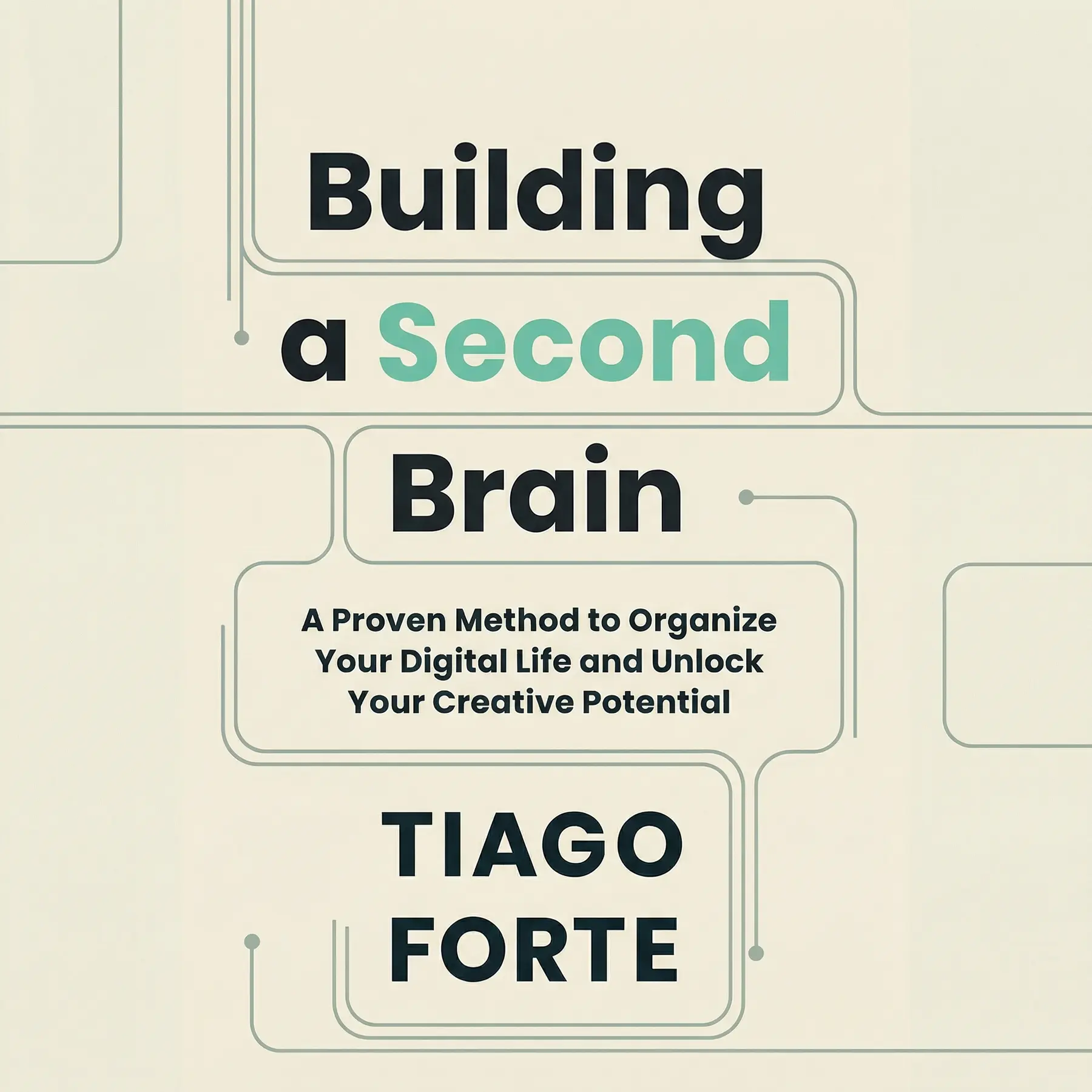
EnglishไทยBuilding a Second Brain: A Proven Method to Organize Your Digital Life and Unlock Your Creative Potential
By Tiago Forte
Shows how to stop losing good ideas by keeping a simple digital system outside your head, and how to turn saved notes into finished projects with four steps: capture, organize, distill and express.
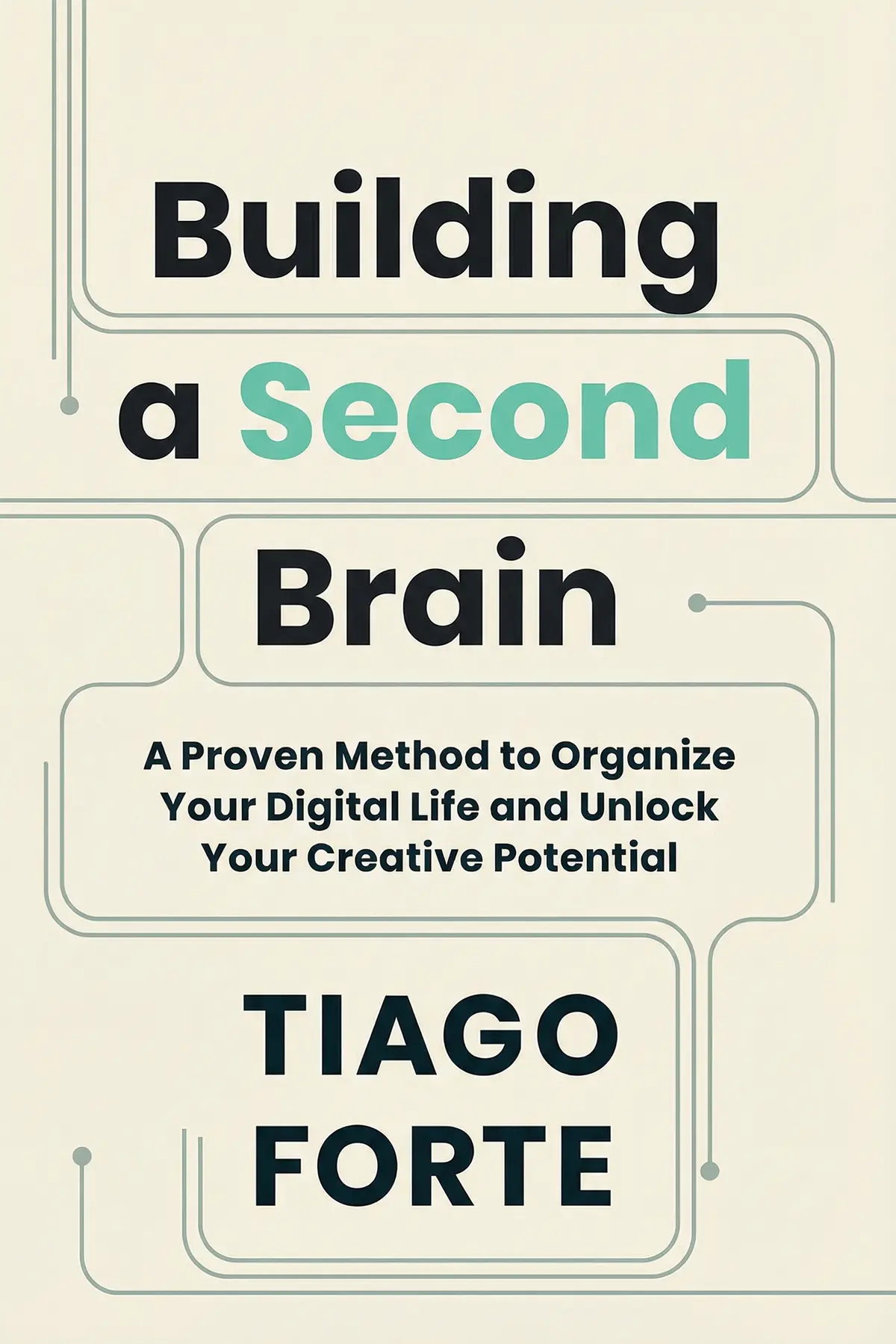
Table of Content
1. Introduction
1 min 03 sec
Most knowledge workers lose good ideas faster than they can use them: the insight on the commute that is gone by the office door, the study you read last week that slips away in the meeting where it matters. In Building a Second Brain, productivity teacher Tiago Forte argues the fix is a trusted digital system outside your head, one that files, recalls and combines what you learn. He cites a New York Times figure putting the average person’s daily intake at the equivalent of 34 gigabytes of information, far beyond what one brain can manage.
His method is called CODE: capture what resonates, organize it by how soon you will act on it, distill it to its essentials and express it in finished work. Running through all four steps is one conviction: notes earn their place only when they help you make something. By the end, you will know which two ideas to save today, where to put them, and how a folder of notes becomes a finished project.
2. A second brain that holds your ideas for you
1 min 47 sec
Two colleagues wake up with the same scattered thoughts. By evening, one has a proposal ready for the board and the other has given up on her own project. Neither is smarter. One small difference decides the day.
3. Save only what sparks something in you
2 min 06 sec
You probably bookmark, highlight and screenshot every day, and still feel like you remember nothing. The trouble is rarely the tools. A Nobel physicist’s habit points to a far stricter way of deciding what deserves a place.
4. A filing system built around your next action
2 min 19 sec
Sorting notes by subject feels natural and tidy. Forte says it is exactly the wrong instinct, and the reason becomes obvious the moment you imagine a kitchen arranged the same way.
5. Turn long notes into summaries you can scan
2 min 05 sec
A note that felt brilliant at night can look like nonsense by morning. Forte argues that the better you get at saving things, the worse this problem becomes, unless you learn to take words away.
6. Big projects made of small reusable pieces
1 min 53 sec
Software teams and television producers rarely build the whole thing at once. Their habit offers a way past the moment where notes pile up and nothing gets made, and it gets easier the longer you use it.
7. Finish what you start to become an expert
1 min 48 sec
A well-kept archive of notes can feel like knowledge. An 18th-century philosopher disagreed, and Forte turns his three Latin words into a simple rule for people who start far more than they finish.
8. Conclusion
1 min 05 sec
Forte’s method can look like a filing system, yet its real subject is output. Every step exists to shorten the distance between noticing something and using it, which is why John’s commute note could reach the board by afternoon while Amelia’s ideas never left her head. Ken Burns sets aside 49 hours of footage for every hour he keeps, and the film is better for it. A second brain works the same way: most of its value comes from what you leave out and what you finally ship.
You do not need a new app to begin. Pick the two ideas from today that actually stirred something, and send them to one notes app. Move old clutter into an archive and open a folder for each project you are working on now. The next time an article matters to you, leave yourself a summary of a few sentences at the top. Then choose one piece of work whose groundwork is mostly laid, and finish it, imperfect or not.
Vico’s three Latin words say it best: we only know what we make.
About this book
What is this book about?
Most people save more than ever: screenshots, bookmarks, highlights, voice notes. Yet the useful idea still vanishes before the meeting where it would help, and the passion project still stalls because nobody remembers where it was left. Tiago Forte argues that one brain cannot hold the flood of information we meet each day, and that it should not have to. His answer is a second brain, a digital system that files, recalls and combines what you learn. He builds it with a four-step method called CODE. You capture only what sparks something in you. You organize it by how actionable it is, using four folders called Projects, Areas, Resources and Archives. You distill each note in layers until a short summary sits on top. Then you express it, assembling finished work from small, reusable pieces. Readers get a method they can start in an afternoon, with clear exercises: name today's two key ideas, archive old clutter, distill one article in thirty minutes and finish one project. The result is fewer forgotten ideas and more work actually shipped.
Book Information
Who it's for
Overloaded knowledge workers
Knowledge workers buried in email, files and saved articles who still cannot find the right fact in a meeting.
Stuck on side projects
People with passion projects or side businesses that stall because they never remember where they left off.
Note-takers and bookmarkers
Chronic note-takers and bookmarkers who want their collection to produce finished work.
About the Author
Tiago Forte
Tiago Forte founded ForteLabs, where he teaches productivity and personal knowledge management. He has worked with organizations including Toyota and the Inter-American Development Bank, and his ideas have appeared in The New York Times and Harvard Business Review. Counting Building a Second Brain alongside The PARA Method and Life in Perspective, his books have reached over 500,000 readers in more than 25 languages and made the Wall Street Journal bestseller list. He lives in Valle de Bravo, Mexico, with his wife and children.
Ratings & Reviews
Ratings at a glance
What people think
Listeners find this title outstanding for knowledge management, as it delivers functional techniques for handling personal data and structuring digital routines. The delivery is lucid and easy to grasp, which clarifies the milestones for success, and listeners mention improved output and efficiency. They prize the work's life-altering influence, and one listener points out how it reframes their entire method of organization.
Top reviews
Cha
Wow. This book completely shifted how I view my digital life and mental clarity. For years, I struggled with 'information FOMO,' bookmarking hundreds of articles I never revisited, but Tiago Forte provides a concrete framework to actually use that knowledge. The PARA system—Organizing by Projects, Areas, Resources, and Archives—is a total game-changer because it prioritizes action over just hoarding data. It’s not just about taking better notes; it’s about building a reliable infrastructure for your creativity. I’ve noticed a massive spike in my productivity since I stopped trying to memorize everything and started trusting my digital system. If you feel constantly overwhelmed by your browser tabs and random voice memos, you need this. It’s a clear, accessible guide that turns digital chaos into a structured creative engine.
Show moreOat
Ever wonder why you feel so mentally drained even when you aren't technically working? It’s likely because you’re trying to use your brain as a storage device instead of a processing tool. Building a Second Brain provides the antidote to that cognitive load by teaching you how to externalize your thoughts. I particularly loved the 'Express' part of the CODE framework, which emphasizes that the point of knowledge management is to actually create something new. Since implementing these principles, I’ve closed over 200 open tabs and moved everything into a streamlined system in Notion. The weight off my shoulders is palpable. This isn't just about apps; it's a fundamental shift in how to navigate an information-dense world. Truly transformative work that I wish I’d read back in college.
Show moreVarinee
Finally, a framework that prioritizes the output rather than just the storage of information! I’ve been a serial note-taker for years, but I always felt like my notes were a 'black hole' where ideas went to die. Building a Second Brain changed that by forcing me to think about how my future self will actually use the data I'm capturing. The 'Express' phase is a brilliant reminder that we should be building blocks for future projects, not just collecting digital dust. My creative output has doubled since I started using PARA to organize my research. The writing is punchy, the logic is sound, and the impact on my daily workflow has been immediate. It’s easily one of the most practical books on productivity I’ve read in the last decade.
Show moreTern
As a freelance designer, my desktop used to be a graveyard of 'final_v2' files and random screenshots that I could never find when I actually needed them. After working through Forte’s methods, I finally feel like I have a handle on my professional assets. The chapter on 'Distilling' was particularly eye-opening for me, as it taught me how to take notes for my future self rather than just highlighting text mindlessly. The writing is accessible and the steps are easy to follow, even if you aren't a 'tech person.' I did find some of the examples a bit banal, and the tone occasionally leans into being condescending, but the practical value of the filing system outweighs the fluff. It’s a solid 4-star read for anyone drowning in digital clutter.
Show morePriya
After hearing about this on several productivity podcasts, I decided to see if the 'Second Brain' was worth the hype. Frankly, the methodology is excellent for anyone in a corporate environment where information hoarding is a real problem. The book explains how to make information retrievable, which is where most people fail. I’ve started applying the 'Project' vs 'Area' distinction at work, and it’s made my weekly reviews so much faster. I do agree with other reviewers that there is a bit too much repetition, and some chapters felt like they were reaching to meet a word count. Still, the core principles of the CODE framework are practical and easy to implement immediately. It’s a great resource for improving efficiency, even if you have to wade through some flowery language to get to the meat.
Show moreOn
The chapter on distilling information was the highlight for me, specifically the idea of 'Progressive Summarization.' Most of us just clip articles and let them rot in Evernote, but Forte shows you how to layer your notes so they are useful months later. It’s a very pragmatic approach to Personal Knowledge Management (PKM) that doesn't get bogged down in which specific software you should use. I appreciated that he stays 'tool-agnostic,' focusing on the habits rather than the tech. My only gripe is that the book feels a bit too much like a marketing vehicle for his expensive online course. Regardless, the value is there if you’re looking to organize your digital life. It’s a quick read that offers a lot of 'aha' moments for the chronically disorganized.
Show moreNiramai
Personally, I found the PARA system to be the most valuable part of the whole experience, even if the rest of the book felt a bit stretched. I’ve always struggled with where to put 'middle-ground' information that isn't quite a project but isn't trash either. The 'Resources' and 'Areas' categories solved that problem for me instantly. While I think the 'Second Brain' branding is a bit hyperbolic, the underlying principles of digital organization are solid. It’s a great guide for students or early-career professionals who are overwhelmed by the sheer volume of media we consume daily. You might find some of it repetitive if you’ve followed Tiago on YouTube, but having it all in one cohesive volume is definitely worth it for the sense of order it brings.
Show moreNatchaya
To be fair, Tiago Forte has a very clear and accessible writing style that makes complex ideas feel manageable. However, I couldn't shake the feeling that I was reading a polished manual for things I was already doing instinctively. The PARA method is just basic organization, and while 'Capture' is a good reminder to write things down, is it really worth an entire book? I was hoping for more deep-dive neuroscience or perhaps some historical context regarding commonplace books—which the author strangely ignores in favor of modern celebrity examples. It’s a decent primer for someone just starting their career or someone who is naturally very disorganized. If you’re already an avid note-taker, you’ll likely find yourself skimming through eighty percent of the pages to find the few nuggets of actual wisdom.
Show moreBo
Look, I wanted to love this because the hype in the productivity community is massive, but it felt like an over-extended blog post. The core concepts, CODE and PARA, are actually quite useful, yet they could have been explained in twenty pages rather than three hundred. There is so much filler here, including anecdotes about Taylor Swift and Richard Feynman that felt more like padding than essential evidence. To be fair, if you’ve never used a folder in your life, this might feel revolutionary, but for most people, it’s just common sense wrapped in fancy acronyms. I’m honestly surprised at the price tag for what essentially amounts to 'put your files in folders and summarize them.' It’s not a bad system, but the book itself is incredibly wordy and repetitive.
Show moreNathan
This book is essentially an overpriced manual for basic computer literacy disguised as a productivity revolution. Forte acts like he discovered the concept of note-taking, completely ignoring centuries of intellectual history like the Dutch commonplace books described by Erasmus. Instead of rigorous methodology, we get shallow stories about pop stars and the same repetitive advice to 'use an app.' If you know how to create a folder and you understand that you should probably save things you want to remember, you have already mastered this book. It is 300 pages of fluff that could have been a single Twitter thread. I bought this on a recommendation from Ali Abdaal, but it was a total letdown. Save your money and just look up the acronyms on Google; you’ll save hours of your life.
Show moreQuestions about this book
What is the main idea of Building a Second Brain?
Tiago Forte argues that one head cannot hold all the information we meet each day, so we need a trusted digital system outside it. His CODE method has four steps: capture what resonates, organize it by how actionable it is, distill it into short summaries and express it in finished work. The aim is fewer forgotten ideas and a mind left free for deep, creative thinking.
What is the PARA method in Building a Second Brain?
PARA is Forte’s way of sorting notes by how soon you will act on them. Projects are short-term goals with deadlines, like planning a holiday. Areas are ongoing responsibilities with no end date, like personal finances. Resources hold interests you have not acted on yet. Archives keep finished or inactive material out of the way. He compares this to a kitchen, which is arranged by use rather than by type of food.
How many notes should I capture each day?
Forte captures about two knowledge assets a day on average. He suggests saving only information that sparks something in you, such as a solution, a shortcut or a new perspective, and sending everything to one central notes app. Testing new material against a short list of core questions, as the physicist Richard Feynman did with roughly a dozen of his own, keeps the collection focused.
How do I turn my notes into finished work?
Forte recommends intermediate packets: small, reusable chunks of larger work, such as a meeting agenda or a mission statement. They are easier to finish, invite feedback early and can be reused across projects when tagged with useful keywords. For people who rarely finish things, he adds a rule of thumb: only start a project that is already 80 percent done, with the groundwork laid in your notes.
Who should read Building a Second Brain?
It suits knowledge workers overwhelmed by email, files and saved articles, people with passion projects they never complete, and anyone who forgets useful ideas before they can use them. The steps are small and concrete, from capturing two ideas a day and archiving old clutter to writing a summary of a few sentences at the top of each important note.
Readers also enjoyed





AUDIO SUMMARY AVAILABLE
Listen to Building a Second Brain in 15 minutes
Get the key ideas from Building a Second Brain by Tiago Forte, plus 5,000+ more nonfiction titles.
- 5,000+ titles
- Listen as much as you want
- 7-day free trial
- Cancel anytime









