

13 min
Available in: English
Your Best Financial Life: Save Smart Now for the Future You Want
By Anne Lester
Shows how early, steady saving compounds into real wealth and why the brain resists it. It then lays out a five-step order, called STASH, for emergencies, retirement accounts, debt, investing and everyday enjoyment.
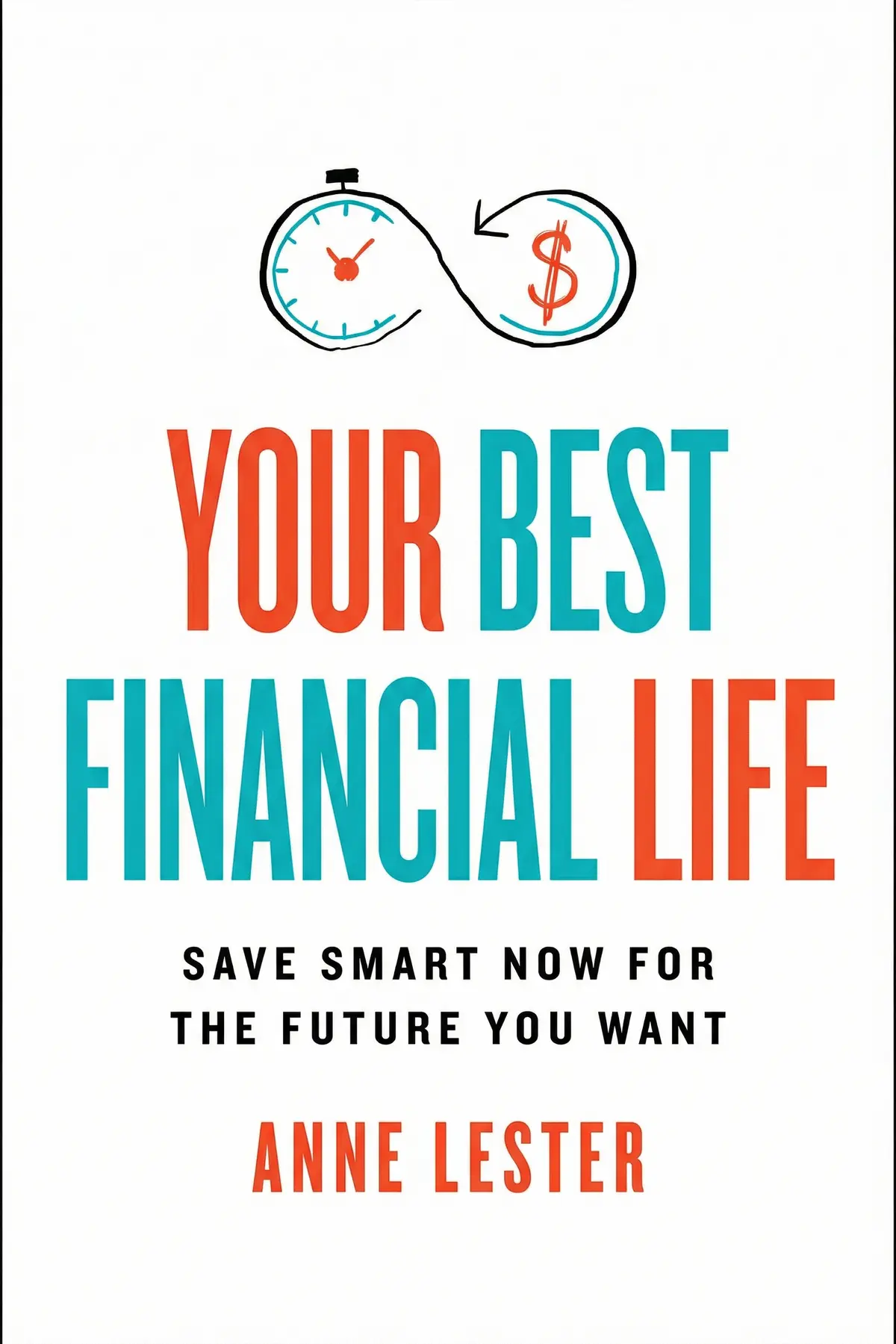
Table of Content
1. Introduction
1 min 09 sec
If saving for retirement feels like something for later, Anne Lester’s numbers suggest that later is exactly what makes it work. In Your Best Financial Life, the former head of retirement solutions at J.P. Morgan Asset Management shows that $5,000 put away once at age 21 can grow past $100,000 by 65. It gets there simply because returns start earning returns of their own. Time, in her view, is the strongest tool an ordinary saver has.
Most people still struggle to use it. Rent comes first, shopping apps make spending painless, and old habits pull toward now. Lester’s throughline is that financial freedom comes less from earning more than from three things: starting early, understanding why you spend, and following a clear order of priorities that can bend when life changes.
She offers a five-part plan she calls STASH, a list of common mistakes and practical moves for job changes and emergencies. By the end, you can name your own spending type and know which money task to tackle first.
2. Start early and let time multiply your savings
1 min 52 sec
A single deposit made in your early twenties can end up worth twenty times as much. The reason has nothing to do with clever stock picks, and most people let it slip past them for years.
3. Understand your brain's pull toward spending now
1 min 44 sec
A young woman who refused to use credit cards still ended up asking her parents to bail her out. Her story points to a struggle that starts long before any purchase is made.
4. Turn your spending type into a strength
1 min 48 sec
Some people feel their paycheck vanish without ever buying anything big. Lester describes the patterns behind that leak and a fix suited to each, starting with knowing which pattern is yours.
5. Avoid five mistakes that drain careful savers
1 min 49 sec
Several of the costliest money mistakes feel responsible, even generous, while you are making them. One of them is made by loving parents every day, and Lester argues it can backfire badly.
6. A savings order that puts first things first
1 min 44 sec
Most people juggle emergencies, retirement, debt and treats all at once, and feel behind on every one. Lester proposes a fixed sequence, plus a single number that tells you when a debt costs too much to keep.
7. Keep saving when life changes course
1 min 40 sec
A breakup, a wedding, a new job: none of them appear in a savings plan, yet each can throw one off track. Two savers’ stories show which moves protect the money when life swerves.
8. Conclusion
1 min 14 sec
Lester’s book comes down to a trade between two versions of yourself: the one who wants something today and the one who will live on what you save. Her case that the future self deserves a voice is that early $5,000 growing past $100,000. Her respect for the present self shows in the H of STASH, which leaves room for trips and celebrations once the basics are covered. Freedom, as she describes it, does not mean either self winning. It means a plan where both get paid.
What makes that plan workable is sequence. A cushion comes first, so emergencies never raid the long-term pot. Then the tax-advantaged accounts, with any employer match collected. Then debt above about 7 percent, cleared before you chase market returns. After that comes patience through market swings, and fresh attention every time a job or a relationship changes.
If you do one thing this week, find out whether your long-term saving has actually begun, and if it has not, start it at whatever size you can manage. If you do a second, look for a debt or a subscription that costs more than it gives back.
Speed was never the goal. The years are.
About this book
What is this book about?
Most people know they should save more for the future. The trouble is that rent, bills, shopping apps and a brain built for the present all argue for spending now. Anne Lester spent two decades leading retirement solutions at J.P. Morgan Asset Management. She argues that the answer lies in starting early and saving in the right order. She opens with the math of compounding: $5,000 invested at 21 can grow past $100,000 by 65. Then she explains why so few people take advantage of it, through the story of a careful young shopper caught by Buy Now, Pay Later and through spending types such as the over-subscriber and the accidental spender. The heart of the book is STASH, a five-step sequence. Build an emergency fund, use tax-advantaged retirement accounts, clear high-interest debt, stay invested through market swings, and save for fun. Readers also get warnings about common mistakes and practical moves for job changes, layoffs and emergencies.
Book Information
Who it's for
New to retirement saving
Young professionals who have not started retirement saving and wonder whether small amounts matter.
Careful earners
Careful earners whose subscriptions, installment plans or rising lifestyle keep eating their pay.
Protecting savings through change
People changing jobs or facing a setback who want to protect the savings they have built.
About the Author
Anne Lester
Anne Lester led retirement solutions at J.P. Morgan Asset Management for 20 years, developing strategies to help individuals retire securely, within a finance career of around three decades. She speaks and comments on retirement issues in the media and has contributed to CNBC, Bloomberg, the Wall Street Journal and the New York Times.
Ratings & Reviews
Ratings at a glance
What people think
Listeners find the guide approachable and simple to follow, offering useful techniques for building savings and managing investments. Furthermore, the content is highly educational, as one listener pointed out the beneficial tips regarding the diversification of assets. They also enjoy the down-to-earth and funny style, with one review mentioning that it turns complicated money topics into something understandable. Listeners appreciate the core themes of the work, with one noting its emphasis on the optimistic side of handling personal finances.
Top reviews
Pichaya
Finally, a finance book that doesn't feel like a root canal or a lecture from a disappointed grandfather. Anne Lester manages to take the absolute dread out of retirement planning by using a tone that is actually conversational and, dare I say, funny. While most experts make you feel guilty for every latte, she focuses on a more positive management style that emphasizes automating your future. The advice on diversifying investments was particularly eye-opening for someone like me who usually just stares at their 401(k) options in total confusion. It is definitely geared toward a younger crowd—think 20s and 30s—but the core message about time being your biggest asset is universal. If you want a guide that simplifies the jargon without being patronizing, this is the one to grab. Just keep in mind it’s very US-focused regarding tax laws.
Show moreSiriporn
Picked this up on a whim after a friend recommended it, and I was pleasantly surprised by how much I actually learned about diversifying my portfolio. Lester has this unique way of explaining US investing vehicles like IRAs and 401(k)s that just clicks. The information is extremely informative, providing a roadmap that feels achievable rather than restrictive. I loved the section on 'paying yourself first' because it shifts the mindset from deprivation to building a foundation. Some might find the writing style a bit too slangy or 'young,' but honestly, I think that’s why it works for the target demographic. It’s relatable and keeps you turning the pages. It’s one of the few personal finance books I’ve actually finished cover-to-cover. Highly recommended for anyone just starting their career journey!
Show morePrayoon
The chapter on different spending and saving personalities was an absolute game-changer for my relationship with my bank account. It helped me realize that I’m not 'bad' with money; I just have specific triggers that I need to manage. Lester is humorous and intelligent, avoiding the droll tone that usually plagues this genre. I’ve read a lot of finance books, and this one stands out because it feels like a conversation with a very smart friend. She covers everything from emergency funds to the nuances of diversifying your investments. Everything is explained in a way that feels doable, not overwhelming. It’s very encouraging to see a book that focuses on what you *can* do rather than just telling you to stop buying lattes. This is easily one of the most informative and relatable finance books on my shelf.
Show morePraepimon
Anne Lester has managed to take the dread out of retirement planning with this fantastic guide. The book is incredibly informative, particularly when it comes to the strategies for saving and the importance of diversifying. I found her approach to be very relatable, especially her admission that finance is usually tedious and boring. She breaks that mold by being funny and using examples that actually make sense to someone in their 20s or 30s. Some might find the slang a bit heavy-handed, but I thought it made the book much more readable than the standard dry investment manual. The focus on automation and 'paying yourself first' is exactly the kind of practical advice people need to hear. This book gives you the tools to build a financial future without feeling like you're sacrificing your entire present life.
Show moreFah
As someone who has always found the stock market intimidating, I appreciated how this book broke down complex concepts into bite-sized, digestible pieces. The author’s humorous approach makes a normally dry subject quite engaging, and the practical strategies for saving are easy to implement immediately. I did notice she takes a few shots at the 'FIRE' movement and folks like Dave Ramsey, which felt a bit unnecessary even if I agree with her general points. To be fair, her 'Fireflies' nickname for early retirement seekers cracked me up, though I can see how it might offend some. My only real gripe is that the book assumes you have a decent chunk of change left over after your bills are paid. It doesn’t provide much of a roadmap for those living paycheck to paycheck on a tight budget. Still, it's a solid, informative read for any young professional.
Show moreMadison
Ever wonder why most money books are so incredibly boring? Anne Lester clearly did, because she wrote the opposite of a textbook. This is a reader-friendly guide that prioritizes accessibility over ego. I found the insights on diversifying investments to be some of the most helpful I’ve read in years. She makes a great case for starting early, even if you can only contribute a small amount to your retirement plan each month. The chapter on different spending personalities helped me understand why I struggle to save, which was an unexpected bit of psychology. My only caution is for my fellow Canadians. This book is 100% focused on the American system, so things like 401(k) and IRA details won't apply to us at all. If you can look past the US-specific tax info, the general philosophy is excellent.
Show moreCharles
Look, if you're already a pro at the stock market, you can skip this one. But if you’re a total novice who gets hives thinking about a budget, Lester is the guide you need. The writing is snappy and the advice is practical. I appreciated her focus on the positive aspects of financial management rather than just listing everything you’re doing wrong. She has a real talent for making complex financial concepts accessible to the average person. I did find the constant slang a bit much after a while, and her disdain for the 'Fireflies' was a little weird, but the core advice is solid. It’s a great gift for a college grad who is about to sign their first employment contract. It sets a foundation that will serve them well for decades to come. Worth the read for the investment tips alone.
Show moreSomsak
To be fair, Lester’s advice on US tax-advantaged retirement accounts is technically sound and very thorough for a beginner. However, I struggled with the math she proposed for savings. She suggests saving 40% of whatever is left after your essential expenses, but she never really defines what counts as 'essential.' For many young people in this economy, there isn't exactly a mountain of gold left over after paying rent and buying groceries. The book seems to assume a level of financial privilege that isn't universal. I also found the criticism of other financial experts to be a bit petty. While her writing is intelligent and certainly not dull, the organization felt a bit scattered at times. It’s a decent introductory text, but it lacks the depth needed for people facing real-world financial struggles or those living outside the United States.
Show moreGrace
Not what I expected given the broad title, as it's clearly laser-focused on a very specific American demographic. I picked this up hoping for some general principles but found myself skimming through pages of 401(k) and IRA talk that doesn't apply to me as a Canadian. Truth is, the author is a great writer—she's funny, engaging, and clearly knows her stuff. But the lack of information for anyone not in their early 20s or living in the States is a major drawback. I also felt like she brushed over the reality of people who are actually struggling to make ends meet. It’s easy to say 'save 40% of your extra money' when you have a high salary. That being said, her advice on the psychological side of spending was interesting. It’s a mixed bag depending on your personal situation.
Show moreWatcharee
The tone of this book really rubbed me the wrong way from the very first chapter. Lester uses excessive slang and profanity in what feels like a forced attempt to sound 'cool' for a younger audience, which I found distracting and unprofessional. Beyond the writing style, I was disappointed by how narrow the target audience is. If you aren't a 20-something American with a high-paying job and a bunch of spare cash, this isn't for you. She dismisses the early retirement movement and aggressive saving strategies as living in a 'garbage can' and eating 'rice and beans.' That felt incredibly dismissive to people who are actually disciplined. Furthermore, as a middle-aged reader, I found very little here that applied to my stage of life. It left me feeling more regretful about the past than empowered for the future. There are much better, more inclusive finance books out there.
Show moreQuestions about this book
What is the main idea of Your Best Financial Life?
Anne Lester argues that financial freedom comes from starting to save early, so compounding has decades to work, and from saving in a clear order. She shows that $5,000 invested at 21 can grow past $100,000 by 65. She also explains why the brain resists saving, describes common spending types and lays out a five-step plan called STASH that can adapt when jobs, relationships or emergencies change.
What does STASH stand for in Anne Lester's book?
STASH is a five-step sequence. The first S is an emergency fund covering three to six months of living costs. T is tax-advantaged retirement accounts such as 401(k)s and IRAs. A is assessing your budget and paying off debts above about 7 percent. The second S is staying the course through market swings. H is having fun by saving for vacations, weddings or a home.
What is the bagel effect?
The bagel effect is Lester’s name for compound growth. Savings do not rise by a flat amount each year. They swell, because the interest earned starts earning interest of its own. Her example is a single $5,000 deposit at age 21 growing to more than $100,000 by 65, or $5,000 saved every year from that age reaching $1.5 million by retirement.
Who should read Your Best Financial Life?
It suits younger earners who have not yet started saving for retirement, people whose subscriptions or installment plans keep draining their pay, and anyone facing a job change or setback who wants to protect their savings. It also speaks to parents tempted to put children’s education savings ahead of their own retirement, a choice Lester says needs careful balance.
How can I apply the ideas in Your Best Financial Life?
Start any long-term saving now, even a small amount, since the start date matters more than the size. Identify your spending type and try its fix, such as a subscription cleanse or raising your savings rate with each raise. Then find the first unfinished step of STASH and work on it. When you change jobs, move old retirement balances instead of cashing them out.
Featured in
Readers also enjoyed




AUDIO SUMMARY AVAILABLE
Listen to Your Best Financial Life in 15 minutes
Get the key ideas from Your Best Financial Life by Anne Lester, plus 5,000+ more nonfiction titles.
- 5,000+ titles
- Listen as much as you want
- 7-day free trial
- Cancel anytime









