

12 min 25 sec
Available in: English
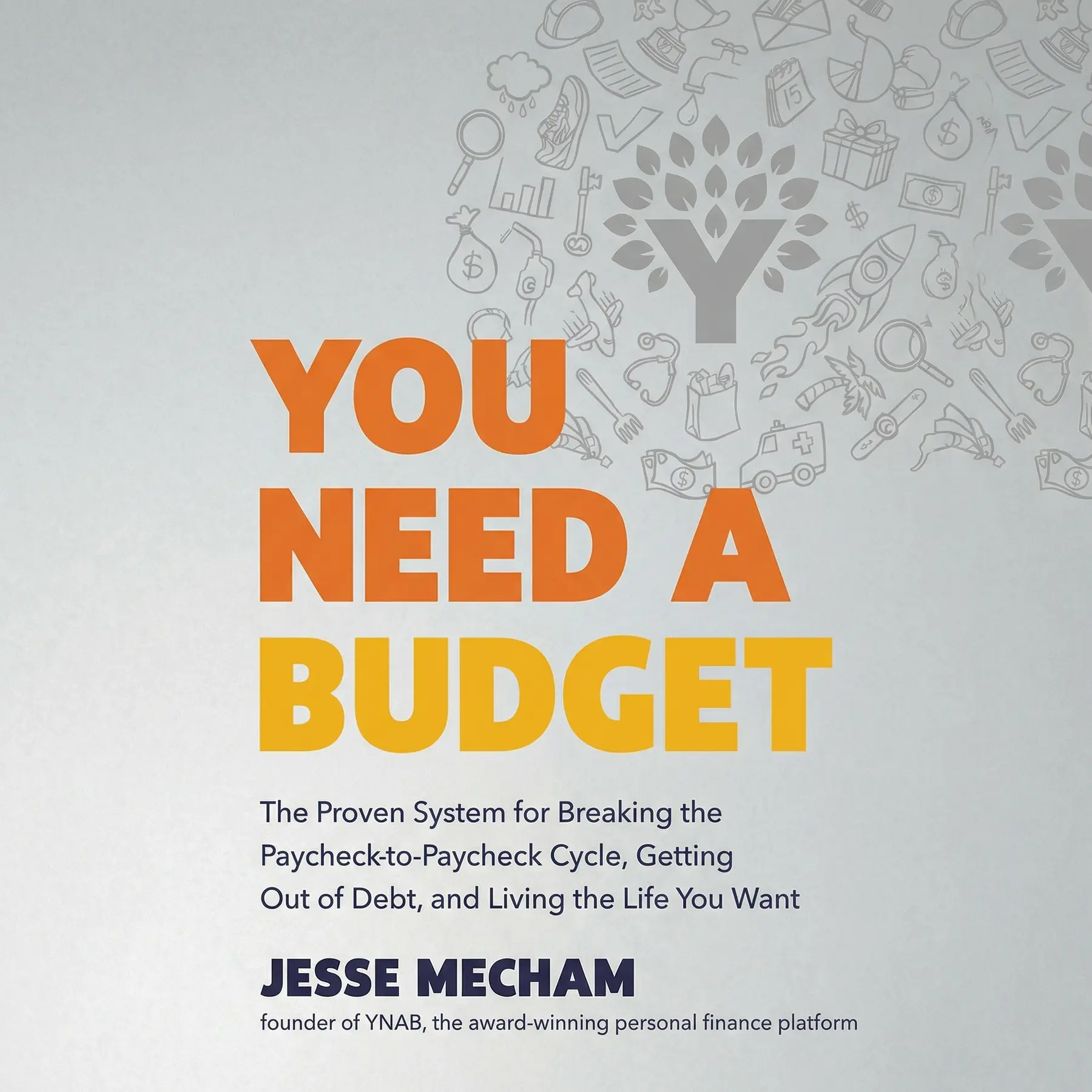
You Need a Budget: The Proven System for Breaking the Paycheck-to-Paycheck Cycle, Getting Out of Debt, and Living the Life You Want
By Jesse Mecham
A four-rule method for ending the paycheck-to-paycheck cycle: give each dollar a purpose, fund irregular bills monthly, adjust the plan without guilt and build a month-long buffer, so money serves what you value.
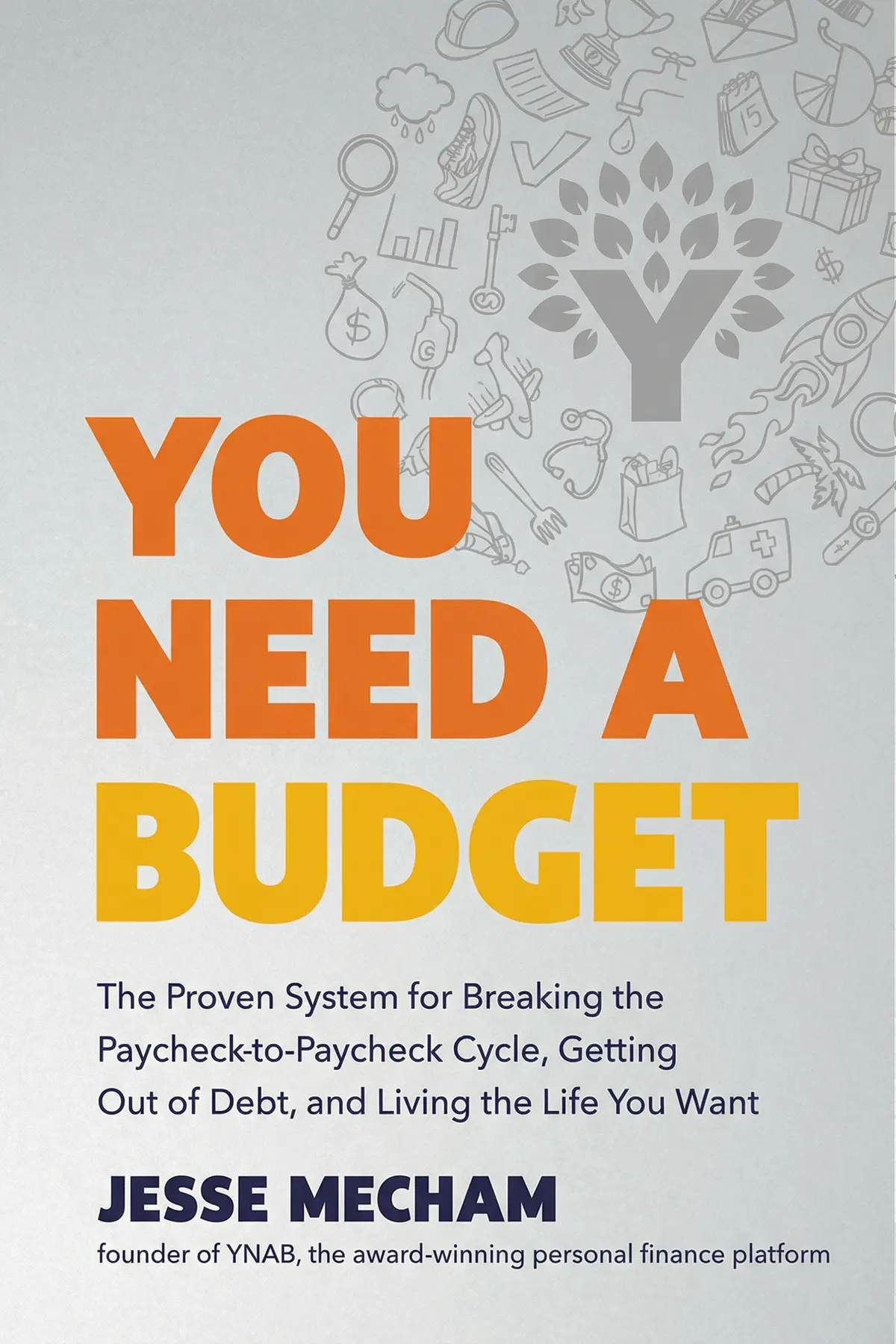
Table of Content
1. Introduction
59 sec
Many people with a steady income still check their bank balance with a knot in the stomach, unsure where last month’s money went. In You Need a Budget, former accountant Jesse Mecham argues that this is a planning problem more than an income problem, and that the fix starts with one question: what do you want your money to do for you?
Mecham built his method in 2004 as a spreadsheet to keep his young marriage afloat, and it rests on four plain rules. Each dollar gets a job before you spend it. Large, irregular bills are paid in small monthly pieces. The plan bends when life changes. And over time you spend money that has already sat in your account for a month or more. Followed together, they move you from living on each paycheck to living ahead of it.
Along the way, Mecham offers a quick way to judge, at the moment of purchase, whether something fits the life you want, and a clear test for which debts deserve any room in that life at all.
2. Ask what your money should do for you
1 min 44 sec
Many people who earn a comfortable living still avoid looking at their accounts. Mecham names three reasons for that reluctance, and his remedy begins by setting the numbers aside for a moment.
3. Plan your paycheck before you spend it
1 min 41 sec
The happiest moment of the month is also the most dangerous one for your bank account. Mecham’s first rule targets that moment, and it changes how every later spending decision feels.
4. Turn surprise bills into small monthly ones
1 min 43 sec
A broken car or a call to the plumber can wreck a month that looked fine on paper. Mecham argues these costs only look like surprises, and a simple piece of arithmetic takes away their sting.
5. Change the plan without feeling guilty
1 min 46 sec
Most budgets die at the first overspent category, not for lack of money but for the sense of failure that follows. Mecham’s third rule treats that moment very differently, from a pricey repair to a move abroad.
6. Spend money you earned a month ago
1 min 45 sec
Living paycheck to paycheck means every bill depends on the next deposit arriving on time. Mecham offers a single number to track that shows, month by month, how far you have moved away from that edge.
7. Learn which debts are worth carrying and which to clear
1 min 37 sec
A mortgage, a car loan and a student loan can look like the same kind of burden. Mecham offers one rule of thumb that separates them, and an unexpected reason to pay off the rest quickly.
8. Conclusion
1 min 10 sec
Mecham’s method turns budgeting from a monthly verdict on your behavior into a set of decisions made ahead of time. Each rule moves a choice to an earlier, calmer moment. You decide on payday instead of at the checkout. You save for the insurance bill months before it arrives. You shift money between categories before guilt has a chance to settle in. And you spend last month’s earnings instead of waiting anxiously for the next deposit. Debt runs the other way, which is why he wants it gone as soon as possible.
What he promises is the feeling of being in charge of the money you already have, whatever your income.
The natural place to start is your next paycheck. Before anything leaves the account, give each dollar a job, essentials first and then the life you want. Pick one bill that arrives only once or twice a year and begin funding it monthly, the way $600 of car insurance becomes $100 a month. When a month goes wrong, move money between categories and carry on.
The question beneath all four rules fits on a sticky note, and it works at any income: what do I want this money to do?
About this book
What is this book about?
Plenty of people with a steady income still feel a jolt of dread when they check their account. Bills they could have predicted catch them short, and each month swings between relief and worry. Jesse Mecham, a former accountant who started his method as a spreadsheet to keep his young marriage afloat, argues that the trouble is rarely the size of the paycheck. It is the lack of a plan made before the money gets spent. His approach rests on one question, what you want your money to do for you, and on four rules that follow from it. Every dollar gets a job on payday. Large and irregular costs, such as car insurance or a vet bill, are paid in small monthly pieces. The plan bends when life changes, so a surprise or a big move is an edit and not a failure. And over time you learn to spend money earned at least a month earlier. Readers also get a plain test for debt: avoid borrowing for anything that will lose value, and pay off what you owe as fast as you can. The result is a budget that feels like a set of choices you made yourself, not a list of things you are forbidden to buy.
Book Information
Who it's for
Steady earners running short
Earners with a steady income who still run short before payday and want to know where the money goes.
Tried budgeting and quit
People who tried budgeting, felt guilty and quit after a month.
Wanting a flexible plan
Anyone carrying debt or facing a big life change who wants a flexible plan.
About the Author
Jesse Mecham
Jesse Mecham is a former accountant and the creator of the You Need a Budget method. It began in 2004 as a spreadsheet he built to keep his young marriage financially afloat, and he developed it into a budgeting system built on simple, adaptable principles. He lives in Utah with his wife, Julie, and their children.
Ratings & Reviews
Ratings at a glance
What people think
Listeners find this budgeting guide practical and straightforward, featuring lucid explanations of the YNAB methodology. They value its suggestions, with one listener highlighting how it assists in prioritizing essentials, while another points out that it leads to smarter financial choices. This enjoyable book is appropriate for all ages, enabling listeners to master their cash flow and handle their personal finances successfully.
Top reviews
Kek
Finally got around to reading this after hearing my friends rave about the software for years. It is a total game-changer for anyone who feels like their paycheck disappears the moment it hits the bank. Jesse Mecham breaks down finances into four simple rules that actually make sense, especially the idea of giving every dollar a job before you spend it. Unlike most dry financial texts, the tone here is encouraging and remarkably easy to understand. I especially appreciated the 'Age Your Money' concept because it shifts your perspective from living paycheck-to-paycheck to actually looking ahead. To be fair, some sections feel a bit repetitive, but that repetition helps the core philosophy stick. This isn't just a book about math; it's a book about aligning your spending with what you actually value in life. I feel more in control of my financial future than I ever have before.
Show moreManee
Wow, I never thought I’d actually enjoy a book about money, let alone find it fun to read! Jesse Mecham has a gift for taking the stress out of budgeting and replacing it with a sense of purpose and clarity. The explanation of 'True Expenses' was the biggest 'aha' moment for me because it helps you prepare for those irregular costs that usually derail a budget. By breaking down big annual costs into monthly chunks, those 'emergencies' like car repairs or holiday shopping no longer feel like disasters. It’s a very proactive system that encourages you to make better financial decisions without relying on restrictive percentages. In my experience, most finance books are written for people who already have money, but this one is perfect for anyone starting from zero. It truly gives you the tools to gain total control over your cash.
Show moreMind
Ever wonder why you feel broke even though you earn a decent salary? This book finally answered that question for me and provided a way out of the fog. Mecham argues that debt restricts your cash flow and offers a flexible alternative to traditional, rigid wealth management systems. I love that he doesn't tell you exactly what to spend your money on, because everyone’s priorities and cost of living are different. Instead, he gives you a framework to make those decisions for yourself. The tone is incredibly supportive, and the four rules are easy enough for my teenagers to understand and apply. It has completely changed how my husband and I talk about our goals and our spending. It’s easily the most practical finance book I’ve read in years, making it an essential guide for anyone wanting to master their money.
Show moreRatchada
This book presents a much more flexible and realistic alternative to Dave Ramsey’s rigid percentages and intense rules. The 'Roll with the Punches' rule is exactly what I needed to hear; it taught me that adjusting your budget isn't a failure, it’s just reprioritizing. I’ve read many personal finance books, but this is the first one that made me feel like I could actually succeed without being a math whiz. The focus on 'Aging Your Money' creates a safety net that feels much more tangible than just a stagnant emergency fund. Not gonna lie, I was skeptical about the author's personal anecdotes at first, but they really help illustrate how these rules work in real-world scenarios. It’s an empowering read that makes the boring topic of budgeting feel like an exciting path to freedom. Highly recommended for anyone who wants to stop stressing about their bank balance.
Show moreSavannah
As someone who has struggled with debt for years, this book provided a refreshing and shame-free roadmap for recovery. Mecham’s writing style is very conversational, though he does use a lot of anecdotes and parentheses which might distract some readers. The 'Roll with the Punches' rule was a revelation for me because it acknowledges that life is messy and budgets need to be flexible. Frankly, I was worried it would be a giant advertisement for his app, but the concepts stand perfectly well on their own using just a notebook or Excel. My only minor gripe is that the advice on not saving for your children's college felt a bit controversial and won't sit well with every parent. However, the core methodology for managing daily cash flow is undeniably effective. It’s a quick, practical read that makes the daunting task of budgeting feel entirely doable for people of all ages.
Show moreNarongrit
The chapter on 'True Expenses' alone was worth the price of the book for my household. We used to feel like we were failing every time a 'surprise' bill came up, but Mecham shows how those aren't actually surprises if you plan ahead. His 'Age Your Money' rule is a brilliant way to measure financial health without getting bogged down in complex net worth calculations. The writing is clear and the steps are actionable, making it a great resource for couples trying to get on the same page. My only criticism is that the book is a bit light on the 'how-to' for the actual software, focusing almost entirely on the mindset. That’s fine, but if you’re looking for a technical manual, this isn't it. Still, it’s a solid 4-star read that will definitely help you stop the cycle of living paycheck to paycheck.
Show moreOtt
After hearing so much buzz about the YNAB app, I decided to start with the source material to understand the logic. The book is a quick read—I finished it in about two sittings—and it lays out a very compelling case for intentional spending. I particularly appreciated the section on teaching kids to budget, which used some great insights from Ron Lieber’s work. Jesse’s style is very conversational, which makes the medicine go down easily, even if he gets a little carried away with the 'budgeting as a lifestyle' metaphors. While much of this info is available for free on his blog, having it all in one cohesive narrative is helpful for staying focused. It's a great pick for anyone who feels defeated by traditional budgets that feel like a straightjacket. You’ll walk away with a clear plan and, more importantly, the confidence to actually execute it.
Show moreMadison
Picked this up during a particularly stressful month when our credit card debt felt like it was starting to spiral. The book is essentially a manual for the YNAB philosophy, and it really excels at simplifying the complex world of personal finance. Jesse Mecham explains his four rules with such clarity that you can start applying them the same afternoon you finish the first chapter. While I found some of the formatting choices and the frequent use of parentheses a bit distracting, the core message is incredibly strong. It helps you differentiate between immediate obligations and long-term priorities, ensuring your money goes where it actually matters. It’s a very grounded approach that avoids the 'get rich quick' fluff found in other finance titles. Even if you don't use his specific app, the mindset shift this book provides is worth the time. It definitely leads to better, more conscious financial decisions.
Show moreLars
Look, if you already have a functioning spreadsheet and stick to it, you probably won't find anything groundbreaking in these pages. The book is definitely geared toward beginners who are currently flying blind with their finances and need a starting point. Mecham’s four rules are logical and easy to follow, but the content is very elementary and at times feels a bit 'shilly' for his own brand. I did like the idea of the one-month tracking period to see where you can pinch or splurge, which is a great exercise for anyone. However, the author meanders quite a bit, and I found myself skimming through the case studies to get to the actual meat of the advice. It's a decent introduction to the YNAB philosophy, but it lacks the depth I was hoping for in a full-length book. Good for a library borrow, but maybe not a permanent shelf addition.
Show moreSuthee
The truth is, this felt like an extended blog post that could have been summarized in a single pamphlet. While the 'four rules' are solid principles, the author spends nearly 200 pages reiterating them through constant anecdotes that started to feel like filler after the third chapter. I found the overuse of parentheses and the casual writing style more annoying than helpful or 'accessible.' If you already have a basic handle on your finances or use a tool like Dave Ramsey’s, you aren't going to find anything revolutionary here. Also, his specific stance on college savings seems irresponsible to me, and it really colored my view of the rest of his advice. I love the concept of the YNAB software, but the book itself is wholly redundant if you’ve spent ten minutes on their website. Save your money and just read the free tutorials online instead.
Show moreQuestions about this book
What are the four rules of You Need a Budget?
Jesse Mecham’s method rests on four rules. Give every dollar a job before you spend it. Embrace your true expenses by funding large or irregular bills in monthly pieces. Roll with the punches by moving money between categories when life changes. Age your money, so that what you spend today was earned at least 30 days earlier. Each rule applies one question: what do you want your money to do for you?
What does age your money mean?
The age of your money is the average number of days a dollar stays in your account before it is spent. Mecham’s goal is to spend money earned at least 30 days ago, so this month’s pay covers next month’s costs. That buffer means a payroll delay or a late-paying client stops being a crisis, and you plan with money you already have.
How do you budget for irregular expenses like car insurance?
Mecham suggests treating every irregular cost as a monthly bill. If car insurance costs $600 every six months, set aside $100 each month so the money is ready when the bill arrives. The same approach works for costs with no fixed date, such as a vet visit or a wedding gift, and it smooths out the swings in your monthly cash flow.
What does You Need a Budget say about debt?
Mecham advises paying debt off as fast as possible, because it gives your money a job before you have earned it. His rule of thumb is to avoid borrowing for anything that will lose value. A car loan fails that test, a mortgage is better because land tends to rise in value, and education depends on what you study and what it pays back.
Who should read You Need a Budget?
It suits people with a steady income who still feel anxious about money, run short before payday or keep getting caught by bills they could have predicted. It also helps anyone who quit budgeting because it felt strict or guilt-driven, since Mecham’s third rule treats adjusting the plan as normal. People paying down debt get a clear way to judge which debts matter most.
Featured in
Readers also enjoyed




AUDIO SUMMARY AVAILABLE
Listen to You Need a Budget in 15 minutes
Get the key ideas from You Need a Budget by Jesse Mecham, plus 5,000+ more nonfiction titles.
- 5,000+ titles
- Listen as much as you want
- 7-day free trial
- Cancel anytime









